Ancient Triple Wisdom
The fundamental esoteric teachings of the ancient world focused on three subjects: astrology, magic, and alchemy, and this appears in the name Hermes Trismegistus—the thrice-great in wisdom, the sage of hermetic literature in Alexandria in antiquity.
The hermetic body of wisdom is encapsulated in the Emerald Tablets, which, according to legend, were written on a divine sapphire stone, similar to other ancient tablets of wisdom and magic of the ancient world. In Egypt, Mesopotamia, and elsewhere, including in Hebrew mystic tradition, there is mention of wondrous tablets, stelae. The word was considered divine, and its appearance on a wondrous stone gave it power, as in the case of the names of the tribes engraved on the sapphire stone on the shoulders of the High Priest, or on the stones of the breastplate.
The Emerald Tablets of Hermes Trismegistus, which appear in hermetic literature from the 2nd century BCE (some argue for a later date, the 1st century CE), are the most famous tablets (stelae). They are named after the god Hermes, the counterpart of the Egyptian god of wisdom, Thoth. On them is the essence of the knowledge of the unseen worlds, the sciences of magic, alchemy, and astrology. But there were also ancient wisdom stelae in the Land of Israel, at least according to the Gnostic book The Three Steles of Seth (2nd century CE) [1], which reveals the existence of stone tablets bearing ancient knowledge set down by Adam, Noah, Seth, and Enoch.
The Emerald Tablets were part of the spiritual heritage of the Library of Alexandria, and of the larger corpus of Hermetic literature called Corpus Hermetica [2]. According to what is written in the corpus, the original tablets were in the tomb of Abraham in Hebron and reached Alexandria by the hand of Alexander the Great. The stone on which they were written is emerald, and its origin is from the East. Hermes is the embodiment or reincarnation of Moses, who was part of a group of teachers of wisdom for humanity [3], and he is called Trismegistus—thrice-great in wisdom—because he represents the three wise men who visit Abraham and the three magi who come from the East to the birth of Jesus. They brought with them three gifts—myrrh, gold, and frankincense—which represent the three sciences of astrology, alchemy, and magic.
The three sciences are three types of ancient wisdom: the wisdom of the sun is represented by alchemy. Its purpose is to bring the body to perfection through refinement, and this is called the Magnum Opus; the wisdom of the moon is represented by astrology, and its purpose is to find balance between inner and outer (the movements of the planets are symbols in the mind of the One). The wisdom of the unseen worlds is represented by magic, and it has two sides: one is black magic, and the other is theurgy (the activation of the powers)—white magic, connection with angels and the powers of God, with the aim of turning a person into a god and ultimately bringing about union with God.
In simpler words, and as I understand it: magic deals with summoning forces, connecting to powers, with the aspiration toward ever higher powers, aiming toward union with God; alchemy is the science of processes of transformation whose aim is to connect to the gold within us, or in other words, to attain eternal life; and astrology is the knowledge of how to live harmoniously in accordance with our place and role in the universe. A person should act according to his astrological inclination; the whole universe is within us, and we must synchronize between the microcosm and the macrocosm.
The body of writings of the Corpus Hermeticum deals with the goodness and unity of God, with the perfection of the world, and calls for the purification of the soul on the way to redemption. They elaborate on the spiritual journey that leads to the vision of God, rebirth, and the liberation of the soul. This was done in the past with the help of ecstasy, meditation, magic, and the divinatory sciences, including astrology. Some attribute these writings to the attempts of Ptolemy II to gather in Alexandria the wisdom of the world.
In the books of the corpus, emphasis is placed on intuitive knowledge, alongside a positive attitude toward the universe and the role of man in it. God is revealed through all things, which are also forms of His thought. A person can become like God, feel and think everything, and see God through all things. The writings explain the structure of the higher worlds. They are connected to the schools of Orphism, Pythagoras, and Plato and contain the wisdom of ancient Egypt.
In Egypt there were several schools of spiritual knowledge, one of which was connected to Hermes, and its ancient center was in Hermopolis in Middle Egypt. The writings are remnants from this school, a continuation of the old Egyptian books of Thoth.
The first of the 14 books of the Corpus Hermeticum is the book Poimandres—the shepherd of men—which speaks of a larger-than-life figure who appears to the narrator in a vision and guides him. It reminded Christians of Jesus or the Christ impulse, and therefore it became important. The enlightened person ascends through the seven heavens to receive the secrets and the blessing of the enlightened in the eighth heaven.
The Hermetic initiate says: “I am in the heavens, I am in the earth, I am in the waters, in the air, I am in the animals, in the plants, in the womb, before the womb, after the womb, everywhere.” The Corpus Hermeticum deals with something that is beyond this world, which appears here through light, mind, thought, Logos, and causes the physical world to move, descending through the seven heavens and appearing in the four elements.
The last book in the corpus is The Secret Sermon on the Mountain (reminiscent of Jesus’ Sermon on the Mount), and it speaks of rebirth in which the initiate replaces twelve torments (negative spiritual forces—from the word for torment) with ten divine attributes (reminiscent of the Kabbalah), which lead to knowledge of the self and of God.
The twelve torments are connected to the twelve zodiac signs, and these are: ignorance, sadness, hot temper, lust, injustice, stinginess, error, envy, deceit, anger, haste, and wickedness. Knowledge of the true self occurs through the awakening of memories of God in thought, and not necessarily through learning.
The ten divine attributes (forces) are: rational expression, joy, self-control, righteousness, sharing, truth, goodness, life, light (one attribute is missing because the manuscript of Poimandres is torn). Knowledge of the true self occurs through the awakening of memories of God in thought, and not necessarily through learning.
The Corpus Hermeticum does not refer to the Bible nor to Greek mythology; it has a mythology of its own, but within it biblical figures appear, and a connection can be found between some of the books of the corpus and Jewish apocryphal literature.Top of Form
Magic
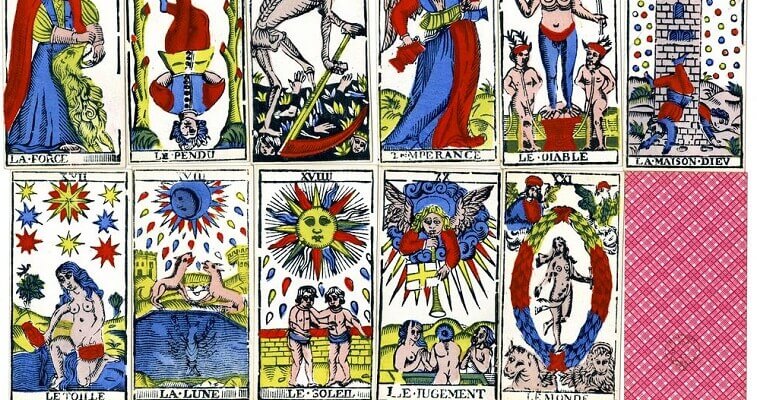
There is a difference between black magic and natural white magic. White magic unites nature and religion; it is using rituals and invocations to communicate with entities that are not normally part of the created physical world, including angels and gods. It assumes a fundamental universal power that exists beyond the visible phenomena, which can be harnessed for the benefit of man. White magic aspires to develop humans. It is based on observation of nature and man, the study of nature, and the acquisition of the ability to control and channel great forces of nature and beyond it for the benefit of man.
If we summarize the three main laws of magic, they are these:
- Like attracts like: if you want to produce gold, you need initial gold.
- As above, so below: every physical thing has a spiritual root, and there is mutual influence between the worlds.
- Thought creates: a person becomes what he thinks about; there is magical power in human will and thought.
We live in a mystical culture that believes no matter what happens outside, what matters is what is in our heart and mind. However, magic asserts that we are part of systems greater than ourselves—on the planetary and cosmic levels—and that there are reciprocal relations between us and the environment. Accordingly, magic is activated through clothing, building materials, plants, animals, and also more abstract things such as symbols, colors, numbers, shapes, and especially through language.
Magic asserts that the world is dual—physical and energetic—and that energy has three garments: color, sound, and scent. The manipulation of these garments can summon energy. There is a difference between magical and spiritual: magical refers to anything connected to the unseen, energetic worlds, even if it is against man; mystical aims at union with God and is therefore tied to moral choice. Magic includes symbols, the use of colors, scents and sounds, formulas of enchantment, and more.
Black magic is associated with curses, such as Balaam who wished to curse Israel, and it is more mechanical in nature. That is, a person trained to be a magician can apply the principles of magic toward anything, not necessarily in a religious or developmental context. In this way one can prepare a love potion or cause the evil eye. Judaism, in general, distanced itself from magic, especially black magic, and opposed sorcerers and magicians. Yet, to some extent, there was white magic within it, particularly among sectarian groups such as the Essenes.
One might argue that some of the acts performed in the Temple, such as burning incense, were magical, and that the sacraments in Christianity and the Eucharist are a certain kind of magic.
Alchemy
The Tabernacle and the Temple are characterized by the use of metals, especially silver, gold, and copper, in their construction, vessels, and worship. From a spiritual perspective, this is connected to the science of alchemy. One can say that Abraham was the first alchemist (as well as astrologer), since according to Midrash he was cast into a fiery furnace and nothing happened to him. In addition, a smoking furnace and a flaming torch passed between the pieces of the animals in the Covenant Between the Pieces.
King Solomon, who was the wisest of men (like Trismegistus), is also considered the first alchemist, because he created the golden and silver vessels of the Temple in the depths of the earth, in the manner of alchemists. The alchemical laboratories were usually underground in order to prevent interference from cosmic radiations. One of the most protected places on earth from radiation, due to its low elevation below sea level, is Jericho (with additional layers of air), where the Temple vessels were forged. Solomon knew how to pour spiritual content, and therefore the vessels he created were not only physical gold, but also spiritual gold.
Gold is one of the substances that characterizes Eden, as it is written: “The name of the first [river] is Pishon; it winds through the whole land of Havilah, where there is gold. The gold of that land is good; aromatic resin and onyx are also there” (Genesis 2:11–12). The four rivers of Eden emerged from beneath the Foundation Rock, and therefore gold became associated with Jerusalem.
In the Tabernacle there was a progression from copper, to silver, to gold, as one advanced inward toward holiness. On the copper altar in the courtyard burned a fire that never went out. The altar and the water basins were of copper, as was the Bronze Sea in the Temple. The pillars around the courtyard of the Tabernacle were made of copper, as were the two pillars Boaz and Jachin at the entrance to the Temple. But in the Holy of Holies there was gold, and in the Hall there was gold and vessels of gold. Silver was present at the base of the inner pillars and the boards of the Tabernacle, and in the vessels of the Levites, such as the trumpets.
The silver and gold for the building of the Tabernacle were donated by the women from their mirrors and jewelry, and this was part of the rectification of the sin of Eden. The passage from copper to gold through the awakening of silver (trumpets) symbolized the alchemical process of change and enlightenment. The copper in the courtyard was linked to the bronze serpent of Moses, which served to heal the Israelites in the desert.
Until the days of Hezekiah, the people worshiped the bronze serpent of Moses in the Temple, as it is written: “He broke in pieces the bronze serpent that Moses had made, for until those days the children of Israel were burning incense to it, and he called it Nehushtan” (II Kings 18:4). This tradition passed also into church architecture, where we find the use of bronze doors at entrances, and gold and silver chalices on the altar.
The aim of alchemists was to transform simple metals into gold. But this had several levels, the deeper one being how a person connects to the gold within himself, becoming gold himself. And this is not only physical gold, because Eden is existence in another dimension. The greatest alchemical laboratory is the human body, and the processes of transformation that we undergo in our lives are intended to refine and purify the body, which itself is in the image of God—especially the energetic parts (centers) within us—to create more subtle substances inside us.
According to alchemy, the process of transformation we undergo is a process of seven stages, corresponding to the seven known metals on earth, with each metal connected to one of the moving stars in the heavens—the planets. Thus the sun is connected to gold, the moon to silver, Mercury to quicksilver, Venus to copper, Mars to iron, Jupiter to tin, and Saturn to lead.
The role of magic is to summon forces, whereas alchemy transforms them. The essence of alchemy is not a mechanical process of seven stages, but the attainment of eternal life—the discovery of the Philosopher’s Stone, which is capable of changing substances, breaking down existing metal and reassembling it anew as another metal. All metals are built from a combination of three substances: sulfur, salt, and mercury.
Sulfur gives the combustion of the substance and also its color, salt gives the degree of stability and strength, and mercury gives the degree of flexibility. In each metal there is a different proportion between them, and therefore the way to turn iron into gold is first to separate the components and then to combine them again, but in a different way.
According to ancient wisdom, the world is composed of four elements: earth, air, water, and fire, and four states: dry, wet, hot, and cold. Every metal has two external qualities and two internal qualities connected to these four states. For example, gold externally consists of heat and moisture, and internally of cold and dryness. Silver has other qualities, and if its internal qualities are removed, it becomes gold. This was done by means of an elixir—a potion of life composed of plant and animal substances—that brought healing to both soul and body.
If we take the alchemical process as an allegory of human life, the first stage on the path is the dissolution (or melting) of the personality, corresponding to the death of the alchemist: “He who wishes to enter the Kingdom of Heaven must first enter with his body into his mother’s womb and there die.” Afterwards, through the encounter with the Philosopher’s Stone, one goes through a process of purification and maturation—the union of opposites. The Stone heals diseases, restores youth; it is the elixir of life that ultimately grants eternal life.
The essence of alchemy is not only change, but the finding or distillation of the gold within us. From the perspective of the Temple, the Philosopher’s Stone was the Tablets of the Covenant inside the Ark of the Covenant in the Holy of Holies.
The process of transformation (work) is called the Magnum Opus, and it consisted of several stages, sometimes represented by colors. First of all, as a basic preliminary stage, the aspiration was to reach the Prima Materia, the primordial substance that existed before creation and exists in everything. This material is connected to an important alchemical concept called Anima Mundi—the Soul of the World. The universe is a living being with intelligence, reason, and intention thanks to that Soul of the World.
According to Platonic thought, the movement of the planets is a mathematical expression of this Soul. According to ancient Hermeticism, there are connections and relations between all things, which are expressions of the Soul of the World. The Stoics identified the Soul of the World with the Logos, while the Gnostics identified the Soul of the World with Sophia. After reaching the Prima Materia, the alchemical processes of refinement and transformation take place, and these are represented by the colors black, white, yellow, and red.
In the alchemical work, the base metals are dissolved or broken down into components. This is done in the form of blackening, and the process is therefore called Nigredo, from the word for black. Afterwards, the materials are purified and refined, and this is called Albedo, from the word for white. At some stage, a small quantity of the new substance is introduced—in other words, the gold within us awakens—and this is called Citrinitas, related to yellow (you need gold in order to make gold). Finally, the substances are recombined in their new form and gold is created, and this is called Rubedo, from the word for red.
The final stages of transformation are assisted by the Philosopher’s Stone, by the alchemical fire whose essence is love. The aspiration of matter is to reach perfection—to undergo a process of spiritualization. The microcosm and the macrocosm reflect one another, but nature requires human intervention and assistance in order to reach perfection, and lies the importance of the alchemist and alchemy.
In the first centuries CE, alchemy flourished. Maria the Jewess, a woman who lived in Alexandria in the second century CE, is considered the mother of alchemy. She invented hydrochloric acid and various alchemical instruments. The writings identify her with Miriam, the sister of Moses, and with Mary Magdalene, as an enlightened teacher who transmitted ancient wisdom whose sources were esoteric Judaism and ancient Egypt. Thus Maria says: “One becomes two, two become three, and from the third comes the one as the fourth.” The psychologist Carl Jung interpreted this statement as a metaphor for the development of the “self.” This statement can be illustrated as a circle containing a triangle, within which is a square, and inside it another small circle—a symbol of the four elements together (a kind of mandala) [4].
Although there are no direct writings of Maria the Jewess, she is quoted by later authors, the most important of whom is Zosimos of Panopolis in Middle Egypt, who lived and worked at the beginning of the 4th century CE. He wrote books on alchemy that appear in the writings of later Arab authors. The seven metals symbolized seven influences that govern the various manifestations of life—seven heavens, and also seven stages in the spiritual journey, and from another perspective, seven ages in a person’s life, in which he must complete the journey from the base metal—iron or lead—to gold.
The seven metals were connected to the Menorah with its seven branches in the Temple, which was cast by Solomon from a single lump of gold in the depths of the earth near Jericho. The fire that burned in the Menorah was a wondrous fire—an alchemical fire—and this explains in another way the miracle of Hanukkah. The search of the alchemists was not for gold, but for the sacred fire that enables the process of transformation—the inner fire within man that drives him to fulfill his purpose in life. The Temple and the experience of holiness it offered were meant to connect a person to this inner fire—the fire of faith—which, if it burns, will turn Jerusalem and the people of Israel into a light unto the nations.
Every day a perpetual fire burned on the altar in the courtyard, and every day the oil in the branches of the Menorah was renewed, with always one lamp left burning. During the wanderings in the desert, God appeared as a pillar of fire, and this enabled the Israelites to transform from a mentality of slaves into a chosen people. Fire also had an important role in other religions, and in this context one should especially mention the religion of Zoroaster, in which it was considered sacred. A remnant of the importance of fire in Judaism is found in the custom of lighting candles before the Sabbath. There are many kinds of fire, and one kind is an invoking fire—not every fire is the same.
Astrology
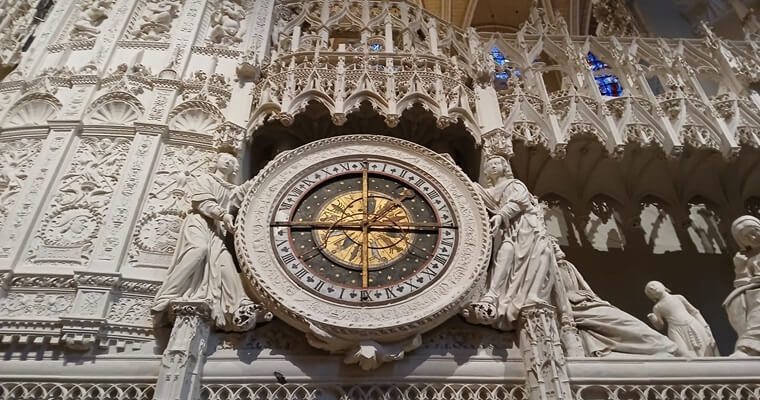
According to Jewish sources, our forefather Abraham was not only an alchemist but also the first astrologer, and therefore it is said that his seed would be as numerous as the stars in the heavens. He also passed between twelve parts in the Covenant Between the Pieces. But his grandson Jacob also engaged in astrology, and this is revealed in the blessing he gave to his twelve sons—the Blessing of Jacob to the Tribes—in which each of them is characterized by astrological traits. The importance and centrality of the number twelve in Israel, as seen in the number of tribes, in the number of stones on the priestly breastplate, and elsewhere, and the use of a year of twelve months, reveal to us the importance of astrology, if only indirectly.
When the Israelites left Egypt, they were arranged according to the twelve tribes, each of which had a banner in a color connected to its astrological sign. On the breastplate of the High Priest were twelve gemstones, each connected to one of the tribes, but also to an astrological energetic influence. When the Israelites settled in the land, they divided it into twelve inheritances according to the twelve tribes. This division was, in fact, an astrological division, since Israel is like a microcosm of the world and the entire universe.
through the mystery schools. The Torah opposes the worship of the stars, sun, and moon, but at the same time, in order to be a member of the Sanhedrin one had to know astrology, and zodiac wheels appear in synagogues across the land. The contradiction is resolved by the saying: “All is foreseen, but freedom of choice is given.”
Indeed, everything follows heavenly law and is predetermined, but human beings have free will, and through the covenant between God and the people of Israel their destiny is changed and overrules the one set by the constellations. As it is said, “There is no destiny for Israel,” and thus whenever a zodiac wheel appears in a synagogue, there are always scenes above it showing the covenant between God and the people of Israel .
According to David Flusser [5], one of the main issues during the Second Temple period was providence and free will. The Sadducees believed in free will, the Essenes in providence, and the Pharisees in a combination of the two: there are areas in which man has choice, especially between good and evil. The belief in providence recalls Stoic belief and points to the influence of the stars on human beings. In the Dead Sea Scrolls there is a text that refers to the external appearance of people according to astrology. By contrast, the Sadducees adhered to the reason given to man in order to decide his path, and therefore there is choice, and if necessary one can consult the Torah—everything has already been given, and now it depends on us. The Pharisaic conception is expressed in the cancellation of the decree against the people of Nineveh by Jonah: all is foreseen, yet freedom of choice is given.
It must be understood that real astrology is not only fortune-telling and superstition, as it appears today in newspaper columns, but a complex and advanced theology that explains the laws of the world—a science of the structure of the unseen worlds. Astrology is intimately connected to explanations of the structure of those worlds as they appear in early Jewish mystical writings and later in Kabbalah. Thus, in the Book of Creation (Sefer Yetzirah), which is the first Kabbalistic book, supposedly written by Abraham, we find an identification between Hebrew letters, planets, and astrological constellations.
Astrology expressed the Greek way of thought and other philosophies of the classical world during the Second Temple period. According to Pythagorean philosophy, there are three forms of life: the pursuit of pleasure, the pursuit of fame, and the pursuit of wisdom, with the third being preferable. There is order in the world, expressed in the word cosmos—order in Greek. Observing the heavens directs man toward this order, which in turn creates inner order, and so one becomes similar to the universe. “If you live in a way that clarifies or enlarges in you the participation in all living things and the participation in all of nature, then your soul will be in a purer state.”
Pythagoras held that the celestial bodies are divine and are moved by the aetheric soul, which informs the universe and is close to the human soul. In his numerical and geometrical system there is correspondence to astrological theories, and the dodecagon—the twelve-sided polygon that represents the aether—bears the name of Jupiter, partly because Jupiter completes its cycle every twelve years.
Astrology can be divided into two kinds: astrology of the fixed stars—the twelve constellations whose origin is ancient—and astrology of the planets, the seven bodies that appear to move in the heavens: the sun, moon, Mercury, Venus, Mars, Jupiter, and Saturn, which became popular in classical times. According to Sefer Yetzirah, the seven doubled letters of the Hebrew alphabet (בגדכפרת) represent the seven planets, and the twelve simple letters represent the constellations. The branches of the Menorah in the Temple represented the seven planets that move in the heavens, and the loaves on the Table of Showbread represented the twelve tribes of Israel, and correspondingly the twelve constellations.
Plato’s work Epinomis refers to the religion of the stars and claims that the sciences are a gift of the gods, and that astronomy and astrology are the highest sciences. Man aspires to understand nature and to be absorbed in thoughts of heavenly harmony. The study of the heavenly bodies and their harmony brings wisdom, joy, and reward in the world to come, where the astronomer will live a full life of contemplation of celestial radiance and will attain happiness.
Posidonius of Apamea
Posidonius of Apamea (135–51 BCE) is one of the fathers of Stoic philosophy. He was the most important intellectual figure and spiritual giant in the Roman Empire of the early 1st century BCE—an astronomer, geographer, historian, politician, philosopher, and polymath. He was born in Syria to a Greek family, studied in Athens, and traveled throughout the Roman world. Pompey and Cicero were among his students; Philo of Alexandria, Seneca, and many others were influenced by him. The school he established in Rhodes spread its light throughout the entire world. He is considered the one who linked the spirituality of the Near East with that of the West, contributed to shaping Stoic philosophy, and to the creation of astral theology (the theology of the stars).
Posidonius defined man as a “seer and expresser of the heavens” [6]. Nature was perceived as directing man to look at and contemplate the skies. Other animals turn toward the earth, but man lifts his eyes proudly to the stars. The eye was regarded as the wonder of the human body—a small mirror able to contain within itself the universe, a gateway to the soul, a medium between the starry gods and reason. Sight was perceived as superior to all the other senses. According to Posidonius, the movements of the heavens are governed by invisible laws, and the eye is drawn to discover them. The basic quality of the stars is that they are eternal, fixed, and move according to mathematical law, and by so doing they represent reason, which is the measure of truth, as opposed to the transient world of natural phenomena.
“Dominion passes, men move from one condition to another, from servitude to empire, yet those same months of the year always bring the same stars to the horizon. All things subject to death are subject to change. The years pass, the earth changes, every century alters the character of the nations, but the heavens remain the same, and preserve in all their parts the passage of time, adding nothing to themselves, taking nothing away. And this will remain the same forever, for it has always been so. Thus it appeared to our ancestors, and so will our descendants see the same heavens. This is God, for it does not change through the generations.” — Manilius.
The Canaanite god Baal was called in the astrological religion “Lord of Eternity.” The firmament of the fixed stars contains all the other spheres. The divine power that resided in it and caused it to move was sometimes identified as “Bel”—that is, Zeus. Sometimes reference was made to the substance of which the stars in the upper firmament are made, and it was called “aether.” It burned in the stars but also filled the empty spaces in the heavens. Sacrifices were offered to the aether; it was celebrated in hymns as the source of all light and the dispeller of darkness.
According to Posidonius, beneath the sphere of the fixed stars, which are the constant and eternal divinity (the spiritual Jupiter), there are seven spheres of wandering planets: Saturn, Jupiter, Mars, Sun, Venus, Mercury, and Moon. The Sun stands in the middle, leading the procession. Above it are the three slow and free-moving planets—Saturn, Jupiter, and Mars—and beneath it are the fast-moving planets, limited in their angle on the horizon: Mercury, Venus, and Moon. What drives the entire system is the heat of the Sun, and since the motion is constant and operates according to mathematical law, the logic of the world is found in the Sun. Josephus Flavius, who may also have been influenced by Stoic ideas, describes the Menorah in the Temple in precisely these terms: the central shaft is the Sun, the three branches to the left are the limited planets, and the three branches to the right are the free planets.
Beneath the sphere of the Moon (the lowest of the seven) are the four spheres of the elements: fire, air, water, and earth. The combinations of these four create the world of phenomena—the physical world. Beneath the four elements, and within them—especially in the air—there exists a host of beings and essences that mediate between man and the gods.
The Sun is the unique source of energy that causes the world to move. Therefore, it is also the ruler of destiny and of nature; it is the soul that animates the entire universe, just as the heart sustains man (and thus it was called “the heart of the world”). The Sun is the ruler of the four seasons and the four elements. The Sun nourishes, produces, and destroys plants and animals through its celestial power and its changes of course, through day and night that heat, cool, dry, and moisten (the four dynamic qualities). The stars owe their properties and their light to the Sun.
Yet the universe cannot be driven by a blind force, and since it is the Sun that drives it, then within it resides the fire of reason, causality, and intelligence. It was perceived by the ancient theologians as the cause of the world—the Logos—the reason that directs the human microcosm and appears in the form of thoughts. Its radiant circle constantly sends rays toward the earth and sparks of fire into bodies, and causes them to live (after death the sparks wish to return to the place from which they came, namely, the Sun). The Sun is the creator of souls, eternally sowing the crop of souls.
In Posidonius’ astral philosophy, the science of astronomy is accompanied by a refined religious feeling. In the mysteries of the religion of the stars, the connection to the light of reason of the Sun quenches the thirst for truth, and the intoxication that arises from it elevates man to the higher heavens. It is an intoxication containing nothing more than the aspiration for divine knowledge. In the new astral religion, not only is the place of the mysteries transferred from the earth to the heavens, but their very character also changes from emotional to intellectual.
Manilius writes: “Although I am mortal, I know that I was born for a day, but when I follow the multitude of the stars in their course, my feet no longer touch the ground, I ascend to Zeus himself, who feeds me with ambrosia, the food of the gods.”
Astrology and Jerusalem
During the existence of the Temple in Jerusalem, the priests would watch for the rising of the new moon in order to announce the beginning of the month. The message would be passed along through a network of bonfires on high landmarks that reached all the way to the exile in Babylon. In addition, there were sects such as the Essenes, who related to the solar year rather than the lunar, and in silence and sanctity watched the sunrise over the mountains of Moab.
Many of the ancient stone circles, megalithic sacred places, and sometimes even temples, were astronomical observation sites, and it is tempting to think of the peaks of the Jerusalem mountains as such a place—a place where the physical light is different, and therefore the heavens themselves appear differently. Yet within a large city plagued by severe light pollution, it is difficult to sense and to relate to this aspect, which is no less important—and in my opinion far more important—than the fleeting dramas of political rule on the face of the earth.
Many of the Jewish holidays occur at the time of the full moon. The conclusion of the Sabbath takes place when three stars are visible in the sky, and it may be assumed that in many cases one of them was Venus, the brightest star, which spends about half its time near the setting Sun at dusk. The prayer times are determined by the rising and setting of the Sun. All this indicates the importance of the sky to the Jewish people in Jerusalem.
At the end of the Second Temple period, a star fell upon the earth in Bethlehem near Jerusalem, and this was a sign of the beginning of a new era—the birth of Jesus. The wise men of Persia, the Magi, who practiced astrology, foretold this event and came to Jerusalem in search of the divine child who had just been born. Together with them they brought three gifts: gold, myrrh, and frankincense, representing the three sciences of alchemy, magic, and astrology. The essential difference between myrrh and frankincense is that myrrh often appears as oil of myrrh, which was also the oil used for anointing, and therefore it has magical properties, whereas frankincense appears as incense, and through its burning it summons energies from outside and is used in the religious worship of heavenly gods, and thus the connection to astrology.
Modern astrologers have connected Jerusalem with the sign of Gemini, because of the duality of the heavenly Jerusalem and the earthly Jerusalem, and because of its role as a light to the nations, derived from the connection of Mercury, the planet of Gemini, to communication. Yet ancient astrologers such as Ptolemy linked the Levant to the fire signs, and especially to Aries. This corresponds with the attribution of the tribe of Benjamin—within whose borders Jerusalem lay—to the sign of Aries, as appears in the blessing of the tribes: “Benjamin is a ravenous wolf.” The wolf was an animal associated with Mars, and thus with Aries.
f we view the land as an organism representing the astrological human (Homo Signorum), with Jerusalem as the area of the navel, then Jerusalem is connected to the sign of Virgo. This accords with the birth of Jesus to a virgin in nearby Bethlehem. Both Virgo and Gemini are ruled by the planet Mercury, and so the question arises: what then are the Sun and the Moon? According to the division of the land, the Moon is connected to the Jordan Valley, and the Sun to the lowlands, to Beth-Shemesh. The theme of the astrological man in the land of Israel is reinforced by the fact that the projection of the Moon upon the land during a solar eclipse covers the width of the land from the sea to the Jordan. In this context it is worth recalling Joshua’s miracle: “Sun, stand still upon Gibeon, and Moon, in the Valley of Aijalon.”
Some have linked Jerusalem with the Moon, because it is the heart of the land and lunar observations were made from it, while others linked it with the Sun, because it is the center of the world. But in my view, the correct identification is with Mercury—the celestial body closest to the Sun, the messenger of the gods that transmits the Sun’s power onward, serving as its mediator. And therefore Jerusalem is indeed connected with Gemini and Virgo, the astrological signs associated with mercury.
Footnotes
[1] Robinson, J. M. (Ed.). (1977). The Nag Hammadi Library in English. Harper & Row
[2] Copenhaver, B. P. (1992). Hermetica: The Greek Corpus Hermeticum and the Latin Asclepius in a new English translation, with notes and introduction. Cambridge: Cambridge University Press.
[3] Holroyd, S. (1994). The elements of Gnosticism. Element.
[4] Netzer, R. (2004). Journey to the self: The alchemy of the soul – Symbols and myths [In Hebrew]. Ben Shemen: Modan.
[5] Flusser, D. G., & Roger, S. (2002). Judaism of the Second Temple period: Its sages and literature [In Hebrew]. Jerusalem: Yad Yitzhak Ben-Zvi.
[6] Cumont, F. (1912). Astrology and Religion among the Greeks and Romans (Vol. 581). GP Putnam’s sons.