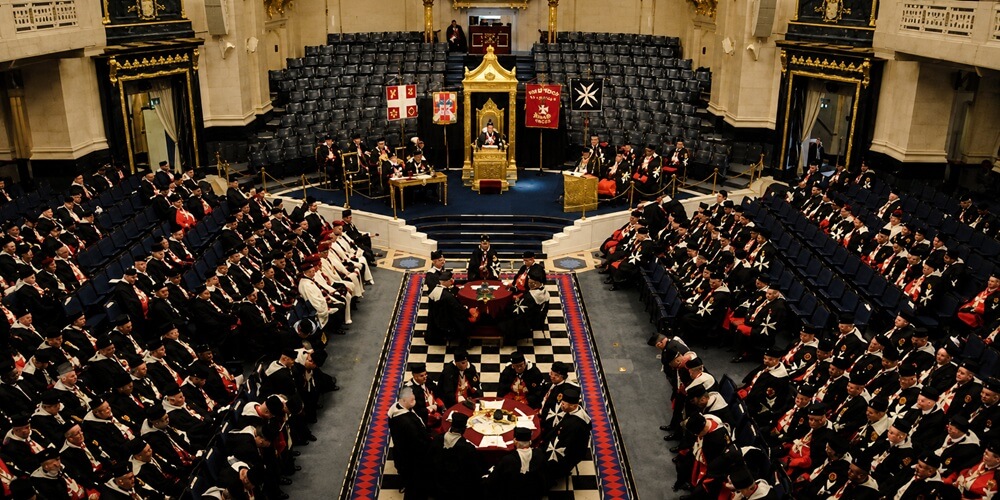
The Hospitaller Order and Gothic Architecture
The Hospitaller Order takes its name from the word “hospital.” Indeed, this was an order that, from its inception (and still today), set as its goal the care of the sick. It was founded at the end of the 11th century, even before the start of the Crusades, when a group of wealthy merchants from Amalfi in Italy saw the suffering of the sick among the pilgrims to Jerusalem and decided, with great nobility, to abandon their other pursuits and dedicate themselves to caring for the sick in the spirit of Jesus and Christian compassion. They established the first hospital of its kind in the world in Jerusalem and devoted themselves to the sick. They vowed not to eat before the sick had eaten, not to sleep before the sick were cared for in their beds, and to dedicate themselves to others, whoever they might be.
The hospital initially operated within the Benedictine Order, and the person who led it in its early years was a man named Blessed Gerard. Until that time, the sick person was considered someone who had sinned, and the illness was perceived as punishment for his sins. The Hospitallers changed this view and saw illness as participation in Jesus’ suffering and a heavenly gift, and the sick person as someone created in the image of God. They were the first to set a standard for beds in a ward, meals, and treatment, and housed the sick in good conditions with personal and humane attention.
Blessed Gerard (1040–1120) was probably born in the Amalfi region (according to another version, in France). He came to Jerusalem and helped re-establish Christian institutions in Jerusalem after the destruction by al-Ḥākim at the beginning of the 11th century. From 1080, he was involved in the management of the guesthouse and hospital of the Benedictines, which operated within a monastery near the Church of the Holy Sepulchre established by the Amalfitans and called “Maria Latina.” Gerard was known as a saint and miracle worker. In the Jerusalem of that period, there was relative tolerance and a multinational and multireligious population, and Gerard was well-liked by all. The hospital served the entire population.
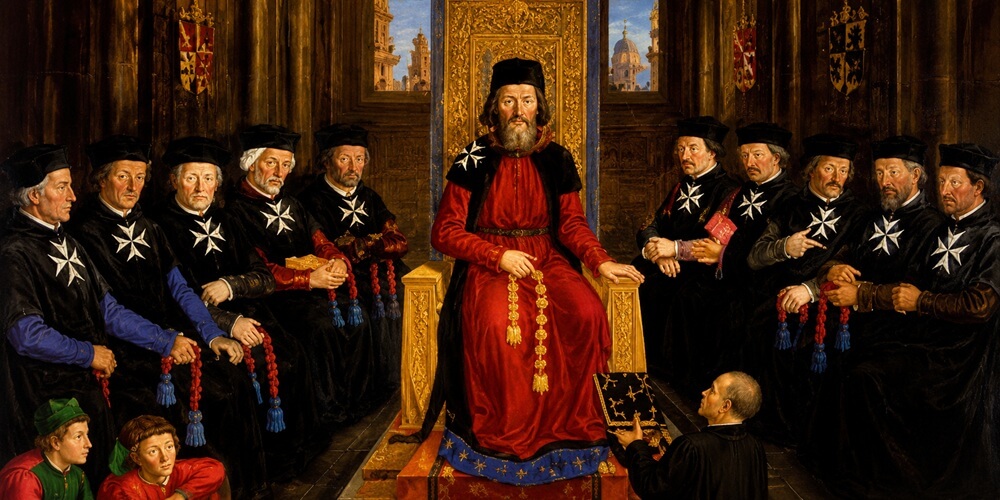
When the Crusaders besieged Jerusalem, Gerard remained to treat the sick and wounded and suffered torture at the hands of the Muslim rulers. But when the Christians re-established the hospital and decreed that it would serve only Catholic Christians, Gerard insisted on treating everyone—including Muslims—without bias. We know this to be true because the Order’s hospital regulations include a menu for patients who eat pork and those who do not, the latter presumably being Jews and Muslims.
In any case, Gerard left the Benedictine Order and founded an independent order, which later became the Hospitaller Order and was officially recognized as such in 1113 or, at the latest, in 1119. After the founding of the Hospitaller Order, it spread throughout the kingdom and Europe. The Church of Santa Maria Majora, adjacent to the Church of the Holy Sepulchre, was built as its mother church (remnants of it are integrated into the structure of the Lutheran Church of the Redeemer). Gerard operated in Jerusalem until his death in 1120 and was recognized as blessed and later as a saint. His remains are in France.
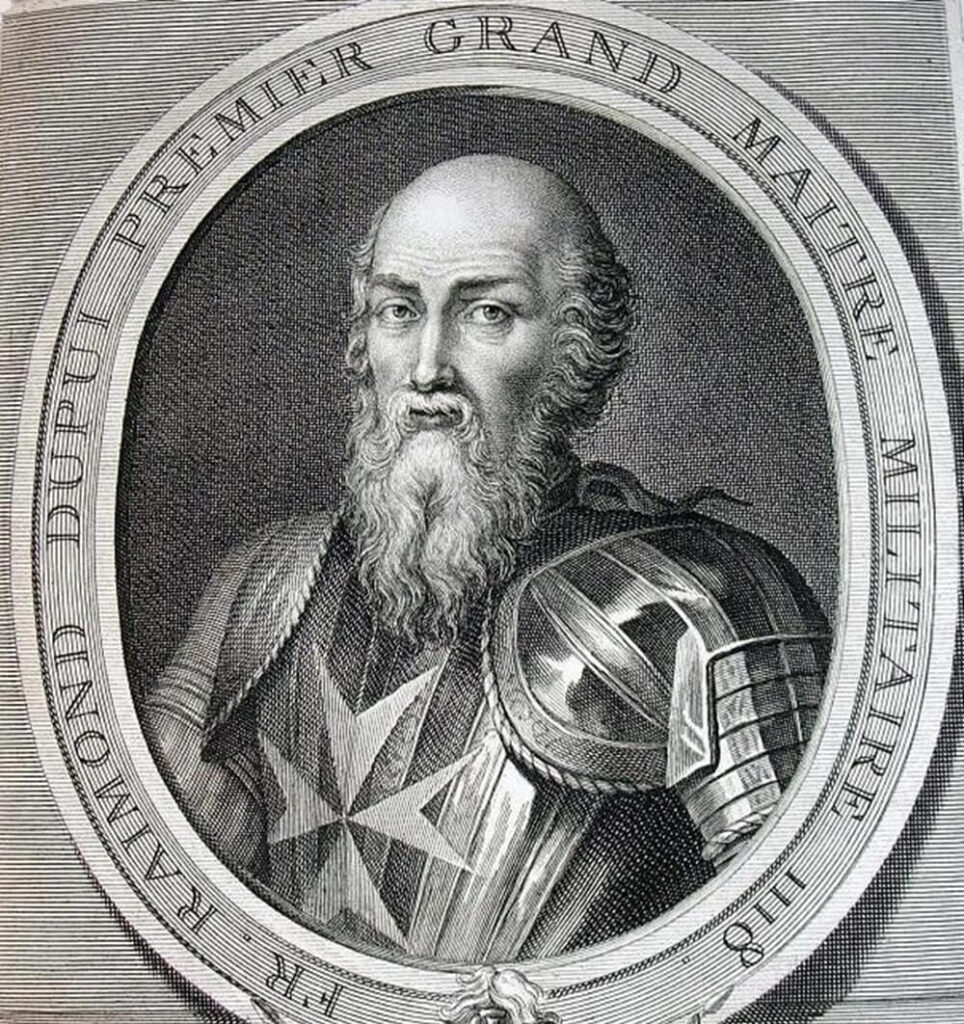
The person who replaced Gerard as head of the Hospitaller Order and changed its character was Raymond du Puy (head of the Order 1121–1160). He turned the Hospitaller Order into a strong and militant international order, owning many properties, building and maintaining fortresses, and serving as a kind of army for the Crusader Kingdom—similar to the Templars—in addition to its traditional role as a caregiver for the sick and wounded. With the beginning of the Crusades, the Hospitallers became a kind of medical corps of the Crusader army, and Raymond completed the process of transforming them into a military order similar in nature to the Templar Order.
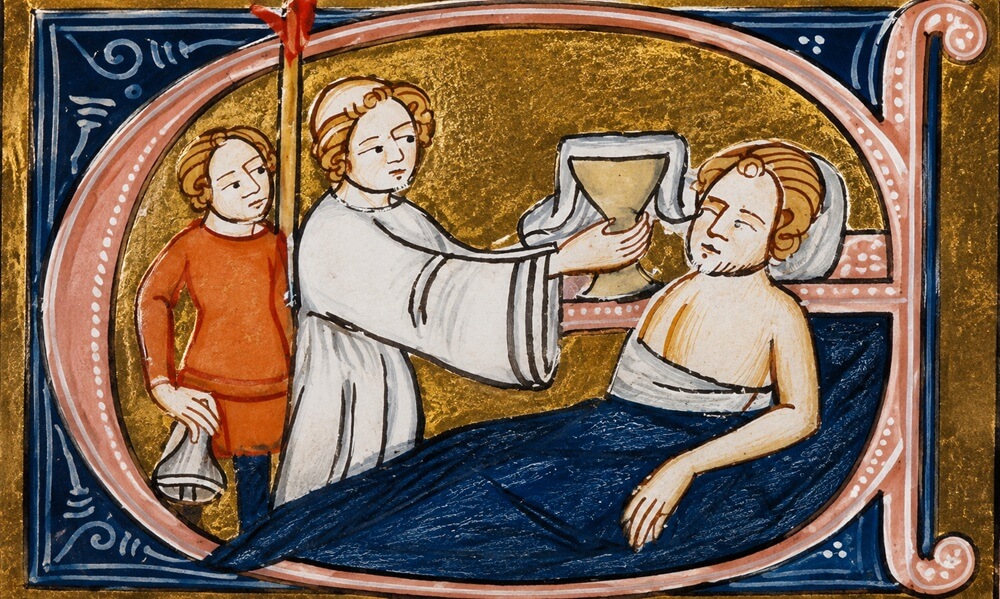
Nevertheless, the Hospitaller Order had a principle that they must treat every wounded person, be he Muslim or Jew. They were willing to sacrifice everything for their patients. In their archive is an amazing story about Ṣalāḥ ad-Dīn (Saladin), the heroic Muslim leader who fought the Crusaders for many years. He wanted to check whether the legends about the high principles of the Hospitallers were true, and so he came to their hospital pretending to be sick. One of the diagnostic methods in those days was dreaming—an ancient method practiced in the temples of Egypt and Greece in antiquity, and also in the Temple of Asclepius north of the Temple Mount in Jerusalem at the end of the Second Temple period (see chapter in Book 1), and still exists today in Orthodox monasteries that have hospitals.
Thus, the anonymous patient dreamed that the remedy for his illness was a concoction whose one ingredient was the heart of the Order’s Master’s horse. The Hospitallers vowed to dedicate themselves and everything they had to the sick, but in those days, the horse was more important to the knight than anything else, as his life depended on it. After a long consultation, the Hospitallers decided that the horse would be sacrificed for the sake of saving that mysterious patient, because that was their oath, and they had to keep their word.
Following this, Saladin revealed himself to the Hospitallers and recognized them as men of honor, and later repaid their kindness during his conquest of Jerusalem, when he allowed them to continue operating the hospital until all the sick who were unable to walk recovered and could leave safely, and some say he even contributed money to their hospital.
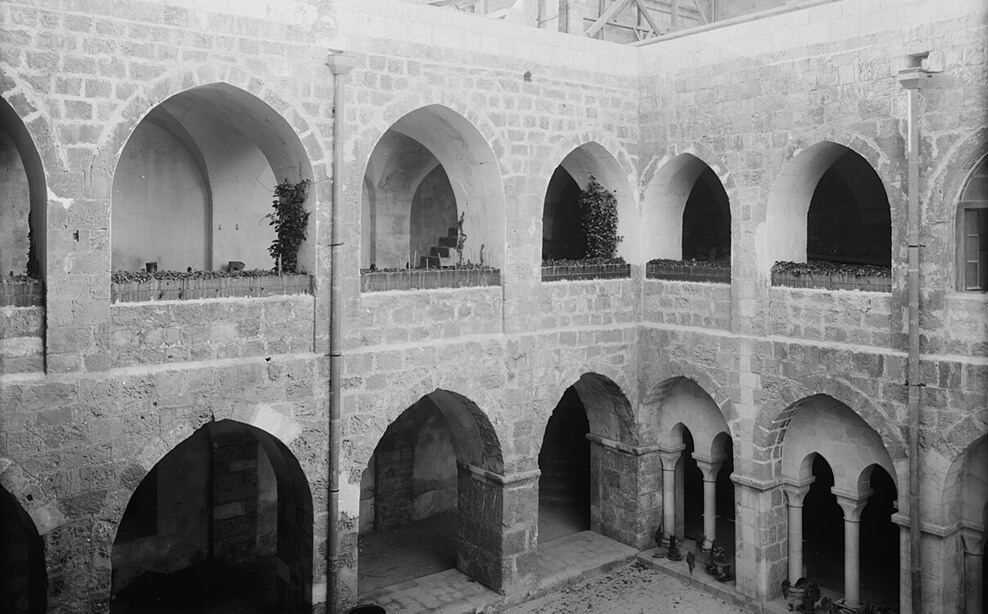
Near the Church of the Holy Sepulchre, to the southeast, stood the large Hospitaller complex dedicated to Maria Latina. Within it was the first hospital of its kind in the world, founded for pilgrims as early as the 11th century. At its peak, it could hospitalize about 2,000 people, and parts of its structures (arches) have survived and now surround a beautiful courtyard with a memorial plaque to the Order and the hospital.
Adjacent to the hospital were the Great Church of Mary (Santa Maria Maggiore) and the Small Church of Mary (Santa Maria Latina), from which an entrance gate has survived (now incorporated into the Church of the Redeemer).
In a nearby building, which was part of the Hospitaller complex and perhaps served as a monastery, there was a beautiful cloister courtyard, which also survived and is now integrated into the guesthouse named after Mary and adjacent to the Church of the Redeemer. The place has a museum of the excavations on the site and a small café, but above all—a charming courtyard that conveys the feeling of that period better than a thousand words.
The Hospitaller complex covered the area of today’s Muristan and also included a church in honor of John the Baptist, which exists to this day but passed into the hands of the Greek Orthodox. The patron saint of the Hospitaller Order was John the Baptist, and a bone from his skull was preserved in this church. Pilgrims used to come to the church to receive energy from the holy relics, hoping that this would help them avoid being hospitalized in the adjacent hospital.
There were two Hospitaller hospitals in Jerusalem. One of them was established in 1153 by Raymond in the Jewish Quarter and was designated for German patients, and therefore only German monks served in it, and later it was linked to the Teutonic Order. The remnants of this complex’s church are still visible today near the stairs leading down to the Western Wall.
The Hospitallers, following their transformation into a military order, were given the task of defending the pilgrims and the kingdom’s borders, and they specialized in building fortresses. Thus, some of the most beautiful fortresses in the land, such as Belvoir Fortress (Kōkhav ha-Yardēn), are associated with them. Later, the masons’ guilds of the Middle Ages were connected to this order, and some say it also influenced the founding of the Freemasons’ societies.
According to the tradition of the Freemasons, some members of the Hospitaller Order were engaged in operative building in the land, and later established Freemasons’ societies in Europe after returning home. Thus it is written in one of their books:
“During the Crusades in Israel, many princes, lords, and citizens dedicated themselves and vowed to re-establish the Temple of the Christians in the Holy Land, employing themselves in restoring its architecture to its original state. They agreed among themselves on a number of ancient signs and symbolic words drawn from the wellspring of religion, with the aim of serving as recognition symbols among the pagans and Muslims. These symbols and words were passed on only to those who solemnly promised, sometimes at the foot of the altar, never to reveal them. This sacred promise was a respectable commitment to the union of Christians of all nations in one brotherhood. Some time later, our Order formed an intimate connection with the Knights of St. John of Jerusalem; from that time, our lodges took the name of St. John.”
And a Freemason named Ramsay [1] further claims: “The word Freemasons should not be taken in its material, simplistic sense, as if our founders were merely simple workers in construction, or only curious geniuses who sought to perfect the art of building. They were not only talented architects who wished to dedicate their skills and will to the construction of material temples, but also religious princes and warriors who planned to illuminate, preserve, and defend the living temples of the Most High. Although the origin of the Masons lay in the schools of the ancient mysteries, they were devout Christians, and their source of inspiration was the buildings that were constructed and that they encountered in Israel during the Crusades”—meaning, these were the Hospitallers or people connected to them.
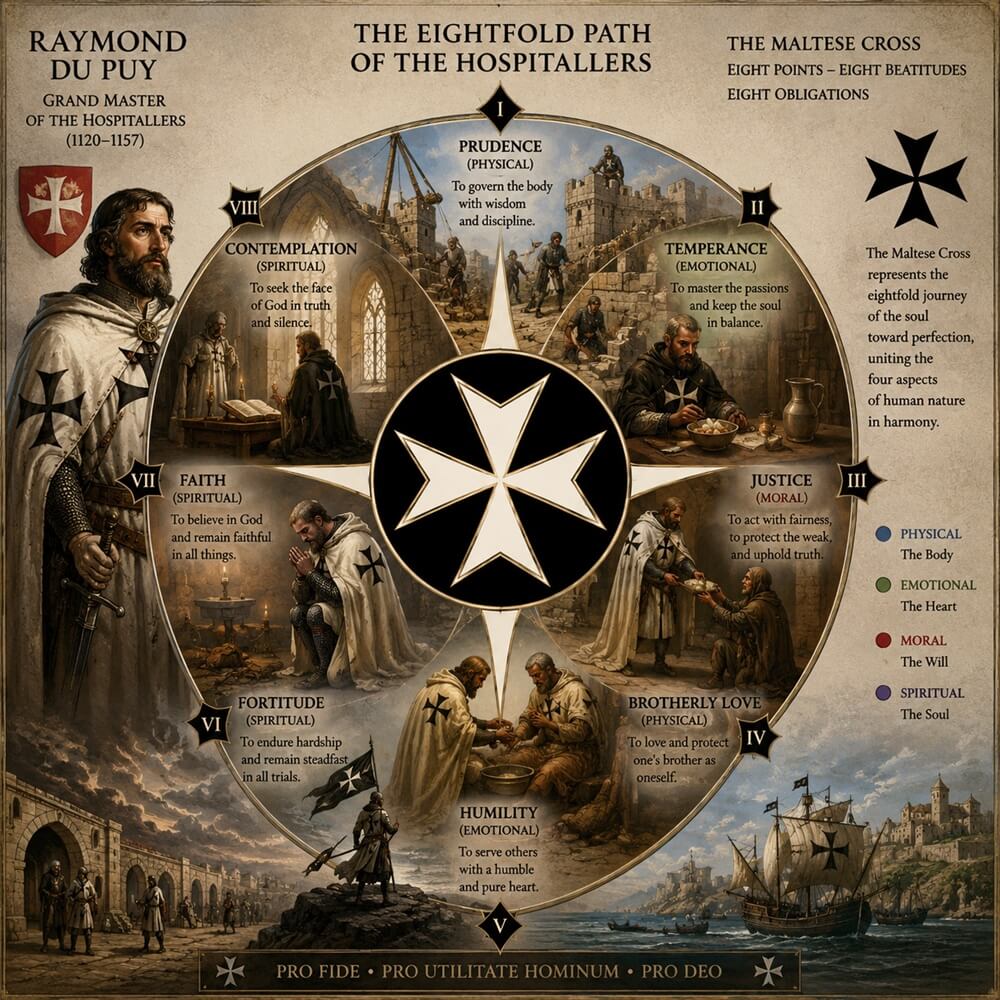
Raymond du Puy transformed the Order into a hierarchical, mystical, and esoteric one, establishing eight brotherhoods (groups) within it and the Order’s symbol—the Maltese Cross, which splits at its end into eight points. According to the Hospitallers and other Christian orders, and based on Greek philosophy, the meaning of the cross is the adoption of four qualities (temperaments) of being human: Prudence, Temperance, Justice, and Faith. These correspond to four types of human existence: Physical, Emotional, Moral, and Spiritual.
In ancient Greek philosophy, there are four qualities—temperaments that make up the Arete—the excellent virtue of man: Courage, Temperance, Justice, and Wisdom. Above all is the love of wisdom, hence the word: Philos-Sophia—the love of wisdom. However, in Christianity, Faith replaced Wisdom and Prudence replaced Courage.
The four qualities—temperaments that the Hospitaller Knight must strive for are expressed by the four arms of the Order’s cross, the Maltese Cross, which has eight points. The eight points are the ways in which the four arms—the temperaments—are expressed, and this is done through eight virtues, which are:
Truthfulness in life
Sincere Faith
Repentance for Sins
Humility and Modesty
Love of Justice
Mercy
Honesty
Sacrifice
These eight ways appear in the Sermon on the Mount, the most important sermon Jesus delivered, detailing the fundamentals of Christian belief—a sermon that begins with eight blessings (“Blessed are…”), each containing one of the eight ways.
After the failure of the Crusades, the Order’s center moved to Cyprus and then to Rhodes, and from there to Malta. It continued to exist until the conquest of Malta by Napoleon at the end of the 18th century, when it ceased to exist as an international military order, but parts of it continued as national orders that exist to this day. For example, the English branch of the Hospitaller Order established an eye hospital in the Hinnom Valley—the area of today’s Mount Zion Hotel—at the end of the 19th century, and acquired the compound of the Lutheran guesthouse at the beginning of the 20th century.
In the area between the Lutheran guesthouse, David Street Market, and the Church of the Redeemer, there is a courtyard bordering the street with a kind of memorial altar in memory of the Hospitaller hospital that once stood there. The altar bears an inscription and symbols—flags of the Hospitaller Order. It is a good place to stop and remember the acts of kindness that were performed there, and the sacred care given to the sick and needy—long before Mother Teresa.
Gothic Architecture
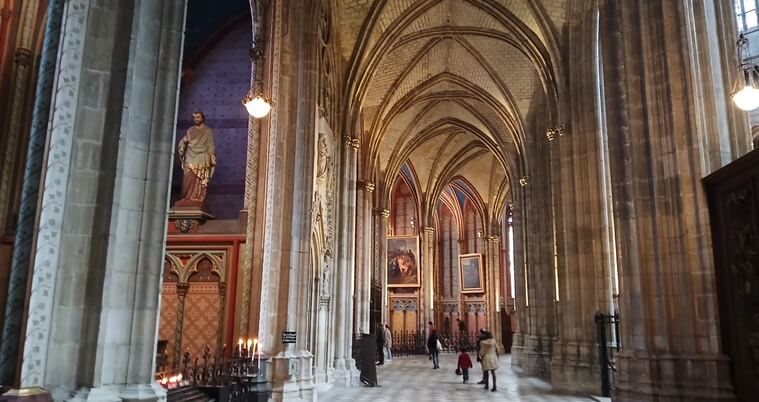
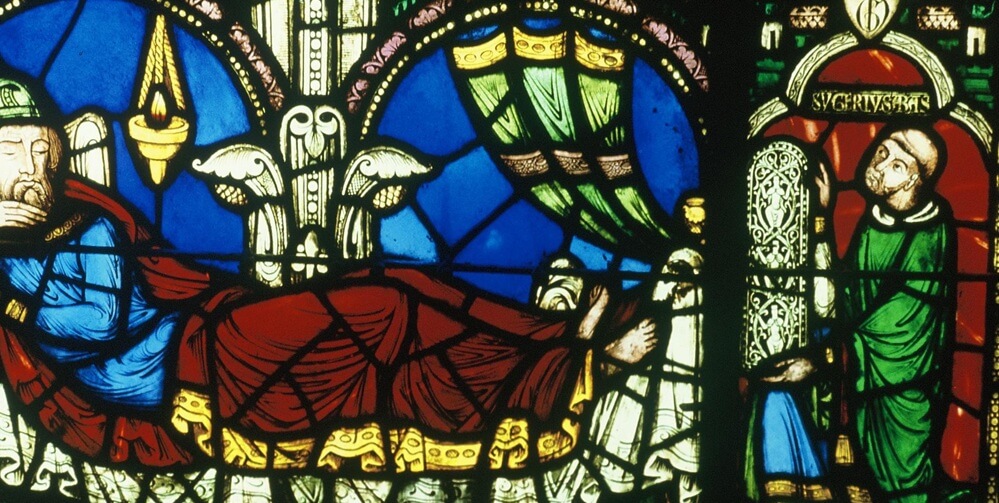
Gothic cathedrals are considered the peak achievements of human architecture—marvelous structures that amaze all who see them. The famous art critic Erwin Panofsky claims that the mysticism of Dionysius the Areopagite stands at the foundation of the design of the first Gothic church in the world—Saint-Denis, built by Abbot Suger and completed in 1144, with the support of Eleanor of Aquitaine and Bernard of Clairvaux [3]. The Church of the Holy Sepulchre relates to this mysticism to some extent.
Abbot Suger was the abbot of the Saint-Denis Monastery in Paris in the 12th century. Dionysius the Areopagite was a Syrian scholar from the 6th century who wrote the book Corpus Dionysiacum (see chapter on Peter the Iberian) and identified himself with the figure of Dionysius appearing in the Book of Acts alongside Paul. His writings reached the Saint-Denis Monastery in France, and he was identified with Denis, the bishop of Paris and its saint. His teaching developed the concept of Theosis—human beings becoming divine. He developed a mystical theology of the heavenly hierarchy, based on symbolic mysticism and the Divine Names. According to his teachings, one can reach God through negation rather than affirmation—through silence, darkness, and unknowing.
Abbot Suger delved into the writings of Dionysius, perhaps thinking that he was the patron saint of Paris buried there. He believed that thought ascends through material things, and that a sense of holiness can be evoked through images, sculptures, and architecture. The light in the church should reflect the new Christian theology and mysticism. Thus, he helped develop a new architectural style that would fit these conceptions, as described in his book Little Book on the Consecration of Saint-Denis.
The other important figure who developed the new religious-architectural concepts was Bernard of Clairvaux—the most important religious figure of the 12th century. These two scholars argued that the structure of churches should express the hierarchy of the emanation of divine energies, and they proposed developing a new type of church that would physically express these new spiritual understandings.
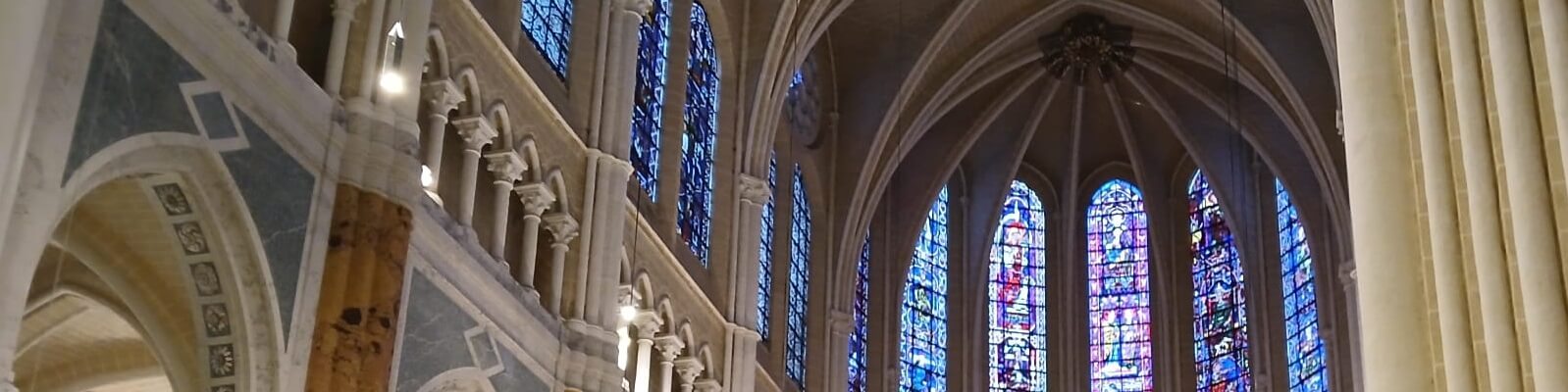
Furthermore, the Christian philosophy that developed from the 12th century onward taught that one could reach God not only through the power of faith but also through the power of reason. One can reach God through a complex and rigorous mental effort, but also through a delicate and sensitive one. This delicacy, sensitivity, and complexity were expressed in the sculptures, decorations, and intricate structure of the Gothic cathedrals. The new Gothic churches reflected the sublimity of the evolving thought, and the colored light entering and flooding the church expressed the developing mysticism of light and darkness.
Rational thought was expressed in the proportions and hidden harmonies in the building—in the relationships between height and width, between the towers and the building, and also in the sculptures and paintings of figures expressing wisdom. In the Cathedral of Siena, for example, figures of philosophers and wise men appear, such as Socrates, Hermes Trismegistus, Zeno, and the figure of Sophia—the goddess of wisdom.
The Gothic cathedrals express the human body in their shape and proportions, just like the temples of the ancient world. According to the theology of Paul, the founder of Christianity, the Church is the body of Jesus. Some people took this explanation a step further and thought that the structure of the churches itself should express the body of Jesus—and therefore the human body.
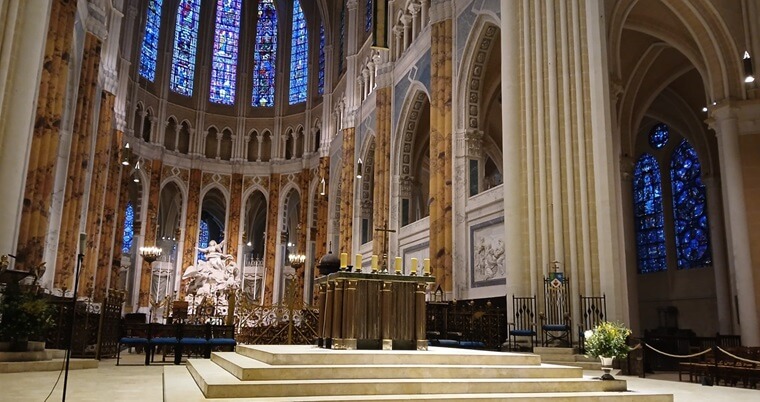
The main hall at the entrance to the cathedral is called the Nave. On both sides, there are sometimes side halls, called Aisles. The Nave and its sides thus became the body. The Nave of the cathedral is crossed by the transept halls—which became the arms. Following them is the Choir and the Apse, where the altar is—this is the head, the place of holiness [4].
In addition to the human body, the cathedrals express the structure of the world and the act of creation. According to spiritual teachings such as Kabbalah or Gnosticism, the structure of man reflects the structure of the world, and vice versa. The hierarchy of God’s manifestation in the world consists of four stages: Divinity, Spirit, Soul, and Matter, which correspond to the four states of matter—energy, gas, liquid, and solid. From a geometric perspective, these four stages correspond to four geometric forms: a point, a line, a square (two-dimensional), and a cube (three-dimensional).
The four geometric shapes are expressed in the Gothic cathedrals as follows: the bread and wine in the Eucharist ceremony are the point, which is an expression of God’s appearance in the world in the form of Jesus; therefore, the shape of the bread and the wine cup is circular. The altar, upon which the divinity appears, is the expression of the Divine Spirit in the world, and its shape is a straight line. It symbolizes the Ark of the Covenant. The place where the altar is located—the Choir area—is the Soul through which the Spirit of God appears in the world, and its shape is a square. This is the Holy of Holies, which only the elders, officeholders, and priests are allowed to enter. The body of the church is the physical world, and its shape is rectangular—a quadrangle. Inside it are the congregation and the community of believers, which is the manifestation of the Church and of Jesus in the world.
The way in which God is revealed in the world appears in the ceremonies held in the church: the Divinity, which is a point—the bread and wine—is emanated through a straight line, which is the altar upon which the ceremony is performed (Spirit), and appears through the square Choir area—where the ceremony is performed (Soul). From there, it passes into the hall, which is the quadrangular body of the church, where the community that receives the sacrament is located (Body).
Gothic architecture was directed towards God, and therefore the churches were long and narrow, Gothic cathedrals rise to a great height. They are built of columns and vaults pointing upwards, with narrow and elongated windows between them. Everything tends towards the length and upwards. An echo of this can also be seen in the paintings of figures from that period. All the saints suddenly become very long. The folds of the clothes resemble the bundles of columns.
Gothic strives for height. The cathedrals rise to enormous heights of more than one hundred meters (the height of the towers). The use of ribbed vaults allowed the ceilings of the inner halls to be raised to unimaginable heights of fifty meters. Inside the cathedrals themselves, the ratio between height and width approaches 4:1, which adds to the feeling of transcendence. [5]
Building upwards was made possible by the ribbed vaults and the use of external flying buttresses, which relieved the pressure from the walls and allowed for airy construction. Furthermore, a large part of the walls became glass windows, so that in many cases the walls were only a light stone frame.
The existence of the external supports, a kind of eternal scaffolding, could have detracted from the building’s beauty, but the Gothic builders turned this disadvantage into an advantage. The external flying buttresses were decorated with sculptures and carvings, which also appeared in many other places in the building and became part of its essence. Stone tracery appeared in the windows, so that the entire structure looked tall, complex, and delicate. It is important to emphasize that the conception behind the new type of construction preceded the development of the buildings and not the other way around.
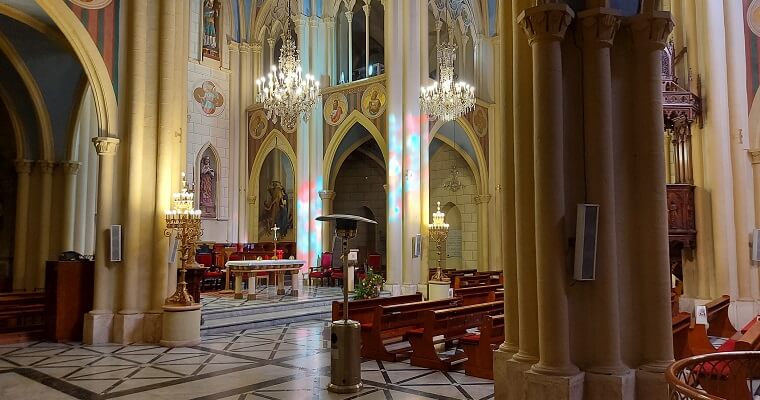
Examples of architecture with early Gothic influence can be found, as mentioned, in parts of the Crusader Church of the Holy Sepulchre. However, a more complete appearance of this architectural style in Jerusalem only appears in the 19th century with the establishment of the Latin Patriarchate (see chapter in Book 3), which was personally designed by the first Patriarch Valerga in the Neo-Gothic style.
Footnotes:
[1] Ramsay, A. M. (1737/2006). Ramsay’s Oration (translated & edited by K. L. Little). In Freemasonry Research Forum. Retrieved from https://www.freemasonryresearchforumqsa.com/ramsay.php
[2] West, K. L. (2010). Chivalry: The origins and history of the orders of knighthood. Ian Allan Publishing.
[3] Panofsky, E. (1985). Abbot Suger on the Abbey Church of St.-Denis and its art treasures (2nd ed., G. Panofsky-Soergel, Trans.). Princeton University Press. (Original work published 1946)
[4] The Council of Trent determined that a clear view of the altar should be provided for the worshipers, and that the ceremony should be heard by everyone present in the church. Thereby, it connected the altar, the Eucharist ceremony performed over it, and the choir area—with the body of the church and the congregation of believers.
[5] Conti, Flavio, From Gothic Art to Rococo: Gothic, Renaissance, Baroque and Rococo, translated by Adi Besok, Tel Aviv: Dvir, 1992.