The Order of the Golden Dawn
In the late 19th century, esoteric orders began to appear in London—groups of hundreds of people who practiced magic, energetic spiritual purification, communication with entities and guides, and more. This was a step forward in the development of Western esotericism, relying on the availability of Western esoteric knowledge, antiquities from Egypt, and advancements in research on energetic fields, communication with entities, and spiritual guides, all based on the belief in the existence of an ancient wisdom tradition [1].
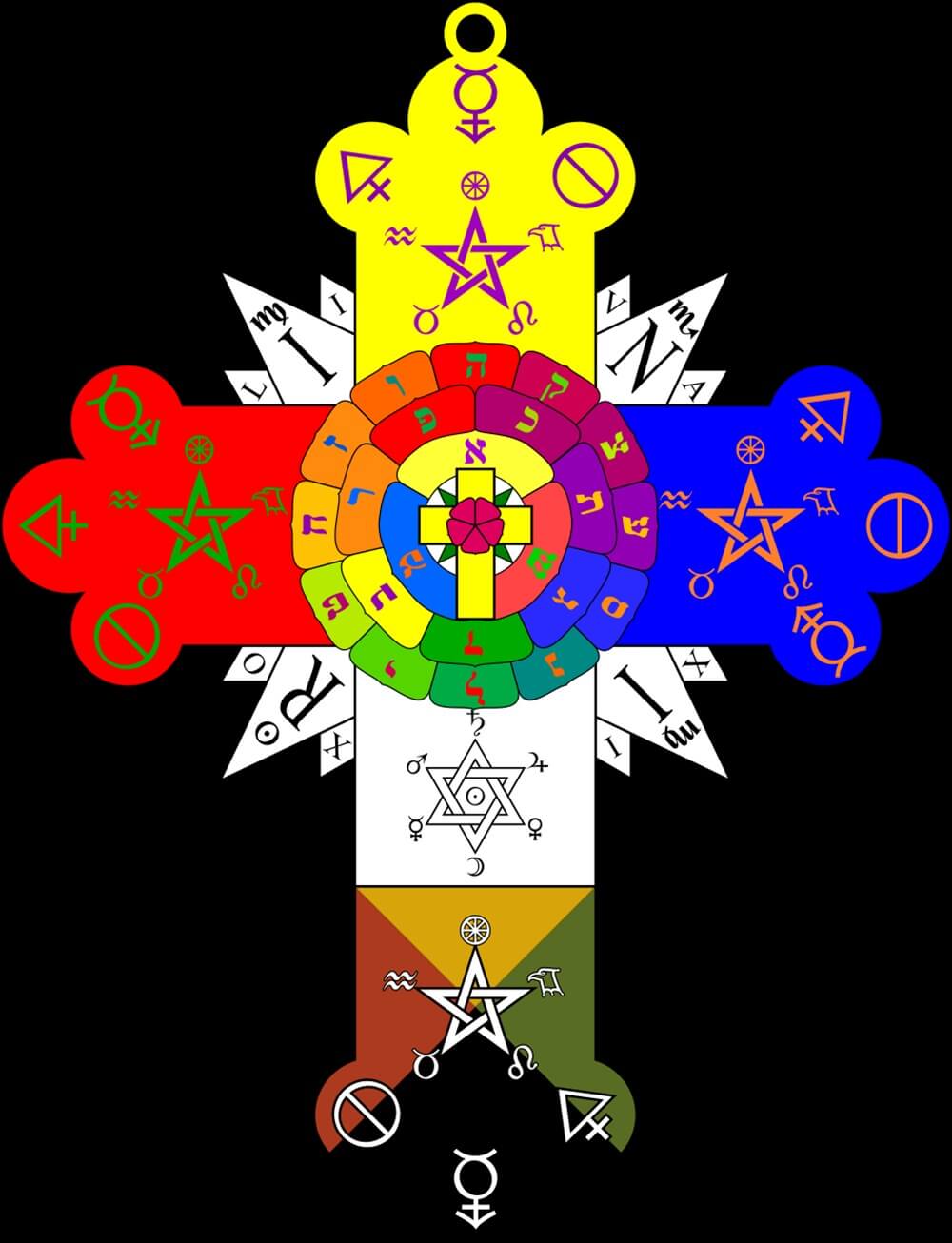
One of the important esoteric orders that emerged in this context is the Hermetic Order of the Golden Dawn. The Order began as a society of people engaged in the study of Hermeticism and was founded by members of the English branch of Theosophy in London, led by Anna Kingsford. They were dissatisfied with the eastern orientation of the movement and wanted to base the spiritual teaching on the Western esoteric tradition of Christian Kabbalah and Hermeticism. They were joined by a man named Samuel Liddell Mathers, who wrote the book Kabbala Unveiled [2] and was a member of the Freemasons, as well as William Wynn Westcott, who was connected to the Rosicrucian order, the Societas Rosicruciana in Anglia (S.R.I.A.).
When Anna Kingsford died in 1888, the two remaining leaders—Mathers and Westcott—decided to establish the Isis-Urania Temple in London and to found the new Order of the Golden Dawn, based on the spiritual wisdom of Greece and Egypt. It was somewhat similar to the Rosicrucian Order but, unlike most esoteric groups of the time, it also accepted women into its ranks.
The new Order attracted many followers of Theosophy (in response, Blavatsky founded the “Magic Houses,” closed esoteric circles). Many people joined it, including the poet W. B. Yeats. Westcott claimed that a mysterious Rosicrucian Master had written him a letter instructing him to open the new Order. However, over time, he fell out with Mathers, who claimed he had received guidance from Secret Chiefs in Paris commanding him to continue the Mysteries of Egypt, Greece, and Mesopotamia.
Mathers became the sole leader in 1897 and reorganized the Order, which was based on rituals, literature, lectures, channeling entities and energies, and a spiritual path of initiation intended to bring a person into connection with their spiritual twin—their Higher Self. The goal was the purification and strengthening of the soul, the development of inner qualities, and connection to the archetype of the Heavenly Man, all based on the sciences of Western esotericism.
The Order developed meditation techniques, performed the “Lesser Banishing Ritual of the Pentagram” to purify the aura, taught theoretical knowledge, and awarded grades (4th degree – “Philosophus,” 5th degree – “Adeptus Minor,” 6th degree – “Adeptus Major,” and 7th degree – “Hierophant” [priest, cleric], and so forth). It consisted of three circles: in the Outer Circle there was study of the esoteric sciences—magic, Tarot, Theosophy, alchemy, and so on. In the Middle Circle, there was study and practice of practical magic, work with entities, communication with spirit guides, and more.
The Inner Core of the Golden Dawn was established in 1892, and only individuals of the Fourth Degree—Philosophus—were allowed into it. The core focused on connecting with the Lords of Light—high spiritual entities—and included the use of a special chamber in which initiates underwent a transformation (similar to the tomb of Christian Rosenkreuz, founder of the Rosicrucian Order). The Inner Circle engaged in extrasensory experiences, visions, and the acquisition of immediate knowledge (Gnosis) through exposure to sacred esoteric and ancient books. They also traversed the various Sephirot, made contact with their Guardian Angel, and experienced the Higher Self, and each one found their spiritual (angelic) twin. In this way, the individual re-established their spiritual body.
The Order claimed to possess the magical knowledge of Enoch and the Egyptian tradition—astrology, Tarot, geomancy, the Tree of Life, and the synthesis between the Macrocosm and the Microcosm. The symbols of the higher learning were the Pentagram and the Hexagram (six-pointed stars, or the Star of David). There was extensive use of clothing, language, and rituals originating in Egypt. The Order had several hundred members and branches in a few places worldwide. Westcott, who had previously withdrawn from the Order, served as a bridge to the Theosophical Society. The two societies worked together, and many members belonged to both—their goals were similar, and there was a cooperation agreement between them.
Mathers died in 1918. Before his death, he had a falling out with Aleister Crowley. The latter withdrew from the Order and published some of its inner secret teachings in his Tarot deck. The Order of the Golden Dawn, in contrast, had its own system of Tarot cards, designed by A. E. Waite (the Rider–Waite Tarot Deck), who was Mathers’ successor in the leadership. The Waite cards are still the most widespread in the world today.
It is worth mentioning in this context that the first Parapsychological Society was founded in London in 1882, and from its inception, it included important and respected members such as James Joyce, Arthur Conan Doyle, Lord Balfour, and others. The Society dealt with telepathy, clairvoyance, extrasensory perception, communication with the dead, out-of-body experiences, spirits, reincarnation, psychokinesis, dowsing, and more.
American Transcendentalism
This may not be specifically related to Jerusalem, but it is important to understand the American Transcendentalist movement in the 19th century in order to grasp the American ethos and the cultural background of some of the pilgrims to the city.
The Transcendentalist movement developed in the eastern United States in the 19th century and emphasized the power of the individual, their striving for good, and their ability to transcend and reach inner insights and a sense of personal purpose, calling, and destiny, in the spirit of the Romantic movement that connects human beings to emotion. It also emphasized nature and its transcendent manifestation in the human person.
Transcendentalism is a utopian aspiration for a sublime existence; it relies on contemplation of nature, through which one can connect to a sense of purpose, reason, and existence in God [3].
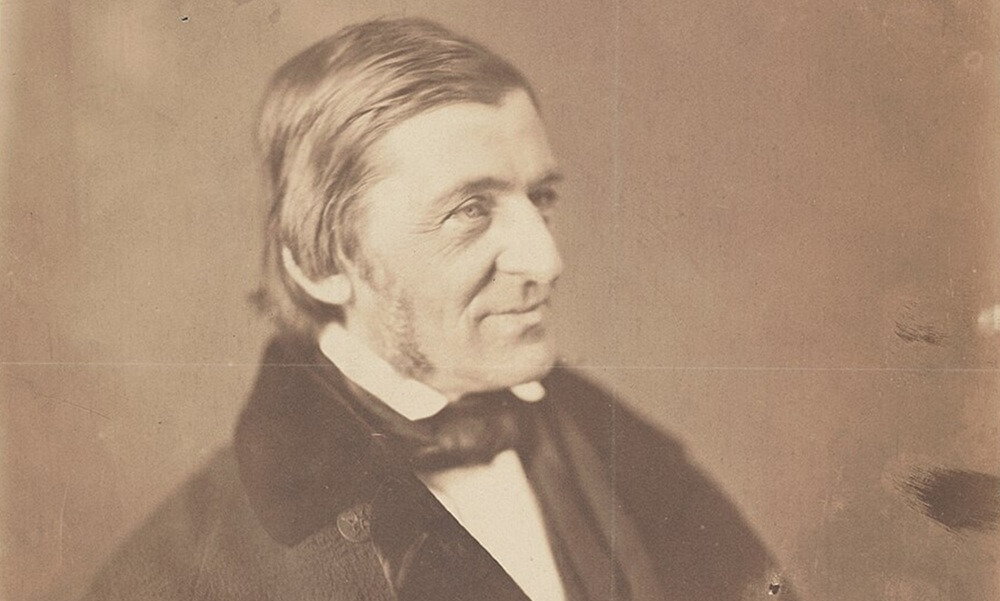
The key figure in this movement was Ralph Waldo Emerson (1803–1882), an American writer, philosopher, and poet who engaged with Neo-Platonism and Eastern doctrines, connected them to his knowledge of the world, and transcended both. Emerson was influenced by the Hermeticism and the Christianity of Swedenborg, but he added a new element of comparative religion, showing that the same truths appear in all religions. At some point, he spoke out against the Church but recognized the holiness and sublime nature of both the world (nature) and the human being. Emerson delved into the Indian scriptures, appreciating and valuing them. He saw principles such as duality appearing in all things, and argued that there is a kind of Overall-Soul shared by all humanity and nature.
The second important figure in American Transcendentalism is Henry David Thoreau (1817–1862), a poet and philosopher who advocated seeing the wonder of existence and the divine fabric in nature and simple things, setting a personal example by living modestly in a cabin in the woods [4]. To some extent, he resembles Christian monks, but without the religious context and accompanying sense of guilt.
According to Thoreau’s Transcendentalism, human beings carry a divine spark within them, and nature is an expression of the Great Spirit existing in the universe; therefore, both are connected to a higher realm that lies behind the world of phenomena. Transcendentalism seeks truth through individual personal experience and fundamentally opposes artificial frameworks imposed on human beings by virtue of being social creatures.
It was this Transcendentalism that inspired various American visionaries to come and live simple lives in Jerusalem, through which one could feel the spirit of God, somewhat like the ancient tribes of Israel. Transcendentalism also validated the religious experience as it can be felt in Jerusalem and everywhere else, allowing residents and visitors to rise above the social and political context, the filth, and the noise of the city, toward a connection with a singular spiritual dimension. This process was helped by the large natural mountain and desert areas near the city, only a half-hour walk away.
Esoteric Secular Spirituality
In the 18th century, the figure of Louis-Claude de Saint-Martin (1743–1803) stands out, upon whose thought the Martinism Order is based. He saw France as a spiritual beacon of the world and hoped for a time when divine love would manifest. He was in contact with the Comte de Saint-Germain, a wonder-worker who served as an agent of King Louis XV—a kind of “immortal man” mentioned in Anthroposophy and Theosophy—was influenced by Jacob Böhme, and emphasized inner contemplation and the Alchemy of the Heart.
The Martinism Order is a mystical interpretation of the Freemasonic doctrine begun by a man named Martinez de Pasqually (1727–1774) in the 18th century. According to him, the human being originally existed as a spiritual entity and fell from spirit into matter, but is capable of returning to this primordial state through enlightenment. Unlike Catholic Christian spirituality, Martinism relies on ancient and universal wisdom traditions. Martinists in the higher grades combat the forces of evil in the world with the help of magic. Martinez’s successor was Louis-Claude de Saint-Martin.
The age of Enlightened Absolutism met its violent end in the French Revolution, but even afterward, several larger-than-life figures appeared in the esoteric secular spirituality circles of the 19th century. The first is Antoine Fabre d’Olivet (1767–1825), an Orientalist and Romantic, a friend of Lord Byron, who explored the true meaning of the Hebrew language, music, and Pythagorean doctrine; translated the Golden Verses; pointed to a connection between hieroglyphs and Hebrew; engaged in healing; and led a renewed wave of interest in occultism and esotericism.
The most famous figure is Éliphas Lévi (1810–1875), the pen name of the French theorist of magic and occultism Alphonse Louis Constant, who initiated the renewed esoteric interest in the Tarot and connected it to Kabbalistic motifs and the Hebrew language. He wrote books on magic and the spiritual path [5], distinguished between white and black magic, and developed concepts such as “Astral Light”—an energy inherent in all things.
Another highly important name is Allan Kardec (1804–1869). He was an educator drawn to the supernatural and founded the Spiritism movement—communication with spirits—in 1857. Kardec participated in the séances that were common in the salons of Europe and the United States; his systematic presentation of the subject [6] led to widespread belief in mediums and reincarnation and had an enormous influence.
Antoine Fabre d’Olivet influenced Alexandre Saint-Yves d’Alveydre (1842–1909), who claimed the existence of a secret underground kingdom called Agartha at the center of the Earth (similar to the Shambhala of Tibetan Buddhism). He developed the term “Synarchy”—a harmonious order and the interconnection of all things—as well as the ideal of a tripartite rule by a spiritual, scientific, and political elite.
Along with him appears Gérard Encausse (1865–1916), known by the pseudonym Papus, who founded the Martinism Order, whose symbol is the Star of David [7]. He studied Kabbalah, was influenced by Éliphas Lévi, and was a member of the Golden Dawn and of the Theosophical Society. He studied medicine, was a physician, and served as a spiritual advisor to the last Tsars.
Éliphas Lévi
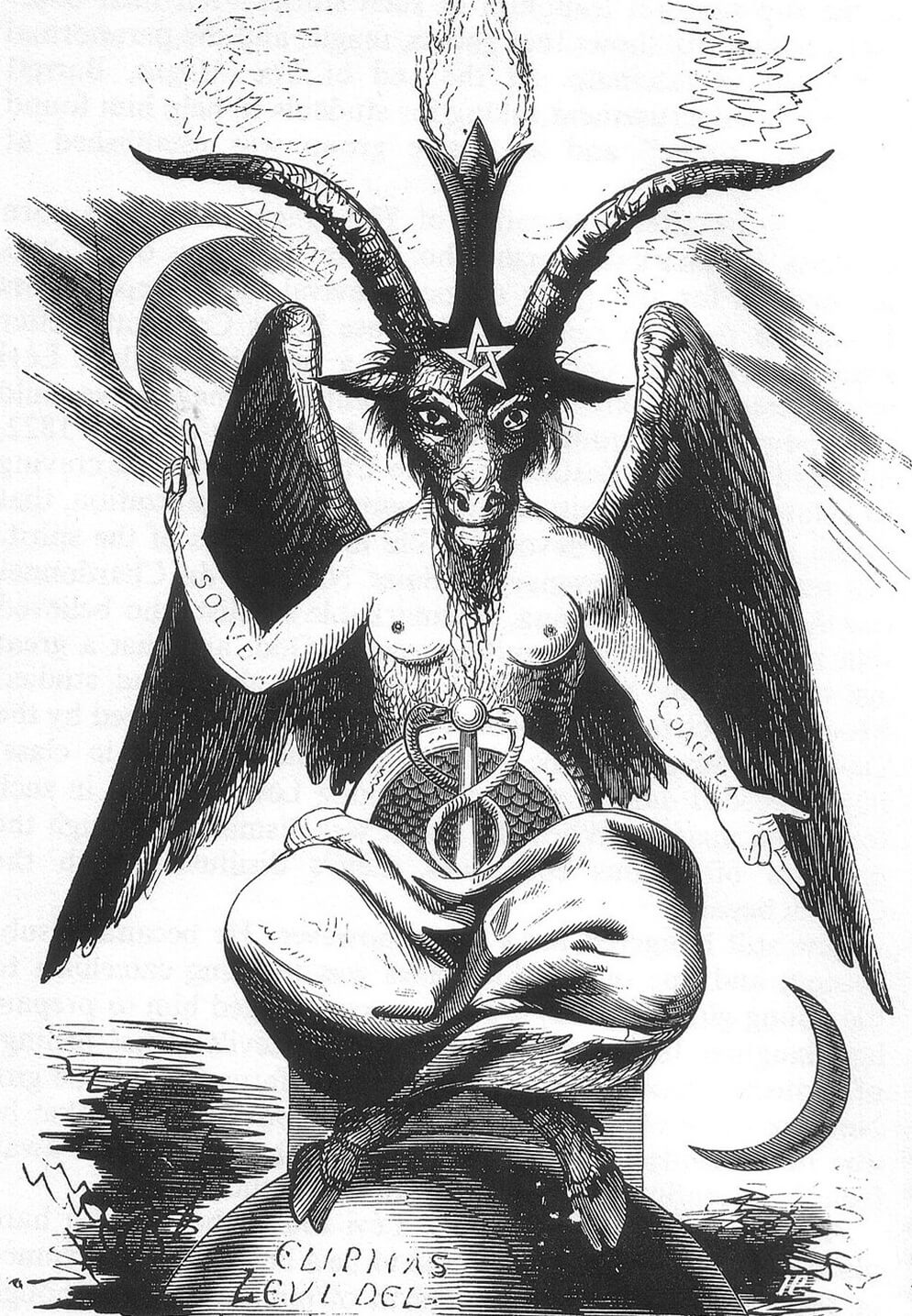
Éliphas Lévi (1810–1875) is considered the father of French occultism, a movement that became popular at the end of the 19th century. The important French spiritual-esoteric orders at the time were the Martinism Order, the Rosicrucian orders, certain Masonic orders with an emphasis on Egypt, Theosophy, and branches of the Golden Dawn. The first was headed by a man called Papus, and the Rosicrucian orders by others.
Éliphas Lévi wrote the influential book The Doctrine and Ritual of High Magic [8] in 1854, which began a new era. He revived the concept of the “Astral Light,” an energetic medium—like an Aether—that exists in everything. However, according to Éliphas Lévi, this is a kind of world of energetic fields existing in the lower levels of the Earth’s energy field. Although they reflect cosmic archetypes—the energies of the universe—they are also influenced by everything that has happened and is happening here, especially human emotions and thoughts. Everything is imprinted in the Astral Light fields, and conversely, everything that will happen first has an appearance—a template—in the Astral Light.
And this is precisely where magic enters. The most important tools of magic are thought and will. Thought, insofar as it is accompanied by strong will and mental power, can imprint forms in the Astral Light that will eventually come to manifestation. Hence the saying, “Thought creates.” The process can be strengthened by magical means.
Furthermore, the Astral Light is currently polluted, which explains the state of the world. However, it can be cleansed by magical means and through certain types of thoughts and emotions. This also explains what Jesus accomplished in the Mysteries of Golgotha. The Astral Light likewise explains Paul’s ascent to the fourth heaven in a vision, as well as many other phenomena—such as the visions of certain individuals, like Baba Vanga, who perceive these worlds. Since the templates of the future also exist within it, one can look into the Astral Light and know future events. But, as stated, magic can change them.
If there is an energetic medium in which the thoughts and emotions of human beings are recorded, and where the remnants of everything that ever was continue to exist, then in Jerusalem the Astral Light is especially strong, given the city’s history. This is also the place where it can undergo cleansing and correction through magical means. And this perhaps explains the sacrifice of Jesus specifically in this place—He had to cleanse the Astral Light of the old path in order to make possible the emergence of the new spiritual path.
Papus and Peladan
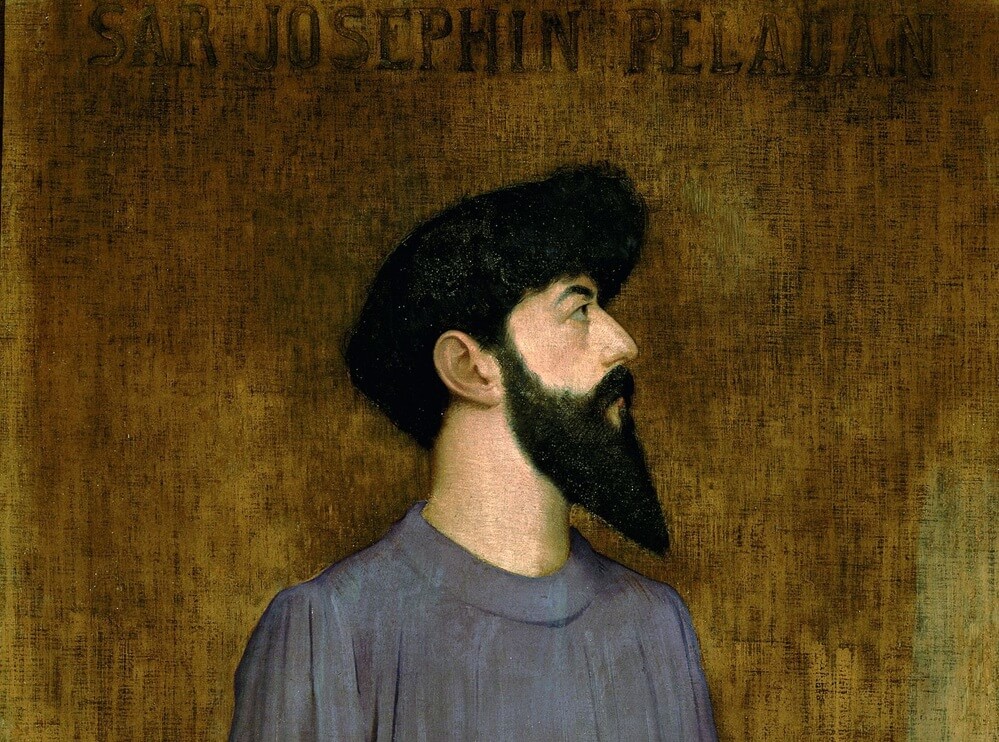
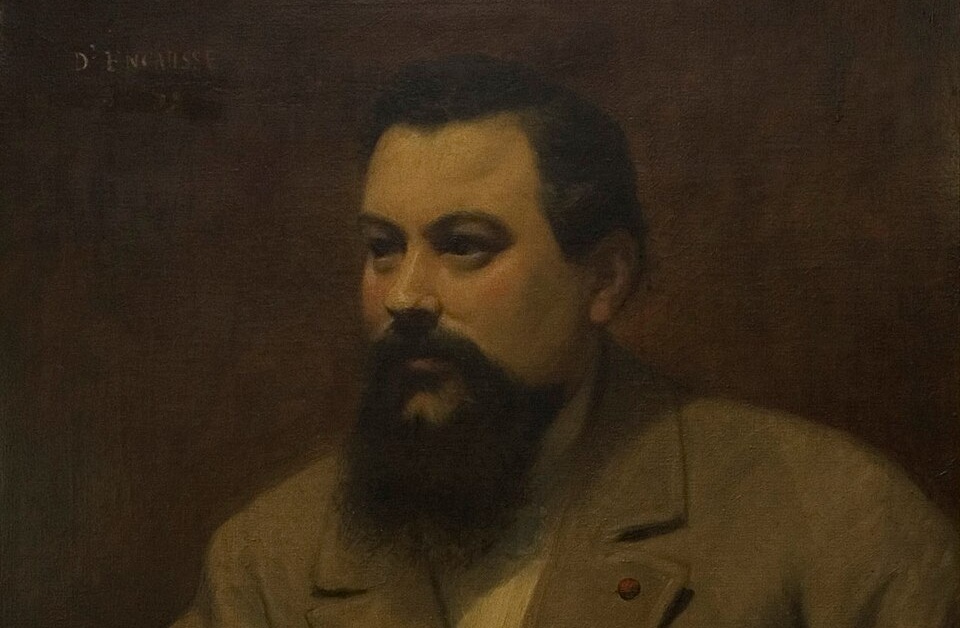
In 1887 in Paris, Joséphin Péladan, Stanislas de Guaita, and a doctor who had come from Spain to France named Gérard Encausse (1865–1916)—later known as Papus—met. Each of them had been independently engaged in the esoteric field, but they discovered that the source of their knowledge was the same: the Martinist doctrine of Saint-Martin, who had lived a century earlier and whose teachings had reached them through various intermediaries. They decided to unite the different streams and renew the French Kabbalistic Order of the Rose-Cross, which continued the traditions of Saint-Martin as well as those of the Rosicrucians and the Freemasons.
Later, their paths diverged. Gérard Encausse—Papus—founded the Martinism Order in 1891. He possessed the original writings of Saint-Martin and Martinez de Pasqually. He was also involved with other esoteric societies related to the Cathar Gnostic revival, the Golden Dawn, and the Freemasons. He engaged in extensive literary activity, writing many books [9] and publishing a magazine, and he specialized in healing—both energetic and physical. Papus was a charismatic person with extrasensory abilities, including healing, who also influenced the Tsarist family in Russia.
Joséphin Péladan (1858–1918) pursued his own path and founded the Order of the Temple of the Rose-Cross in 1890. Péladan was a renowned writer, mystic, thinker, and art critic who sought to promote the idea of Symbolist Art by organizing exhibitions and writing. According to his view, art should also contain spiritual messages that awaken the individual. The true artist is a spiritual teacher and prophet. He wrote many books [10] and identified himself with the Babylonian god Marduk—that is, as a Babylonian magus who brings ancient wisdom.
In 1898, Péladan received a call to undertake a pilgrimage to Jerusalem, where he underwent significant spiritual experiences [11]. First, he believed he discovered the true tomb of Jesus on the Temple Mount—something that led to a confrontation with the Franciscans. But more importantly, he passed the Test of the Four Elements: Water (thirst), Fire (burning), Earth (dryness), and Air (storm)—and succeeded. The Great Sphinx of Giza appeared before him and revealed that the era of self-glory had passed. From that moment on, Péladan, who had been arrogant and outgoing, became a humble man until the end of his life.
Péladan’s arrival in Jerusalem and the experiences he underwent can be understood through his belief in the existence of the Astral Light. Péladan was a student of Éliphas Lévi and a continuator of the ancient Hermetic and Rosicrucian tradition. He believed in the existence of energetic worlds that must be purified by magical means. He presented himself as a Babylonian magus.
According to this worldview, the way to purify the Astral Light of the Earth is through the Four Elements—which are the principles of creation and exist first in a spiritual state. The thirst, dryness, burning, and storm he endured also characterize the experiences of mystics who ascend through the heavens; they, too, confront the harsh consequences of human history imprinted in the Astral Light. Jerusalem is the place where this severe legacy must be faced.
Additionally, there is an energetic connection between Jerusalem and the Great Pyramid in Egypt—where the Sphinx is located. The Foundation Rock in Jerusalem lies more or less on the sunrise line of the shortest day of the year, running from the Pyramid toward the northeast. According to various esoteric traditions (including that of the Druze), beneath the Sphinx there is a hall containing books, scrolls, and tablets with all of human history that has occurred and will occur—a kind of Akashic Library.
Napoleon’s arrival in Egypt and the French research into the great Egyptian culture, including Napoleon’s entry into the Great Pyramid, opened a new possibility in the spiritual history of the world. There was significance in the fact that it was the French who first uncovered ancient Egypt, and that this occurred precisely after the French Revolution, which symbolized a new stage in the cultural and social development of the world. Furthermore, the French led the research of Mesopotamia and the East. It was also an important French researcher working in Jerusalem who discovered the treasures of ancient Assyria and Babylon (see chapter on secular French spirituality – Émile Botta).
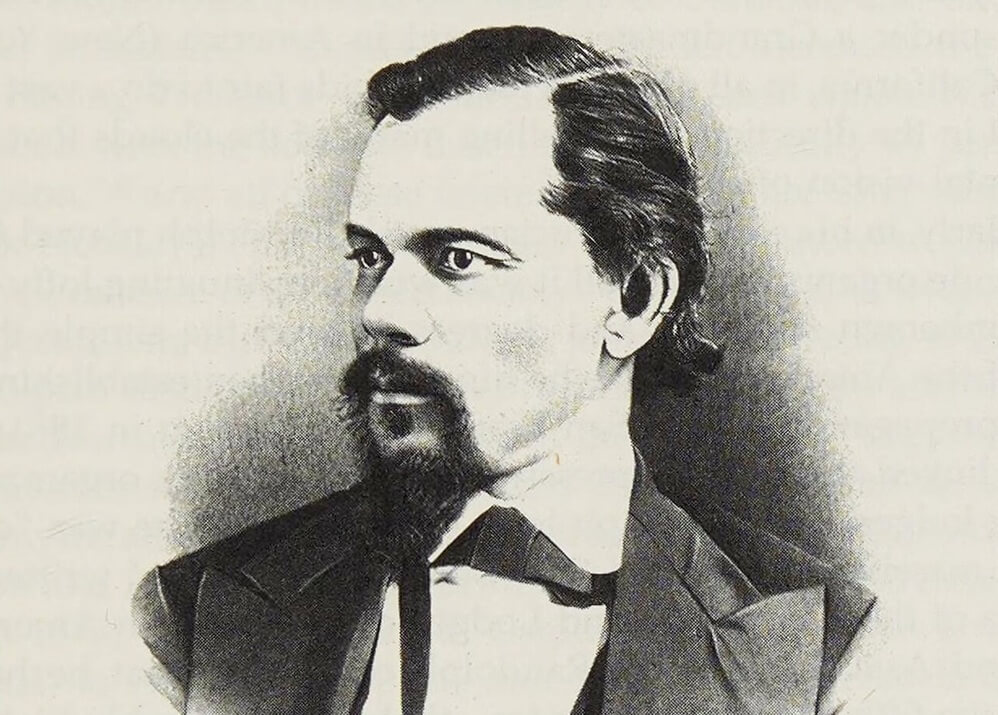
In 1857, an adventurer and mystic from New York named Paschal Beverly Randolph (1825–1875) arrived in Jerusalem. At 32, he had already traveled all over the world, studied occultism and ancient doctrines in Persia, and met spiritual teachers in France and England. He was versed in magic, alchemy, and other esoteric doctrines, and especially in sexual magic. He engaged in channeling—mediumship and healing—and also studied conventional medicine. Before coming to Jerusalem, Paschal met Éliphas Lévi in Paris (1854), who introduced him to the teachings of the Rosicrucian Order, Kabbalah, and alchemy.
While in Jerusalem, he met a group of Sufis and learned from them the secrets of spiritual alchemy and occultism. However, an encounter no less significant occurred while he was traveling around Jerusalem: he met a mysterious dark maiden of Arab descent (he himself was also of Black descent), who revealed to him the spiritual secrets of erotic love, through which he developed his doctrines of Sex Magic [12].
It is interesting to note that Randolph and the mysterious dark maiden had their encounter in the Artas area, where a monastery was later established marking the location of the “Locked Garden” in the Song of Songs—a meeting place for lovers. In the Song of Songs, the beloved is “black and beautiful,” and union with her is also a spiritual union. Even more astonishing is that not far from there, in Nahal Tekoa, the world’s earliest known erotic sculpture was discovered, dating back 15,000 years—from the Natufian culture.
When Randolph returned to the United States, he established the first American branch of the Rosicrucian Order in Los Angeles (1858). In addition, he started the Sexual Magic movement. According to his belief, magical sex brings health, love, the empowerment of women, and children of a high spiritual level. He wrote several books [13] on esoteric topics that influenced the founding of the “Hermetic Brotherhood of Luxor” by Max Théon (see below) and the establishment of the Ordo Templi Orientis (O.T.O.) in Vienna (see chapter on Viennese Spirituality).
Helena Blavatsky and Theosophy
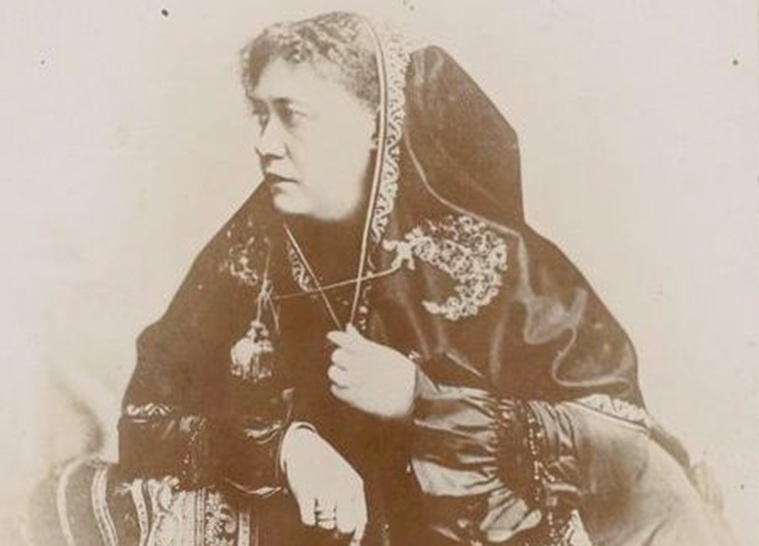
Helena Blavatsky (1831–1891) was born into a Russian noble family and was exposed from a young age to the treasures of world culture and literature. Her family was very wealthy, and Blavatsky could dedicate her time to study. The topics that interested her were related to mysticism, the occult, and the existence of an ancient body of wisdom concerning the human being and the world. From a young age, she had extrasensory abilities and a connection with spirit guides. Miracles were commonplace. She felt as if an angel was watching over her and guiding her steps.
From the age of 17, Helena Blavatsky began spending long periods traveling around the world—to remote places such as Central Asia, India, South America, and more—in search of ancient wisdom. On her journeys, she encountered different systems of thought and knowledge and met with a variety of spiritual teachers. According to her, she established contact with the Hidden Masters of the world, located beyond the Himalayas. She met some of them in Europe, and from them she learned the ancient wisdom that had once existed in the world and received her mission—to refound the schools of the mysteries and ancient knowledge in her own time.
In 1872, she arrived in Egypt and met the Masters Hilarion and Serapis. From there, she continued through Israel, Syria, and Lebanon to Istanbul, where she stayed for some time. In Jerusalem, she apparently met a rabbi named Jacob Saul Elyashar, who was one of the community leaders, a Torah prodigy, and probably also a hidden expert in Kabbalah (see chapter on Kabbalah in the Jewish Quarter). This was a period in her life when she was interested in Kabbalah, as well as in the Druze religion.
In 1873, Blavatsky arrived in America at the age of 42, with the aim of fulfilling the mission assigned to her—the renewal of the mystery schools and the revelation of the spiritual wisdom traditions of the ancient world. She gave lectures, wrote articles, and along the way met Henry Steel Olcott, who became her partner in founding, leading, and developing the Theosophical Society, established in 1875.
Blavatsky wrote two main books. The first is Isis Unveiled, which tells the story of an initiate in the Temple of Isis in Egypt who sneaks into the temple at night to remove the veil from the statue of the goddess and unlock the mystery, and to his surprise discovers that the face in the statue is his own. The book summarizes the esoteric mysteries of the Western world: those of Egypt, Greece, Rome, and Atlantis. According to the Theosophical Movement, it was written with the help of celestial inspiration. Blavatsky quotes sources she had access to only in an extrasensory manner; she claims to receive guidance in writing the book from the Masters, who appeared as entities.
During the writing, Blavatsky felt the presence of another being with her—something passing through her—a kind of maggid (celestial mentor) like those described in Kabbalistic literature. This presence knew additional languages, such as German, and it was he who helped her complete the book in 1879.
The next chapter of Blavatsky’s life took place in the East. She traveled to India in 1879 and remained there until 1885, initially in Bombay and later near Madras, in Adyar, where the global center of Theosophy—still active today—was established. The purpose of the move to India was to deepen acquaintance with the traditions of the East and to create a bridge between the religions of the East and the West.
The Theosophical motto, “There is no Religion Higher than Truth,” suggests that truth exists in all religions—one and the same truth—which can be reached by peeling away the external shells. However, the Theosophical view in those years was that it was easier to find this truth in the religions of the East, especially Buddhism.
The Theosophists played an important role in colonial Ceylon and India. They supported and fostered the local religions, acting as a counterweight to missionary activity. Education at the end of the 19th century in India was tied to Christianity, which created a sense of inferiority among the Buddhist and Hindu elites—until Europeans appeared who knelt before the Buddha, admired Yoga and Hinduism, translated the sacred texts into a language understandable to all, and established an educational system that nurtured national religious pride. Thus, many of the reformers of Indian religion and leaders of the liberation movement were educated in Theosophical institutions in Ceylon and South India and were influenced by their doctrine, including—indirectly—Gandhi and Nehru.
During and after her stay in India, Blavatsky’s second important book, The Secret Doctrine, was written, in which she expands and explains topics raised in the first book. It leans toward Eastern esoteric traditions. In addition to these two monumental works, she wrote several shorter books, including The Key to Theosophy and The Voice of the Silence. The latter was intended for a closed circle of initiates that formed around her in her final years in London, and it contains meditations and prayers for inner work.
According to Blavatsky’s early writings, hidden knowledge existed in the West and appeared through societies such as the Rosicrucians. There were spiritual teachers—Masters hidden in places like Greece, Egypt, and the West—who were in contact with the Hidden Masters of Central Asia (the Teachers of Humanity). The ancient wisdom existed primarily in Egypt, which she viewed as the source of human spirituality. Some well-known figures in history were in contact with the spiritual tradition and hidden masters, including Pico della Mirandola, Ramon Llull, Henry More, and others.
In summary, there are four basic ideas of Theosophy: the fundamental unity of the entire universe; the idea that no matter is dead; the idea that the human being is a microcosm; and the great Hermetic axiom, which summarizes all the others: “As within, so without; as the great, so the small; as in the heavens, so on earth.” There is only one life-spirit and one law.
Gurdjieff in Jerusalem
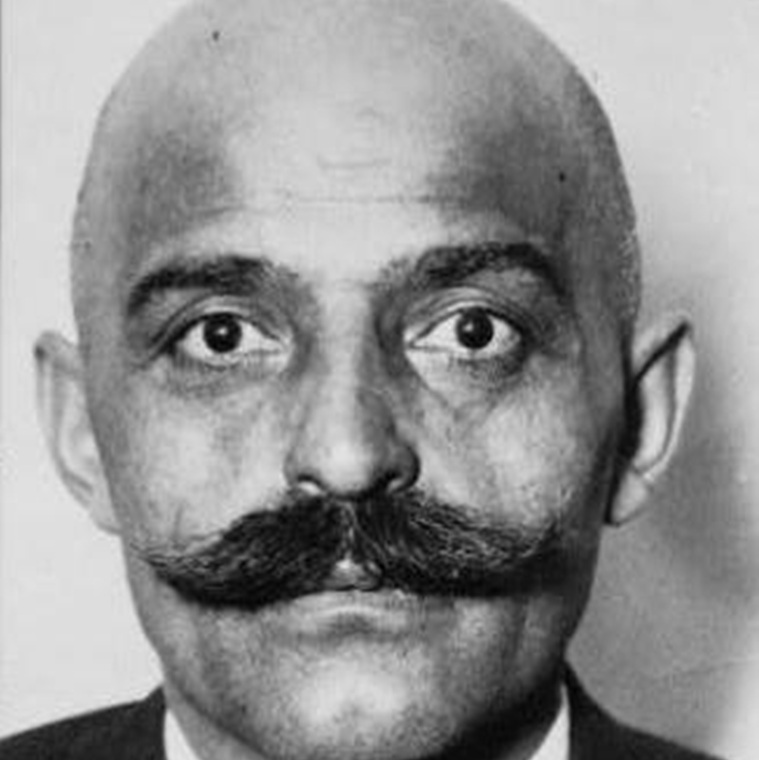
George Ivanovitch Gurdjieff (1872–1949) was born to a Greek Orthodox father and an Armenian mother in Gyumri, northern Armenia. As a child, he experienced the twilight of the rich traditional societies of the Caucasus (Armenians, Orthodox Christians, Yazidis, Sufi dervishes, Russians, Ottoman Muslims), which preserved some of the ancient wisdom teachings—at times through folklore traditions. Gurdjieff was exposed to mysteries and to a variety of spiritual traditions in the Kars region, where he grew up. When he matured, he set out in search of the source of knowledge about human life.
And so, Gurdjieff disappeared for about twenty years—from the time he matured (1892) until he appeared in Moscow in 1912. During these years, according to his accounts, he was part of a group that searched for the truth all over the world. He reached Egypt, where he met Dervishes and learned about the history of Egypt before recorded history—an advanced culture that possessed spiritual knowledge about the essence of the human being. He searched for antiquities and lost cultures in Iraq (Mesopotamia). According to some sources (Dr. George Hintlian from the Armenian Patriarchate in Jerusalem), he stayed in Jerusalem for two years and slept in the Indian Hostel near the Flower Gate.
According to the book In Search of the Miraculous, which recounts his adventures, during Gurdjieff’s stay in Jerusalem he met his Russian friend Lubovedsky, whom he had met earlier in Cairo. Lubovedsky informed him that he had joined the Essenes Brotherhood, which continues to exist in a monastery in the Judean Desert. If such a monastery exists, it is most likely the Mar Saba Monastery.
One of the close students who illuminated Gurdjieff’s teaching is Ouspensky, who later continued the doctrine and teaching independently. In one of his books he explains:
“There are many excellent books on the doctrine of the soul found in the religious literature of different countries and different periods. For example, in early Christianity, there is a collection of books by various authors, under the collective name Philokalia, which is used in our time in the Eastern Church, especially for the purpose of giving instruction to monks.”
Mar Saba Monastery had an ancient library containing some of the original Philokalia manuscripts, and therefore it is plausible that Lubovedsky stayed there.
Gurdjieff claimed that there was a spiritual school in Sumer that existed until the 6th century BCE and was called Sarmoung, or by another name, “Merkabah.” It was active at the time the Great Pyramid was built in Egypt, continued through the days of Hammurabi, and later moved to Central Asia, where it still exists in a hidden place. The wisdom of Zoroaster came from this school, and Pythagoras also studied there. The sages of the school are a kind of hidden spiritual teachers of humanity, capable of accumulating a form of spiritual energy and releasing it into the world whenever humanity needs it.
In his further travels around the world, he reached Bukhara, and there—guided by a Sheikh named Boga-ed-din (whom he had also met in Cairo)—he found the way to the monastery of that school, which still exists to this day in a hidden place in the mountains. He was accepted as a student and later taught the doctrine he received there in Paris and elsewhere.
Teachers from the Gurdjieff school established in Paris came to Israel, including Jerusalem, and acquired many students in the second half of the 20th century (see chapters on Yosef Safra and Shmuel Nelkin).
Footnotes:
[1] Faivre, A. (2010). Western esotericism: A concise history (C. Rhone, Trans.). Albany, NY: State University of New York Press. (Original work published 1992)
[2] Mathers, S. L. MacGregor. (1887/1938). The Kabbalah Unveiled: Kabbala Denudata (5th ed.). Routledge & Kegan Paul Ltd.
[3] Emerson, R. W. (1836/2009). Nature and selected essays. New York: Penguin Classics.
[4] Thoreau, H. D. (1854/2004). Walden; or, Life in the Woods. New Haven, CT: Yale University Press.
[5] Lévi, É. (1856/1896). Transcendental magic: Its doctrine and ritual (A. E. Waite, Trans.). London: George Redway. (Original work published 1856 as Dogme et rituel de la haute magie)
[6] Kardec, A. (1857/2006). The spirits’ book (A. Blackwell, Trans.). New York: Cosimo Classics. (Original work published 1857 as Le livre des esprits)
[7] https://www.ordre-martiniste.org/?utm_source=chatgpt.com
[8] Lévi, É. (1856/1896). Transcendental magic: Its doctrine and ritual (A. E. Waite, Trans.). London: George Redway. (Original work published 1856 as Dogme et rituel de la haute magie)
[9] Papus. (2002). Occult Science: The Science of the Magi (R. Ansell, Trans.). Ibis Press. (Original work published 1891)
[10] Péladan, J. (1891). L’Ordre de la Rose-Croix Catholique et Esthétique du Temple et du Graal. Paris: Librairie de l’Art Indépendant.
[11] Brach, J.-P. (1993). La Rose-Croix catholique. Politica Hermetica, 7, 31–41.
[12] Partridge, C. H. (Ed.). (2015). The occult world. New York, NY: Routledge. p. 231.
[13] Randolph, P. B. (1874). Eulis! The history of love: A book for the heart. Boston: Randolph Publishing Co. (Reprinted by Kessinger Publishing, 2003).