The Coptic Church
The Apostle Mark, in whose house the Syrian Church is located, was one of Jesus’s 70 disciples and a key figure in the Jerusalem of the early Christians. The Last Supper took place in his mother’s house, and he was the one who walked with the water jar on his head in the market. After the resurrection, he went with Peter on journeys around the world to spread the gospel. In this context, and after Peter was crucified in Rome, he arrived in Alexandria and looked for people to whom he could pass on the gospel. Meanwhile, he went to have his sandals repaired by a cobbler named Anianus. During the repair, the cobbler injured his finger and cried out in pain, “God is one.” Mark realized he had found the right person. He healed the cobbler’s wound, and when the cobbler asked him where his healing power came from, Mark told him about Jesus and his gospel. The cobbler became a Christian and later the first bishop of the Coptic Church, as did all his household. While in Alexandria—or possibly before—Mark wrote one of the four gospels, which is considered the earliest.
According to the story[1], one can learn that the first converts to Christianity were probably from the community of Greek Jews who lived in Alexandria. Mark’s activity in Alexandria and the establishment of the church and community there greatly angered the pagans. Thus, during the festival of Serapis, which coincided exactly with Easter, a large crowd entered the church, seized Mark, and dragged him through the streets of Alexandria. At night, after being thrown into prison bleeding, there was a great earthquake, and an angel appeared before him and said: “O Mark, servant of God, the first among the saints in Egypt, behold, your name is written in the book of eternal life and you are counted among the holy apostles. Your memory will not be forgotten forever..” After that, Jesus appeared before Mark, but what happened between them is not told.
In the morning, the incited mob took Mark out and dragged him through the city until he died. When they tried to burn his body, Jesus sent a great storm that dispersed the mob, and the believers were able to take the body and bury him in the Cathedral of Saint Mark in Alexandria.
The name Copt comes from the word Aigyptos – Egypt. The Copts were native Egyptians who converted to Christianity and preserved the hieroglyphic language—and some say the wisdom of ancient Egypt—from which their name is derived. Today, they number about 18 million worldwide, most of them in Egypt. In an interesting book called Christianity in the Land of the Pharaohs[2], the author, Jill Kamil, asks how it is possible that such a religious country, with such an ancient tradition and such a deep belief in life after death, a country like Egypt, would embrace the Christian story and convert relatively quickly. The answer she gives is that the Christian story resembles the story of the Egyptian god Osiris, that images of Mary holding Jesus resemble the images of Isis and Horus, and that the presence of Mary and the Holy Family in Egypt amplified the Christian story and made it a local story that was easy to identify with.
The Copts continue the tradition of Gnostic mysticism that found a home in Egypt in the 2nd–3rd centuries CE. Their important theologian is Clement of Alexandria (150–215), who was the tenth patriarch. There is a letter from Clement of Alexandria, whose authenticity is disputed by scholars, about a secret gospel written by Mark while in Alexandria. According to the letter, there is an esoteric level of Christianity that allows for direct knowledge of God, which Mark taught, and it is available only to the chosen: “But when Peter died as a martyr, Mark came to Alexandria, bringing with him his notes and those of Peter, from which he transferred into another of his books the things that are suitable for everything that contributes to progress toward knowledge (gnosis). And so he composed a more spiritual gospel for the use of those who had already become perfect. Nevertheless, he did not yet open the things that cannot be expressed, nor did he write the lessons of the initiation of the Lord. But to the stories that were already written, he added others, and more than that, he brought a number of sayings that he knew that their translation, by the mystic, would lead the hearers into the innermost dwelling of the truth hidden by seven veils.”[3]
Clement wrote several books that connected Greek philosophy with Christianity. He claimed that Plato and Pythagoras received their knowledge from ancient Egypt and that they prepared the way, in their thought, for the coming of Jesus. He had many students, the most important of whom was Origen, on whom the Cappadocian Fathers relied (Gregory of Nazianzus, Gregory of Nyssa, and John Chrysostom). He had an important influence on Coptic and Ethiopian Christianity[4].
Clement interprets the New Testament and argues that one cannot understand things literally. He speaks of the mirror of the heart that needs to be cleansed and of the possibility of reaching gnosis—a direct knowledge of God. He believed in a cosmic cycle, the eternity of thought, and the soul. In other words, Clement tried to create a kind of Christian Gnosticism and stretched the boundaries of Christian thought.
The soul can become a temple of the Holy Spirit, a divine figure. What is important to it is mental prayer (without sound). Clement argues that prayer can be sent to God only if the person praying puts all their spiritual effort into it, according to the inner voice of thoughts and with an undisturbed approach to God. Prayer, he says, is a relationship and communication with God, and even though we turn to Him without opening our lips, in silence our cry will reach Him from the innermost depths of the heart. While we think about God, He will be near us and within us.
In relation to the possibility of enlightenment, he writes: “There is a kind of divine emanation that is poured into all people without exception, but it especially enters those who spend their time in meditation. For this reason, they admit, even against their will, that God is one, uncreated and existing forever, and that He truly exists somewhere above for all eternity. The sun cannot reveal the true God to us either. Reason, or the life-giving Word, who is the sun of the soul, alone is able to do this. Through Him, and only through Him, when His rays shine on the most secret places of thought, the eye of the soul is enlightened.”
The Egyptian Church and its Patriarch of Alexandria were a counterweight to Constantinople, led by great figures such as Athanasius in the 4th century CE. Egypt is the birthplace of the monastic movement, which began with Antony the Great, a hermit monk who attained enlightenment in the deserts of Egypt and whose fame spread far and wide. After him, a movement of communal monasteries was founded by Pachomius. Throughout all periods, and especially in the early ones, there were close relations and deep mutual influence between Egyptian Christianity and monasticism and those of Israel.
In the 5th century, the Egyptian Church separated from the Byzantine Church following the Monophysite dispute and the decisions of the Council of Chalcedon. The local clergy began to create a national church that incorporated ancient Egyptian elements, such as the language, into its worship. A unique component of Coptic Christianity is the belief that the Holy Family spent several years in Egypt, and therefore there is great reverence for the worship of Mary. The Copts report various apparitions of her even in modern times to comfort and encourage the believers. In the 1950s, Mary appeared in the Coptic compound in Jerusalem and in the Church of St. Antony, where hundreds of people saw her.
With the conquest of Egypt by the Muslims, the independence and uniqueness of Coptic Christianity, now separate from the wider Christian world, were sharpened and developed. The Coptic Church extended its patronage to the Ethiopian Church, which remained religiously subject to it until the mid-20th century. The rule of Egyptian Muslim kingdoms over the Land of Israel, such as the Fatimids (9th–11th centuries) and the Mamluks (12th–16th centuries), strengthened the position of the Copts in Jerusalem. In 1236, the first Coptic bishop, Basilios I, was installed there, and the line has continued unbroken ever since.
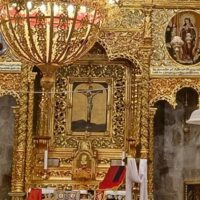
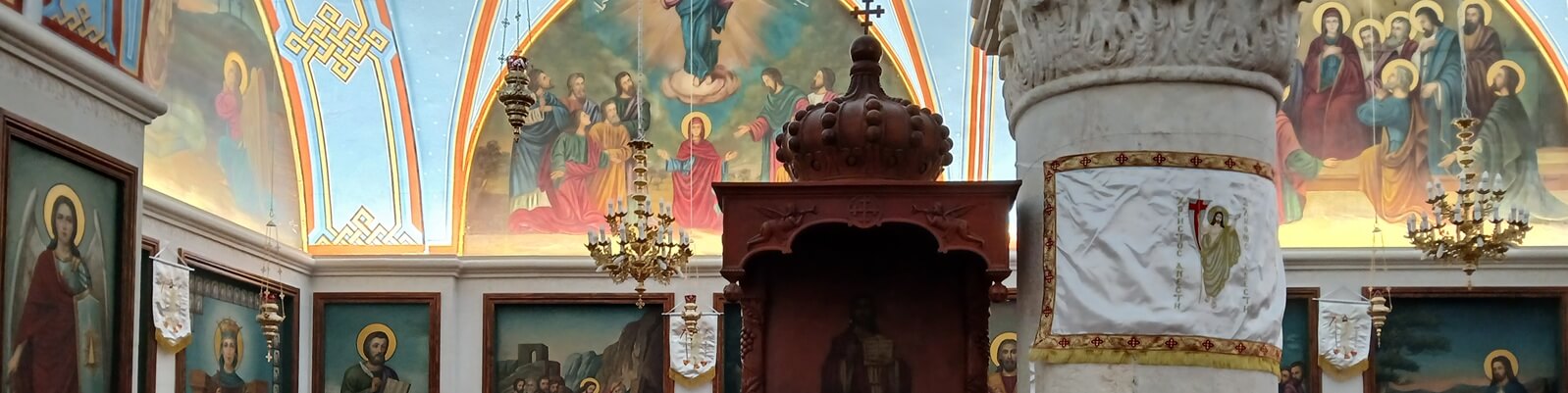
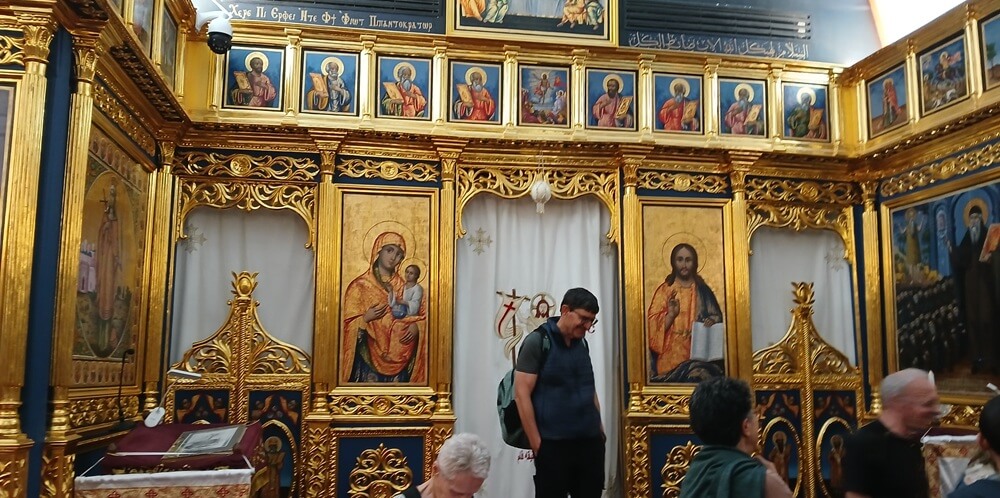
The Coptic Church has a large center in Jerusalem above the Church of the Holy Sepulchre, which includes a monastery, a school, residences, two churches, and a courtyard, with the large church named after Saint Antony. Like many courtyards in Jerusalem, this is a world in itself. In addition, they have a chapel behind the Aedicula in the Church of the Holy Sepulchre, where a monk is constantly present in prayer, as well as several other compounds in both the Old and New City. In the area of Hezekiah’s Pool, there is a large Coptic compound with a hostel, a church, and a school.
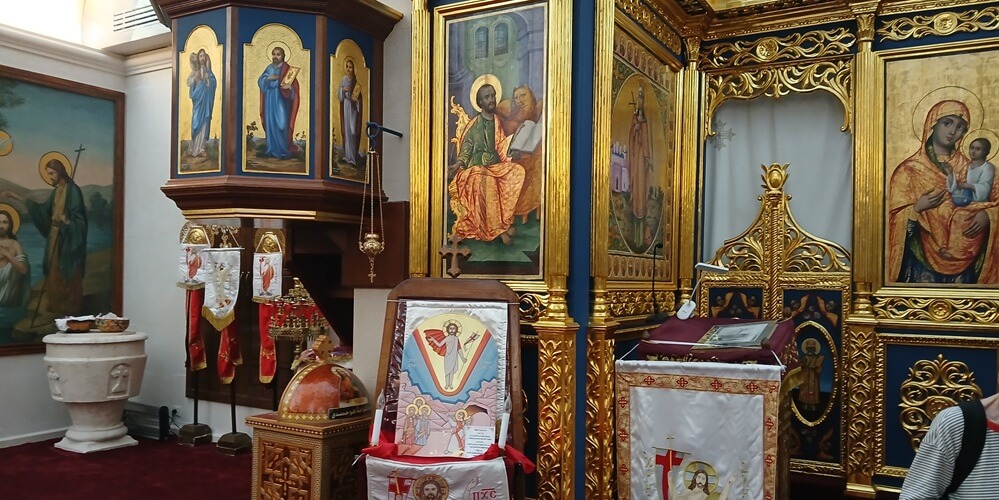
Coptic Church Jerusalem
Antony the Great and Egyptian Monasticism
We draw our knowledge of Antony the Great from the book by Athanasius, Patriarch of Alexandria in the 4th century[5]. He made Antony a model to follow, just as Pope Gregory the Great made Benedict a model. Athanasius was the one who finalized the New Testament and one of those who shaped the Orthodox conception of the Trinity and the relationship between the human and divine natures of Jesus. In addition, he was entrusted with the tradition of Greek philosophy and Christian spirituality as expressed in the writings of Origen, Clement, and others. The Christian way is not only faith but also a progression up the stages of a spiritual ladder, an effort that leads to enlightenment. His saying was: “God appeared in man in order to show man the way to become God.” From this, the concept of theosis, the transformation of man into God, developed. Antony was, for Athanasius, the example of such a man.
Antony was born in 251 CE in the Nile Delta of Egypt. His parents were wealthy landowners. At the age of eighteen, he inherited their fortune, and then he read the verse in the New Testament where Jesus answers a man who asks Him what to do to be a believer. Jesus says: all he has to do is fulfill the commandments of the Torah. The man asks: but what beyond that? And Jesus says: “If you want to be perfect, go, sell your possessions and give to the poor, and you will have treasure in heaven. Then come, follow Me.” (Matthew 19:21)
Antony understood this as an instruction to leave everything and go into seclusion with Jesus in the wilderness. He sold the estate, gave the money to the poor, and went into seclusion with Jesus in the Nitrian Desert, about 100 km southwest of Alexandria, where he lived for thirteen years in ascetic isolation. The devil tempted him through boredom, laziness, and visions of women, but he overcame everything by the power of prayer. At some point, he moved to an abandoned tomb and lived on food brought to him by the villagers, dedicating his life to God.
The devil, afraid of his devotion and success, struck him so hard that he fainted, but the villagers found him and took him to a church where he recovered. Then he sought a more remote place—a mountain called Deir al-Maimun near Krokodilopolis. There he found an abandoned Roman fortress where he lived for twenty years. The devil attacked him in this new place through visions of wild animals coming to devour him. Antony laughed, called out the name of God, and they vanished as if they had never been. He lived in complete isolation, taking supplies for six months at a time, leading a life of austerity, and dedicating himself to prayer, contemplation, and resisting the devil.
After twenty years, to everyone’s surprise, Antony came out of the fortress healthy and enlightened. The legend of the man who had faced the devil in isolation for thirty-three years spread like wildfire, and his fame reached all corners of Egypt. Antony the Great became a celebrity. He went to the nearby Fayum to evangelize the people and later to Alexandria in 311 to comfort those persecuted for their faith, with the desire to be a martyr—but to his disappointment, he did not succeed. The governor of Alexandria simply did not want to kill him. From time to time, he returned to his fortress on the mountain. Many came to him to ask for advice and blessings, until finally he left the fortress in search of a more isolated place in the Eastern Desert. But when such a place was found, pilgrims soon began to arrive there as well.
Antony had no choice: he created a community of monks who worked, studied, and began to teach others, founding a monastery that exists to this day. One day he heard a voice that said, “Go out and see.” He went out and saw an angel dressed in a strange garment, standing in prayer and then sitting and weaving palm leaves together. The voice said: “Antony, do this and you will find rest.” The angel’s garment became the garment of the monks, and the craft became the craft of the monks. One day, while he was praying, the devil decided to tempt him and snatched his hood. Antony grabbed the hood from the other side, and it tore, and since then the head covering of the Coptic (and also Syriac) monks has been a hood with a seam in the middle and two groups of six stars on either side, symbolizing the twelve apostles.
Antony the Great died in 356 at the advanced age of one hundred and five. His disciples continued his path after him, and he passed on his authority to Saint Macarius. His sayings, along with those of other monks, were collected in a book called Sayings of the Desert Fathers. Early compilations of this collection, from the late 4th and 5th centuries, had a great influence on Christian thought, including that of Saint Augustine and others.
The emphasis in Antony’s monasticism is not only on abstinence from women, nor poverty or obedience, but the practice of a spiritual path. Antony offers a path to perfection that leads to heaven—a union of the soul with God. God is the first good, who brought all things into existence and seeks a way to return to Himself those who have fallen from their original state, and to respond to their longing for Him. The first good is the universal essence, which exists in itself, and within it all separate existence seeks to unite once again.
The teachings of Antony the Great were influenced by the Neo-Platonic conceptions of Alexandrian Christianity. The mystic seeks the path of ascent, and God does not let the thoughts fall but calls them back, presents them, and accepts them. They make the journey to union with the supreme God, who has existed from the beginning of time, in purity and holiness, and they strive to be with Him and in Him. The thoughts that arise require purification as in fire. They must be willing to suffer the crucifixion of the old man—that is, the killing of the body of sin: “Then the thoughts of the mystic approach, naked, without soul and without body, and surrender in holiness and humility to the cross.” They return to the source of their essence and are mingled with the good, and are no longer thoughts: “For when thoughts are mingled with the good, the distinction that was before is no longer seen or known.”
Antony the Great started the desert monasticism of solitary monks. The next stage in the development of monasticism was communal monasticism. The first to organize the monks into communal monasteries was Pachomius the Great (292–348). He founded nine monasteries with three thousand monks. They lived in cells with a shared church for prayer. In addition to prayer, the monks engaged in agriculture and handicrafts, and the surpluses were given to the women’s monasteries and to the needy. The rule was not to be excessive in matters of eating, drinking, or fasting. The monks lived together, three in one cell, ate together, slept sitting up rather than lying down, and wore a heavy outer garment of leather with a belt and a cap during the day, and cloth under the garment at night. Candidates underwent a three-year trial period. At the beginning of the fifth century, there were already fifty thousand monks in Egypt, and sometimes they were organized into double monasteries along the Nile, one for women and the other for men. Pachomius was close to Athanasius and received his blessing. Some of the first monasteries built in the Land of Israel, especially in the Gaza area, were modeled on the example of Pachomius.
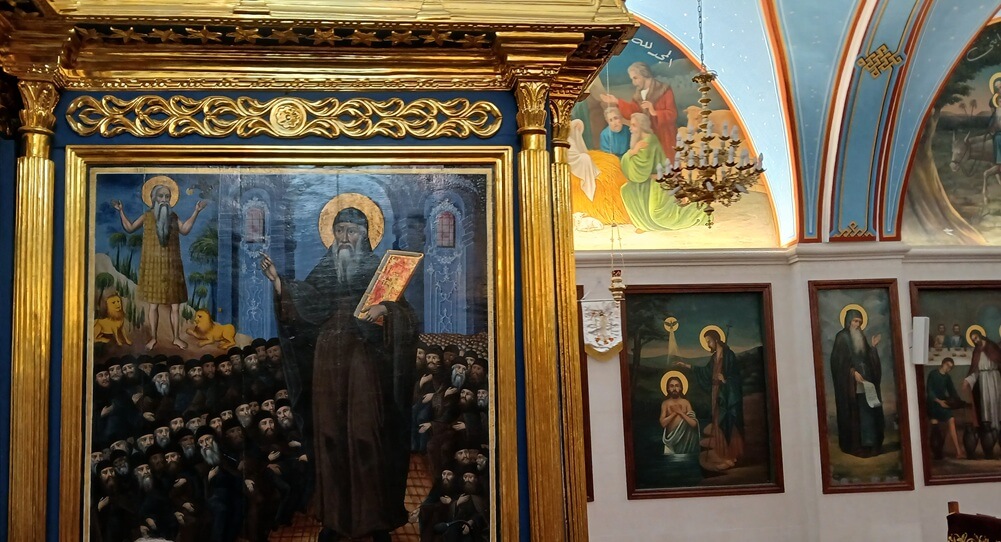
Coptic Church Pachomius Icon
The Ethiopian Church
The Ethiopians see themselves as descendants of the ancient Israelites. According to their national epic, The Glory of Kings[6], the Queen of Sheba bore a child named Menelik to Solomon. When he grew up, he came to visit Jerusalem and returned to Ethiopia with a distinguished entourage of firstborn sons, including the son of the High Priest, and with the Ark of the Covenant. The exiles founded a Jewish kingdom that later adopted Christianity and became known as the Kingdom of Aksum. The presence of the Ark of the Covenant in Ethiopia made it the New Zion, and it was this that enabled Ethiopia’s independence and spiritual genius throughout the years. This presence is called both Zion and Mary. For the Ethiopians, Zion is not a place but a spiritual state, an abundance that flows to the earth, a blessing that rests on the land—the presence of the Shekhinah.
The dynasties that ruled in Ethiopia until the time of Haile Selassie claimed descent from the House of David and a spiritual connection to Jerusalem. The Ethiopians feel a special closeness to the Land of Israel and Jerusalem. With the appearance of Jesus and the beginning of Christianity, they became Christians, but they retained some Jewish traditions such as Shabbat and circumcision, and developed a unique form of Christianity. According to legend, the first Ethiopian to convert to Christianity was the Ethiopian eunuch who met the Apostle Philip, as described in the Book of Acts. In Psalms it is written: “Ethiopia will stretch out its hands to God” (Psalm 68:31), and indeed, the Ethiopians raise their hands to God to this day. This is a country of very deep religiosity, one expression of which is the long-standing Ethiopian presence in Jerusalem.
In the 4th century CE, there was a strong kingdom in Ethiopia called Aksum, which traded with Byzantium, including with Egypt and the Land of Israel. With the Christianization of the Romans and the Armenians, the Ethiopians also converted. Those who brought Christianity to Ethiopia were two Syrian boys, one of whom—Frumentius—became the first bishop of Ethiopia, receiving his instruction and spiritual authority from Athanasius the Great in Alexandria. From this time until the beginning of the 20th century, the Ethiopian Church was under the official patronage of the Coptic Church, and its bishops were of Coptic origin. Today, however, it is an independent Monophysite church numbering about 42 million people.
The Christianization occurred during the time of King Ezana, and since then the history of the Ethiopian people has been intertwined with the history of their church. It was this that united the Ethiopians and preserved them as an independent and proud people. The Ethiopians are the only African nation that was never under foreign occupation and managed to maintain their independence and identity for thousands of years—largely due to the power of faith and the presence of the Ark of the Covenant. In every Ethiopian church, there is a model of the Ark of the Covenant at the center—a tabot—kept in a special room, and it is this that gives the church its sanctity and is used in religious ceremonies.
The Ethiopians used to make pilgrimages to Jerusalem, which was considered an important religious commandment. They have maintained a presence in Jerusalem since the Byzantine period. On the roof of the Church of the Holy Sepulchre, they have a monastery called Deir al-Sultan, which resembles a village in Ethiopia. In the Muslim Quarter stands their patriarchate, with a church dedicated to the national saint Tekle Haymanot. Near the Street of Prophets, there is a large church from the end of the 19th century built in the style of Ethiopian churches and dedicated to Mary. Nearby are other Ethiopian institutions and buildings.
the time of King Ezana, who made Ethiopia Christian in 330 CE, there is a lack of information about the history of Ethiopia and Christianity until the period of the next great king who burst onto the stage of world history—King Kaleb, who ruled from 514 to 543 CE.
The biblical Caleb is a descendant of Judah and one of David’s ancestors. The Ethiopian Kaleb is the first to be called by a biblical name. Kaleb fought for the protection of Christians in Yemen who suffered under the oppression of the Jewish king Yusuf Dhu Nuwas. He made an alliance with Justinian, the Byzantine emperor, and in 525 conquered Yemen, annexing it to his Christian kingdom. His activity is documented in Byzantine and other literature. Many remains from his period—such as coins, inscriptions, and even palaces in Aksum—have survived. His reign was a time of rooting Christianity as a state religion, active church building, persecution of pagans and Jews, battles against them, conquests, and glory. Scholars argue that it was only in his time that the final stage of the conversion of the people to Christianity was completed.
At the end of his days, Kaleb retired from power and joined the monastery of Abba Likanos near Aksum. His son, Gabra Masqal, who ruled from 550 to 580 CE, continued his father’s works. He is considered a king of peace, justice, and faith. “Gabra Masqal”—servant of the cross—was the first king to be anointed to kingship under the auspices of the cross and in a Christian ceremony. One day, a holy man named Yared appeared before him. According to legend, Yared had a vision in which he ascended to the third heaven, like Paul, and visited the Heavenly Jerusalem. Some say that he also visited physical Jerusalem and received his inspiration from there. In any case, while he was there, he saw three birds flying in the sky that revealed to him the secrets of music and religious song[7].
In the Ethiopian Church, there are three types of songs: “Ge’ez” – the Father, “Ezel” – the Son, and “Araray” – the Holy Spirit. A bird named Aroydon taught him “Ge’ez,” and from this, he received the name Saint Yared. A bird named Machedo, found in the areas of the Tekeze River, taught him the melodies of “Araray.” A bird named Izil taught him the songs of “Ezel.”
Yared learned the music from 24 priests (who, according to the vision of John, are in the Heavenly Jerusalem). He learned Mehelet—the singing of the Debtaras (the Levites)—and the sacred music of the Temple. Yared presented the king with the Zema—songs of praise to God that became part of the church’s worship. The king was enthusiastic and stamped the ground with his spear, and in his excitement, they both failed to notice that he wounded Yared’s leg. The wound on his leg resembled the wound of Jesus on the cross[8].
Yared was accepted as a teacher and poet in the king’s court. He composed the Anaphoras (the hymns of the Eucharist ceremony) of the church and wrote hymns for the four seasons, holidays and Sabbaths, and the days of angels, prophets, apostles, martyrs, and righteous people. According to his teaching: Ge’ez is sung during fasts and weekdays, Ezel on Passover, Christmas, and other important holidays (its tone is more vigorous and dramatic), and Araray is sung on the Friday when Jesus was crucified. He was the composer and initiator of the tradition of the Qene—a mystical poem in which the words have a double meaning: wax
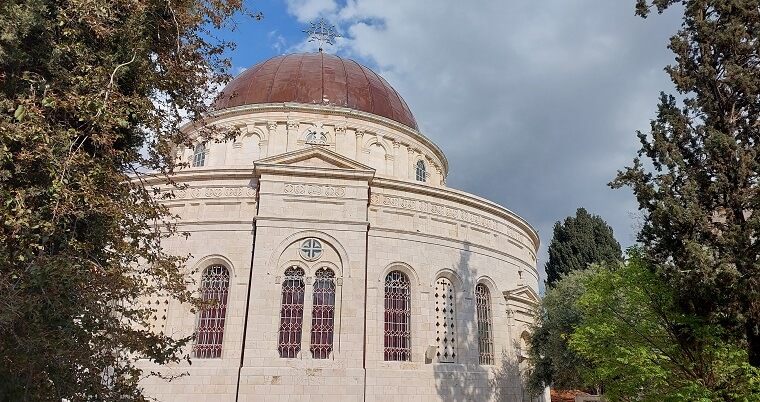
School of Poetry
Poetry is one of the most wonderful things in the Ethiopian Christian tradition. They use a short poem called “Qene” that, like the Japanese haiku, has two meanings: one is explicit, called “wax,” and the other is hidden, called “gold.” The wax is the mold into which the gold is poured [9].
The student must create a poem with two meanings, explicit and hidden. The process is connected with a deep study of the language, concentration achieved through meditation, and the ability to connect to inspiration. They begin with two-line poems, and by the end of their studies they reach seven or eleven lines. The lines must rhyme and sometimes share the same ending letter. Learning the Qene tradition takes between one and several years, and both women and men participate in it.
The Ge’ez language is considered sacred and influences thought. The study of Qene poetry is the highest form of acquaintance with Ge’ez. Knowledge of Qene leads to elevated thinking and enhanced psychological abilities. The mystery that Qene poetry addresses is the mystery of unity on the one hand and separation on the other. Jesus cannot appear in this world without separation, yet on the other hand, he is called the lion who brings unity.
A Qene, ideally, is sung only once, but sometimes it takes weeks to reach it. Only after a student has mastered Qene (the study usually takes a year or two) can he move on to the next school—the school of books. However, to achieve extraordinary expertise in Qene requires 20–25 years of study and practice.
For example: A student was asked to write a Qene and could not find the words. After a week, his teacher asked him: “What’s going on?” The student presented him with only the first line: “The drums are not working.” He meant that at this time before Easter, they did not play drums in the church, and at the same time, he was referring to himself, unable to complete the poem. The teacher completed the poem for him: “Difficulty and suffering pass through your heart.” By this, he meant that in the days before Passover, people connect to the difficulty and suffering of Jesus, and therefore they do not play drums. At the same time, his words also referred to the inner reason why the student could not find the words, which was the sadness in his heart and the need to die to the old self in order to be reborn—to complete the poem.
Here is an example of Qene: “Since Adam, your lips have eaten from that tree. The Savior, my heart is hung for you.” The explicit meaning (wax): Because Adam ate from the apple of the tree of knowledge, the Savior of the world was crucified for you. The hidden meaning (gold): Because of your tempting lips, my heart longs to be close to you (to Jesus)[10].
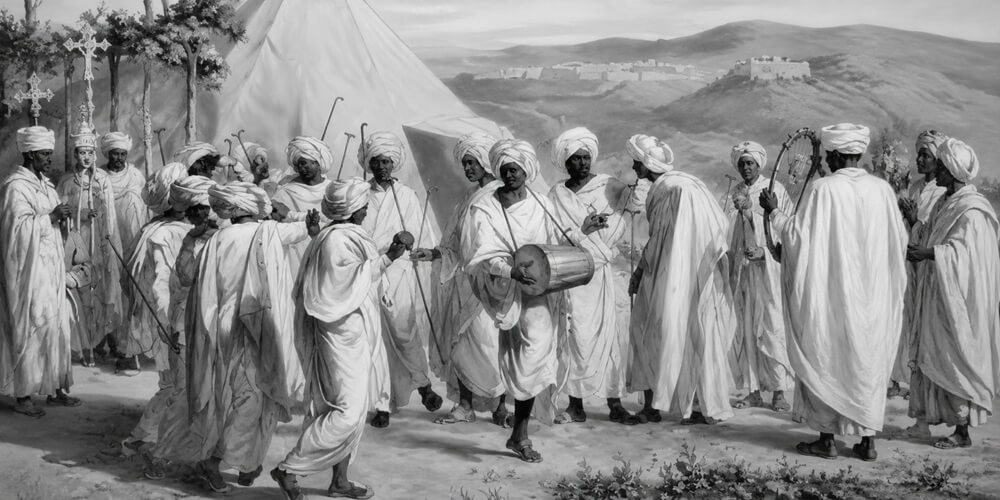
Ethiopian Religious Music and Dance
Musical Instruments and the Ark of the Covenant
Ethiopian Christianity sanctifies the Ark of the Covenant. In every church, there is a replica of the Ark of the Covenant called a “tabot,” and it is this that gives the church its sanctity. It is stored in a square room called the Holy of Holies, which is inside a hall called the Holy, just like in the Temple. The word “tabot,” which also means Noah’s Ark in the Ethiopian translation of the Bible, is an identification that already exists in the Septuagint.
The connection of the Ark of the Covenant to the church also exists in the Coptic Church, where there is a small wooden box on the altar with a chalice inside, and they refer to it as the Ark of the Covenant containing the Tablets of the Covenant, similar to Mary who contained Jesus within her. It is possible that the Ethiopians adopted this motif from the Egyptians, and it is also possible that the Ark of the Covenant indeed reached Ethiopia. Either way, a church does not exist without the tabot (replica of the Ark of the Covenant), and it is named after the tabot. Each tabot is dedicated to a different saint or angel, and it is so sacred that it takes on supernatural powers. The tabot can only be consecrated by the head of the Ethiopian Church, and “once consecrated, only priests are allowed to see it, and if a non-priest touches it, it must be consecrated anew.” It is always wrapped in cloth.
The tabots appear in two forms: one is a kind of flat board about 7 cm thick, patterned after the Tablets of the Covenant, usually made of marble, and about the size of a large floor tile (25 × 40 cm). On the board are written the names of saints, and it is decorated with a cross. The second form is a square box with legs. Sometimes the flat tabot is placed in a box that contains it—a kind of “tabot seat” similar to the second type of tabot, but it is not itself a tabot.
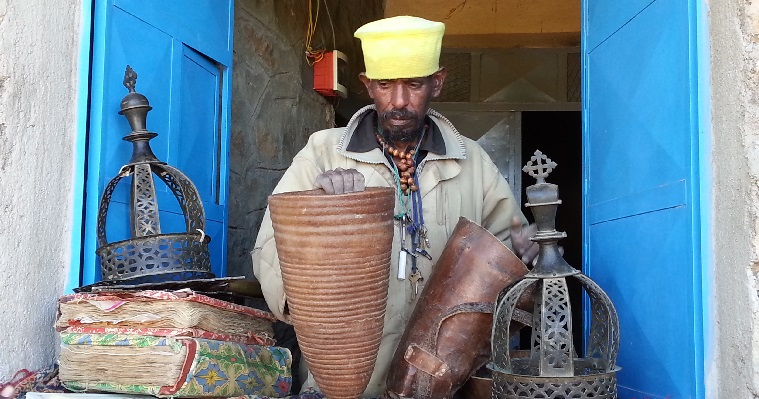
From time to time, the tabots that are kept in the heart of the church are taken out on holidays, and the priests and the people dance before them, just as King David danced before the Ark of the Covenant. Even today, on Ethiopian holidays in Jerusalem, one can relive for a moment the days of King David and Michal, the daughter of Saul. During the dances, there are characteristic movements, and the singing is accompanied by rattles, drums, and staffs. This tradition is also attributed to Saint Yared, and here is its meaning[11]:
The prayer staff—this is the staff with which Moses struck the Red Sea. The staff has an upper part in the shape of ram’s horns, in memory of the sacrifice of Isaac by Abraham. It symbolizes the dual nature of Jesus—on the one hand, born to a spiritual Father before the creation of the world, and on the other hand, born to a physical mother, Mary. Raising and lowering the staff symbolizes the appearance of the spirit in matter, and moving it to the right and left symbolizes Jesus’s journey in this world. This is the cross, composed of a spiritual vertical vector and a physical horizontal vector.
The prayer rattle symbolizes Jacob’s ladder and is connected to the crucifixion. It has five metal parts—three at the bottom and two at the top—that symbolize the wounds of Jesus. When it is moved from top to bottom, it represents the hammering of the nails into Jesus’s body. The movement from side to side symbolizes Jesus’s journey carrying the cross to Golgotha. Sometimes the movement to the sides is accompanied by a step forward and a bending of the leg, symbolizing Jesus’s fall while carrying the cross.
The prayer drum used in Ethiopian churches is very large and has two sides. One side—the larger one—symbolizes the New Testament. The other side—the smaller one—symbolizes the Old Testament. The drummers strike both sides. The larger side also represents the face of Jesus. The body of the drum is covered with animal skins and shrouds, symbolizing the body of Jesus wrapped in the shrouds of the tomb. But the inside of the tomb is empty, because Jesus rose from the dead, and every beat of the drum reminds us of this. It is customary to leave several pieces of wood inside the drum, which rattle and remind us that Jesus is not there.
According to the psychological interpretation, the rhythm of the drum is the rhythm of the heartbeat. This is what the fetus in the womb becomes accustomed to through the heartbeat of its mother. Therefore, the drumming touches something primordial, archetypal, and fundamental that resonates within us.
References
[1] Meinardus, O. F. (2002). Two thousand years of Coptic Christianity. American Univ in Cairo Press.
[2] Kamil, J. (2002). Christianity in the land of the pharaohs: The Coptic Orthodox Church. Routledge.
[3] Smith, M. (1973). Clement of Alexandria and a Secret Gospel of Mark. Cambridge, MA: Harvard University Press
[4] Osborn, E. (2005). Clement of Alexandria. Cambridge University Press
[5] Athanasius of Alexandria. (1994). The Life of Antony and the Letter to Marcellinus (R. C. Gregg, Trans.). New York: Paulist Press.
[6] Ran HaCohen (translator and editor). The Glory of Kings. Tel Aviv University, 2009.
[7] Ephraim Isaac. The Ethiopian church. Henry n. sawyer company 1968
[8] Kessis kefyalew merahi. The most versatile Ethiopian scholar, st yared and his outstanding works. 2004
[9] Donald N. Levine. Wax and Gold: Tradition and Innovation in Ethiopian Culture. University of Chicago Press, 1972
[10] Kessis kefyalew merahi. The meaning of quine. 2006
[11] Christine Chaillot. The Ethiopian orthodox tewahedo church tradition. Inter orthodox dialogue. 2002