Joachim of Fiore’s New Vision
World history was shaped not only by kings and influential people (or orders) but primarily, and most significantly, by ordinary individuals who experienced a vision or divine revelation. Jesus of Nazareth was one such person, and in a different way, so was Joachim of Fiore. Born in 1135 to a noble family in one of the most advanced kingdoms of the 12th century—the Norman Kingdom of Sicily and Apulia in southern Italy, a crossroads of East and West, Islam and Christianity, education and culture—Joachim received an excellent education in his childhood, becoming a learned man who served the royal court in Palermo and progressed through the ranks of administrative positions.
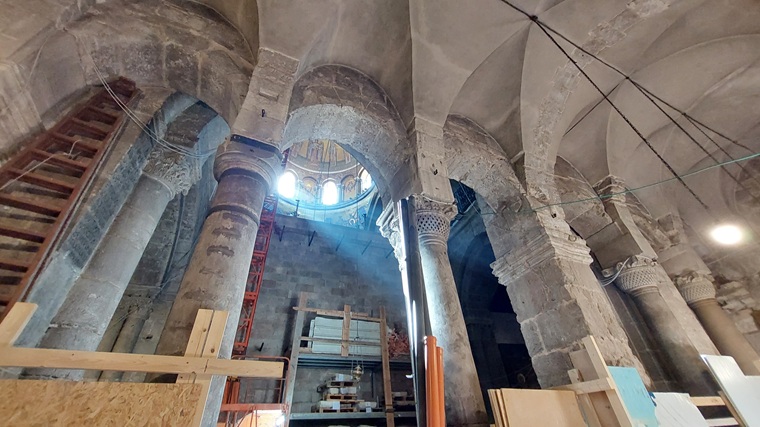
In 1159, at the age of 25, he set out as a pilgrim on a journey to Jerusalem. The Crusader Kingdom was then at the height of its power and glory. These were the final years of the joint reign of Melisende and Baldwin III. The rebuilt Church of the Holy Sepulchre stood in its full splendor. It seemed as if the Christian God approved of human actions and blessed the enterprise of the Crusades, but Joachim felt that something was about to change—that the existing order, which seemed eternal, was in fact extremely temporary.
During his visit to the Church of the Holy Sepulchre and the sites where Jesus suffered and acted in Jerusalem, Joachim underwent a spiritual crisis. He saw how empty his life was, and perhaps how empty the splendor and grandeur of this world were. It was shortly before Passover, and Joachim experienced a moment of enlightenment, during which the veil concealing the spiritual worlds was lifted. This recurred on the following Pentecost. During these moments of illumination, he saw the mistakes of his life and decided to turn his back on this world and devote himself to monastic life. He underwent a conversion in which he died to his previous life and was reborn into a life of deep faith in God.
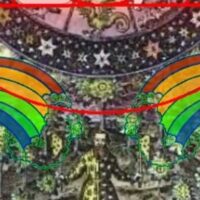
According to Eliade[1], Joachim was granted the ability to discover and decipher the signs that God left in history and in the Holy Scriptures, which made him a kind of prophet. Joachim saw three periods in human history:
- The First Period is that of the Old Testament, ruled by God the Father, and its religion is characterized by fear stemming from the authority of the Law. This period was led by married men and is expressed in the Old Testament.
- The Second Period is that of the Son, in which the Church is sanctified by God’s grace, and its main characteristic is faith. This period was led by priests.
- The Third Period, which, according to Joachim’s calculations, would begin at the end of the 13th century, is that of the Holy Spirit, in which people would live a religious life full of love, happiness, and freedom, because they would have a direct connection with the Holy Spirit dwelling within them. This would be a kind of messianic age led by spiritual monks, but it would be preceded by difficult trials. The Third Period would know corruption and destruction, but these would be followed by abundance and the Christian perfection stemming out of spiritual freedom.
Joachim’s vision stirred up great messianic fervor in his time, as well as opposition. The opposition arose from the understanding that in the Third Period, the role of the clergy and the Papacy would diminish. It would necessarily bring about a reformation of the Church. This meant that Joachim’s theory contained a kind of criticism of the establishment and even of rituals such as the Eucharist, which would lose their power. On the other hand, his vision was embraced by large parts of the Christian world, especially by the Franciscans a few decades after him, who saw in the figure of Saint Francis the fulfillment of Joachim’s prophecy about a spiritual monk directly connected to the Holy Spirit, a kind of new appearance of Jesus.
Joachim preaches a historical salvation, a new stage of Christianity that will herald the end of times, the completion and redemption of history—a kind of eschatological vision. The Holy Spirit will complete the work of Jesus. History will not revert to a past idea of fulfillment, but will reach a new kind of fulfillment at a higher level. Joachim prophesied the establishment of two new orders that would represent the new spiritual Church of the Holy Spirit. Later, as mentioned, some Franciscans saw themselves as fulfilling his prophecies, and even Abraham Abulafia, a Jewish Kabbalist from southern Italy, referred to him. According to James Harvey, there was a synchronistic connection between them [2].
The belief in the imminent arrival of the Christianity of the Spirit—the Third Age of the Holy Spirit—continued in later centuries, and thus some of the Jesuits (17th century) saw themselves as fulfilling his prophecies, as did other charismatic orders.
After he conversion in Jerusalem, Joachim returned to Italy and lived for several years as a solitary monk. He then joined various monasteries of the Cistercian Order, became an abbot, and moved to places where he could write down his prophecies and insights without interruption, with the encouragement of popes and kings. He interpreted passages in the Book of Revelation as predicting that in the Third Spiritual Age of Christianity, the Church would no longer be necessary, and the unbelievers would convert and unite with the Christians. He met with Richard the Lionheart before the latter set out on his Crusade in 1189 and advised him on matters of this world and the next.
According to Joachim, the perfect society of the Third Age of Christianity would be led by the Order of the Just—highly spiritual people—and therefore Law would not be needed; in its place, there would be a rule of freedom. The true meaning of Christ’s return is a new era of peace, love, and harmony. Only then would the Holy Scriptures be truly understood at their deepest level. Dante saw Joachim as a prophet and features him in the Divine Comedy, which is influenced by his teaching. John Dee, the English queen’s advisor and spiritual astrologer from the 16th century, also refers to Joachim as a prophet. And it all began with Joachim’s pilgrimage to Jerusalem.
Saint Francis
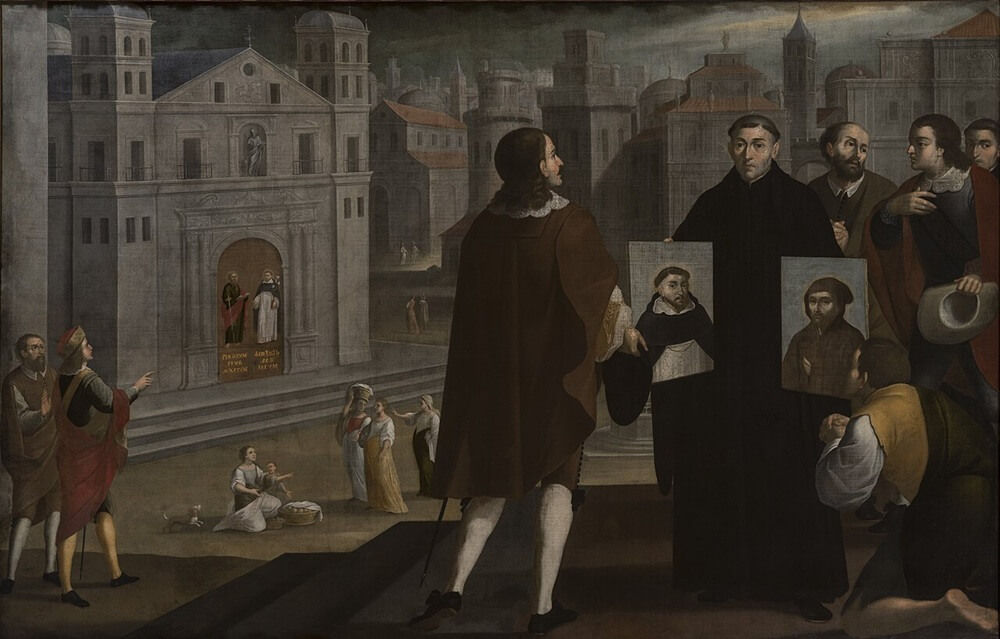
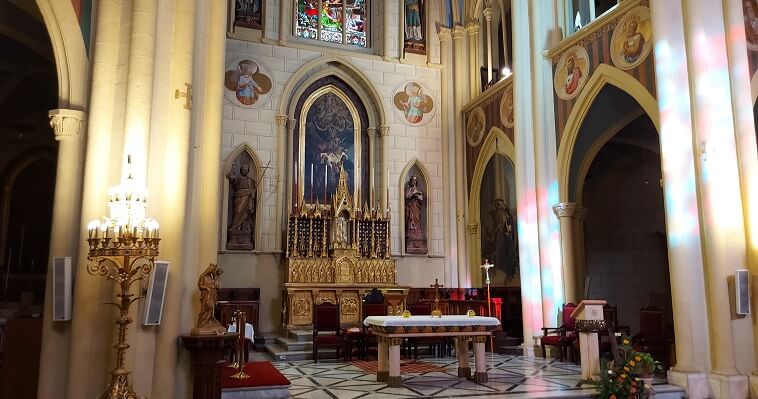
Saint Francis (1182–1226) is considered by the inner and mystical circles of the Franciscan Order to be a second appearance of Jesus. He lived in the 13th century and so deeply identified with Jesus in his heart and mind that the wounds Jesus bore on the cross appeared physically on his body. This was called the “Stigmata” and was a great miracle. Francis preached love and a life of poverty. He connected with animals and the forces of nature, wrote songs to the sun and the moon, and saw Jesus in nature and everything else.
His life includes an unfamiliar chapter of visit to the Holy Land, during which he underwent a crucial change and development [3]. In the centuries that followed, and even today, the Franciscans, members of the order he founded, play a central role in guarding the Christian holy sites in the Holy Land, as will be detailed later in the chapter on the “Custodia de Terra Santa” (Custody of the Holy Land).
was born in the city of Assisi, Italy, the only son of a wealthy cloth merchant, a popular young man who spent most of his time socializing and singing with his friends. He was known for his talents as a poet and musician and for the extravagant and luxurious life he lived at his father’s expense. He was nicknamed Francesco (“the Frenchman” in Italian), both because of his mother’s origin and his father’s business, as well as due to his love for the troubadour songs.
In the spirit of the time, Francis aspired to glory and wanted to achieve recognition as a knight, so he set out to participate in one of the wars of Assisi against Perugia, its great rival. However, to his shame, in his very first battle he was captured and spent a year in prison, during which he also fell ill. Upon his return to his city after his release, he did not give up on his aspirations, and two years later (1205) he set out to join the army of Apulia. His father, who aspired to elevate his family name, bought Francis an expensive horse and splendid armor. Accompanied by the blessings of his townspeople, he rode off to glory. But on the way, a change came over him. Francis realized that a glorious name and a noble title would not fill the void he felt in his heart. He gave his horse and armor to the poor people he met along the way and returned to his city barefoot, to the amazement of the residents.
No one understood the change that had occurred in the young man, and Francis himself needed time to understand what he sought in life. He abandoned his extravagant lifestyle, gave his luxurious clothes to the poor and beggars, and went into solitude near a ruined church outside the city. His townspeople claimed he had lost his mind and mocked him when he came to beg for alms. But young people began to seek his company and listen to his words. And so, at the age of 25, he received a call in the ruined church of San Damiano to repair the shattered house of God. Before the altar, he said the following prayer (one of his first): “Most High, glorious God, enlighten the darkness of my heart, and give me a right faith, a firm hope, and perfect charity, wisdom and understanding, O Lord, that I may accomplish Thy holy and true command. All that I have is Yours. My God, I am all Yours, You know that I have nothing but my tunic, cord, and undergarment, and those three are Yours as well. So what can I give You?”
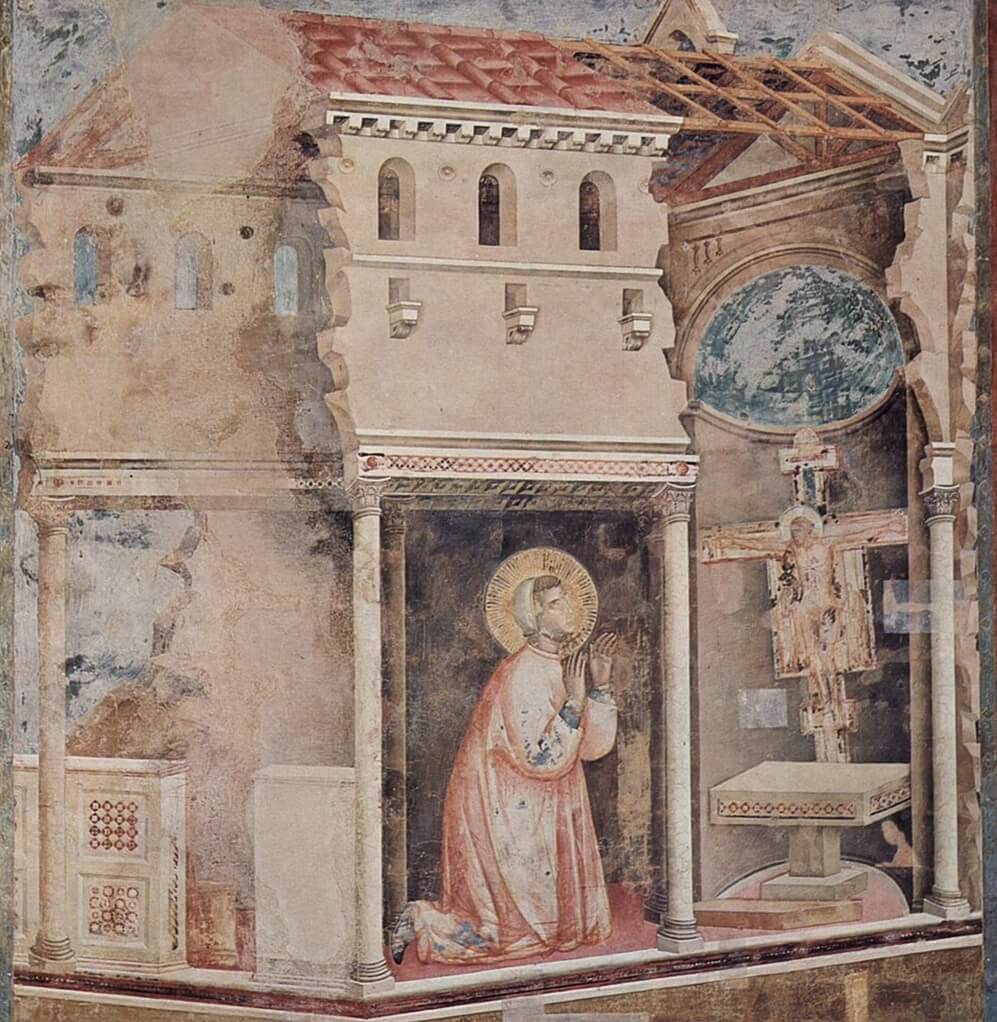
Francis understood the call as a command to physically reconstruct the ruined church. He gave his father’s valuable cloths to the poor and went to live in the ruins. His enraged father disinherited him and brought him to trial before the city bishop. In response, Francis quoted passages from the New Testament before the astonished “judge” and relinquished his inheritance rights. The young people of Assisi, led by Saint Clare, joined him in the work of repairing and building the church, and slowly a community of young people gathered around him, living together in holiness according to a basic religious rule that Francis composed, preaching repentance in the surrounding villages and towns. Many in Assisi saw him as an irresponsible and dangerous anarchist, inciting youth away from their duties, but his teaching of love and humility overcame the opposition, and he eventually gained recognition as a spiritual teacher and a saint and was followed by many.
Francis was granted meetings with God through his prayers, which changed him completely. When he returned to his normal state, he was careful that nothing of his intimate encounters with God would be seen or revealed, and he advised his disciples to do the same. He advised the disciples to say the following prayer in such situations: “My God, I am a worthless and sinful man. I return the consolation You sent me from heaven into Your hand; otherwise, I would feel like a thief taking Your treasures for himself.”
Francis emphasized poverty and renunciation of this world. He entered a mystical marriage with Lady Poverty and wrote songs to her, claimed to possess nothing of his own, and demanded of his followers “not to worry about tomorrow,” as Jesus commanded in the New Testament. Additionally, he argued that one should intervene in the world and help people, to do God’s deeds, and not isolate oneself permanently—only when necessary. The monks should love and give of themselves to society, and not immerse themselves in studies. He was full of gratitude for the miracle of life and the miracle of salvation, and thus he wrote: “Almighty, Most Holy, Most High and Supreme God, Holy Father, Lord King of heaven and earth, we give thanks to you for yourself, and because by your holy will, through your only Son and through the Holy Spirit, you have created all things spiritual and temporal. You made us in your own image and likeness and placed us in paradise, from which we fell through our fault. We thank you that you created us through your Son; we thank you that you loved us with your holy love. As true God and true Man, Christ came into the world, born of the Most Blessed Virgin Mary, and through his cross, blood, and death, he redeemed us from the prison of sin.”
The idea behind the Brotherhood of the Brothers and Sisters was an attempt to live life in the spirit of the Gospel, to apply what Jesus says in the New Testament simply, humbly, and directly, such as “not to worry about tomorrow.” Francis’s understanding was that every person has the possibility to connect directly to God, and not through the Church establishment. Nevertheless, in 1209, Francis went to Rome with eleven of his disciples to ask Pope Innocent III for recognition of the new order he had founded.
In Zeffirelli’s wonderful film Brother Sun, Sister Moon, which tells the story of Francis and Clare, this beautiful encounter is depicted between the most powerful man in the world, Pope Innocent III—who had actually lost his way and his faith—and the poorest man in the world (Francis boasted that he was married to “Sister Poverty”), full of faith and power. A few days before the meeting, the Pope dreamed of a man who would come and fix the Church and return the hearts of the masses to it, and when he met Francis, he recognized him as that man, acknowledged his order, and approved their rule. From this time onward (1210), the new order spread rapidly throughout Italy. In 1212, Saint Clare left her home in Assisi, finally joined Francis, and together they established the Order of the Poor Clares.
In 1213, Francis was given Mount Alverna (Alverna) in the Northern Apennines for the Order’s use, and it became his favorite place of solitude, and later he received the Stigmata there, but before that, he needed to make a pilgrimage to Jerusalem. Mount Alverna has a ravine above which a massive rock hangs as if suspended. Francis used to pray there, and one day he had a vision through which he understood that what moved the rock to its place was an earthquake that occurred when Jesus was crucified at Golgotha, thus connecting the place with Golgotha (at the time of the crucifixion, heaven and earth shook). Francis and his companions would sleep among and above the cliffs, and the devil also tempted him there, just as he did Jesus at Quruntul (Mount of temptation near Jericho). In other words, Francis transfers the holiness of the Holy Land and the concept of the mythical mountain – the center of the world – to Mount Alverna.
In 1219, Francis joined the Fifth Crusade, but unlike the other participants, he wished to bring peace to the world and speak to the heart of the Egyptian Sultan—which he did (see the description of their beautiful encounter in the chapter on the Custodia Terra Sancta). Francis spent about a year and a half in the Middle East, during which he reached Israel and Syria, and some say that during this time he was influenced by the mystical teachings of the Sufis, a stream of Muslim mystics that was widespread at the time in the cultural centers of Syria, Israel, and Egypt. According to Idris Shah [6], he met Shams Tabrizi in Damascus and received from him spiritual blessing.
After he returned to Italy in 1220, Francis reorganized the Franciscan Order and decided to retire from public activity and dedicate more time to a life of prayer and contemplation. At the general assembly in September 1220, he relinquished responsibility for the Order, transferring it to Brother Peter, and said the following prayer: “To You, O Lord, I commend this family which You have entrusted to me until today. Because of my instability, which You know, sweet Lord, I am no longer able to care for it, and I commend it also to the local superiors; they will answer for it on the Day of Judgment.”
his “retirement,” in 1221 he established a Third Order of Brothers—for people who wished to follow the Franciscan path but could not or did not want to separate themselves from the life of this world and take the vow of celibacy. In 1222, he wrote a new rule for the “regular” Order, which was approved by the Pope. From this moment on, Francis considered himself subject to the rule and the heads of the Order, like everyone else. Thus, he wrote in one of his letters to the head of the Order: “I confess all sins to my Lord, God the Father, the Son, and the Holy Spirit, to the blessed ever-Virgin Mary, to all the saints in heaven and on earth, to Brother Elias, the minister of our Order and my superior, to the priests, and to all the brothers of our Order: In many ways, I have sinned through grave weakness, especially in not keeping the Rule and my promises to God, and in not saying the prayers as the Rule commands, whether from forgetfulness, or due to ill health, or because I am an ignorant and uneducated person.”
In his final years, Francis spent most of his time wandering in the mountains, in prayer, contemplation, and connecting with God and nature. One day he was caught in a storm and said the following prayer: “Lord Jesus Christ, I thank You for the great love and charity You have shown me. For it is a sign of great love when a lord punishes his servant for all his bad deeds in this world instead of punishing him in the next world. And I am willing to undergo happily any trial and any distress that You, O God, wish to send me for my sins.” Francis’s path was unconditional love.
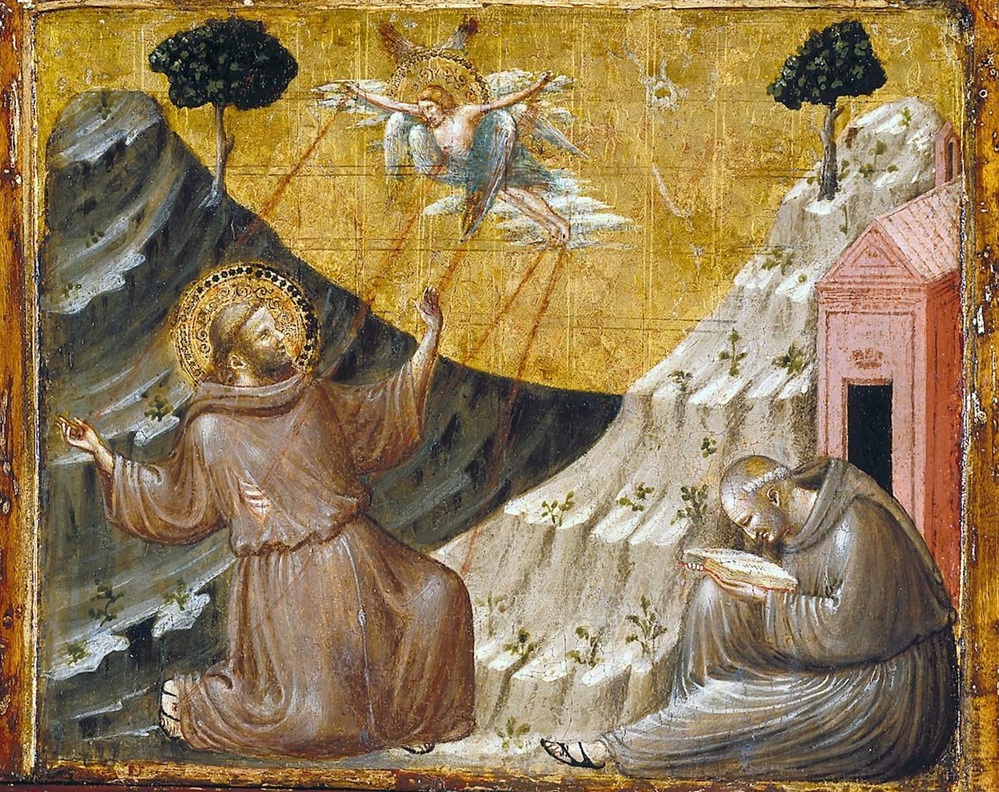
In September 1224, he arrived at Mount Alverna, and a great miracle occurred there. He became the first person to receive the Stigmata on his body. Francis spent a period of fasting and solitude with two brothers for forty days, and then climbed the mountain with two brothers. On the way, they found shelter from a storm in an abandoned church. While the brothers slept, Francis was tormented by evil spirits, and then he loudly recited the following prayer, which benefited him: “O Lord Jesus Christ, two graces I ask of You before I die: the first is that during my life I may feel, in my soul and in my body, as much as possible, the pain with which You, sweet Jesus, suffered at the hour of Your bitterest Passion. The second is that I may feel in my heart, as much as possible, the abundance of that love with which You, Son of God, were inflamed, and so willingly suffered so great a suffering for us sinners.”
Francis sought to bear the burden of Jesus, but first to be granted the love that was in His heart, for without love it is impossible to endure the torments. The next day, he saw a Seraph with six wings approaching him, and within it, Jesus suffering on the cross. The Seraph imprinted the Stigmata on his flesh—the five wounds of Jesus suffering on the cross appearing on the hands, feet, side of the body, and sometimes an additional wound on the head. The “Miracle of the Stigmata” is considered the second appearance of Jesus in the flesh, this time through the figure of Francis and on Italian soil. The event led to a wave of religious enthusiasm and spiritually cleansed Italy (according to the Franciscan view), paving the way for the emergence of the Renaissance and a new spirituality.
After returning from the Holy Land, his travel companion—Brother Elias—became the person closest to Francis and the leader of the Order. He was responsible for the burial arrangements after Francis’s death in 1226. He was the head of the Order until 1227 and again from 1232, and was the one who built the church in Assisi. However, in 1239, a rift developed between him and the other leadership of the Order, and he was expelled from the Order and excommunicated. Instead, he collaborated with Frederick II, and it is likely that their connection was formed as early as 1229, when Frederick II came to the Holy Land.
The common denominator between the two figures was a good relationship with the Arabs and knowledge of the Arabic language and the spiritual traditions of the East, and therefore some attribute alchemical writings and the transfer of esoteric knowledge from the East to the West to Father Elias. In any case, starting in 1239, the Franciscans began to support and become involved in the pilgrimage route to Jerusalem, and in due course they developed the Custody of the Holy Land (see chapter) and the Via Dolorosa route, which is a kind of miniature pilgrimage route that can be replicated in various places around the world.
Who is a Saint?
According to the Catholic Church, a saint is a person, male or female, of low or high origin, uneducated or educated, who at a certain point in their life achieves spiritual enlightenment. From that point onward, until their death, they dedicate their life to the service of faith, and in addition, at least two miracles must have occurred in their life that can be authenticated. The ways to serve God are many and varied. Some dedicated themselves to caring for the sick and suffering, some engaged in preaching and spreading the faith and influenced many with the fervor of their belief, and some were granted visions and enlightenment, performed miracles, and brought healing to the sick through the power of faith. Some withdrew from the public and devoted their lives to prayer and meditation, and some died for their faith. But that is not enough; there must be a supernatural dimension to a saint—for as it is said, every prophet has qualities, but not everyone with qualities is a prophet. Usually, at least fifty years will pass from the death of a holy person until they are recognized as a saint, and only after all the testimonies received about their life—from the moment of their repentance until their death—justify their recognition as such, including miracles and revelations after death.
However, saints exist not only in the Catholic Church but in all Christian denominations, and they form the foundation of the Church and of the faith. Divine revelation continues through the saints, who are destined for all humanity. Like Francis of Assisi, the saints—through their faith, suffering, and actions—spiritually cleanse the world and herald the coming salvation.
The Heavenly Jerusalem
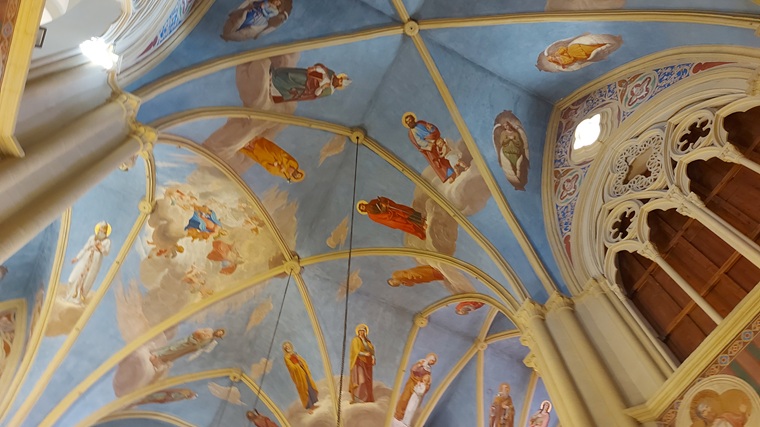
In Christian tradition, a distinction is made between the physical and the Heavenly Jerusalem. Jerusalem becomes a concept of a utopian society and an ideal state of holiness among different peoples and groups in the world. Furthermore, Jerusalem is a state that will occur in the End of Days. When Eusebius (a Christian scholar from Caesarea in the 4th century) is asked where he comes from, he answers, from Jerusalem, which is in the East, the place where the sun rises. In the Middle Ages, the concept of the Heavenly Jerusalem became widespread.
Throughout history, people have tried to connect with the divine, and one of the primary places where this happened was Jerusalem. Humans constantly strive to touch the eternal and sacred instead of the temporary and routine, and this was expressed in the building of holy cities and temples, a kind of paradise – heaven on earth. However, when these were destroyed or their continued existence was threatened, these places, through a process of sublimation, became a spiritual reality. Thus, the great prophets turned the Temple and Jerusalem into a concept, which enabled the continued existence of the Jewish people after the Babylonian exile.
New Jerusalem will descend from heaven, and its destruction is part of the divine plan. In the Book of Ezekiel, where the vision of the Chariot (Merkabah) and the structure of the divine worlds appear, there is a vision of the Heavenly Jerusalem and the Third Temple. The redemption sects of the Second Temple period, including the Essenes, adopted this vision and longed for the end of the world, the war of Gog and Magog, and the coming of a different Jerusalem instead of the corrupt current one, and the Book of Revelation contains a vision of a perfect city that will descend from heaven at the end of days.
When Rome was destroyed shortly after becoming the stronghold of Christianity and the second Jerusalem, this event needed to be explained to the believers. Augustine introduced the concept of the “Heavenly Jerusalem” and argued that it was the truly important one, not the physical city. He further added that the true city is the Church and the Faith, and from then on, the path was open to choosing between focusing on the physical Jerusalem and other existing sacred frameworks, or focusing on a spiritual utopia.
In early Christianity, the earthly Jerusalem held no importance, especially in light of Jesus’ prophecies about the destruction of the Temple. But with the Roman Empire’s conversion to Christianity and the transfer of the capital to Constantinople, the enterprise of the earthly Jerusalem began, focusing on the Church of the Resurrection – the Sepulchre. An industry of holy relics developed, a perception of sacred geography, and a tradition of pilgrimages.
According to the New Testament, Jesus is the New Temple that replaces the Temple in Jerusalem. He is also the sacrificial lamb that used to be sacrificed in the Temple and the atonement for the sins of humanity, which was essentially the Temple’s role. In the Gospel of John, Chapter 2, Jesus says to destroy the Temple and that he will rebuild it in three days. The text explicitly states that he is referring to his body – “But he was speaking of the temple of his body” (John 2:21) – and therefore there was no importance to a physical place. However, over time, the Church of the Holy Sepulchre, the place where Jesus died and rose again after three days, was perceived in Christianity as the substitute for the Temple.
In the fourth and fifth centuries, Jerusalem was a place where miracles occurred. The emperors made efforts to transfer Jerusalem’s holiness to Italy (mainly Rome) and Constantinople, and over time, and especially after the Muslim conquest, Jerusalem became a metaphor. This is reflected in the concept of the Heavenly Jerusalem and in the replication of the Church of the Holy Sepulchre and the creation of additional Heavenly Jerusalem cities in Europe as part of the process of sanctifying the continent (and also in other places such as Armenia or, for example, Ethiopia, where the city of Lalibela was built as a Heavenly Jerusalem and a substitute pilgrimage destination).
Professor Guy Stroumsa of the Hebrew University argues that the development of the concept of the Heavenly Jerusalem occurs side by side with the creation of reproductions of the earthly Jerusalem in various places that become sanctified in Western Europe. Between the 9th and 12th centuries, 19 churches were built in Europe that imitated the Church of the Holy Sepulchre [4]. The basic motif was a circle (the Rotunda) and a rectangular structure attached to it (the Basilica), which serves as a kind of mandala and also appears in maps and illustrations of the period. The circle is a focus for meditation and reflection on the mysteries of life.
This trend continued even after the conquest of Jerusalem by the Crusaders. Bernard of Clairvaux developed the concept of the Heavenly Jerusalem: Jesus is the groom and Jerusalem is the bride; the monastery is a practice of the Heavenly Jerusalem and should be organized according to its model. “If I forget you, Jerusalem, may my right hand forget its skill” is a spiritual exercise in human remembrance. The man who goes down from Jerusalem to Jericho and lies wounded by the roadside (the parable of the Good Samaritan in the New Testament) descends from spirituality symbolized by Jerusalem to the world of matter symbolized by Jericho. The wounded man is the soul trapped in this world, and the Good Samaritan is Jesus.
Bernard forbade monks to make a pilgrimage to the physical Jerusalem because it interferes with their concentration and their attainment of the spiritual Jerusalem. But on the other hand, he supported the conquest and establishment of the physical city, and pilgrimage to it by ordinary believers, to strengthen the faith and hasten the coming of the Messiah.
After the fall of the Crusader Kingdom of Jerusalem, the perception of the Heavenly Jerusalem strengthened. This can be explained by the theory of cognitive dissonance, presented by Festinger in his groundbreaking book When Prophecy Fails [5]. He shows that one of the ways to deal with the non-fulfillment of a prophecy is to turn it from physical to spiritual—to subject it to a process of spiritualization, to say, “it happened, but in a spiritual way.” So after the failure of the Crusaders to create a model city and society in Jerusalem, and even more so after the city’s recapture by the Muslims, the trend of referring to Jerusalem as an ideal spiritual city that will appear in its full glory in the future intensified.
Footnotes
[1] Eliade, A History of Religious Ideas Vol. 3, p. 98
[2] Hames, H. J. (2007). Like angels on Jacob’s ladder: Abraham Abulafia, the Franciscans, and Joachimism. SUNY Press.
[3] Englebert, O. (1966). Saint Francis of Assisi: A Biography (2d ed.). Franciscan Herald Press.
[4] Stroumsa, G. (1997). Mystical Jerusalems: From the early ninth to the early twelfth century, at least nineteen churches were built in western Europe, which were meant to be copies of the Holy Sepulchre. Barbillon / Presses Universitaires de France, num. 8, 377 ff.
[5] Festinger, L., Riecken, H. W., & Schachter, S. (1984). When Prophecy Fails: A Social and Psychological Study of a Modern Group that Predicted the Destruction of the World. Jerusalem: Magnes Press.
[6] Shah, I. (1964). The Sufis. Doubleday.