Indian Spirituality in Jerusalem
India is rightly considered the land of spirituality: a place of yogis, fakirs, monks, monasteries, temples, and religious cults. It is a place where religion is woven into daily life. India’s spirituality reached the West at the end of the 19th century and conquered it, continuing to influence New Age spirituality to this day and introducing concepts such as karma, Maya (illusion), and nirvana, alongside practices like meditation, yoga, tantra, and more.
The encounter between the West and the advanced spirituality of the East can be compared to the meeting of medieval minds with the advanced spirituality of the classical world during the Renaissance—an encounter that shifted the religious point of reference from God to man. Just as late-medieval scholars adopted new worldviews, and just as ancient wisdom texts (such as those in the Corpus Hermeticum) revived the occult sciences in the West, one might have expected a similar transformation to follow Western-European Christianity’s encounter with Buddhist and Hindu thought, spirituality, and living traditions. However, this did not happen wholly, but only partially.
The West’s encounter with the Eastern high moral teachings, deep religious experience, understanding of the unseen worlds, and the spiritual dimensions of man demonstrated that Europe’s spiritual and religious-philosophical heritage, and its mystical experience, were not just the result of a specific historical development, but rather a natural development touching upon universal human archetypes. This served as the catalyst for the birth of comparative religion and the scientific study of religions as such. Its pioneers, such as Max Müller and others, were scholars who studied Buddhism and Eastern spiritual doctrines and were astonished to find in them ideas strikingly similar to those of the great Christian mystics. Religious experience came to be seen as an independent human faculty, akin to aesthetic experience, prompting attempts to explain it, its inner workings, and its impact.
While Western materialism did absorb a few Eastern concepts, it was not defeated. On the contrary, if anything, it conquered large segments of Indian society, which had historically been traditional and religious—whether Hindu, Muslim, Sikh, or other. Nevertheless, it is fascinating to examine whether there were, and still are, synchronous connections and mutual influences between Jerusalem—the center of Western spirituality—and the living spiritual traditions of India. Indeed, such connections existed throughout the generations, starting from the middle ages and perhaps even earlier, and particularly during the British Mandate period when both Palestine and India were under the same British rule, and means of transport and communication improved.
Jerusalem influenced Indian spirituality in two main ways. The first is through Islam. For many years, a large part of India was under Islamic rule, which was mostly moderate, inclined toward Sufism, and deeply connected to the holy sites of Islam—including Jerusalem, the site of the Night Journey (Isra and Mi’raj). Thus, many Indian pilgrims made their way to Jerusalem over the centuries. One of the most famous among them, whose story is told in this article, is Baba Farid, a saint of the Chishti Sufi order, but also one of India’s most important religious poets, the only Muslim poet who is revered by Sikhs as well.
The second way India connects to Jerusalem is through the tradition claiming that Jesus did not die on the cross, but was taken down alive, and after healing, made his way to India, where he lived to an advanced age. According to these traditions, even before beginning his ministry at the age of thirty, Jesus traveled to India, learned the spiritual path, and underwent initiation. In fact, according to the likeness emerging from the Shroud of Turin—the cloth in which Jesus was buried—he was a man of somewhat Indian appearance. Furthermore, in terms of core essence, Jesus’s teachings on love closely resemble Indian spiritual doctrines. For these reasons, Yogananda—the man who brought yoga to the West in the early 20th century—made a significant month-long visit to Jerusalem in 1931, a journey that profoundly influenced the remainder of his life and the development of his spiritual path.
In Jerusalem, there was a zawiya (hospice) for Indian pilgrims, zawiya of the Chishti order located near Herod’s Gate (the Flowers Gate). Near the temple mount in Al-Khatuniyya Madrasa Muhammad Ali Jauhar one of the leaders of the Indian independence movement—is buried.
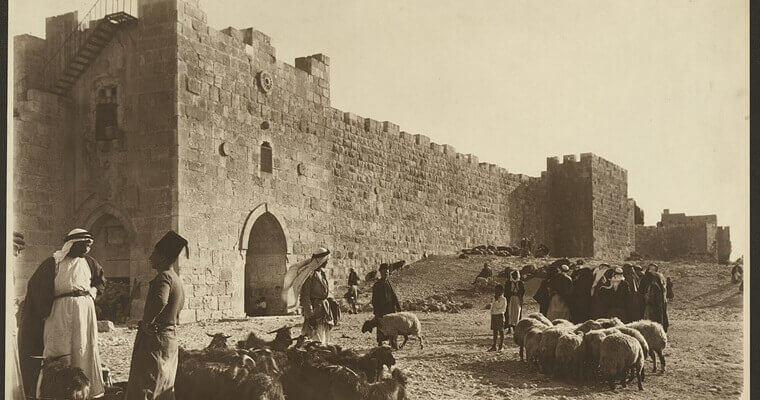
Baba Farid at Herod’s Gate
The Chishti order is one of the primary Sufi orders in India and parts of Southeast Asia. Its distinguishing feature is the use of music and religious hymns in a genre known as Qawwali within dhikr rituals and other spiritual practices, incorporating local musical instruments. Recently, several Israeli musicians have adopted this style and have even written songs in Hebrew using its form. Few people know this, but one of the most important sheikhs of the order, who is uniquely revered as a saint by the Sikhs of India as well, attained enlightenment in Jerusalem. His name, known to almost every Indian Muslim and Sikh, is Baba Farid (1173–1266).
The Chishti order was established as early as the 10th century as a branch of the teachings of Ibrahim ibn Adham (see chapter on early Islamic Mystics in Jerusalem), but its true founder was Mu’in al-Din Chishti, who arrived in India at the beginning of the 13th century and permitted the integration of musical elements into worship. He is buried in the Chishti shrine in Ajmer, Rajasthan, which serves as a major pilgrimage site. Mu’in al-Din’s student and successor was Qutb al-Din Bakhtiar, whose own student and successor in leading the order was Baba Farid—one of the most famous and important saints in India, a poet and mystic accepted by Hindus and Sikhs alike. Many of his verses appear in the holy book of the Sikhs, the Guru Granth Sahib, which is composed of mystical poetry.
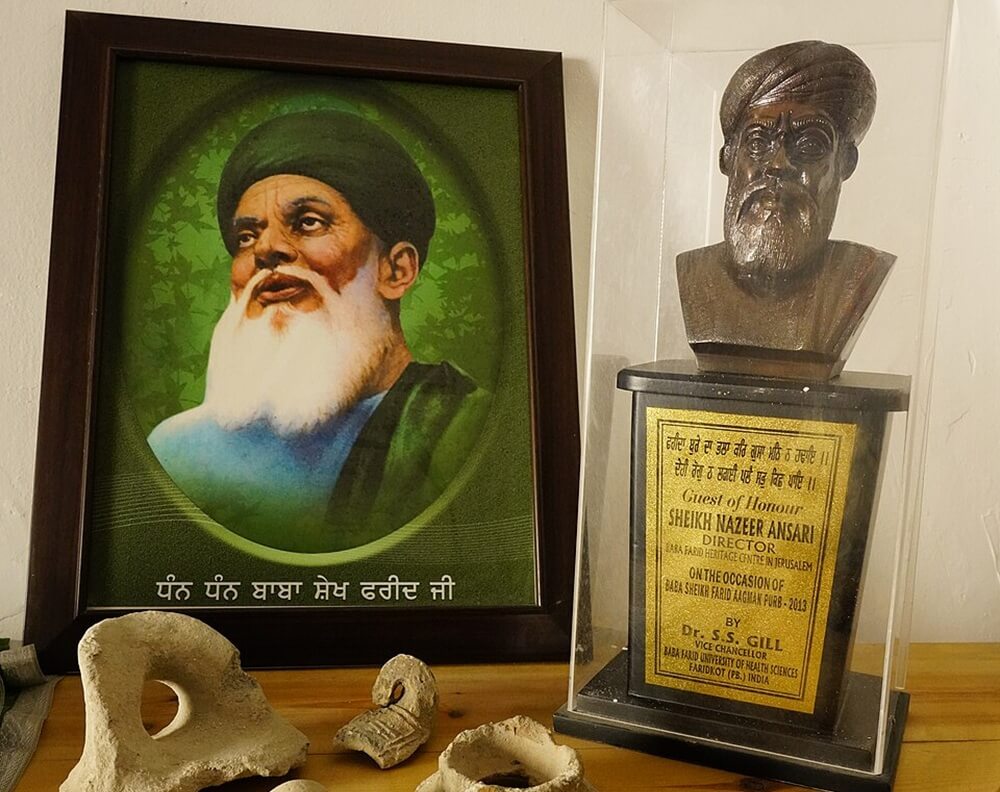
When Baba Farid was still a young man seeking his path, he made a pilgrimage to Jerusalem. There, he stayed at the Indian hospice near Herod’s Gate (the Flowers Gate), Al-Zawiyya al-Hindiyya, which still exists to this day—perhaps because the site is close to the tomb of Ibrahim ibn Adham, the first of the order’s masters in the chain of transmission. During the day, he swept the Temple Mount plaza, and spent the rest of his time in prayer and self-sanctification. The hospice contains a room where he spent forty days in isolation—a spiritual practice known among the Chishtis as a chilla (melting pot). the room features a portrait of him and a plaque in his honor. It was here that he attained enlightenment. Over the years, his stay in Jerusalem drew many Indian Muslim pilgrims to the city, who held their dhikr rituals and Qawwali singing at the site.
It is interesting to note that about a century ago, a young seeker of truth lived in the Indian hospice. He was close in spirit to the Sufi orders and later became famous in the West. His name was Gurdjieff, and today there are several groups in Israel practicing his spiritual method. According to certain sources (Dr. George Hintlian), he stayed in the country and met with a hidden group of Essenes who lived in a monastery not far from the Dead Sea. A friend of Gurdjieff named Bukachevski (Father Evlissi) had joined one of their monasteries before him and wrote to him about them. What exactly Gurdjieff was doing in the city at the beginning of the 20th century, and what brought him here, we do not truly know. Perhaps it was because of Baba Farid.
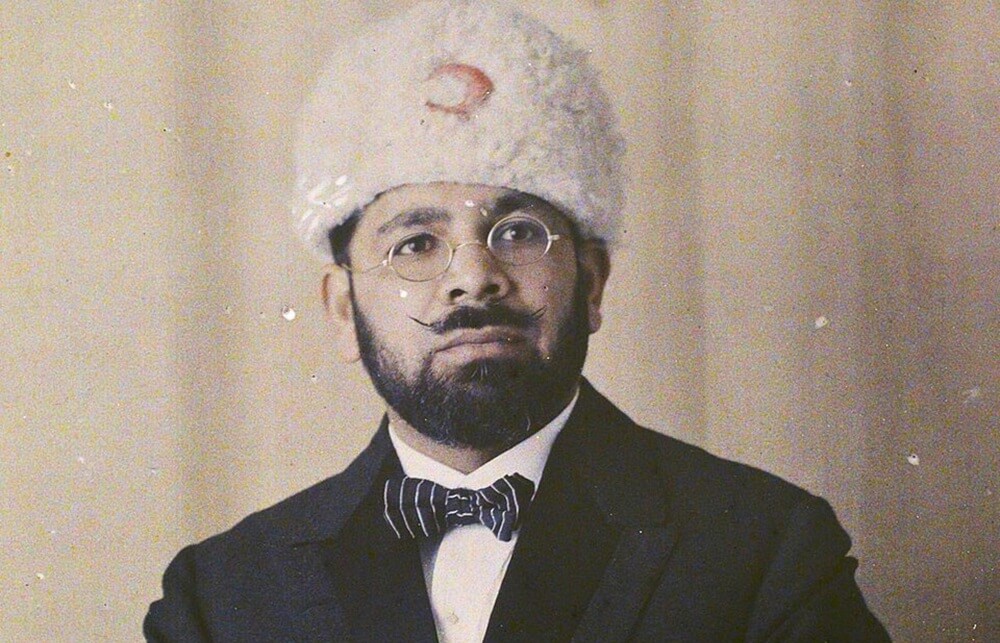
Mohammad Ali Jauhar in Jerusalem
The British Empire, which ruled over a quarter of the globe, was famously called “the empire on which the sun never sets,” and India was the jewel in its crown. A large portion of India’s population was Muslim, and they began to develop a deep connection to Jerusalem, particularly during the British Mandate period, when England ruled both lands. This bond intensified after one of the most prominent national leaders of Indian Muslims, Ali Jauhar, was buried on the Temple Mount (Haram al-Sharif) in 1931. He was laid to rest in the Khatuniyya Madrasa on the western side of the Temple Mount plaza—one of three madrasas originally dedicated to pious women, which later evolved into a sort of pantheon for the Palestinian national movement, where many of its leaders are buried.
Mohammad Ali Jauhar was a leading figure in the Indian independence movement. Early on, he collaborated with Gandhi and Nehru, and even briefly served as the president of the Indian National Congress. He was part of an umbrella organization of Indian Muslims who sought to restore the Ottoman Caliphate and have it recognized as the unifying religious authority for all Muslims worldwide, viewing this as a cultural solution to the question of Islam in India.
The Ottoman Caliphate continued to exist as a religious authority until the death of Abdulmejid II in 1942. He was a titular caliph, appointed briefly in 1922 during the era of the Turkish Republic, until he was expelled from Turkey and found refuge in France. He was a fascinating individual, as well as a talented musician and painter. The hope was that he would marry his daughter to the ruler of Hyderabad State in India—the Nizam of Hyderabad—who was the wealthiest man in the world at the time, and that their son would become both the ruler of Hyderabad and the caliph of Muslims worldwide.
For this to materialize, there was a need to rally pan-Islamic support for the designated caliph. This led to the idea of creating a hub of support in Jerusalem, positioning it to become the international capital of Islam—a pan-Islamic center of education and spirituality that would radiate its light across the world. To achieve this, Indian Muslims were called upon to support the Muslims in Palestine. Jerusalem was considered irreplaceable: not only due to its sanctity and religious importance, but also because radical elements were operating in Mecca and Medina at the time, and because politically, Jerusalem was not tied to any of the major stakeholders in the Muslim world, such as Turkey or Egypt, allowing it to gain broad consensus. Its international status and European-Christian context further reinforced the perception of Jerusalem as a place that could elevate the standing of the Muslim world, especially vis-à-vis the British Empire.
The leaders of the Khilafat Movement were the two brothers, Mohammad Ali Jauhar and Shaukat Ali, who, as mentioned, collaborated for a time with the broader Indian national movement led by the Hindus and headed by Gandhi. The brothers founded the All-India Muslim League, which ultimately pushed for the establishment of a separate Muslim state—Pakistan—as well as the Jamia Millia Islamia (The Islamic National University) in Delhi. Shaukat Ali was Jauhar’s elder brother and partner in this endeavor. Following his brother’s death in London during the Round Table Conferences aimed at resolving the Indian constitutional issue, Shaukat fulfilled his brother’s request to be buried in Jerusalem and convened the first World Islamic Congress in the city in 1931. The underlying idea was that just as the brothers had organized a Muslim League in India, a global Muslim League could be established to restore past glory, and that Jerusalem was the ideal place to do so.
Following the conference, which was organized in cooperation with the Grand Mufti Amin al-Husseini, Shaukat Ali attempted to assist al-Husseini by utilizing his connections with billionaires in Hyderabad State to establish an Islamic university in Jerusalem. He likely viewed this as a natural and complementary step toward a global Muslim league, similar to the Jamia Millia Islamia university that the brothers had established in Delhi, India.
One of the byproducts of this tightening Muslim connection between India and Palestine occurred as early as 1924, when Hajj Amin al-Husseini requested that the Indians send a family to care for the Indian zawiya near Herod’s Gate. Consequently, Sheikh Nazir Hasan Ansari—who was part of the Ali brothers’ Khilafat Movement in India—arrived in Jerusalem to oversee the zawiya, and his descendants continue to do so to this day.
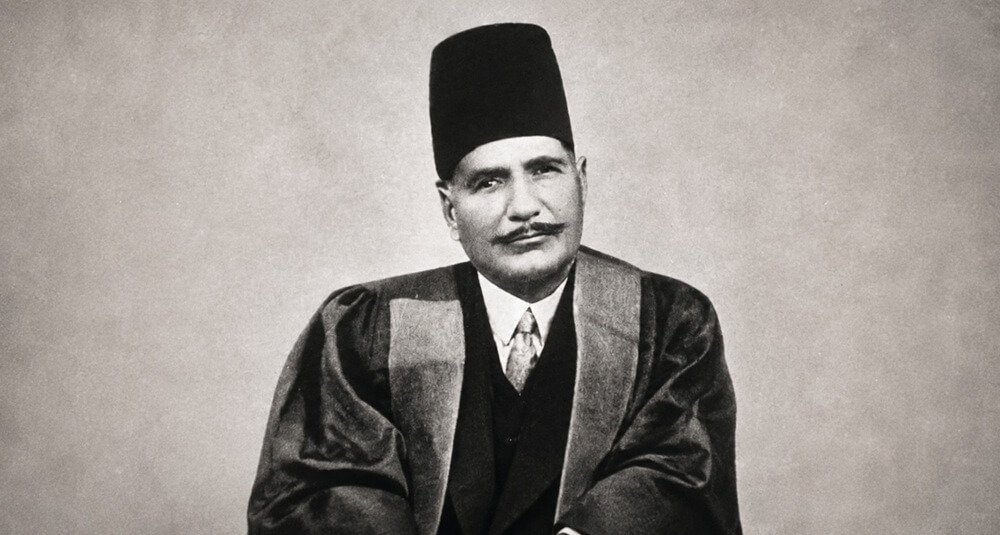
Muhammad Iqbal’s Vision of Jerusalem
The shared British rule over both India and Palestine generated a movement of Indian Muslim pilgrims to Jerusalem, which revitalized the city. Thus, in 1931, Muhammad Iqbal—regarded as the spiritual father of the Pakistani national movement—arrived in Jerusalem to participate in the first World Islamic Congress organized by Shukrat Ali. Iqbal was the first to propose the establishment of a separate Muslim state in India and was deeply involved in politics and the struggle for independence. He is the national poet of Pakistan, yet he was also knighted by the British Empire.
Iqbal arrived in Jerusalem as one of the invitees to the first World Islamic Congress, אhe Caliph Abdulmejid II was also invited, but the British vetoed his attendance and barred him from entering the country. The conference promoted a message of peace, with participants declaring themselves “friends of all and enemies of none”; nevertheless, some speakers, particularly the Grand Mufti, used the platform for anti-Zionist and nationalist propaganda. In his address, Muhammad Iqbal stated that he was not concerned by the struggle between Islam and other religions, but rather by what was occurring within the Muslim world itself. His primary anxieties stemmed from two factors: on one hand, the materialism and traps of the modern (Western) world, and on the other, exaggerated and extreme nationalism. He argued that after the Palestinians had freed themselves from the tyranny of Ottoman rule, they became ensnared in the jaws of western civilization.
Despite Iqbal’s warnings, some conference participants turned toward extreme nationalism, which ultimately ended in disaster. Even during the convention, sharp disagreements and disputes arose among the attendees; the initiative to establish an Islamic university in Jerusalem floundered, as did other proposals. Nonetheless, the seed of Muslim cooperation and its connection to the struggle over Jerusalem was planted, eventually leading to the creation of the Organisation of Islamic Cooperation (OIC), which today comprises 58 member states.
Following the conference, Muhammad Iqbal focused on his literary endeavors and wrote the Javid Nama, his most important literary masterpiece, in which he offers guidance to his son on how to build an exemplary society in the new nation. Iqbal was profoundly influenced by Rumi. In Javid Nama—which bears a resemblance to Dante’s Divine Comedy—Rumi guides him through realms of culture and spirituality, heaven and imaginary worlds, including encounters with leading historical figures and intellectuals ranging from Nietzsche to Al-Hallaj, on his path to self-discovery and understanding the world. Iqbal was a devout, practicing Sufi and is considered the most important Urdu-language poet of the 20th century.
Yogananda in Jerusalem
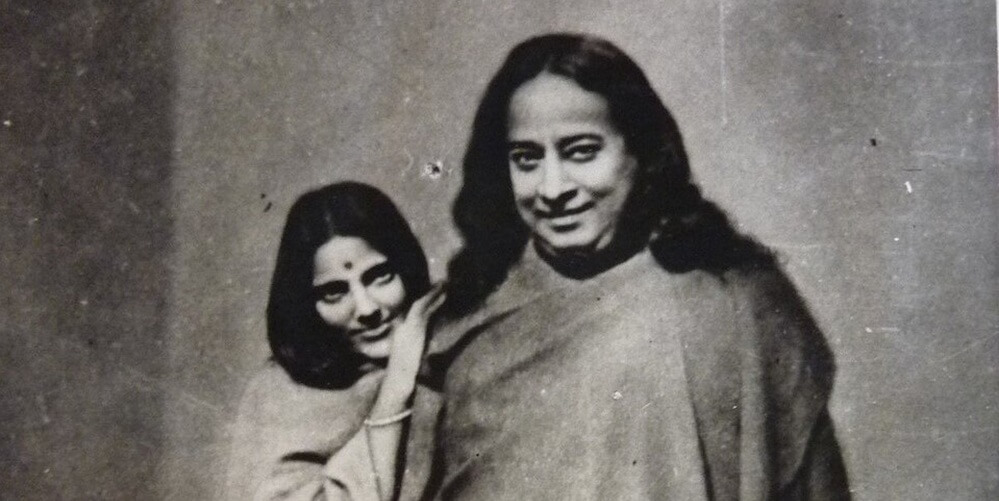
Paramahansa Yogananda (1893–1952) is considered the father of yoga in the West. Through his master’s teacher, Lahiri Mahasaya, he learned Kriya Yoga—a technique that reached him from a legendary figure named Mahavatar Babaji, an immortal saint who spends part of his time in a Himalayan cave. This form of yoga appears in Patanjali’s Yoga Sutras. In 1920, Yogananda was instructed to bring yoga to the West and moved to the United States. However, between 1935 and 1936, he journeyed across the world in pursuit of spiritual traditions, a trip during which he also visited Jerusalem. In a letter written after this visit, the following insights emerge:
According to Yogananda, Jesus is still accessible and active in Jerusalem. Jesus accompanied him during his visit, which included the Old City, the Mount of Olives, Bethlehem, Bethphage, Mount Zion, and also the Mount of Temptation (Quarantal). Jesus revealed ancient mysteries to him and awed him with his presence. In the letter, Yogananda mentions many experiences he had throughout Europe and the Middle East, explicitly stating that, despite all of those, nothing compares spiritually to Jerusalem—notwithstanding the dirt and neglect in parts of it. In the letter, he also expresses his sympathy for the Jewish Zionist enterprise.
Following the visit to Jerusalem, Jesus became more present within Yogananda’s very being—a part of him, much more so than before. According to his words, holy sites transform the souls of individuals who possess faith in the vibrations of the saints. In his final years, Yogananda compiled his lectures on Jesus, which were published in the book The Second Coming of Christ. He seemingly supported the theories of Nicolas Notovitch, published in a late-19th-century book about the unknown life of Jesus and his initiation in India and Tibet during his youth. This view was also supported by Swami Abhedananda and likely by Nicholas Roerich as well.
According to the spiritual master Omraam Mikhaël Aïvanhov, who claimed to have met Babaji, there is an identity of being between Babaji and Jesus. These are two spiritual masters of humanity: one living in this world, and the other living in the world beyond. They impart similar teachings and promote love, wisdom, and truth in the world. It should be noted that the tradition of Jesus visiting India and traveling there after his death is a living tradition, which is also accepted by Muslims. In Israel, this tradition is particularly nurtured by the Ahmadis in Haifa. Theosophy also espouses this view, and not without reason.
Bibliography
Johnson, P. (2015). An Indian Corner in Jerusalem. Jerusalem Quarterly, 62.