The Mandate Rule
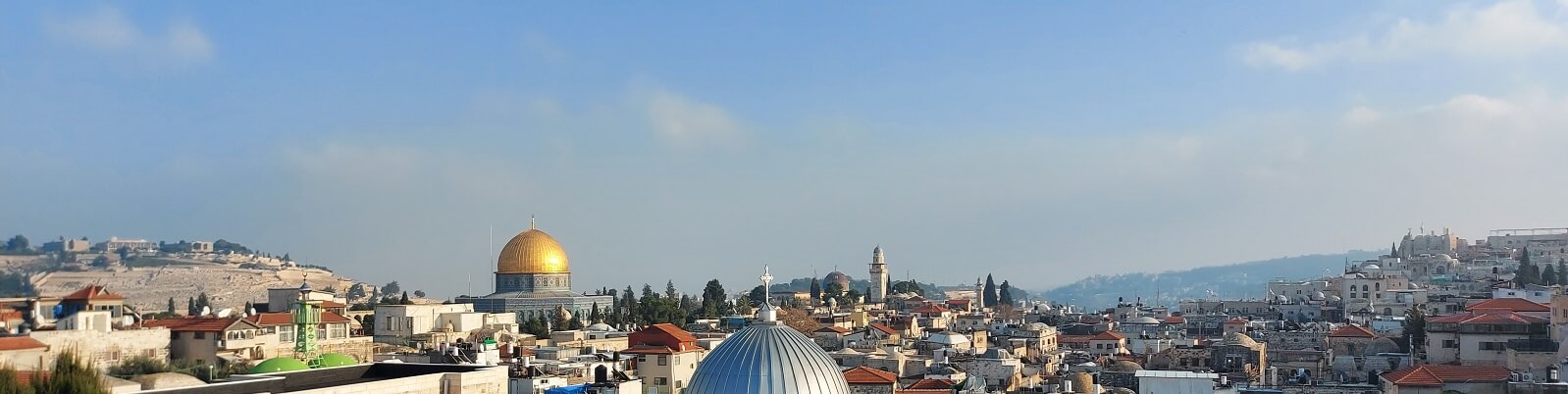
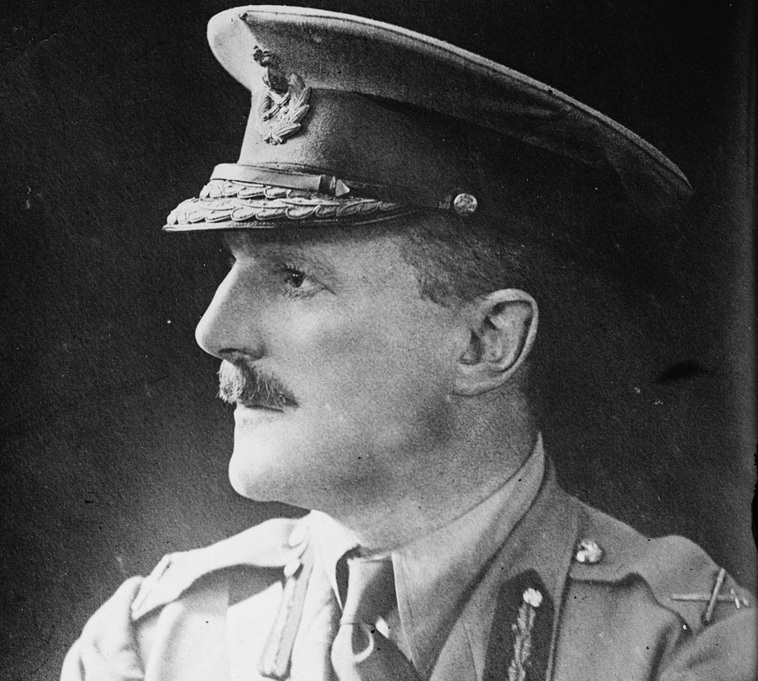
In 1917, the British captured Jerusalem, marking the beginning of a new era. Jerusalem under the Mandate became a rapidly growing city, transforming from an underdeveloped provincial town into a modern European-style metropolis. Before the Mandate period, Jerusalem lacked electricity, running water, paved roads, and street lighting—deficiencies that were rapidly addressed.
In 1919, following the British occupation of the region and the commencement of the Mandate, the Anglo-Israel Association was founded. It was headed by Princess Alice, Countess of Athlone (1883–1981), the daughter of Prince Leopold and granddaughter of Queen Victoria. She was the first British princess to visit the country during the Mandate period.
A different royal figure named Alice with deep ties to the Holy Land was Princess Alice of Battenberg (1885–1969), Queen Victoria’s great-granddaughter. She married Prince Andrew of Greece, and spent much of her life in that country, eventually converting to Greek Orthodox Christianity. Alice of Battenberg became a nun and dedicated her life to charitable works and the founding of monasteries. She maintained an interest in mysticism and esotericism and was likely exposed to the traditions of theosis and Hesychasm.
In the 1950s, she visited Jordanian-controlled Jerusalem and stayed at the Gethsemane Convent—the Church of Mary Magdalene—where her aunt, Grand Duchess Elizabeth Feodorovna of Russia (murdered by the Bolsheviks), is buried. Her stay at this site, central to the life of Jesus, was profound, and she expressed a desire to be buried in the church. This wish was fulfilled when her remains were transferred to Jerusalem in 1988. Princess Alice of Battenberg was the mother of Prince Philip, the husband of Queen Elizabeth II, and the grandmother of King Charles III. This lineage has led to royal visits to the Holy Land and cemented a personal connection between the British Royal Family and Jerusalem (see the chapter on the Church of Mary Magdalene).
Mandate-era Jerusalem was a focal point for the Western world. While it is often said that India was the “Jewel in the Crown” of the empire upon which the sun never set, in a spiritual and cultural sense, that title belonged to Jerusalem. Even Rudyard Kipling visited the country in 1929. A Freemason, he was a guest of the British “King Solomon’s Temple Lodge,” founded in 1926. He visited the British Military Cemetery on Mount Scopus; as a father whose son was killed in World War I and whose burial place remained unknown, this site held great significance for him.
Many others took advantage of the improved transportation and infrastructure brought about by the British and came to visit the city, regarding it as both the cradle of Western culture and an object of longing—an ideal for the future. It became a burgeoning center of culture, fostering intercultural and interreligious dialogue.
A Round Table in Jerusalem
Visitors to Jerusalem today enjoy the beautiful view of the Old City, immersed in gardens and greenery that emphasize the walls. Part of the city’s unique atmosphere stems from its three concentric circles, activating the archetype of holiness associated with the number three: the outer circle is the greater city; the middle circle is the walls of the Old City; and the inner circle is the holy sites—whether the Church of the Holy Sepulchre for Christians, the Western Wall for Jews, or the Temple Mount complex for Muslims.
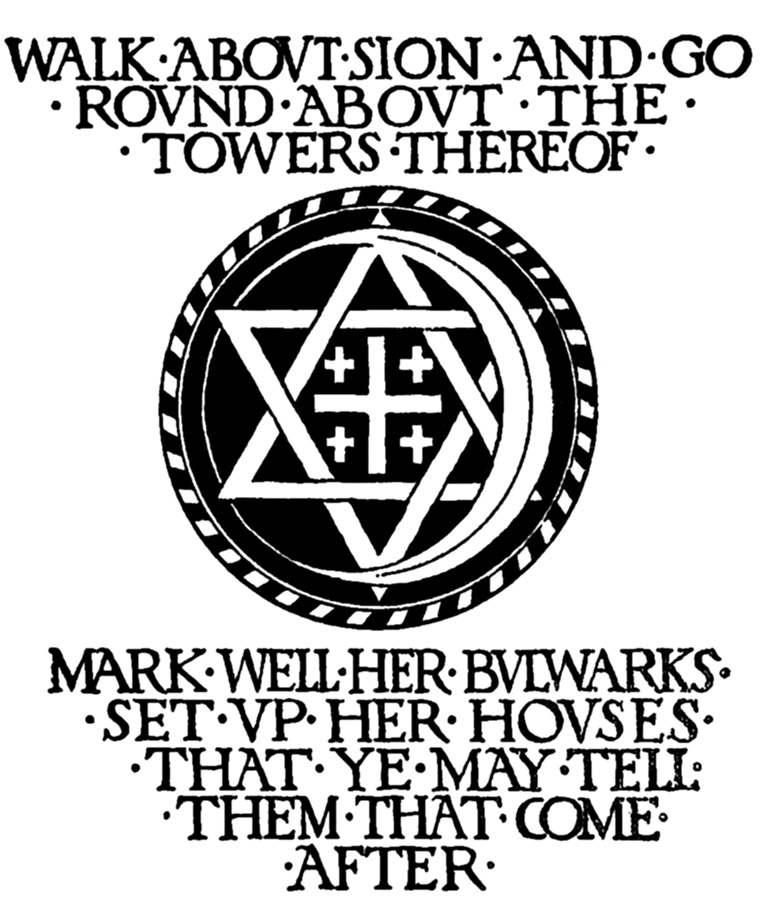
separation of the Old City from its surroundings is the result of urban planning and an intention to emphasize the entire Old City as a “sacred basin,” a temple for humanity. The driving force behind this concept was an organizational body called the Pro-Jerusalem Society, composed of representatives from all religions, communities, and leading figures of the city, who convened regularly to discuss and jointly decide on city affairs at the beginning of the British Mandate—an initiative led by Governor Sir Ronald Storrs.
The beginning of the Mandate rule was a time of grace. The British paved roads, brought cars, introduced running water and electricity for the first time, designed an urban plan, built museums and public institutions. Jerusalem flourished and prospered, and for a brief moment, it was a city of peace, cosmopolitan, a place of intercultural and interreligious encounter. One could almost hear the footsteps of the Messiah. The British authorities envisioned Jerusalem as a house of prayer for all nations.
Ronald Storrs (1881–1955) viewed the entire city as “one complex sacred to world culture, which the authorities have a duty to preserve and highlight its historical and aesthetic values.” He was raised in an atmosphere steeped in the values of British Chivalric Orders (Order of St Michael and St George). According to Nurit Shilo-Cohen, he possessed a broad humanistic education and depth of thought that went far beyond the boundaries and limitations of his official position. He outlined a sublime vision, built upon the foundations of Classical thought and rhetoric—with which he was intimately familiar—and a deep knowledge of history, to make Jerusalem a beacon of light for the whole world.
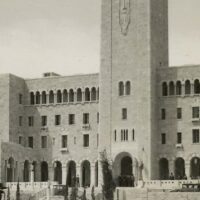
Naturally, upon his appointment as Governor of Jerusalem, he thought it would be a fitting idea to establish a Round Table, in the spirit of the Knights of the Round Table, where the “best knights of the kingdom” would meet as equals. Miraculously, the dream became reality: in the magnificent hall of the former German Hospice of St. Paul (near Jaffa Gate), a round table was placed, and rabbis, sheikhs, priests, politicians, and academics would gather around it once a week.
He wrote: “For the first time in the city’s history, the members of the religions, communities, and denominations of Jerusalem united in a common struggle to preserve the city’s historical and religious assets, and worked shoulder to shoulder in an attempt to shape the image of the Holy City.”
“Behind the establishment of the Pro-Jerusalem Society lies a sublime idea. The Holy City needs unity more than anything else. It asks for a round table around which the members of all races and religions will be designated, forgetting themselves and their small quarrels for a moment, and thinking only of the Holy City and its significance to all humanity.”
The Society functioned as a de facto City Council, assisting the Military Governor until official institutions were established and a civil administration installed. It worked extensively to change and improve the face of the city.
Before the Mandate period, buildings abutted the walls of the Old City, as is the case in Acre. Storrs, influenced by the ideas of the Arts and Crafts movement and the “Ideal City” of C.R. Ashbee (see below), ordered the demolition of these buildings and the planning of a park of open spaces adjacent to the wall. This urban plan was only completed in 1967 by order of Teddy Kollek, but its conceptual father wrote as early as the 1920s: “If a tasteful and sensitive conqueror had arrived in 1850, he would have erected the shops, monasteries, and hotels far from the Old City, and would have left the gray wall within a field of grass, olive trees, and cypresses.”
When a proposal was made—God forbid—to build a railway line between the Old City and the Mount of Olives, Storrs famously declared: “With great pleasure, I replied to the request for a concession to lay an electric railway to Bethlehem and the Mount of Olives that the first rail would pass over the dead body of the Military Governor.”
Another measure Storrs enacted, which we enjoy to this day, was the municipal ordinance requiring the cladding of buildings with white Jerusalem stone. He named the new and old streets (there were no street names during the Ottoman period) and installed ceramic street signs in three languages, produced at the Bezalel Academy. By choosing the names, he instilled his views on the cosmopolitanism and historical importance of the city.
“I cannot pretend to be able to describe or analyze the root of my love for Jerusalem; it is not confined entirely to emotion, aesthetics, or religious feeling—and less so to the theological or archaeological boundary. I believe it contains something of all five… In my eyes, Jerusalem appears and will always appear as a city unto itself among the cities of the world.” — From his autobiography, Orientations.
In one of his speeches he states: “For hundreds of years, the greatest interests of the three great religions of the world have intersected in Jerusalem. From Jerusalem, a heavenly organ voice has gone out at different times, inspiring and ruling the world. I do not dare to prophesy—because the East is a university where the student never receives a certificate—but I do dare to believe that what happened in the past will happen again, and that if we succeed in the just fulfillment of the mission entrusted to us by the will of the nations, and if we can reconcile or unite the leaders and believers of the three great religions—it is possible that for the good of the nations, a voice will once again go out from Zion.”
Among the members of the Pro-Jerusalem Society were: the Mayor of Jerusalem (Raghib Nashashibi), the Mufti of Jerusalem, the head of the Custodia Terrae Sanctae (Franciscans), the Greek Patriarch, the Armenian Patriarch, the head of the Jewish community, the Chairman of the Zionist Executive, Eliezer Ben-Yehuda, Antonio Barluzzi, Patrick Geddes (city planner and Antiquities Inspector), Musa Kazim Husseini (former mayor), David Yellin, and others. The Honorary President was the first High Commissioner, Herbert Samuel.
Storrs commissioned an architect named William McLean to create an urban plan for Jerusalem. Both invited a well-known figure in the context of urban planning—the head of the Arts and Crafts movement, Charles Robert Ashbee—to join them in Jerusalem as an advisor to the Governor, and later as head of the Planning Society, city planner, and secretary of the Pro-Jerusalem Society.
The Arts and Crafts Movement
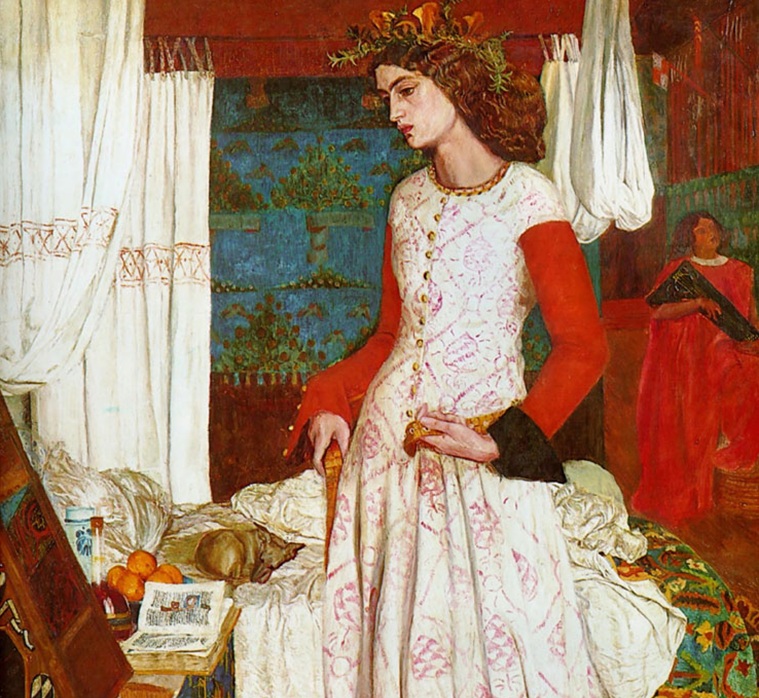
The Arts and Crafts movement was founded in England at the end of the 19th century by John Ruskin (1819–1900) and William Morris (1834–1896). It was inspired by social thinkers who opposed the Industrial Revolution and longed for the guild culture of the Middle Ages. The movement championed the values of medieval craftsmanship and the quality of work associated with traditional artisans, advocating a return to these values.
The thinkers of the Arts and Crafts movement argued that the “Going astray” of humanity occurred during the Renaissance with the appearance geniuses like Leonardo da Vinci, Raphael, and others. At that time, competitiveness and the desire to excel entered the world, and the concept of the “genius”—the person beyond the ordinary—developed. Until that time, people lived in guilds, performing their daily craft out of moral commitment to their station, and from a joy of creation based on traditions passed down through generations from father to son. Medieval artisans excelled in their work due to tradition, joy and honor. Craftsmanship was a source of identity and a form of self-respect that has since vanished from the world—the honor of excelling at one’s craft, continuing ancestral tradition, and remaining faithful to the values one was raised on. The movement’s perception was that unlike Art—which is a personal expression of the individual and their personality—Craftsmanship is the individual’s commitment to the object, which exists outside of him.
Furthermore, the industrialization and capitalism of the Victorian period distanced man from a connection with the “truth” of life and matter. People no longer saw the product as a whole; they lost the connection between planning and execution, becoming mere cogs in a large system, devoid of thought and values. The resulting deterioration of quality affected not only the material level but also the spiritual and moral levels, necessitating a return to the values of craftsmanship of the Middle Ages.
The Arts and Crafts movement had a profound influence on painting, sculpture, and architecture in Europe and beyond, setting the tone in English salons until the advent of modern art in the 1920s. Within the movement, there was a spectrum of opinions on various issues, such as the adoption of machines: some saw them as a necessity, provided they were controlled (Ashbee), while others opposed them entirely. Regarding the division of labor and the separation between planning and execution, some argued that modern society could not dispense with it, while others clung to the ideal of the medieval guilds. They viewed the numerous English churches built and designed by artisans—builders who were often illiterate—as the pinnacle of human creation and a golden age to which society must return.
John Ruskin
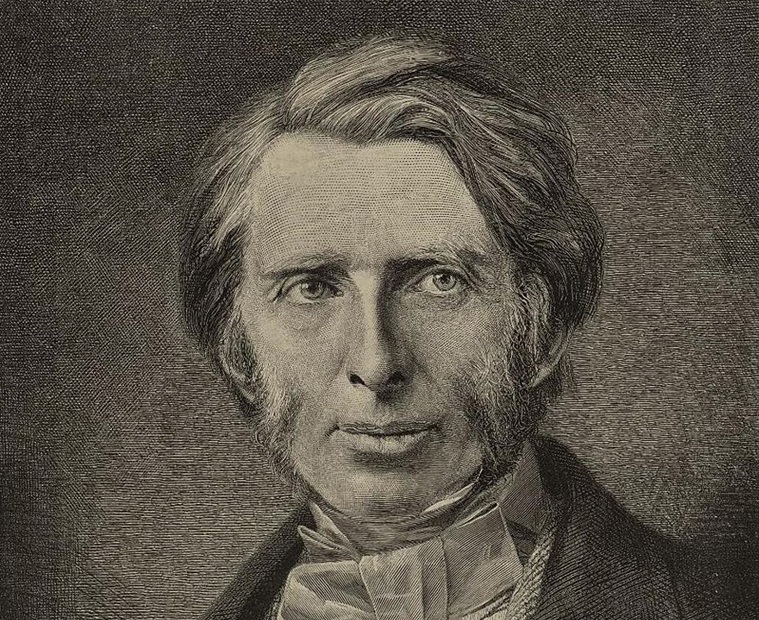
John Ruskin (1819–1900) was the movement’s prophet. He was one of the most important art critics of the 19th century, and in this capacity, he undertook an extended trip to Italy. There he wrote one of the movement’s fundamental books, The Seven Lamps of Architecture, based on his impressions of Renaissance and Gothic art. In it, he described an ideal architecture rooted in ethics, aesthetics, and religion.
According to him, there are seven “Lamps” (principles) of architecture: Sacrifice, Truth, Power, Beauty, Life, Memory, and Obedience.
The first Lamp, according to Ruskin, is Sacrifice. This is a dedication of the craft to the divine—or, in Hebrew, Mlechet HaKodesh (Sacred Work). The second is the Lamp of Truth, favoring handiwork over machine-made imitations. Only a person with the right feeling, whose hands are like those of the medieval artisan, can produce a work of truth such as the one Ruskin advocates.
According to Ruskin, architecture in the Middle Ages (the Gothic period) was directed towards God. Therefore, churches were long and narrow—Gothic cathedrals that soared to great heights, built of columns and vaults pointing upwards with narrow, elongated windows between them. Everything leaned towards verticality. An echo of this can also be seen in the paintings of figures from that period: saints were depicted as elongated, and the folds of their clothes resembled columned halls—many vertical folds creating elongated lines.
In the Renaissance period, the emphasis shifted from God to Man. Man was placed at the center; consequently, churches became less lofty, more circular, and centralised. The cross shrank; it was no longer a long arm extending endlessly, where one cannot see the other end of the church, but rather several short arms extending from a central point. The churches adopted centralized or circular plans rather than the longitudinal basilica.
The transition to Man is important and correct, but as a society, we lost something along the way: the dedication of work and creation to something greater than ourselves—to God.
Ruskin argued that the moral and social health of a nation is inherently connected to the quality of its architecture and the nature of its labor. The Industrial Revolution created subservient and alienated workers, in contrast to the independent worker of the Middle Ages who was responsible for the product as a whole. The separation of planning from labor, and the division of labor into unrelated segments, weakened aesthetics and morality. Ruskin opposed this division; regarding products such as furniture, he argued for a return to the medieval ideal of manual production rather than machine manufacturing. He believed that in the Middle Ages, artisans enjoyed their work, resulting in the Gothic cathedrals designed and built by guilds of builders, sculptors, and painters—making the Gothic the most sublime style.
Ruskin was one of the most influential figures in the adoption of the Gothic Revival style in 19th-century England (alongside the architect Augustus Pugin), as seen in public buildings, including at Oxford, where he headed the art department. This same style appears in Christ Church and other Anglican churches in Jerusalem.
William Morris
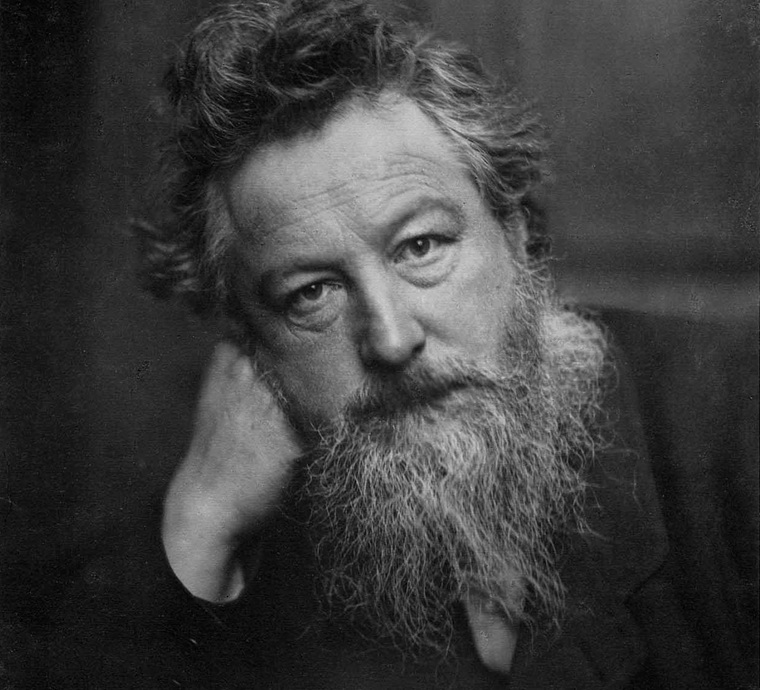
The movement’s second prophet was William Morris (1834–1896), who also advocated a return to the craftsmanship and labor of the Middle Ages. He wanted to restore the artisan’s pride, arguing that “art is the expression of man’s joy in labour.” Medieval craftsmanship existed within professional guilds, fostering a family tradition of pride in work and a desire to perform it in the best possible way for the artisan’s own satisfaction, rather than for the sake of competition or surpassing others, as developed later in the Renaissance.
William Morris significantly influenced the development of Art Nouveau, a style which combined plant motifs, Far Eastern influences, the female body, and more, thereby expressing some of the Arts and Crafts movement’s ideas. He was one of the most highly regarded designers of the 19th century—perhaps the most—as well as a thinker, architect, painter, author, and poet. He was politically active and helped spread the ideas of Socialism in England. He revived traditional textile arts and founded a successful private commercial company (Morris & Co.), which produced, among other things, stained glass. One of his students (or followers of his tradition) was Veronica Whall, who created the stained-glass windows in the Knights’ Hall at Tintagel.
Morris was interested in the legends of King Arthur from a young age, wrote poetry as a youth, and held romantic views. He engaged in painting in the Pre-Raphaelite style (the school of William Holman Hunt and Dante Gabriel Rossetti) and wrote many books, including works on Jason, Chaucer, Icelandic sagas, Nordic tales, and Virgil, as well as fantasy novels that influenced Tolkien’s The Lord of the Rings.
Morris was influenced by Ruskin’s ideas and books as a young man. As he matured, he became Ruskin’s colleague in the movement. In the last decade of his life, he came full circle by becoming the President of the Arts and Crafts Exhibition Society, whose goal was to renew the tradition of medieval craftsmanship. He died in 1896, on the opening day of an international exhibition of the movement. He was succeeded as leader by Charles Ashbee, an artist and architect who later became the secretary of the Pro-Jerusalem Society.
Charles Ashbee
Charles Ashbee (1863–1942) was born in London and studied architecture. He joined the Arts and Crafts movement, and under the influence of Morris, his teacher, he founded art guilds that operated in rural areas. After this endeavor proved economically unviable, he understood that the place for human activity—including that of the proponents of craftsmanship—was in the city, as it had been in the Middle Ages. However, he believed that a city with the “right” planning was required. According to Ashbee, “the artist’s role is to adapt the appearance of the city to the society living in it, through its art.”
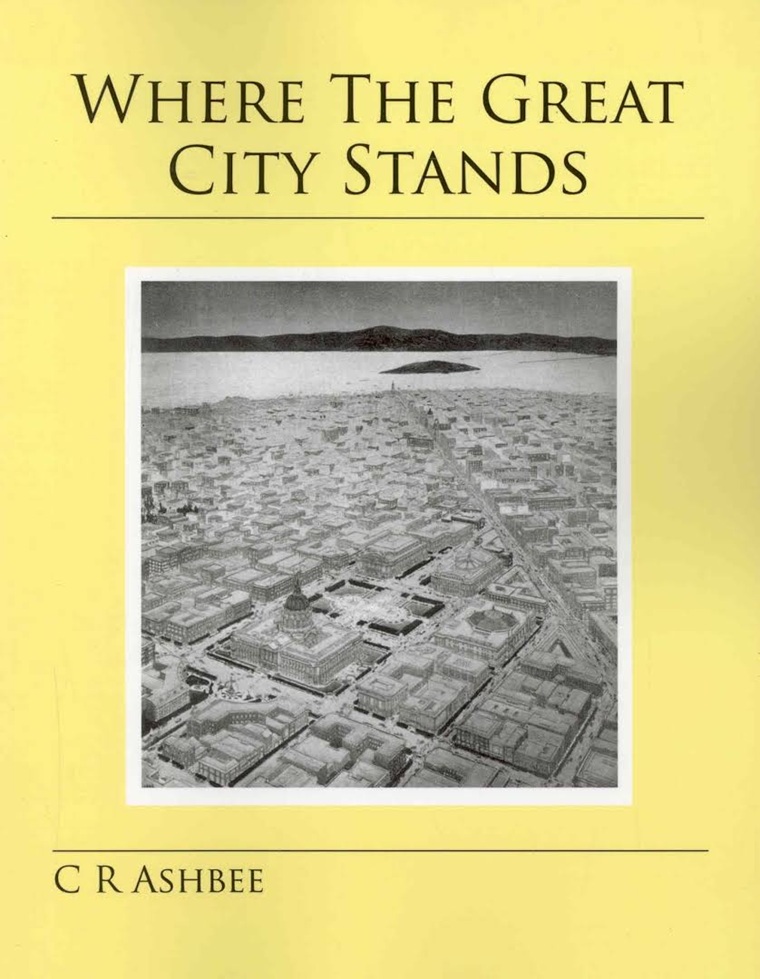
Ashbee argued that the economic advantages of the city, including machines, should be utilized, claiming that this could bring a new and better future for humanity. He wrote a book on the Ideal City [1], in which he proposed a vision of a city where there is a combination of local art and traditional industry with modernity without alienation, and a preservation of the social fabric of the extended family within the guild.
The guild should be the foundation of society and the infrastructure of the new city, as it creates a natural and faithful continuity of culture, “The municipal government will protect the guilds from economic competition, and in return, the guilds will protect society from the harms of industrialization.”
Following Morris’s death, Ashbee became one of the most prominent figures in the Arts and Crafts movement. He argued that the movement should also include an approach and solutions to issues such as housing and employment. The “human scale” must be restored to the city; therein lies the salvation for both society and artists. In his words: “We will not have arts if we are not worthy of them, if we do not have cleaner, more beautiful cities, if we are not sensitive to the landscape.” He lived in Cairo for several years, was impressed by local artists, longed for the medieval city, and advocated for urban preservation and the protection of historical buildings, believing this preserved atmosphere and quality.
Ashbee participated in international urban planning competitions, and his name became known worldwide as an expert in urban renewal. In one of these competitions (Dublin, 1914), he first met Patrick Geddes—a Scottish architect who was close to the Zionist Commission. They later collaborated on the planning of Jerusalem.
Ashbee arrived in Jerusalem in 1918 at the invitation of Governor Storrs to officially prepare a survey of the state of the arts. Immediately upon his arrival, he began working to develop and revive local crafts and artisans. He rehabilitated the “Jerusalem Looms” guild and established a mentorship system there. For this purpose, the Cotton Market (Suq al-Qattanin) was renovated, and a local school was established with the help of Egyptian experts. He brought Armenian ceramic artists from Turkey, led by David Ohannessian, and employed them in the project of restoring the tiles of the Temple Mount. He viewed this as the revival of the Persian artistic tradition.
He brought glassblowers from Hebron to work at the High Commissioner’s residence and carpenters from Damascus to manufacture furniture. He contributed to the development of the power and welfare of the local artists’ guilds. In 1922, he organized an exhibition titled “Handicrafts and Industry in Palestine,” which displayed traditional crafts and household goods, contributing to the restoration and preservation of the country’s arts and crafts.
In addition, he conducted a comprehensive survey of antiquities and buildings in Jerusalem and made practical suggestions for their documentation and preservation, driven by the desire to preserve the ancient (Crusader) character of the Old City. He viewed the Dome of the Rock as an urban symbol and decided to restore it. He worked to restore other ancient structures, including the ancient markets, in which he saw the heart of the traditional city. In addition to the Cotton Market, the Spice Market (Suq al-Attarin) and the David Street Market were restored, as was the Mahane Yehuda Market in the New City.
Over time, he became the secretary of the Town Planning Committee. Ashbee saw Jerusalem and Palestine as a kind of “microcosm,” believing that the experiment he was conducting in urban planning according to Arts and Crafts principles in Jerusalem will have global significance. To preserve the appearance of the city, he initiated a project of cleaning and restorating the Citadel (Tower of David), which had been used as a military barracks. The Clock Tower erected by Sultan Abdul Hamid near the Jaffa Gate was removed because it did not conform to the city’s “Crusader” character. Buildings adjacent to the walls were also removed to emphasize the centrality and beauty of the Citadel, which became the cultural heart of the city—a venue for international exhibitions, displays, plays, and fairs.
In his book – the Ideal City, Where the Great City Stands (published 1911), he suggested that artisans’ guilds be organized by area and neighborhood, arranged concentrically around what he called the source of the city’s power: the school where arts and crafts would be taught, and where exhibitions would be held. This school would serve as the center for local artistic industry, where “permanent and rotating displays of the guilds’ products would be held to encourage the production of quality works.” It would preserve “models reflecting the local tradition in all its expressions as a paradigm for proper development.” Through this center, the city would control—according to artistic standards—the necessary means of mechanization.
Ashbee saw the Tower of David as the physical and spiritual center of the new Ideal City in Jerusalem, a suitable location for the school of arts and crafts. For Ashbee, the school in Jerusalem should also be responsible for the restoration and preservation of antiquities. Thus, Storrs and Ashbee divested the Citadel of David of its religious and administrative functions and transformed it into a secular center—a status it retains today (as the Tower of David Jerusalem City Museum).
Ashbee created a ring of markets and craft workshops in different parts of the Old City and outside it, with a central hub for arts, crafts, schooling, and exhibitions at the Tower of David near Jaffa Gate. Additionally, he restored a symbolic center—the Dome of the Rock—in the spirit of the Arts and Crafts movement, beautified the city, and encouraged local artists. He believed that society’s role was the restoration of arts and crafts, the protection of buildings, and the founding of a solid system of arts and crafts schools; in this spirit, he encouraged institutions such as Bezalel.
Ashbee considered Jerusalem the most complete example of an intact medieval city, particularly regarding its surrounding walls. Therefore, he worked for their restoration. He believed that the Sacred Basin should be distinct from the new modern city. The Old City should be a place of the mind and spirit, dedicated to spiritual, cultural, and religious life—a kind of divine domain. Ashbee suggested (in the spirit of the preceding McLean plan) a ring of open spaces and parks around the walls of the Old City. This “green belt” would separate the New City from the Old, preserve its character, and emphasize its importance and beauty. The plan assigned a central role to the restoration of the Ramparts Walk, as it constitutes the backbone of the Sacred Basin, allowing views in all directions, including inward into the city itself. In the parks around the walls, he suggested incorporating ancient elements as well as decorative features such as fountains.
Unintentionally, Ashbee contributed to the feeling of holiness and uniqueness of the Old City by creating a separation between the sacred and the profane, connecting the built environment with nature, and creating a contrast between stone and vegetation. Additionally, he preserved the windmill in Yemin Moshe (linking it to craftsmanship), planted trees, and developed green spaces outside the walls. Five gardens were established throughout the city, some inside the Old City and some outside, with students participating in the planting to engage them in community action.
Ashbee referred to the Old City as a “unique element worthy of preservation on the one hand and urban continuity on the other.” The planning of new urban components, he argued, should follow the appearance of the existing city. A connection between the future planning of the city and the preservation of its past must be maintained. Part of this effort was the ordinance established by his predecessor, McLean, requiring all buildings to be clad in Jerusalem stone.
In 1922, the architect Clifford Holliday (1897–1960) replaced Ashbee as head of the Pro-Jerusalem Society and civic advisor. Upon his departure, Ashbee wrote a report on the activities of the Pro-Jerusalem Society during four turbulent years [2]. Following his departure, the prestige of the Society declined, yet there were those who continued to believe in the concept of Jerusalem as a microcosm—a house of prayer for all nations.
Footnotes
[1] Where the Great City Stands (1917).
[2] Heisler-Rubin, N. (2005). Planning the Artistic City: Charles Robert Ashbee in Jerusalem, 1918–1922. Cathedra: For the History of the Land of Israel and its Settlement, 81–102.