Continuation of the Concept of Jerusalem as a Microcosm
Following the idyllic period of the early British Mandate, troubles emerged. Unrest began as early as the 1921 riots, though these were successfully contained by Governor Storrs. However, the delicate fabric of inter-religious communal relations was ruptured by the 1929 Riots, which resulted in significant loss of life and created a deep schism between the Jewish and Muslim populations.
Nevertheless, there were individuals, particularly within the British administration, who retained their belief in the vision of Jerusalem as a microcosm and a beacon of light for the whole world, and designed public buildings in this spirit. One of the most important buildings constructed during this period—born of a desire to demonstrate the cosmopolitan nature of the city as a meeting place of East and West—is the Rockefeller Museum. Another significant edifice built in this spirit is the YMCA building.
The YMCA Building – A Book in Stone
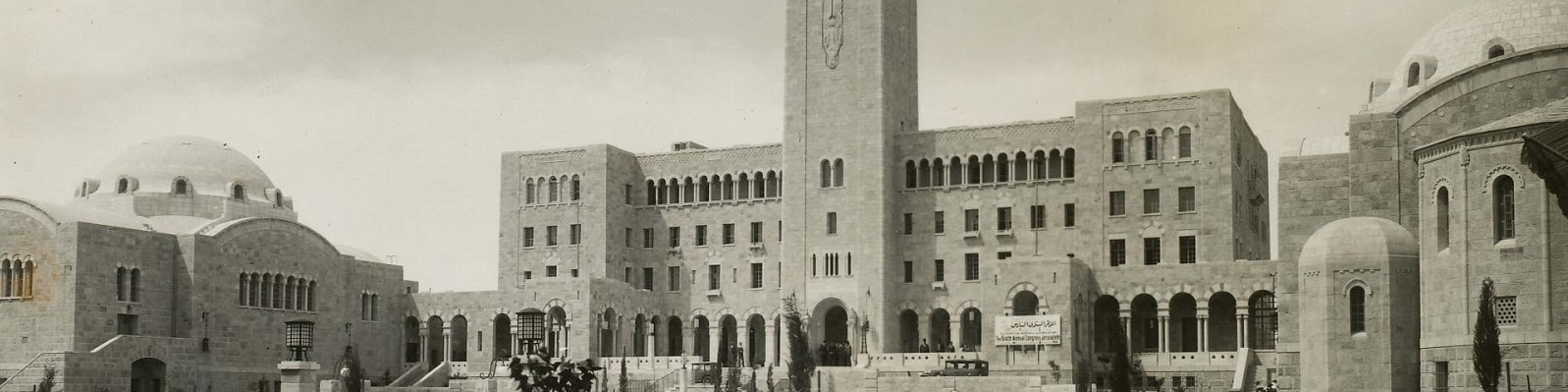
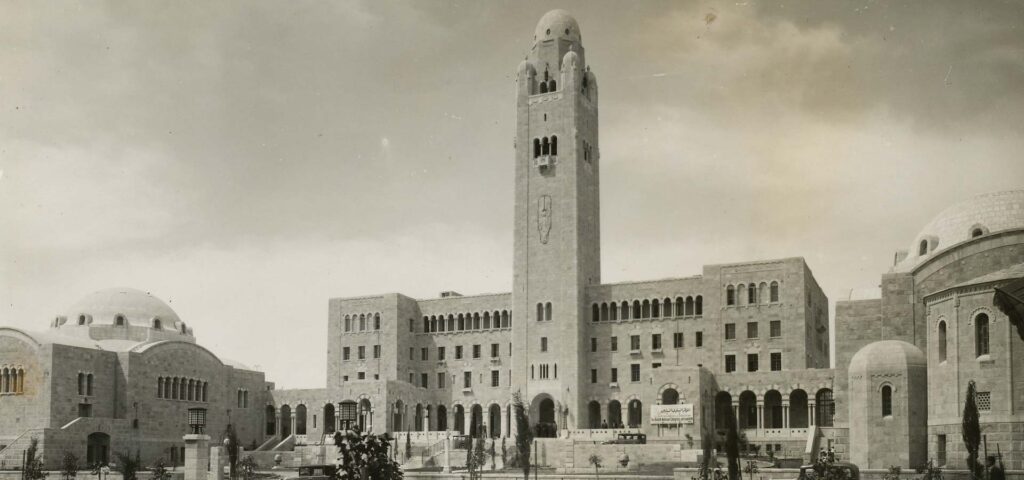
One of the most fascinating and beautiful structures in Jerusalem is the building of the Young Men’s Christian Association (YMCA). Founded in England in 1844, the organization established centers in various countries worldwide as part of the 19th-century Christian revival and the wave of religious enthusiasm that swept the United States and, to some extent, England. The Jerusalem building was inaugurated in 1933.
The Association began operating in Jerusalem in 1878, but until World War I, its activities were limited. In 1920, Dr. Archibald Clarkson Harte (1865–1946) was appointed Secretary of the Association; he became the driving force behind the building’s construction. In 1924, he interested an American philanthropist named James Jarvie, who donated a million dollars for the structure. Jarvie died in 1929 before the building’s completion. In 1928, the cornerstone was laid by High Commissioner Lord Plumer. Another personality associated with the building’s construction was John Mott, the leader of the World YMCA.
The building’s design was entrusted to the firm of the American architect Arthur Loomis Harmon, who was one of the designers of the Empire State Building in New York. He collaborated with the architect Adamson, who served as the regular architect for the YMCA worldwide. Harte was deeply involved in the planning. He traveled to Europe to gather ideas from existing churches and cathedrals, constantly proposing changes and additions to the American architects’ plans; consequently, they were forced to alter their designs according to his demands. Eventually, both the architects and the YMCA management grew tired of the delays. The executive secretariat informed Harte that the building plan had been finalized and no further changes could be made. Deeply offended by this decision, Harte resigned from his position, moved to a house near Tiberias, and refused to attend the building’s opening ceremony despite a delegation sent specifically to bring him, led by the President of the World YMCA.
The construction proceeded vigorously. The new High Commissioner, Sir Arthur Wauchope, visited every Friday to inspect the progress. Sculptors and artists participated in decorating the building, including Batya Lishansky, the painter Shmuel Melnik, Meir Gur-Arieh, and Zeev Raban. Raban designed the capitals of the entrance columns, the six-winged angel on the tower, and the halls in the adjacent King David Hotel. He was an Anthroposophist, a vegetarian, and a prominent figure in the local Freemasons Lodge.
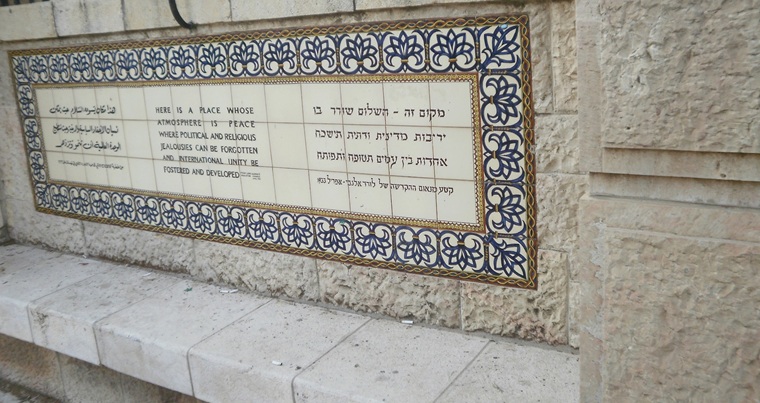
The inauguration ceremony was held in 1933, with the guest of honor being none other than General Allenby (the liberator of the city). On this occasion, he delivered a speech engraved on a stone tablet at the entrance, proclaiming the goals of the building and the Association: “Here is a place whose atmosphere is peace, where political and religious jealousies can be forgotten and international unity be fostered and developed.”
The building is like a book in stone. Harte incorporated Masonic symbolism, as did the Jewish architect Baruch Katinka, who was a member of the Jerusalem Lodge. One can also discern the traditions of Christian sacred architecture alongside those of other religions and cultures. It contains hidden rooms and follows an overall structure that points to the spiritual journey and the constitution of the world and man. It features many inscriptions, symbolic colors, and column capitals, each imbued with meaning.
The structure consists of a main building with an exceptionally tall tower and two wings on either side. The three parts of the building symbolize the three parts of man: Body, Soul, and Spirit. The southern part (gymnasium and swimming pool) represents the Body. The northern part (cultural hall/auditorium) represents the Spirit. The center represents the Soul. These three parts also parallel the Holy Trinity.
From the entrance, cloisters (covered corridors) lead to the two wings. At the end of each wing is a large dome built in the Byzantine style. Each cloister has forty columns, symbolizing the forty years of the Israelites’ wandering in the desert and the forty days of Jesus’ temptation. The forty columns bear different capitals that tell the story of that specific wing—the Body or the Spirit.
The Spirit (North Wing – Auditorium): Leading from the entrance towards the north, the capitals first depict trees, then animals, and finally flowers and plants of the Land of Israel. Near the entrance to the auditorium are four capitals with human figures: a child drawing water, a man driving camels, a shepherd in the field, and a shepherd of sheep. North of the auditorium are the vine and palm tree, and south of it are fish and birds. The progression is from natural qualities symbolized by trees (fig) or animals (bird), to qualities related to human leadership (shepherd), and finally to the vine and palm tree, which symbolize Jesus. On the exterior wall of the auditorium facing the courtyard, the inscription reads: “In essentials—unity; in non-essentials—liberty; in all things—charity.”
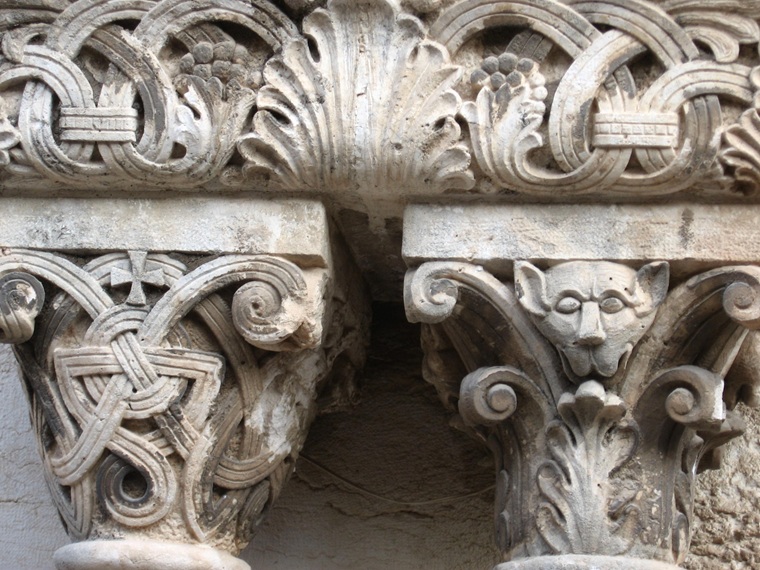
The Body (South Wing – Gymnasium): Leading from the entrance towards the south, the capitals first depict birds symbolizing human weaknesses (the peacock symbolizes pride, the rooster symbolizes denial) and, in contrast, birds symbolizing human strength (the pelican symbolizes sacrifice, the dove symbolizes the Holy Spirit). Further on are capitals of narcissus and anemones, and in the corner are trees, representing the higher parts of man. Finally, there are double capitals on double columns depicting the lion and calf, bear and cow, leopard and kid, wolf and lamb. This combination of animals symbolizes the protection the strong must give the weak and the End of Days that will bring about the unification of opposites (Isaiah 11). On the wall of the sports hall, the inscription reads: “The only temple in the world is the body of man.”
The Garden and Facade: At the entrance to the building is an oval garden containing plants and trees mentioned in the Bible. Twelve cypress trees along the path crossing the courtyard symbolize the 12 Apostles, the 12 Tribes, and the 12 months of the year. The cypress always symbolizes the “One” (pointing upwards). On the garden steps is a quote from Allenby’s speech at the opening ceremony in three languages, along with a dedication inscription from the donor, Jarvie.
On the façade of the central building are three inscriptions expressing the faith of the three religions: In Hebrew: “The Lord our God, the Lord is one.” In Arabic: “There is no god but God.” In Aramaic: “I am the way and the truth.”
Flanking the main entrance are two columns of polished red stone topped by two statues. On one side is the Samaritan Woman (whom Jesus met at the well), symbolizing the acceptance of the Christian faith. On the other side is the Lamb of God (Jesus). Above the entrance is a relief (tympanum) of a vine and a wheat sheaf—symbols of the wine and bread of the Eucharist.
In the entrance foyer, the traditional symbols of the Four Evangelists are affixed: a winged man (Matthew), an eagle (John), a winged ox (Luke), and a winged lion (Mark). It is significant that all are winged—suggesting they are four elements in heaven, in contrast to the four elements on earth. Above the entrance, the inscription from Isaiah 9:6 is engraved: “And his name shall be called Wonderful Counselor, Mighty God, Everlasting Father, Prince of Peace.” On the floor is a replica of the Madaba Map with Jerusalem marked, and a glass star that brings light into a subterranean room below.
The Tower (Jesus’ Tower): The central architectural element of the whole structure is the Tower. On its exterior is a relief of the Seraph from Isaiah’s vision, with six wings. As written: “With two wings he covered his face, with two he covered his feet, and with two he flew. And they were calling out to one another: Holy, holy, holy is the Lord of hosts; the whole earth is full of his glory.” (Isaiah 6:2–3).
The tower contains three hidden rooms intended to demonstrate the three stages in man’s journey to God:
The Subterranean Chapel (The First Room) is Located below ground level at the base of the tower, it is accessed by a winding staircase to the left of the entrance door. On the door is a verse from Psalm 65:1: “To You silence is praise, O God, in Zion.” This chapel corresponds to the verse: “Out of the depths I cry to you, O Lord.” On the eastern wall is an altar-like structure made of 12 unhewn stones that no iron has touched. Engraved on the stone floor is an image of dogs eating crumbs that fell from the Lord’s table—a reference to humility and lowliness as the place from where the spiritual journey begins (Matthew 15:27). On the eastern side is a sculpture showing representative figures of various nations with heads raised in thanks to God. Around the chapel are nine niches designated for ancient oil lamps from different periods in the history of Israel, demonstrating that in the search for truth, light is received from all cultures and religions. This recalls the motif of the ten civilizations carved in the reliefs of the Rockefeller Museum courtyard. The chapel contains four reliefs referring to verses from the Sermon on the Mount, emphasizing that brotherly peace is more important than offering a sacrifice (Matthew 5:23–24). The core message is fraternity and peace among human beings as the basis of religion. The room is illuminated by the Star of Bethlehem located on the ceiling (which is the transparent star on the floor of the foyer above). This represents openness to Divine Light.
The Upper Room (The Second Room) is Located on the first upper floor of the tower, this room echoes the Last Supper held in the Upper Room on Mount Zion. Surrounding the room are eight reliefs telling the story of the Last Supper. This room relates to man’s journey through life—participation in the world and the “table of plenty” God provides. It represents the spiritual journey itself: the acquisition of virtues. The room features a genuine Damascene divan, a low table for 14 people, and a 17th-century Persian carpet from Herat. It is suitable for study and discussion. Here, the mystery of life, death, and the resurrection of Jesus is discovered through the love of the Heavenly Father. The study in this room is directed towards the window capitals on the exterior, which bear eight symbols representing the most important Christian values. These capitals can be viewed from the building’s exterior terrace.
The Room of Silence (The Third Room) is Located at the very top of the tower, this symbolizes the third stage in the spiritual journey: Union, connection with the angelic part within us. It is situated above the angel relief on the tower’s exterior, a completely empty room with empty frames carved into the four walls. The concept is that God has no title and no name, yet He fills everything. The walls are made of dressed stone from Zedekiah’s Cave—the quarry that supplied stones for the Temple. While the altar in the lower room used rough, unhewn stones, here we find exquisitely hewn ashlar stones, symbolizing the person who has completed the spiritual journey—“the stone the builders rejected has become the cornerstone.”
The room is reached by a winding staircase from the observation deck and is intended for solitary prayer. Above the room’s dome, the Greek letters (Chi-Rho)—the initial letters of Christ’s name and part of the YMCA seal—are wrought in iron. The room is covered by a double dome. The upper dome has a star embedded in a blue vault (symbolizing the Infinite God); the inner dome has an oculus through which light enters. Around the oculus is a verse from Isaiah 40:31: “But those who hope in the Lord will renew their strength. They will soar on wings like eagles…” On the inner side of the door is an empty picture frame with the caption: “We love what we do not see.” On the eastern wall are two figures of worshipers: the Pharisee and the Tax Collector, complementing the figures at the main entrance.
Below the tower room is the Observation Deck. The concept of an observation tower connects to the ideas of Patrick Geddes, who collaborated with Ashbee on Jerusalem’s urban planning. Geddes, influenced by universalist ideas, wanted to plan Jerusalem as a spiritual center. He envisioned a circle of towers on the mountains surrounding the Sacred Basin in visual connection and interaction, providing different views of the Holy City. (Such towers existed on Mount Scopus, Mount of Olives, Augusta Victoria, and the High Commissioner’s Palace – Armon HaNetziv).
The observation deck features bronze reliefs on the four cardinal directions and double arches. The capitals display eight verses from the Bible praising Jerusalem, such as Psalm 137:5. Below the deck is the belfry containing 35 bells. The largest bell, weighing 1.5 tons, bears an inscription of the angels’ announcement at Bethlehem. The bells can be played via a carillon keyboard. The column capitals in this area are decorated with bells and musical instruments, including the shofar, harp, flute, and lyre.
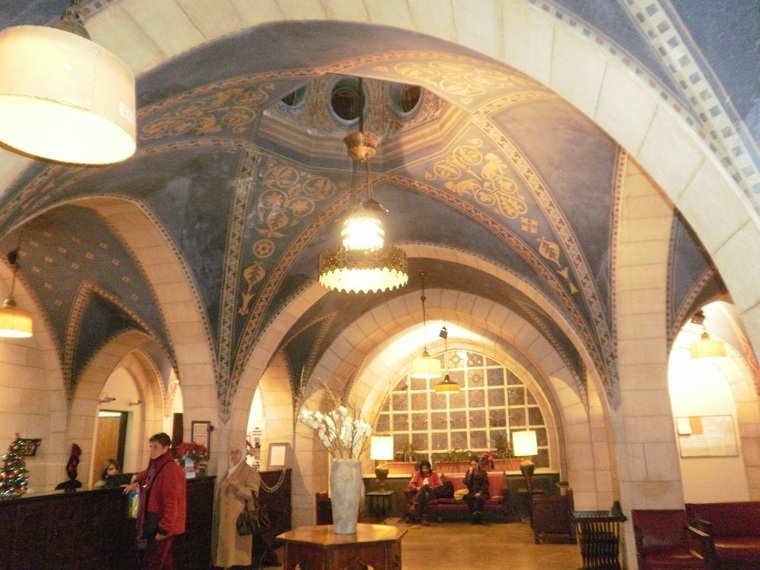
Interior Spaces: The entrance hall features an impressive 17th-century wooden ceiling acquired in Damascus, along with portraits of the donor Jarvie and the initiator Harte. North of this hall is a restaurant with an impressive Eastern fireplace, as well as an inner room that is an exact replica of the room in London where George Williams founded the YMCA in 1844. South of the hall is a reading room with a ceiling decorated in colored geometrical patterns. West of the entrance hall is a reception room (now for the hotel). In this section, a special dome is designed in the shape of an octagonal crown, reminiscent of the Dome of the Rock. Previously, a threshold in the shape of a cross was located before this inner hall, signifying that one cannot reach the “Temple” (the crown) without first passing through the cross.
King Robert the Bruce and the Templars
King Robert the Bruce (1274–1329) is a legendary figure in Scottish history. In the early 14th century, he fought the English and freed his country from their tyranny, sparing the Scots the fate of their Irish brethren and cementing the desire for freedom in Scotland’s national consciousness forever. King Robert the Bruce’s victory was a liberation not only from political and military subjugation but also from the cultural and religious domination of the Church. For much of his reign, King Robert was excommunicated and ostracized by the Church; however, this apparently did not prevent him from receiving divine favor in his victories and, eventually, even papal recognition of his status. He fought with heroism, determination, and courage, step by step, few against many, against the English occupiers, and succeeded in driving them out of his country. He created an independent and unified Scotland that endured for nearly 200 years, and even afterward remained an equal partner in the various unions with England. Some claim that he gave refuge in his country to the Templars, who were ostracized and persecuted by the Church at the same period.
The Templars were the wealthiest and most powerful Order in Europe until the King of France issued an order for their arrest in 1307, claiming they were devil worshipers. The day before the arrest, the entire Templar fleet sailed out to sea. Officially, their whereabouts were unknown, but there are consistent claims that they reached Scotland and Portugal—territories that were at that time beyond the immediate reach of the King of France and his ally, the Pope. The migration of the Templars, who possessed advanced maritime knowledge, to Scotland and Portugal may have contributed to the later daring voyages of the Portuguese and Spanish towards America and Africa, and of the Scots and Northern peoples to Greenland and North America.
The Templars were a secret Order, and some say that in their private rituals and beliefs, they scorned the orthodox Papal religion and advocated a slightly different, more mystical form of Christianity. In any case, no one knew what they truly believed, and this fact alone was enough to arouse suspicion against them, especially since they were known for their good relations with mystical Muslim groups throughout the Middle East. In Scotland, some ancient Celtic traditions and language were preserved, as well as a type of Celtic Christianity that differed in character from Catholic and English Christianity.
According to several researchers, the fleeing Templar knights joined the forces of King Robert the Bruce. It is suggested that they effectively turned the tide in the decisive Battle of Bannockburn in 1314—a battle in which a few thousand Scots defeated more than 20,000 well-equipped and trained Englishmen led by King Edward II. A mysterious group of knights appeared in the middle of the battle and helped drive away the English. It is worth remembering in this context that many Templars were connected to the noble families of Scotland. Ultimately, King Robert the Bruce became the recognized King of Scotland and ruled the kingdom for more than 12 years. He dedicated the rest of his time to improving the condition of the simple, poor, and unfortunate people in society, earning the title “Good King Robert.”
When King Robert the Bruce’s time came to die, he requested that his heart be taken to Jerusalem and buried there. A group of his loyal knights, led by Sir James Douglas (known as “The Black Douglas”), set out to fulfill the King’s request. On their way to the Holy Land, they planned to make a slight detour to perform a pilgrimage to the tomb of the Apostle James in Santiago de Compostela. Like any good knight, they could not refrain from getting involved in battles that came their way and seemed just. Thus, a small Scottish group led by the Black Douglas participated in the battles of the Reconquista against the Muslims in Spain.
However, during a battle, the Black Douglas and his companions found themselves surrounded by Muslim forces. The Black Douglas did not hesitate; he threw the heart of King Robert the Bruce (which was encased in a silver casket) into the thick of the enemy crowd, shouting: “Brave heart, lead on as thou wast wont, and Douglas will follow thee or die!” The knights charged into the crowd—a charge from which only a few survived. Those survivors returned with the heart and the story to Scotland. Instead of Jerusalem, they buried the heart in Melrose Abbey, where it remains to this day.
The Scottish Church
The Scots did not forget the wish of their national hero for his heart to be buried in Jerusalem. When the time came, and Scottish forces—part of the British army—captured Jerusalem in World War I, they built a church in the Scottish style overlooking the Old City, in honor of King Robert the Bruce. Set in the floor before the church’s altar is a brass plaque commemorating the King’s heart’s desire. The marble of the altar was brought from the Isle of Iona in Scotland, the birthplace of Scottish Christianity. On the walls of the church are memorial plaques dedicated to the Scottish soldiers who fell in the battles for the Holy Land.
The Scottish color is blue, a hue associated with nature and Celtic Christianity. Historically, the Scots’ ancestors (the Picts) would go into battle painted blue, while the English were often associated with red and white (as popularized, though anachronistically, in the movie Braveheart). Red and blue are opposites on the spectrum, which perhaps offers another perspective on the fierce historical clash between the Scots and the English. Furthermore, while the colors of the Anglican Church are often red and white, the dominant color in Celtic Christianity is blue. Therefore, the apse in the Scottish Church is painted a magnificent blue, accented by large, beautiful stained-glass windows that bathe the church space in a magical blue light.
The church, known as St Andrew’s Scots Memorial Church, was built between 1927 and 1930. It was designed by the civic advisor and town planner of Jerusalem, Clifford Holliday (1897–1960). Holliday arrived in Jerusalem in 1922 as a young architect, replacing C.R. Ashbee as the advisor for the city’s development and secretary of the Pro-Jerusalem Society. He lived in Jerusalem for 15 years. In addition to the Scottish Church, he designed the historic City Hall building (on Jaffa Road), the British and Foreign Bible Society building (now part of the Mount Zion Hotel complex), and renovated parts of the St. John’s Ophthalmic Hospital area (the “Hutzot HaYotzer” and Mount Zion Hotel vicinity).
Holliday prepared a comprehensive master plan for Jerusalem (the 1930 Plan) which significantly influenced the city’s development. His architecture combines the modern with the Oriental and accords an important place to arts and crafts, incorporating Armenian ceramics, stained glass, and stone masonry. Holliday was influenced by the Arts and Crafts movement and integrated into the general British architectural trend in Jerusalem at the time: designing impressive buildings that overlooked the Old City.
Inside the Church complex is a guesthouse, administrative sections and a shop called Sunbula that helps sell craft products made by villagers from Jerusalem and its surroundings. The structure is laden with symbolism: the entrance features an octagonal space reminiscent of the Dome of the Rock on the Temple Mount, and a representation of the Two Tablets of the Covenant is visible on the tower.
The Rockefeller Museum
The Rockefeller Museum (originally the Palestine Archaeological Museum) was the first national museum established in the country. Today it is part of the Israel Museum and houses the offices of the Israel Antiquities Authority. My mother, who was an archaeologist, worked there for more than 40 years. The museum was inaugurated in 1938, and its architecture and art express the perception that Jerusalem is a microcosm of Western culture—an international, interreligious, and intercultural center, and a meeting place of East and West.
The British fostered archaeological research in the Holy land, and, for the first time, enacted the Antiquities Ordinance, which stipulated that archaeological finds must be preserved in the land where they were found. Until then, excavators transferred their important finds to museums in Europe, and before World War I, to Istanbul. Thus, the famous Siloam Inscription, for example, resides in the Istanbul Archaeology Museums.
The idea of establishing a national museum arose with the beginning of the Mandate. After John D. Rockefeller Jr. pledged funds for the project—at the urging of the renowned archaeologist and Egyptologist James Henry Breasted (1865–1935)—the cornerstone was laid in 1930 and construction began. The building was designed by the British architect Austen St. Barbe Harrison (1891–1976), who was influenced by the Arts and Crafts movement, and specialized in Muslim and Byzantine architecture. He traveled throughout the Middle East to study architectural monuments that would inspire his designs.
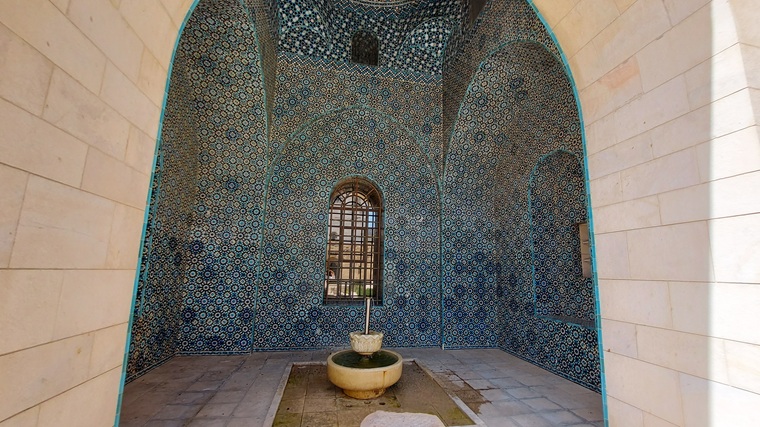
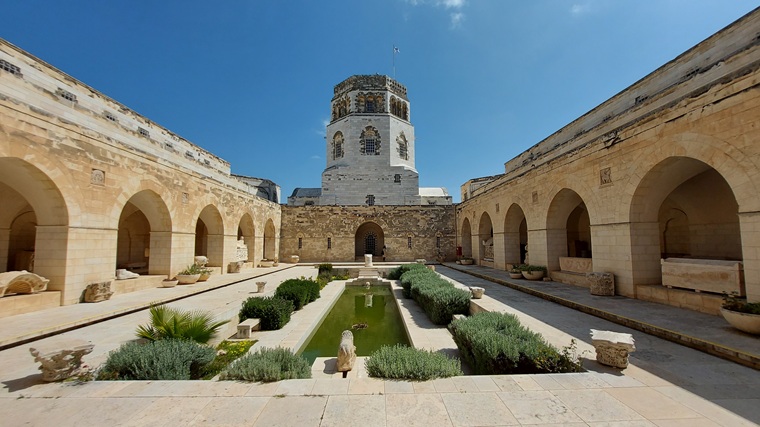
In its architecture and art, the museum expresses the idea of Israel as an intersection of Asia, Africa, and Europe—the meeting place of East and West. The building combines elements from diverse civilizations: the large exhibition halls resemble European cathedral naves, while the inner courtyard is modeled after the Alhambra Palace in Spain and traditional Islamic courtyards, featuring a central pool and fountain symbolizing the Garden of Eden.
Above the main entrance is a stone relief (tympanum) showing an Asian figure on one side and an African figure on the other. The intention is to demonstrate that the Land of Israel lies at the center of the Fertile Crescent, bridging the two cradles of human civilization: Mesopotamia on one side and Egypt on the other.
In the courtyard arcades are stone reliefs created by the artist Eric Gill, depicting the ten civilizations that shaped the history of the land and form the foundation of our culture. Arranged clockwise, the following representations can be seen: Canaanite, Egyptian, Phoenician, Mesopotamian (Babylonian, Assyrian, and Persian), Hebrew (Judaism), Greek, Roman, Byzantine, Islamic, and Crusader. Eric Gill (1882–1940) was a British sculptor, typeface designer, and mystic—a man of radical views associated with the Arts and Crafts movement, deeply concerned with the connection between art and religion.
The building follows a rectangular plan with octagonal halls in the corners. On the side, a tall octagonal tower rises, intended to serve as an observation point over Jerusalem. The octagon is a symbol common to both Islam and Christianity and echoes the Dome of the Rock on the Temple Mount. The building features inscriptions in three languages (English, Hebrew, and Arabic) with lettering designed in an ancient style. It incorporates Armenian ceramics—part of the Mandate-era trend to encourage local craftsmanship—as well as exquisitely carved stone.