America in Jerusalem
The United States gained independence in 1773. At the beginning of the 19th century, its population was just over 5 million, but by the end of the century, it had swelled to 76 million. It became the second-largest economy in the world after England, an industrial power where almost half the population lived in cities. New York was a rapidly growing metropolis with 3.5 million people, followed by Chicago and Philadelphia. The impressive economic growth is somewhat reminiscent of China today, but the population growth was phenomenal. It seemed that God was showering His blessing on the new land and that it was possible to develop a model society there, and this, in the eyes of the Americans, strongly resembled the settlement of the Israelite tribes in their new land.
In the 19th century, the United States became a leading force in the world, both politically and spiritually. Many believed that the Second Coming of Jesus would occur in America, where a new utopian society would be created. The Great Spirit was revived across the American expanses, leading to waves of religious awakenings. The Methodist and Baptist Churches spread, new communities formed within the older denominations (such as the Presbyterians), and the emphasis shifted toward a personal experience of religious rebirth and a direct—and to some extent individual—interpretation of the Holy Scriptures, especially the Bible.
Towards the 1840s, a strong millenarian movement (Christian messianic fervor) with mystical overtones developed. This led to the creation of the Adventist Churches, which observe the Sabbath and advocate healthy, sometimes vegetarian, living. The Adventists gave rise to movements for alcohol abstinence and Christian piety, as reflected among the American settlers in Jerusalem at the end of that century. The non-fulfillment of the prophecies about the End of Days did not necessarily lead to a religious crisis; on the contrary—in the second half of the 19th century, the United States was swept by a Third Great Awakening, which led to the establishment of groups such as the Jehovah’s Witnesses and, by contrast, the Nazarenes, but primarily the Pentecostal Churches, which today are the fastest-spreading Christian stream globally, reaching 200–300 million people.
What distinguishes the Pentecostals is speaking in tongues (glossolalia), as happened to Jesus’ disciples at Pentecost (hence the name), a belief in healing and miracles, charismatic sermons by leaders, and a direct interpretation of the Holy Scriptures. In other words, a massive religious movement began in the 19th century in the United States—one that ultimately established a presence in Jerusalem.
Parallel to developments in Christianity, the United States saw the emergence of the spiritual-philosophical movement of American Transcendentalism, led by great thinkers like Emerson and Thoreau, along with the rise of esoteric societies—some continuations of European groups such as the Rosicrucians or renewed Hermeticism, and others with a new and distinctly American flavor.
The religious atmosphere led to the emergence of new religions, such as that of the Mormons, or, to some extent, the Quakers. The emerging American nation proved to be religious and spiritual, including the development of religious studies as a separate branch of research, inspired by William James. In 1894, the American Parapsychological Society was founded by William Barrett; Alexander Graham Bell and others were also members. America began to be perceived as the place where a kind of world spirituality would appear.
19th-century America was the land of unlimited possibilities, but mainly for the strong and the young. Amidst all the changes, people sought something stable to hold onto, and that was faith. The American poet Bayard Taylor visited Jerusalem in 1851, as did the explorer James Turner Barclay, in anticipation of the Second Coming of Jesus; the historian and writer William Prime in 1855; and, of course, the greatest writer of all – Mark Twain (1835–1910), in 1876, who published his book The Innocents Abroad [1]. What is less known about Mark Twain is that he possessed extrasensory abilities (according to Aharon Zeitlin). The American president of the late century, Theodore Roosevelt, visited Jerusalem as a boy in 1872, which influenced his worldview.
The New World largely adopts Jerusalem, which is evident today in the strong ties between the United States and Israel. This is not just a matter of historical development, but a kind of synchronistic, fateful spiritual connection between the two places.
In the 20th century, Eastern doctrines found a home in America, as did Sufism, the Hippie movement, and the New Age. America had a growing and influential Jewish community, and with the establishment of the State of Israel, it played a major role in forging a strong connection and alliance between the two countries.

Orson Hyde
Orson Hyde (1805–1878) was the apostolic Mormon emissary to the Holy Land (like Jesus’ apostles in the New Testament). He offered a prayer in the name of the new religion and erected an altar on Mount Scopus (where the Mormon University stands today) for the sake of the ingathering of the exiles of Israel and for the rebuilding of Jerusalem and the Temple. By this act, he re-dedicated the Land and the Jewish people to God. According to Mormon belief, if the Jews returned to their homeland and recognized Jesus, it would hasten His Second Coming.
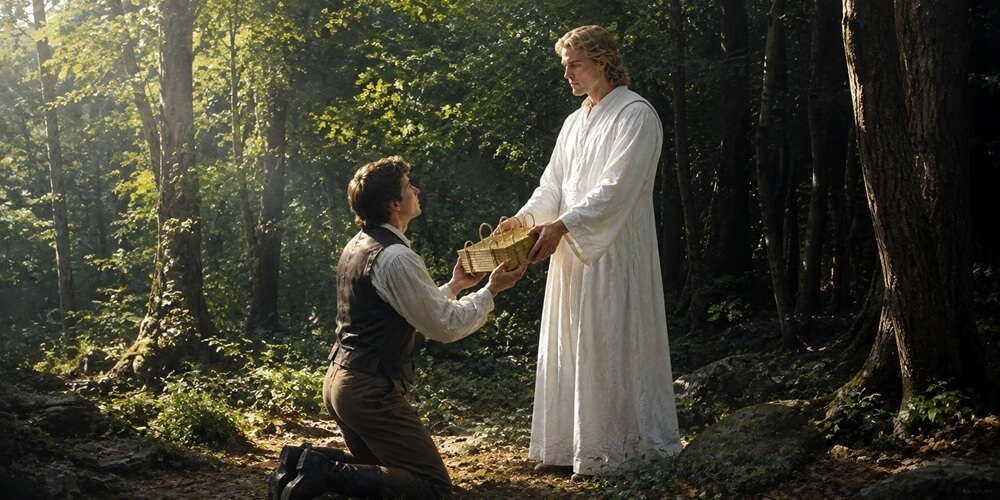
The founder of the Mormon religion is Joseph Smith. In 1830, he found an ancient book written on gold plates in ancient Egyptian, called the Book of Mormon [2], which is the basis of the Mormon faith. According to this book, some of the Lost Tribes of Israel arrived on the American continent and established a magnificent kingdom there. Eventually, the resurrected Jesus revealed Himself to them. This advanced Jewish-Christian civilization was destroyed in the 5th–6th centuries CE, but one of its princes became a divine entity—the Angel Moroni—who revealed himself to Joseph Smith and guided him in the discovery of the book.
After the book’s publication, a new religious community formed around Joseph Smith, and as early as 1832, he prophesied to the young Orson Hyde, one of the first and most important members of the community, that his mission was connected to Jerusalem. In 1840, Orson Hyde had a vision in which he was told that he needed to go to Jerusalem. His mission was to call the Jews to gather and recognize the truth, and to enter the new Church. Smith affirmed the vision and sent him on his journey, which took over a year. In October 1841, Orson arrived in Jerusalem.
Hyde was in the Land for only a few days, but his action was an important magical-mystical act that resonated in the unseen worlds. Indeed, from that time onward, the Jewish settlement in Jerusalem grew and developed, eventually becoming the majority. The year he re-dedicated the Jewish people to God was a period marked by millenarian prophecies about Jesus’ renewed return.
Much water has flowed under the bridge since then, and in 1968, a branch of the central Mormon University in Utah, named after Brigham Young, began operating in Jerusalem. The Mormons built a new and magnificent campus on Mount Scopus, which opened in 1987.
The Indians are Coming
Harriet Livermore (1788–1868) was one of the most important Christian millenarian preachers in the United States in the early 19th century. She was the first woman to address the American Congress—doing so four separate times—and also made a pilgrimage to Jerusalem on five different occasions.
In 1831, she was influenced by a letter from Joseph Wolff (see chapter on the London Society for Promoting Christianity Amongst the Jews), who was then on a years-long journey around the world in search of the Ten Lost Tribes. Wolff prophesied the return of Jesus in 1847 and claimed it would occur on the Mount of Olives.
Harriet underwent a change as a result of her encounter with Wolff’s letters. She believed that the Ten Lost Tribes were the Native Americans (Indians) of America, as claimed by Joseph Smith and others (such as James Adair), and that they needed to be brought back into the fold of Judaism—and perhaps also be called to immigrate to the Land of Israel—before the expected return of Jesus. Therefore, she set out on a mission to evangelize the Native Americans and call them to reclaim their identity and mission.
The belief that the Native Americans were descendants of the Israelites was based on their tribal structure, customs such as niddah (menstruation isolation), and other pseudoscientific theories. It may also have been a psychological compensatory mechanism for the disaster the white settlers brought upon them. In any case, Harriet became a defender of their rights.
In 1837—ten years before the expected arrival of Jesus—she made her first pilgrimage to Jerusalem, followed by four more. Without significant financial means, she relied on synchronicity and on people she met along the way to reach the Holy City. Standing on the Mount of Olives, she waited for the time when women would be “clothed with the light of the sun and walking on the moon” [3].

Adventists
The word Advent means the Second Coming of Jesus. In the 19th century, it was believed to be imminent, which led to a great wave of spiritual awakening, the ripples of which also reached Jerusalem. The Baptist preacher William Miller calculated that Jesus should return in 1844, and consequently, some believers (like Harriet Livermore) came to the Holy Land. But ultimately, Jesus did not appear, and despite revising the calculation several times, He did not arrive on the new appointed date either. This led to great disappointment, but on the other hand—faith is faith—and even when a prophecy fails, it persists. Eventually, the understanding emerged that the world was not yet ready to receive Him, which paradoxically led to the Third Great Awakening.
As part of this American religious fervor, other Americans came to the Land, including Clorinda S. Minor (1806–1855), who arrived to prepare for the renewed coming of Jesus with several companions. Clorinda settled on the agricultural farm in Artas, which Consul James Finn had established together with Yohanan Yellin (Meshulam), a Jew who became a Christian after meeting Joseph Wolff. It was on this farm that the meeting between William Hunt and Henry Monk later took place (see chapter). Almost all the people mentioned, including Consul Finn, believed in the imminent return of Jesus, and it is possible that the farm was intended to serve as a place of refuge for believers, as the prophecies had spoken of a very difficult period in which the social and economic fabric would collapse.
Although Jesus did not arrive, the salvation of the Adventist movement in the United States came in the person of a remarkable woman named Ellen Gould White (1827–1915). She was likely of partial Black ancestry—a prophetess who, together with her husband, founded the Seventh-day Adventist Church, which today numbers over 20 million people. She experienced visions and dreams in which she received messages, and she wrote many books [4] and articles on a wide range of subjects, from education to religious life and interpretations of the modern era. She developed a mythic narrative about the war between good and evil that would soon culminate at the End of Days—believers would be saved through a series of miraculous events.
Another product of the Third Great Awakening in the United States was the development of the Quaker movement—an independent religious stream that believes in a life of purity, connection to the inner voice, the possibility of connecting to the prophetic light, and a direct relationship with God, as well as a contemporary interpretation of the Bible and ongoing revelations. They became active in the Land of Israel starting in 1869 through the couple Eli and Sybil Jones, who established a school in Ramallah. According to Jamal Adawi, this school played an important role in the development of Palestinian society.
American Adventist movements continued to appear in the 20th century. For example, Andrew N. Dugger moved to Jerusalem with his wife because of a vision in which he was directed to help transform Jerusalem into a global Christian spiritual center, establishing the Mount Zion Church of God (Seventh Day), a small group that remains active to this day. He died and was buried in Jerusalem in 1975.

Warder Cresson
Warder Cresson (1798–1860) was considered to possess extrasensory powers and was briefly the U.S. Consul in Jerusalem (1844), until he was discovered to be completely insane. Cresson moved through various American Christian groups, including the Quakers and the Shakers—a group that practiced ecstatic prayer dances and prophetic states, believed in a feminine deity, and lived in several spiritual communities. He was connected to societies that prophesied the renewed coming of Jesus (from which the Adventist Church later emerged), as well as to the Mormons and others. When he could not find his place in any of these movements, and when the prophecy failed, he chose to immigrate to the Land of Israel.
Cresson’s family was wealthy and well connected, and they used their influence to have him appointed U.S. Consul in Jerusalem. He had Jewish friends in Pennsylvania, and by this stage he was already convinced that salvation would come from the Jews. On his way to the Land, he published an article titled “Jerusalem, the Centre of the Whole World’s Happiness,” outlining his vision that the End of Days would come after the return of the Jews to Israel.
Shortly after arriving in the Land, he was dismissed from his position as Consul, but nevertheless continued to work among the people and began to draw closer to simple Jews. He had eschatological visions and developed close relationships with Jerusalem’s leading rabbis, including Rabbi Yaakov Shaul Elyashar. Ultimately, he found his place in Judaism, converted in 1848, and changed his name to Michael Boaz. In 1852, after returning from a visit to the United States, he tried to promote Jewish agriculture in Jerusalem. According to his understanding—shared with contemporary Adventist movements and the Transcendentalist stream—working the land could bring a person closer to creation. Agriculture allowed for an immediate connection between human beings and God.
Cresson was undoubtedly a spiritual man. The experiences he went through during his life shaped and solidified his character, and he learned and developed from them. Unlike many intellectuals of his time, he had the experience of conversion, ecstasy, and, at the same time, sobriety. He knew the process of dying to one thing in order to find oneself anew, to be resurrected into another. The different beliefs he passed through came together to form a remarkable life story, and only those who have not experienced such upheavals themselves can view them as a symptom of imbalance. In his final years, legends developed around him about various wonders he performed, and he was considered a holy man whose intervention could help.

The American Colony and Selma Lagerlöf
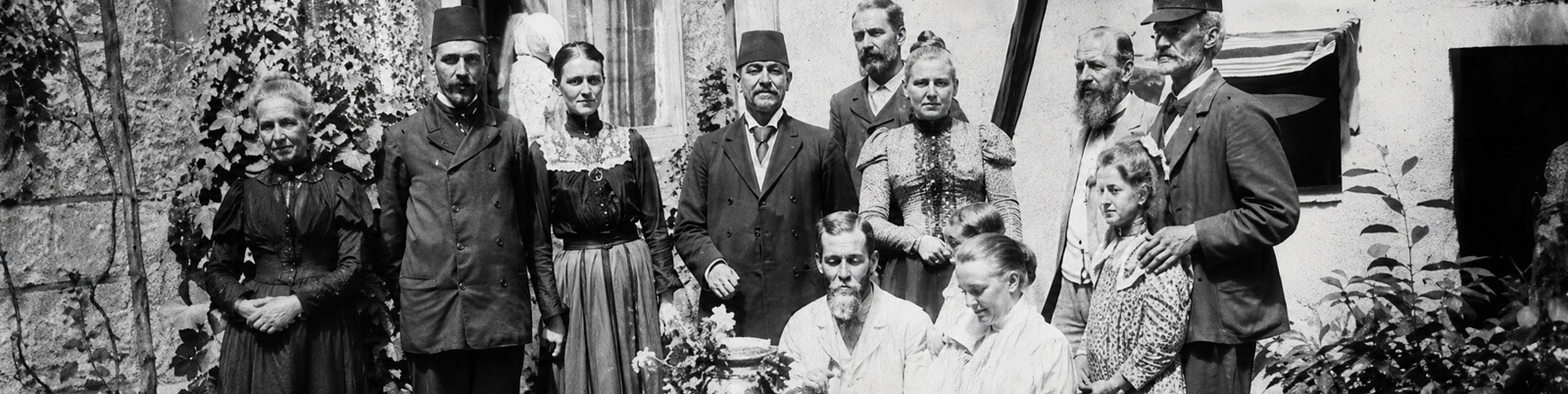
Anna and Horatio Spafford were an upper-class, respectable couple from the United States, active in the Presbyterian Church. In 1871, their family business was affected by the Chicago fire, and in 1873, the ship carrying Anna Spafford and their four daughters sank—only Anna survived. The disaster-stricken couple tried to rebuild their lives and had three more children. During this time, Horatio wrote the famous hymn [5] “It Is Well with My Soul,” but in 1880, one of the children died.
The Spaffords belonged to the Calvinist stream that believed in predetermined fate. People in their community began to whisper about a divine punishment they were supposedly bearing, and this became too much for them. They left the congregation and established an independent community with several friends who believed in the Second Coming of Jesus. They decided to make a pilgrimage to Jerusalem, establish there a community of religious piety, and dedicate their lives to the service of God.
In 1881, they immigrated to Jerusalem and founded the American Colony—a small commune engaged in charitable work and functioning as a utopian society. In 1896, a group from Sweden joined them, led by Olof Henrik Larsson, and they moved to a well-kept palace belonging to the Husseini family north of the Old City, in an open area that today forms the American Colony Hotel.
In 1900, the writer Selma Lagerlöf (1858–1940) visited the American-Swedish Colony. She stayed in Jerusalem for several months and wrote one of her masterpieces, the book Jerusalem [6], based on her experience. The book tells the story of groups of deeply believing farmers who adopt the belief in the Second Coming of Jesus and, because of this, come to Jerusalem to establish a utopian society there. In other words, she tells the story of the Swedish Colony with literary freedom.
Lagerlöf’s novella describes the people’s experience of holiness, their difficulties, and their relationships, and touches on the subtle threads of human feelings and emotions against the backdrop of the settlement in Jerusalem. The difficulties they experience eventually lead some of them to leave and others to stay. Underlying the story is the belief in the sublime unseen worlds, a synchronistic and meaningful network behind the events. The book Jerusalem was translated into several languages, including Hebrew, and was also adapted into a film, but it is not familiar to most of the Israeli public—certainly not in its spiritual context.
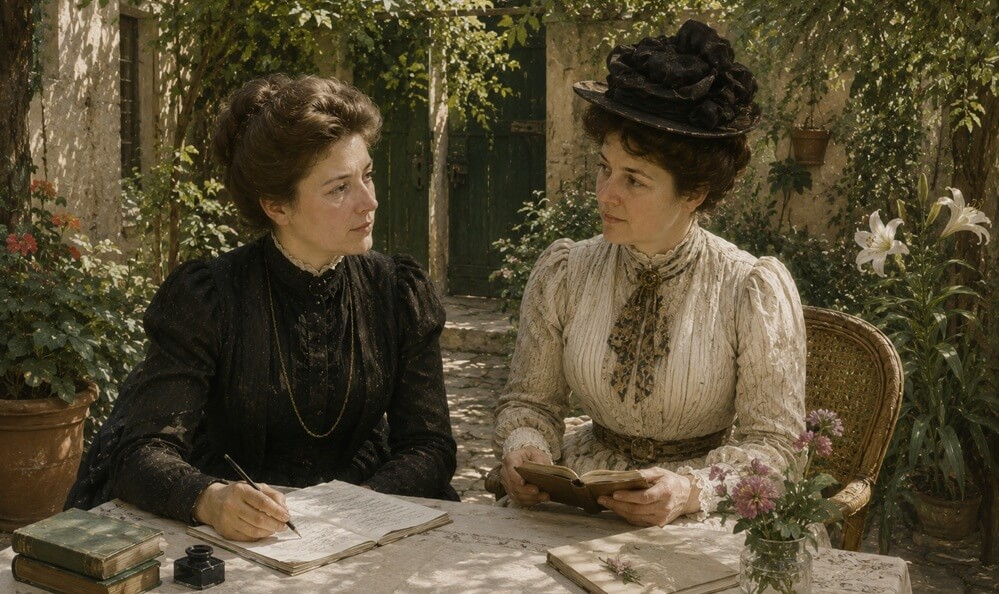
Selma was interested in Christian mysticism and in spiritual doctrines such as reincarnation and spirits throughout her life. Her travel companion and lifelong soulmate, Sophie Elkan (who was also a writer), wrote another book inspired by their journey to Jerusalem, titled Dream of the East [7], which describes their travels to Egypt and the Land of Israel as a spiritual journey leading to profound inner experiences.
The house where Selma stayed in Jerusalem was part of the Swedish-American Colony, and today it is owned by the Baptists, who established a Center of Prayer for All Nations there—a kind of spiritual center with a large room on the second floor for research, contemplation, meditation, rest, and prayer. On the ground floor, there is a large reception hall with a wall painting of the seven species and a piano. The house is managed by volunteers from the United States, and visitors sing Horatio Spafford’s hymn “It Is Well with My Soul” and hear the story of the Colony and of Selma Lagerlöf, who was the first woman in the world to win the Nobel Prize in Literature (in 1909). Her most famous book is The Wonderful Adventures of Nils.
Adjacent to this house (76 Nablus Road) is the Church of the Nazarene of Jerusalem, an Episcopal Methodist stream that incorporates singing into its religious worship and emphasizes personal experience of the Sacred, community service, and the spread of the Gospel.
Footnotes
[1] Twain, M. (1984). The Innocents Abroad. Translated by Aharon Amir. Tel Aviv: Am Oved.
[2] Smith, J. (1830/1982). The Book of Mormon: Another Testament of Jesus Christ. Salt Lake City: The Church of Jesus Christ of Latter-day Saints.
[3] http://www.seacoastnh.com/Famous-People/Link-Free-or-Die/Portrait-of-Harriet-Livermore/
[4] White, E. G. (1911). The great controversy between Christ and Satan: The conflict of the ages in the Christian dispensation. Pacific Press Publishing Association.
[5] Spafford, H. G. (1873). It is well with my soul [Lyrics].
[6] Lagerlöf, Selma. (2006). Jerusalem: A Novel. Translated by Dafna Amit. Tel Aviv: Or-Am Publishing.
[7] Elkan, S. (1901). Drömmen om Österlandet. Stockholm: Albert Bonniers Förlag.