The Armenians and Jerusalem in the Middle Ages
Throughout history, Armenians played an important role in the middle east, and not just in armenia. As early as the 11th century, there was a significant Armenian diaspora across the Middle East. Armenians played an important role in the Muslim Fatimid Empire on the one hand and the Byzantine Empire on the other. The diaspora grew as a result of the wars over the next thousand years. Both voluntary and forced migration, mainly by the Byzantines, who transferred large populations of armenians to the Balkans and across the Empire, all of this led to the development of significant Armenian communities outside the natural homeland, starting with Lesser Armenia in Cilicia, and continuing in Constantinople, which was partially an Armenian city. Armenians held important positions in the Byzantine military, economy, and government. Some of the emperors, such as Heraclius or Basil I, were of Armenian descent. In addition, Armenians played an important role in education, architecture, and art.
In the 10th and 11th centuries, many Armenian settlers arrived in Cilicia in the eastern Taurus Mountains, on the shores of the Mediterranean Sea. This area was liberated from Muslim control by the Byzantines and emptied of its original inhabitants. The new settlers created a kind of independent state, which absorbed many refugees fleeing the Seljuk conquests, especially from the ancient capital Ani, which fell into foreign hands. Unlike the rest of Armenia, the Kingdom of Cilicia has access to the sea, which led to a strengthening of ties with Europe and Latin Christianity. The Kingdom of Cilicia was an ally of the Crusaders and part of the Christian network in the Eastern Mediterranean. It flourished in the 12th and 13th centuries. Armenian culture, painting, sculpture, and religious thought were enriched as a result of the encounter with the West.
The Armenian Church of St. James
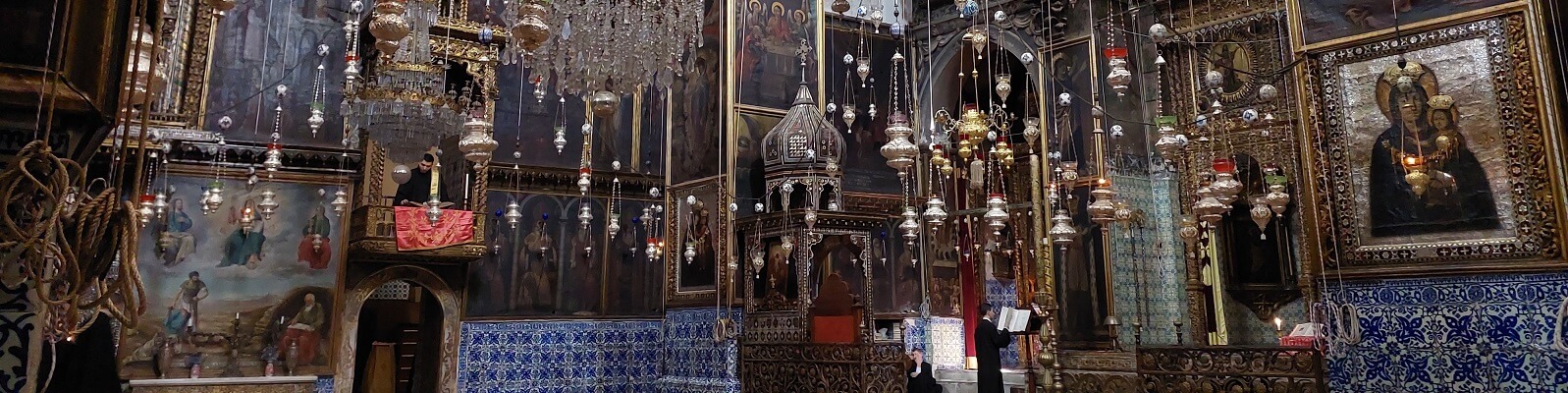
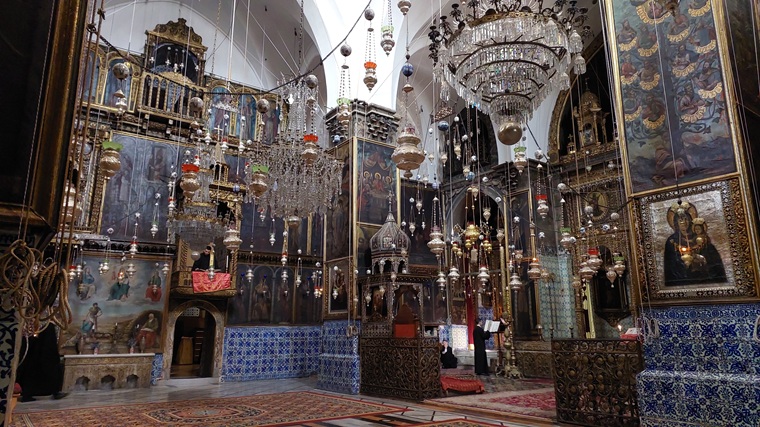
Queen Melisende of Jerusalem was from Armenian ancestry by her mother, she built many churches in Jerusalem and was involved in rebuilding of St. James church in the Armenian Quarter. Melisende incorporated original elements of Armenian sacred architecture into the design.
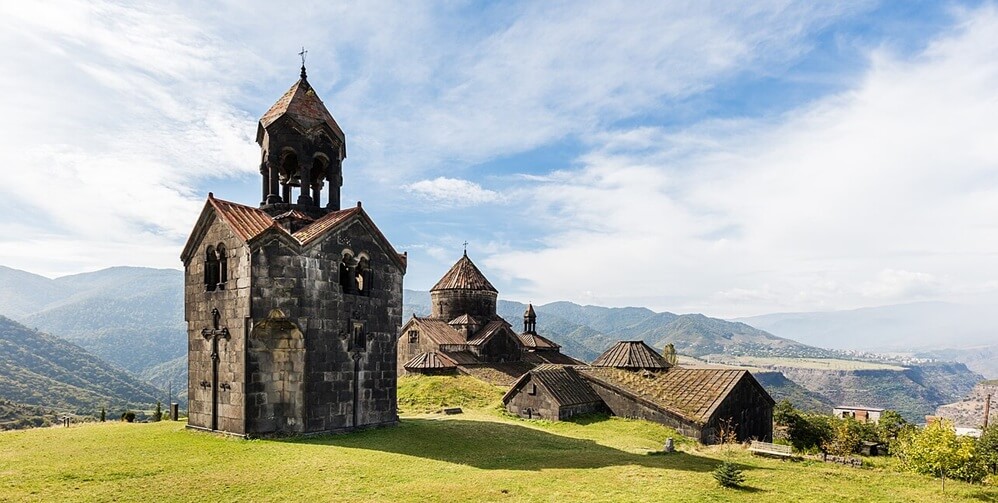
The cathedral uses architectural elements from an important 10th-century cathedral in Armenia called Haghpat. It features a typical Armenian dome that sometimes rises with a cone over a square of arches, and other sacred architectural elements that relate to numbers, measurements, use of light, decorations, and general structure. There is a scholarly debate as to when it was completed, but there is no doubt that its construction began during Melisende’s time and was influenced by her, the proof being that the same Armenian architectural elements found in the church are also found at her tomb site – the tomb of mary in Jehoshafat valley. The Cathedral of St. James maintained its original form and remained active even after the fall of Jerusalem to the Muslims, largely thanks to the good relations the Armenians also had with the Muslims. It houses the tombs of the last King and Queen of Lesser (Cilicia) Armenia, which fell to the Mamluks in 1382.
According to art historian Josef Strzygowski, Armenian architecture served as a model of inspiration for that of Byzantium, and consequently, both directly and indirectly, for Crusader architecture in Jerusalem, and subsequently for the construction of churches in Europe, and especially in the Balkans [1]. Armenians were the first to build a dome on a square with arches in the corners that formed an octagon (squinch arches), and also the first to build a church with a dome and apses on four sides. Strzygowski argues that Hagia Sophia was influenced by early Armenian architecture as well.
From the 6th century onward, the use of a high dome that turns into a cylinder with a conical roof (the exterior of the building is a cone and the interior a dome) became widespread in Armenia. Light is emphasized by the dome, the many special lamps, and the windows that let it in (sometimes the church windows were built to let light in at certain times of the day and illuminate the altar or other holy areas). The orientation of the buildings is inward. The favored shapes were the cross and the octagon, and sometimes a hexagon. The common form of an Armenian church is a cone over a cylinder beneath which is a cross-shaped structure. This is related to a vision St. Gregory the Illuminator, the founder of Armenian Christianity in the 4th century, had in Etchmiadzin, he saw Jesus descending from heaven on a ladder of angels and strucking the ground with His hammer. A golden circle was created there—which is the cylinder, a column of fire appeared—which is the cone, wrapped in a cross of light—which is the cruciform structure. The number four symbolizes the four elements and the dome the heavens. This was the form of the buildings in which the sacred fire of Zoroastrianism was kept, a widespread belief in Armenia in pre-Christian times. The four pillars and the dome symbolize the connection of heaven and earth, which occurs in a holy time and in holy (pure) places.
The halls of Armenian churches have special acoustics, and some say special volume and proportions, which energetically affect visitors to the place. This is explained in alternative theories by human beings having an energy field around their bodies called an aura, which adapts itself to the space it is in. If a person is in a space that pulls upwards, the field elongates upwards in accordance with the building, and as a result, mental or emotional faculties that are usually dormant are activated. Even if we do not accept this explanation, according to the great theorists of religious studies such as Rudolf Otto, buildings of the type of Armenian church halls activate the sense of the sacred [2] in man, the numinous feeling, and this is a result of the size, the interplay of light and shadow, the echo, and I would add unusual elements in the building (such as large stones), the proportions, and shapes such as the circle and the square.
However, a medieval Armenian church is not a single hall [3]. Usually, before the main hall, there is an additional hall which is a kind of entrance hall—a narthex—called a Gavit. This is a type of entrance hall before the main hall of the church, appearing in Armenian churches from the Middle Ages and disappearing at their end. It is found in the most beautiful and important churches. Some say it was a place where church music was played, and that the distinction between the entrance hall and the main hall suggests two levels of religion, the first—the level of the literal meaning (P’shat), and the second—the level of the allegorical meaning (Drash) or the Secret. The entrance to the Church of St. James in Jerusalem is currently from the west, but if the original structure had the entrance from the south, there is a hall there that matches the description of the Armenian traditional entrance hall—the Gavit.
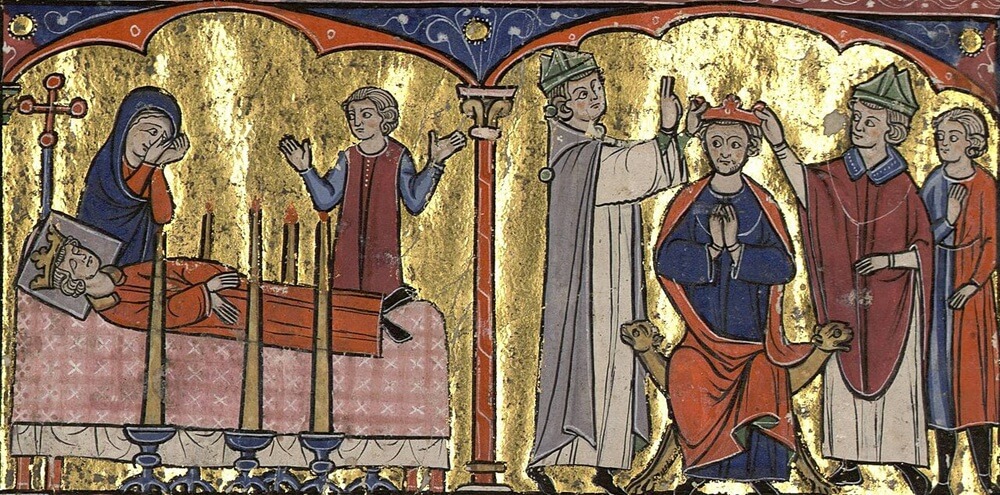
The sacred architecture that developed in the Armenian Church is related to Christian esoteric teachings and refers to numbers as expressing cosmic truths. Thus, numerical archetypes are found in architecture and also in art. Below is a code for the symbolic meaning of the numbers appearing in the sacred architecture of churches in Armenia and consequently also in buildings influenced by this tradition in Jerusalem:
One – Represents Unity. The Godhead in its origin, the elemental. Appears in architecture in the form of a dome or cone.
Two – is duality, the division of unity – yin and yang, good and evil, male and female, the realm of opposites. Appears in Armenian architecture in the form of two halls, Gavit and Church.
Three – is The most sacred number, part of the unconscious thought, the first shape of a triangle. In religion, there are always three foundations. In Babylon, these are the gods Anu, Bel, and Ana, in Rome: Jupiter, Juno, and Minerva, and in Christianity: the Holy Trinity. Three appears in church architecture in the form of three doors leading from the Gavit to the church. And in the case of the Church of St. James, in the form of three arches at the entrance and three apses.
Four – is A number related to the basic division of matter and space: the four cardinal directions, the four humors in the body, the four horses of the Apocalypse, the four rivers of Paradise, the four winds, the four seasons, the four main prophets, the four Gospels. Appears in church architecture in the form of a cross or in the form of four pillars supporting the dome, as is also the case in the Church of St. James.
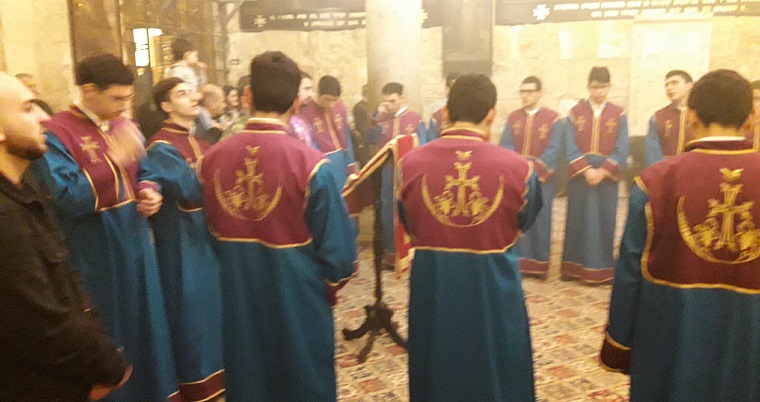
Five – Connects two different parts of two and three. Therefore, five represents the transcendent individual above the natural order of things, the person who has free will. The number is related to the pentagram, and therefore appears in architecture in the form of the Golden Ratio – Phi. Five is related to the Mystical Christianity that found a home in Armenia, and this is expressed in the clothing of the clergy and in church singing.
Six – God created the world in six days. Six is a connection of three and three, or one and two and three, and therefore it is perfect. Jesus was crucified on the sixth day and died at the sixth hour. The number six appears in church architecture in the form of hexagons or a Star of David, and indeed in the dome of the Church of St. James there is a huge Star of David made of curved concrete ribs supporting the circle of the dome, this is the prominent architectural element in the building, which also appears in Islamic buildings, such as the Mosque of Córdoba from the 10th century [4].
Seven –is Related to the celestial bodies and spiritual forces: there are seven colours in the rainbow, seven planets visible to the eye, seven notes in the musical scale, seven matals. According to St. Augustine, seven symbolizes the completeness of God – He created the world and rested on the seventh day. Christian life is governed by the number seven: seven sacraments, seven sins, seven virtues. The number seven appears in the liturgy (rituals) of the church, and is related to the circle appearing inside the hexagon in the dome.
Eight – is The first number after seven, symbolizes the new life after baptism. According to Christian belief, the Resurrection of Jesus occurred on the eighth day. The Octagon is a chosen shape for the baptismal font and appears as the basis for the structure of many churches. And in the Church of St. James, octagons are also found in the carpets and the marble mosaic on the floor.
Nine – Nine represents greater holiness than that found in three, because it is the result of three multiplied by three. There are many Armenian churches divided into nine spaces, and so is the main hall of the Church of St. James, the four pillars divide it into nine spaces, and this is emphasized by arches.
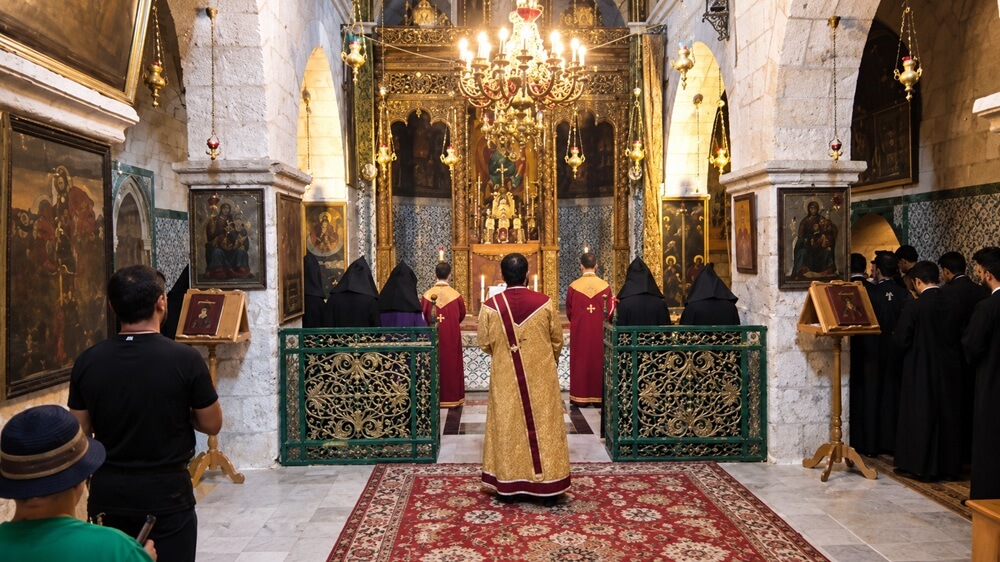
Inside the church hall, the different parts have meaning. The altar area is separated from the body of the church by a railing in the case of St. James, and sometimes a curtain. In front of it is a place for the choir of the clergy. The altar is located in the eastern apse on an elevated area called the bema, and the complexity of the entire structure represents the Unity of God.
In addition to the numbers, the motif of light and the interplay (contrast) between light and darkness is emphasized by the volume of the church, especially that beneath the dome and the many special lamps. According to the Mysticism of Pseudo-Dionysius the Areopagite, which is central to the Armenian Church, darkness was created so that light could be seen against its background. Darkness is an essential component in the process of creation. Before God said “Let there be light,” there was “darkness over the abyss.” The relative darkness of Armenian churches is intentional and its purpose is to awaken the spiritual light in man. Just as the clothing of the priests is a black pointed hat on their heads, which is supposed to awaken the spark of their higher thought, so the clothing of the earth—the churches—are dark, conical spaces that draw visitors upwards.
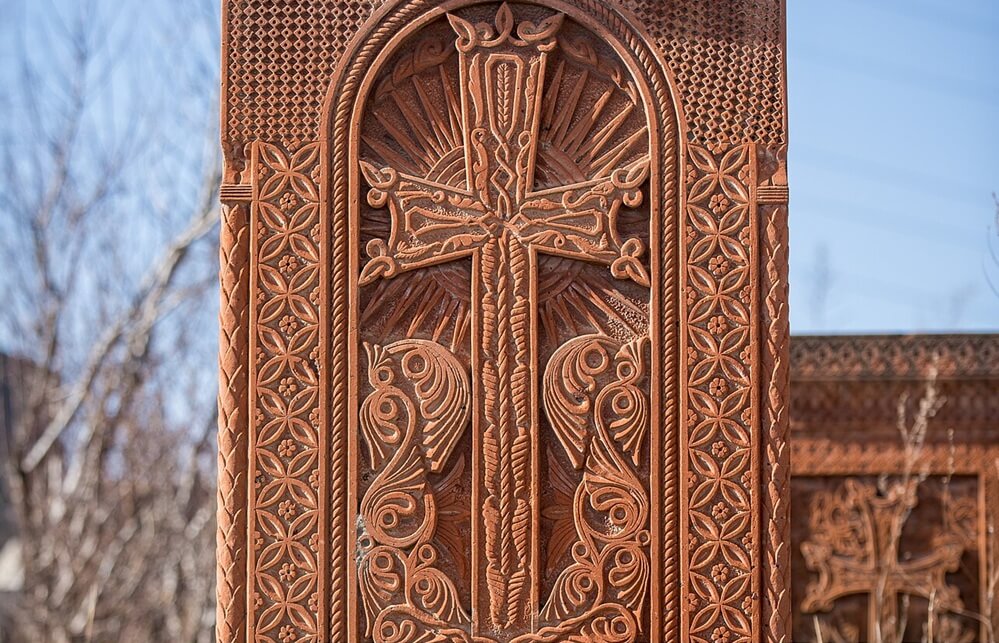
In terms of art, Armenian churches has relatively few wall paintings and carvings, but a lot of geometric art. Thus, the Church of St. James has a lot of ceramics, but unlike other Armenian churches, also many pictures, some of them ancient and important. An Armenian church does not have an Iconostasis, and in fact, there are no icons at all, as in the Orthodox Church. The role of the icon is replaced by the Khachkar, a cross carved in stone or wood, in many and unique designs, symbolizing the Tree of Life, and a magnificent one is found in the courtyard.
Beside the church hall itself, there is a small room that also has an entrance hall, with a silver star on the floor and a beautiful marble altar. This is the burial place of the head of James the Great (his body is in Santiago de Compostela). At the entrance to the room is a wooden door decorated with mother-of-pearl, an artwork from Damascus. On the same wall there is also a balcony with a gilded tree above it, where the Patriarch sometimes appears. The church has a magnificent Patriarchal Throne beneath which St James the Less—Jesus’ brother and the leader of the Christian community after him—is buried.
St. James: His Head in Jerusalem, His Body in Spain
James the great, son of Zebedee, is one of the three disciples closest to Jesus, who was with him at the Transfiguration on Mount Tabor. He was the first to be martyred, being beheaded by Herod Agrippa, but legends say that before that he had Christianized Spain and returned back to the Land of Israel. After his execution, his remains arrived back in Spain on a miraculous stone raft, but his head remained in Jerusalem and is buried in the Armenian Church of St. James in. The Apostles were commanded to reach the ends of the Earth, and Compostela was such a place, making it fitting for an apostle’s tomb. Jesus said, “I send you to the ends of the earth.”
James is the only Apostle buried in Western Europe. Together with Peter and John, he is one of the three disciples closest to Jesus: John is buried in Ephesus in the East, and James in Compostela in the West, while Peter is in the middle in Rome. This is the Christian Kingdom of Saints, with these three saints symbolizing the boundaries of the Christian world.
The tomb of St. James was rediscovered in the 9th century during the struggles between Muslims and Christians over the body and soul of Spain, and it became a center of pilgrimage. However, in the 12th century, under the leadership of the energetic bishop Gelmiriz, santiago became the most important and central pilgrimage destination in Western Europe, a place where half a million people would arrive annually, Galmirez wrote the Pilgrims’ Guide to Santiago, built the Cathedral of St. James, and turned Santiago into a spiritual center competing with Jerusalem and Rome. He drew his inspiration for the cathedral’s architecture and art from other places in the world foremost amongst is jerusalem. This is related to a journey to Jerusalem in 1118 by Pedro Diaz and Pedro Añéz, a cardinal and the treasurer of the Church of Santiago, who were sent by Gelmiriz to travel through Europe and the Middle East to study and bring back ideas. They traveled from the ports of Apulia and were inspired by the churches there, but the main source of inspiration was the Church of the Holy Sepulchre and the holy sites in Jerusalem. In 1129, the Patriarch of Jerusalem wrote to Gelmiriz, proposing the creation of a fraternity between the two churches, by receiving a cleric from the Church in Jerusalem, and so it was. The representative of Jerusalem was given the church of Santa Maria de Nogeira on the west coast in Cambados, Pontevedra, southwest of Santiago.
Parallel to the development of the pilgrimage to Santiago, a tradition and cult of pilgrimage to Jerusalem began to develop, in addition to the pilgrimage to Rome. Thus, there were three centers of pilgrimage in the Christian world: Rome, Santiago, and Jerusalem, and in the 13th century, the route to Jerusalem gained an identity and became the “Via Palm,” which will be discussed in a separate chapter.
Gregory of Tatev in Jerusalem
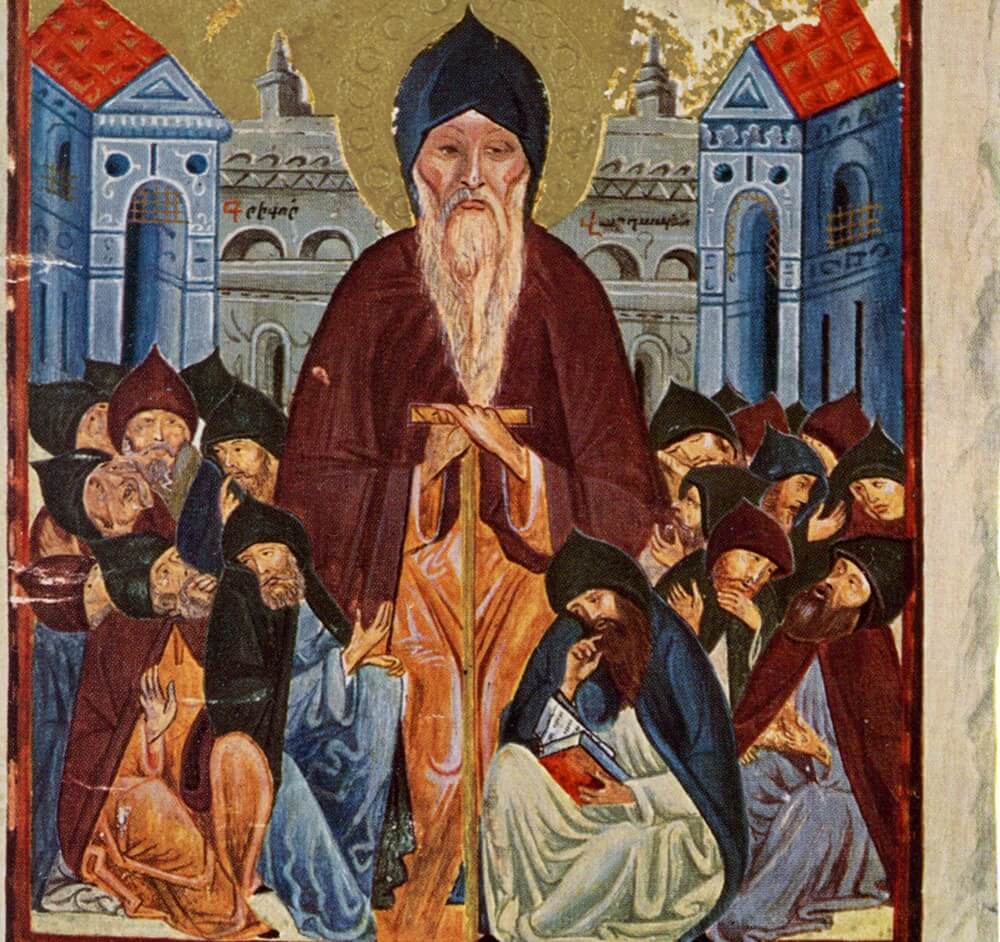
There are three great Gregorys in the history of Armenia, each of whom expressed the spirit of the age in his writing and teaching. The first and most important is Gregory the Illuminator, who worked in the 4th century CE. Following him came Gregory of Narek, who worked in the 10th century CE, and finally – Gregory of Tatev [5] (Grigor Tatevatsi) (1346–1410), who worked in the 14th–15th centuries CE, whose story is connected to that of Jerusalem.
Before he was born, Gregory of Tatev’s mother dreamed that Gregory the Illuminator gave her a lamp that would rekindle the light of faith. Already at the age of 7, he began to study the holy scriptures, and at 14 he met the teacher who adopted and taught him for the next 28 years—the greatest scholar of that time—Vorotnetsi from Vorotnavank Monastery, near Tatev in southeastern Armenia (hence his name). Vorotnetsi and Tatevatsi went on a pilgrimage to Jerusalem together. They walked for months and arrived in Jerusalem in 1373, where Tatevatsi was ordained a monk and on the way back, a priest. In 1376, at the age of 30, he received the rank of Vardapet—a kind of Doctor of Religions of the Church. In 1385, after being a student for 28 years, Tatevatsi received the highest rank of study in Armenia—Senior Vardapet.
After returning from Jerusalem, he began to teach and deliver sermons. According to Tatevatsi, to achieve the best one must learn and then act; one must first think, contemplate, and then act. In the 12th century, Armenia changed and people no longer understood the ancient Armenian, called Grabar. Tatevatsi had a talent for languages and could speak several languages including Arabic, and he began a project of translating and rewriting the holy books. According to his view, the meaning is in the words, and therefore precision in language is necessary.
After the death of his teacher Vorotnetsi in 1388, Gregory of Tatev became the head of the University of Tatev and served in this position for twenty years, until 1408. He was supported by the non-Armenian rulers because he knew how to separate religion from the state. He called for unified Armenian religious leadership and acceptance of the rulers’ authority. According to legend, he was respected by Timur Leng and his sons, who invaded Armenia and annexed it to their empire. In 1375, Lesser Armenia fell to the Mamluks. Tatevatsi persuaded the Patriarchate to move back to Etchmiadzin and healed divisions within the Church.
The main part of his intellectual work is bible and other commentaries. He had commentaries on the Song of Songs, Job, Psalms, Isaiah, John, Matthew, and on the other side—on Aristotle and Gregory the Illuminator. Tatevatsi was called John Chrysostom II, and also Gregory the Illuminator II; he was the theologian and educator of Armenia. Tatevatsi was familiar with the writings of Athanasius, the Cappadocian Fathers, Pseudo-Dionysius, Augustine, Albertus Magnus, and especially Thomas Aquinas [6]. At that time, the activity of Dominican missionaries in Armenia began. Many Armenians became Catholics and the Armenian Catholic Church was created. The university centers in Gladzor and Tatev worked against this trend and to strengthen the Armenian Orthodox faith.
At that time, a fraternity called the Unitarians—of Armenian Catholics who relied on the theology of Aquinas and Albertus Magnus—was active in Armenia. Gregory of Tatevatsi, who was well acquainted with the writings of Thomas Aquinas, composed a significant theological book against this trend called The Book with Golden Content, as well as books of sermons for winter and summer, but his more important book is The Book of Questions, which has been compared to Aquinas’s Summa Theologiae. Throughout his years of activity, Tatevatsi maintained a sentiment for Jerusalem and a connection with the Armenian community there.
Footnotes:
[1] Josef Strzygowski, The Architecture of the Armenians and Europe, Vienna, 1918.
[2] Otto, Rudolf, The Idea of the Holy: An Inquiry into the Non-Rational Factor in the Idea of the Divine and its Relation to the Rational, translated by Miriam Ron, Tel Aviv: Carmel, 1999.
[3] Maranci, C. (2001). Armenian architecture of the twelfth century: Innovation and regional identity. Revue des Études Arméniennes, 29, 123–152. Paris: Association des Études Arméniennes.
[4] Kenaan-Kedar, N. (1998). Armenian architecture in twelfth-century Crusader Jerusalem. Assaph Studies in Art History, 3, 77-91.
[5] Tsaghikyan, Diana. “Grigor Tatevatsi and the Sacraments of Initiation”. (2015).
[6] The most important philosopher and theologian in the West in the 13th century, who synthesized Aristotelian philosophy with Christian thought.