The Mamluks and the Sufi Tradition
The Mamluks were a military caste from Egypt that ruled Jerusalem following the time of Ṣalāḥ ad-Dīn (Saladin) and the Ayyubids (late 12th century) until the Ottoman conquest in the early 16th century. These were usually pagan or Christian youths, brought from the Caucasus, Central Asia, and the Balkans, either kidnapped from their families or sold by poor families, and brought to Egypt to be educated in military boarding schools. When they reached adulthood, they took on administrative and military roles throughout the kingdom. They were characterized by loyalty to the state and religious devotion, but were not allowed to inherit their position or property to their descendants. Their religious education often included membership in Sufi orders and the study of the Sufi way, especially the ideal of the Noble Man.
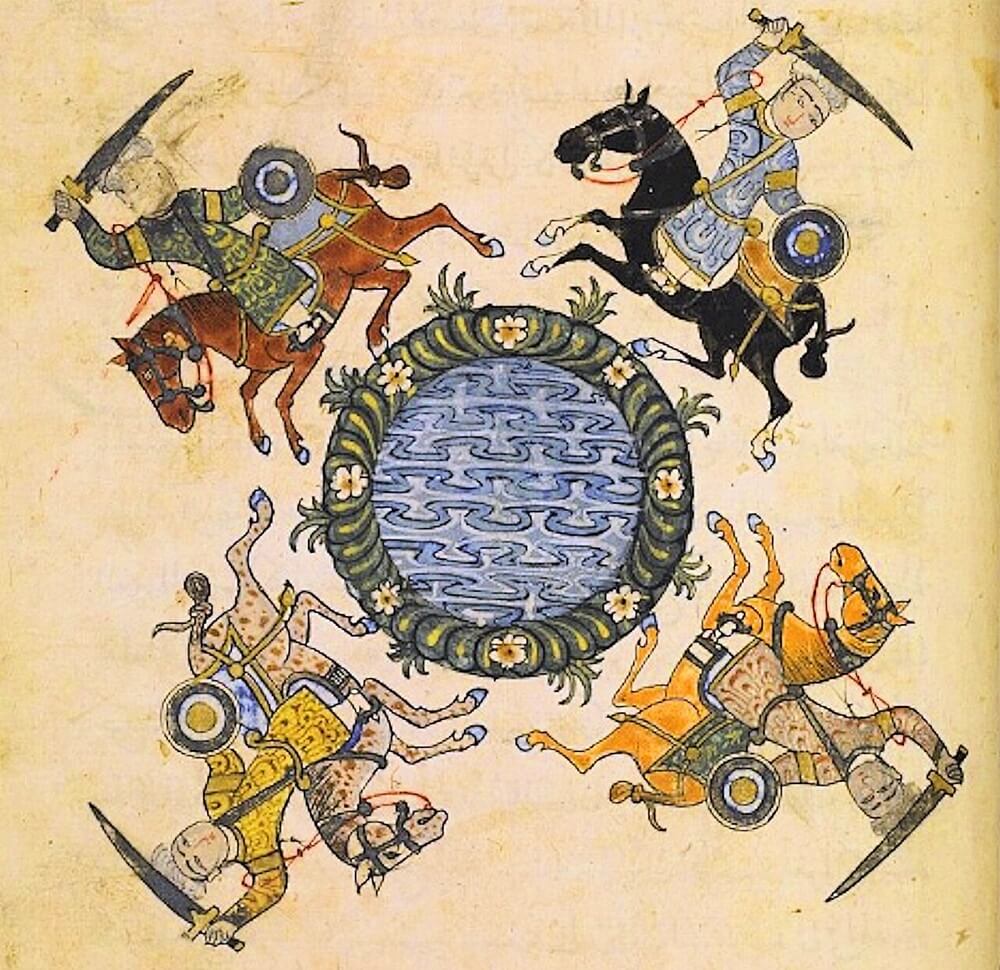
The Mamluks invested heavily in the construction of Jerusalem [1]. Furthermore, it has recently become clear that the Mamluk period was a flourishing era for the Land of Israel. They succeeded in stopping the Mongols at the Battle of Ain Jalut. They then turned to the expulsion of the Crusaders and took over a vast empire that included Egypt, parts of North Africa, Israel, Syria, and more. The secret of their military strength was their skill in cavalry warfare. The secret of their spiritual strength was the religious education they received in their military boarding schools.
One of the Mamluks was the ruler, but the relationships between the other Mamluks and him had the nature of a brotherhood rather than that of a king and his servants, because they grew up together. The aspiration of the Mamluk emirs was to establish religious institutions and support the Sufi orders and lodges. They continued the policy of the Ayyubids in encouraging the Sufi orders as a counterweight to the Shi’ite threat and as a grassroots basis for society. The religious fervor of the rulers who grew up in the boarding schools was directed toward their Sufi teachers and the orders they were part of. And because they could not bequeath their wealth to their families, according to the laws of the kingdom, they invested in creating religious institutions based on endowments (waqfs), many of which were Sufi centers.
The ruling class in the land, and especially in Jerusalem—both local and those who came from Egypt during the Mamluk period or from other regions in the Middle East and beyond—was connected to the various Sufi orders. From the end of the Mamluk period (15th century CE), two famous Sufi families lived in Jerusalem—Al-Dajānī and Al-ʿAlamī—and they contributed to turning the city into a religious and spiritual center. The center of the Al-ʿAlamī family was near the Mosque of the Ascension on the Mount of Olives. Sheikh Shams al-Dīn Muḥammad al-ʿAlamī, who is buried in the zāwiya, received the endowment and left it to his descendants.
One of the largest and most important Sufi structures built at the beginning of the Mamluk period is the Ribat of al-Manṣūrī (Ribat al-Manṣūrī), located northeast of the Temple Mount plaza near the small Western Wall. This was a complex called a ribat, meaning a place for people who inhabited the border areas of the Muslim world. It is often thought that the Sufis were not engaged in fighting, which is incorrect; entire units in Ṣalāḥ ad-Dīn’s army were composed of Sufi followers, and the Mamluk warriors and part of the Ottoman army also underwent Sufi initiation alongside military training, somewhat similar to the Christian military orders. The Sufis were mainly engaged in inner work and service, but when necessary, they stood up for righteous wars, similar to Ṣalāḥ ad-Dīn, while maintaining their humanity on the battlefield.
The Ribat of al-Manṣūrī was established by Sultan al-Manṣūr Qalāwūn in 1282, a few years before the final expulsion of the Crusaders from the Land of Israel. At its center is a large courtyard surrounded by arched halls and rooms. One of the functions of the Sufi zāwiyas was to host pilgrims, and this was the case here—many dervishes came to visit the site of Muhammad’s ascension to heaven and receive inspiration, and they stayed there. Today, it is a social community club for the Muslim African-Sudanese community in the city.
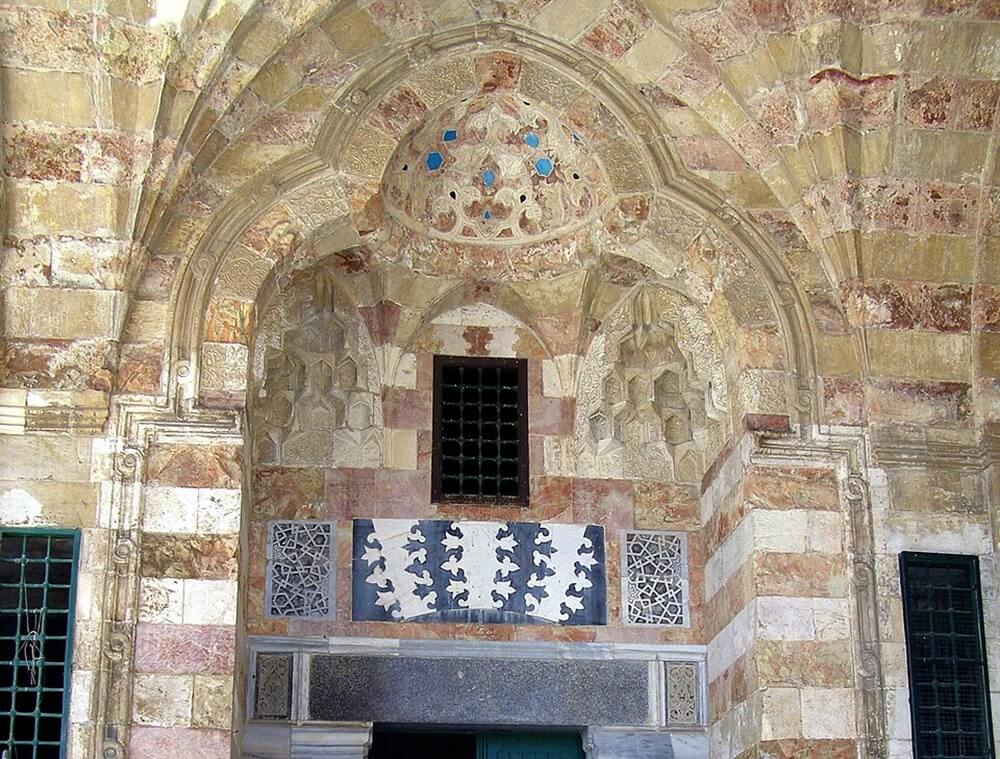
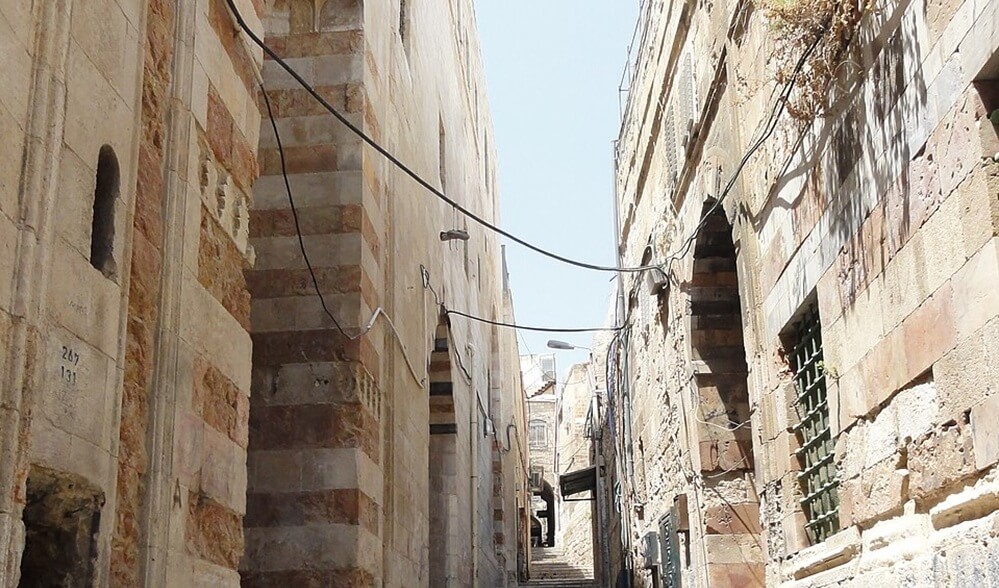
Another important Sufi center is a khānqāh located adjacent to the Saint Anne complex and near the Lions’ Gate, called Khānqāh al-Duwadāriyya. The façade of the building in the ablaq style faces the street. The person who founded it in 1295 was Emir ʿAlam al-Dīn Abū Mūsā al-Duwadār, who called the place “House of the People of Excellence.” He served under the sultans Baybars and Ibn Qalāwūn at the end of the 13th century, supported scholars and religious figures, and established his home near the khānqāh. A hundred years earlier, Ṣalāḥ ad-Dīn had converted the Saint Anne complex into a madrasa called al-Ṣalāḥiyya. The khānqāh completed the sacred complex arrangement.
The entrance inscription reveals that 30 dervishes stayed there—20 bachelors and 10 married men—and it was a place for studying, copying, and translating the Qur’an, Hadith, and Shafi’i law. The village of Bir Nabala north of Jerusalem and other villages served as the waqf of the place. On the western side of the entrance is a special façade that is an architectural masterpiece, made of stones in black, red, and white colors (ablaq style). The impressive entrance leads to a courtyard surrounded by rooms for the dervishes, and a hall on the southern side. Today, it is a madrasa in honor of Abu Bakr.
The Muslim Sufi scholar from the 15th century, Mujīr ad-Dīn, describes life in the city and presents stories of saints and the Muslim religious perspective—both legalistic and mystical—regarding Jerusalem. According to him, there are many saints and religious scholars in the city; it is the holiest city in the land, and its light shines afar.
Mujīr ad-Dīn also mentions the Well of Job in the Kidron Valley, which is probably the biblical Ein Rogel—a large water cistern that, according to Muslim legend, was created by the Prophet Ayyūb (Job), who, in his distress, turned to God, who commanded him to strike the ground with his foot. A spring of water appeared where he struck, and Job washed in it and was healed of his wounds.
The Mamluks continued the Crusader and Ayyubid tradition of identifying the places of prophets in the Blessed Land. Job is a symbol in the Qur’an of submission—islām—acceptance, patience, and faith despite difficulties. Thus it is written: “And remember Our servant Job, when he cried out to his Lord, ‘Satan has afflicted me with distress and suffering.’ We responded, ‘Stomp your foot; here is a cool and refreshing spring for washing and drinking.’” (Sūra 38, verses 41–42).
Over the years, the Mamluks created a new sacred city arrangement in Jerusalem, incorporating the Church of the Holy Sepulchre, the Dome of the Rock, and the Al-Aqsa Mosque, but adding to them their own unique buildings. In this context, Governor Tankiz should be especially noted.
The Cup of Tankiz
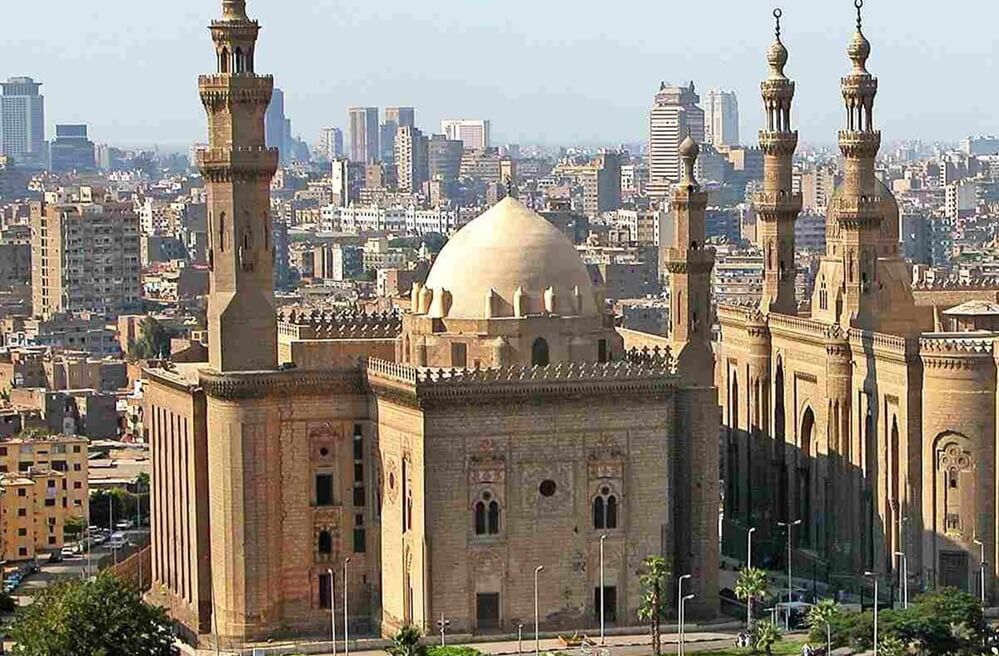
Sayf ad-Dīn Tankiz al-Nāṣirī (1279–1340) was the ruler of the Land of Israel and Syria from 1312 to 1340 and one of the most important builders in Jerusalem, whose works still glorify the city today. He was active during the time of the greatest Mamluk sultan, Muḥammad ibn Qalāwūn, who reigned intermittently for 42 years in the first half of the 14th century. The Muslim geographer al-ʿUmarī says of Tankiz: “He restored Jerusalem to the status of a city, whereas before it had been a neglected and forgotten place.”
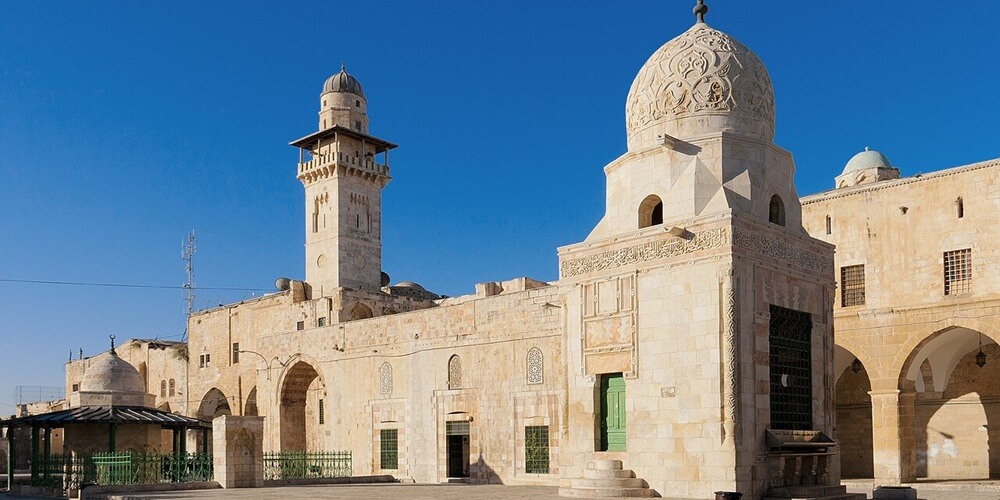
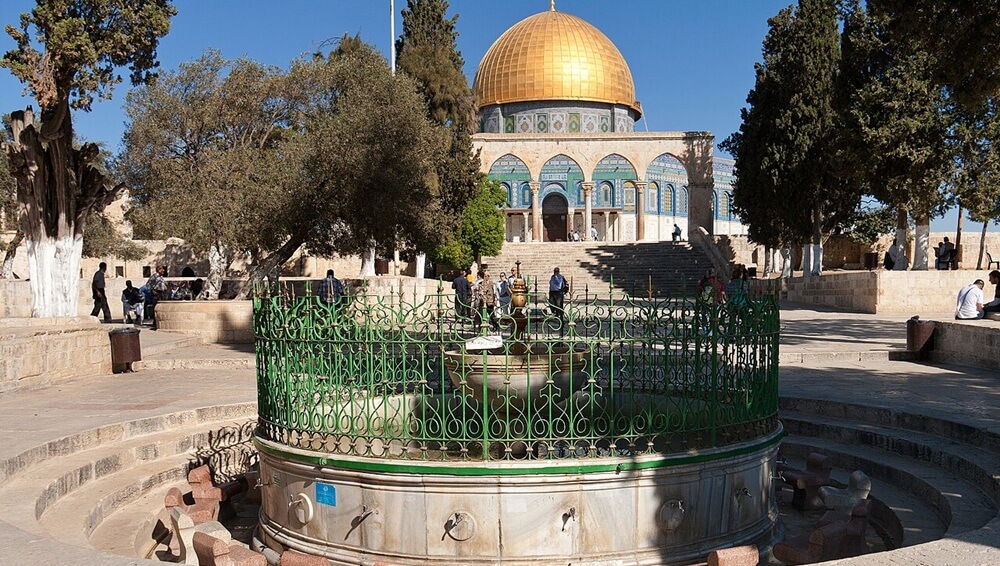
Tankiz built the Sūq al-Qaṭṭānīn (Cotton Merchants’ Market), which exists to this day and served as a waqf for the religious institutions he supported. He built the Cup Fountain (al-Kaʾs)—the purification facility on the Temple Mount—and adopted it as his symbol, perhaps as a symbol of the spiritual purity he desired. This symbol can be found at the entrance to the large building he erected at the exit of the Chain Gate, now called Maḥkama Tankiziyya (Tankiz’s Court), because during the Ottoman period it was the place of judgment in Jerusalem. In the more distant past, it was a madrasa and a khānqāh of Sufis, but it is possible that an ancient synagogue or another structure stood there even earlier.
Next to the khānqāh and the Tankiziyya madrasa, a ribat (religious center) for women was established near the tomb of a holy woman, Lady Tūnshūq (Khātūn Ṭurkhān), who was buried there in 1352. Its façade features beautiful geometric stone carvings. One can also see in the area, which is near the entrance to the Temple Mount, a beautiful Ottoman-era sabil (fountain) that incorporates a rosette wheel from older structures. On the far side of the Tankiziyya is a minaret of a mosque located on the edge of the Temple Mount, which serves as a preferred place for the mu’ezzins (callers to prayer) throughout the generations.
The Tankiziyya was, and still is, the most magnificent Mamluk building in Jerusalem outside of the Ashrafiyya madrasa. The entrance façade resembles a mosque that Tankiz built in Damascus. On the second floor, there is a courtyard and rooms for the Sufis, surrounded by decorated īwāns (open halls) arranged in a cruciform pattern with four halls—a typical plan in large madrasas in Muslim cities during the late Middle Ages. The structure dominates the view of the Western Wall plaza from one side and the entrance to the Temple Mount plaza from the other, which is why a Border Police base is currently located there.
The Khālidiyya Library
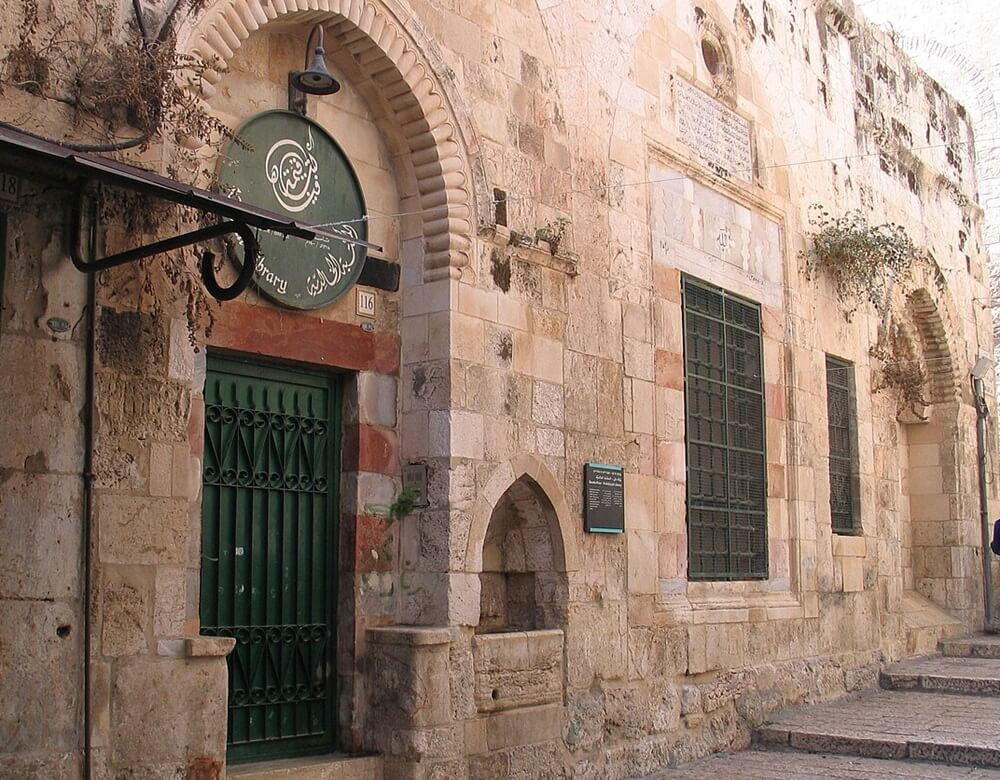
Not far from the Tankiziyya is the Khālidiyya Library, also from the Mamluk period. In the 1240s, the ruler of Egypt, al-Ṣāliḥ Ayyūb, recruited Khwarazmian battalions into his army, and they put an end to Crusader rule in Jerusalem in 1244. Later, the Mamluk sultan Baybars married the daughter of one of the Khwarazmian commanders. Their son, Baraka Khān, was stationed in Jerusalem and was buried on Chain Street at the corner of Western Wall Street along with his two sons. The tomb, therefore, dates back to the end of the 13th century. Nevertheless, the building around it was probably built later, and within it was a rich and old library belonging to the Khālidī family, one of the most important families in Jerusalem with connections to the Sufi orders.
It is worth elaborating here: there is an ancient tradition in Islam of libraries open to all, so that anyone who wishes to learn and advance independently can do so. The Qur’an emphasizes knowledge, and the early Muslims were people of the book and education, who developed the sciences, curiosity, learning, and thought. Libraries were usually part of a madrasa complex, which itself was adjacent to a mosque, where boys were educated not only in religious subjects but also in general and scientific ones. The Arabs preserved part of the knowledge of the classical world, with the most important library being in Baghdad during the Abbasid period, called the House of Wisdom (Bayt al-Ḥikma).
Above the central window facing the street is a dedication inscription to Baraka Khān, whose last line is in Persian and is particularly interesting: “In the name of Allāh, the Compassionate, the Merciful… Our God, grant us what You promised us through Your messengers, and do not disgrace us on the Day of Resurrection, for You do not fail in Your promise… This is the tomb estate of the servant in need of Allāh’s mercy and forgiveness, Baraka Khān, may Allāh illuminate his grave. He died on Friday at the beginning of the month of Muḥarram in the year six hundred forty-four [1246 CE], may Allāh forgive him and his parents… Pure we came out to the world, and impure we became. Quiet we entered the world, and anxious we became. We were made from the black earth, from fire and water, and then we returned to the earth.”
meaning of “Pure we came out and impure we became” is related to the Sufi teaching that man is born with a spiritual organ inside him (the heart), which is like a mirror capable of reflecting spiritual reality, but due to the desires of life, the mirror becomes covered with dirt.
The meaning of “Quiet we entered and anxious we became” refers to one of the tenets of Sufi spiritual teaching. According to the Sufis, there are three souls in every person: the Commanding Soul, the Reproachful Soul, and the Tranquil Soul. They can be likened to the Animal Soul, the Human Soul, and the Angelic Soul.
The Commanding Soul (al-Nafs al-Ammāra) is the one that commands us and does as it pleases with us. This refers to the physical urges that control us: lust, sex, power, laziness, gluttony, and more. In this state, we are not masters of ourselves, but like puppets on strings, moving here and there according to mood and the wheel of life. To be freed from the tyrannical rule of the Commanding Soul—its destructive dominance—we must awaken our second soul, the Reproachful Soul.
The Reproachful Soul (al-Nafs al-Lawwāma) is the human part within us, meaning the moral virtues and the limitations we impose on ourselves to control our urges and become better people. This is the mirror in which we see ourselves, even if the experience is not always pleasant. It tells us: “See, this is your condition; if you continue in this state, you will end up getting nowhere and wasting your life.” The Reproachful Soul is the one that causes us to embark on the spiritual path and begin the journey. It is the one that caused Prince Ibrahim ibn Adham to leave his palace and family and set out after a voice that told him: “Was it for this I created you? Was it for this you were destined?” The Reproachful Soul spurs us on, enabling us to make the long and difficult journey up the Sufi path until we find our destiny.
The third soul that exists within us is called the Tranquil Soul (al-Nafs al-Muṭma’inna). This is the angelic, divine part of us—the Higher Self that is in unity with God. The Tranquil Soul is in harmony with the universe; the person is then in their natural state, a state of trust, where they serve as a channel of blessing for the divine abundance, a conduit through which that abundance can flow into the world (as happens to the whirling dervishes during their dance, or to the shaykhs during the dhikr ritual). The goal of the path is to stop being controlled by the Commanding Soul and to connect, through the Reproachful Soul, to the Tranquil Soul.
Lady Tūnshūq and the Qalandariyya Dervishes
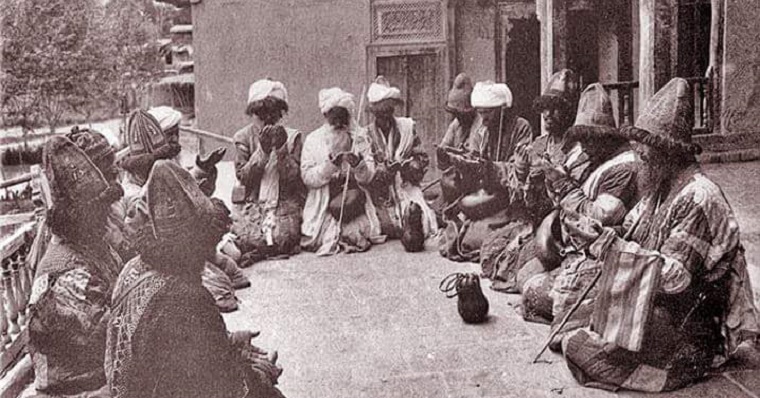
In the 11th century, a movement of dervishes called the Qalandariyya appeared in Central Asia. It was, to some extent, a continuation of the tradition of the Turkoman babas from before Islam. These were people who withdrew from the vanity of this world, lived a celibate life, wandered the roads possessing nothing of their own, and lived off alms. Some of these “crazy holy people” were believed to possess special spiritual powers. They were a continuation of the shamans of the pagan Turkish tribes, as well as Buddhist monks, Indian fakirs, and Christian solitary monks. They scorned worldly vanity and submitted themselves to the will and love of God. Some of the dervishes scorned formal religion and its institutions and saw the hypocrisy inherent in them. They were extremists—rebellious mystics. In the 11th–14th centuries, they coalesced into a kind of wandering dervish order called the Qalandariyya and began to make pilgrimages to the holy sites of Islam, including Jerusalem.
The founder of the Qalandariyya order, after whom it was first named (Yasawiyya), was Shaykh Aḥmad Yasawī, who was a disciple of one of the great Sufi shaykhs in Central Asia, Ḥamdānī. He was the leader of the Bukhara community after Ḥamdānī, but left for Turkestan to live the life of a dervish monk, died in 1166, and was buried in Yasi, Kazakhstan (today Turkistan).
Yasawī was a wandering dervish who lived a life of modesty and solitude, but he was also a gifted poet and teacher. He referred to his poems as heavenly revelations and called them the “Second Book,” following the first book—the Qur’an. His verses are attributed with healing power and are recited in healing dhikr. He wrote an anthology of wise thoughts in which he details his vision of the world—spiritual laws of inner improvement meant to help discover the divine spark within us. He started the tradition of Turkish mystical poetry and also the perception of a spiritual Friend—soul mate (Dūst). From his words: “He who does not give his heart to the Friend is not a Sufi.”
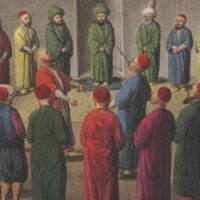
Yasawī’s poems were accompanied by music that became important in the worship of the Qalandariyya order and eventually developed an independent existence. They were sung in rituals and gatherings called dhikr, in which mystical practices of calling on the name of God, entering a trance, and connecting to the super-sensory world were performed. The existence of brotherhoods that held gatherings of music, singing, and trance became the hallmark of Islam in the Turkish world.
Yasawī introduced a new type of spiritual practice called the “Sawing Dhikr,” which is reminiscent of shamanistic rituals—but the interpretation is different. The Prophet Zechariah hid inside a tree trunk, and the voices of the participants in the dhikr symbolize the cutting of the tree in two by his pursuers. The sawing and the prophet’s cries can be heard in the yogic techniques of breathing and vocalizations. The rhythm is adapted to the rhythm of the heartbeat. The ritual lasts two hours and is accompanied by Yasawī’s verses.
Yasawī established a unique ṭarīqa (meaning path, order), the first Sufi order in the world to use the Turkish language in its poetry and prayers. This type of Islam was easily digestible for the masses, who could not read and still believed in the pagan traditions. The brotherhoods spread like wildfire and were often supported by the rulers. Yasawī became a kind of father figure for the people of Central Asia, a role model—especially after he retired to seclusion in an underground room at the end of his life. Yet the order lacked the figure of an organizer who would come after the visionary. Instead, a popular movement of dervishes called the Qalandariyya began—a general name throughout the Muslim world for wandering dervishes who referred to Yasawī as their teacher and model [2].
Qalandariyya dervishes greatly resembled the Hindu sadhus; they wore one robe for life, each had a walking stick and a bowl for food with which they received their meals by begging at doorsteps. They were widespread in Central Asia and India, and also appeared in Damascus and Anatolia. They dedicated their lives to connection with God and inner contemplation, and often did not strictly observe religious duties. Rūmī writes: “There are wild, wandering Sufis, called Qalandariyya, who are always full of the joy of life. It is a scandal how they love and laugh at every little thing. People gossip about them, which makes them skilled in their cunning, but in fact, a vast struggle of God is taking place within these nomads—a flood of light drunk from all this being.”
In the 14th century, we find a center of the Qalandariyya Sufis in the Mamilla cemetery. Their wanderings brought them to the Middle East, and this was integrated with the tradition of pilgrimage in Islam [2]. At that time, a wealthy lady named Tūnshūq (Sayyida Tūnshūq) arrived in the city. She was probably from a family that ruled Central Persia, and together with her brother and considerable wealth, she bought properties in the Muslim Quarter and built a magnificent center for the Qalandariyya dervishes on ʿAqabat al-Khālidiyya Street—which is also a palace. Opposite the center, her tomb can be seen.
Tūnshūq arrived in the city in 1391 and died there in 1398. Her decorated tomb is opposite the building, which was constructed according to the best Mamluk tradition: construction in reddish tones, geometric interlaces (arabesques), a combination of white, black, and red stones (ablaq style), stalactites in the form of muqarnas, carvings of birds and flowers above the gates, and selected verses from the Qur’an. The geometric decorations and Arabic verses are a kind of magical formula protecting the building—a spiritual weapon against evil—and they aid in the concentration of thought and the encouragement of noble behavior.
Al-Ashrafiyya Madrasa
At the end of the 15th century, toward the end of Mamluk rule in the city, the most beautiful Mamluk building was constructed there, considered the third jewel on the Temple Mount after the Dome of the Rock and the Al-Aqsa Mosque—a madrasa with a wonderful entrance and façades, unique in their kind, called the al-Ashrafiyya Madrasa. The place was built by the greatest Mamluk sultan, al-Malik al-Ashraf Sayf ad-Dīn Qāytbāy, who showed great interest in religious matters, lived in abstinence from worldly vanity (despite being at its head), yet built magnificent religious structures throughout the kingdom.
He visited Jerusalem in 1480, and the Ashrafiyya Madrasa was given to him as a gift. It was not to his taste, and he ordered its demolition and the construction of another madrasa in its place that would be as grand and beautiful as the madrasas he knew in Egypt. He brought a team of builders led by a Coptic architect who rebuilt the building. The construction work is commemorated in an inscription next to the entrance gate: “The building of this blessed madrasa was established by order of the Exalted Imām, Emir of the Believers, Sultan al-Malik al-Ashraf Abū Nāṣir [may he achieve great victory]. In the year 1482.” Important Sufi teachers taught in the madrasa, and the shaykh was Shihāb al-Dīn al-ʿUmarī, apparently from a family of scholars from Damascus who were important in the Mamluk administration.
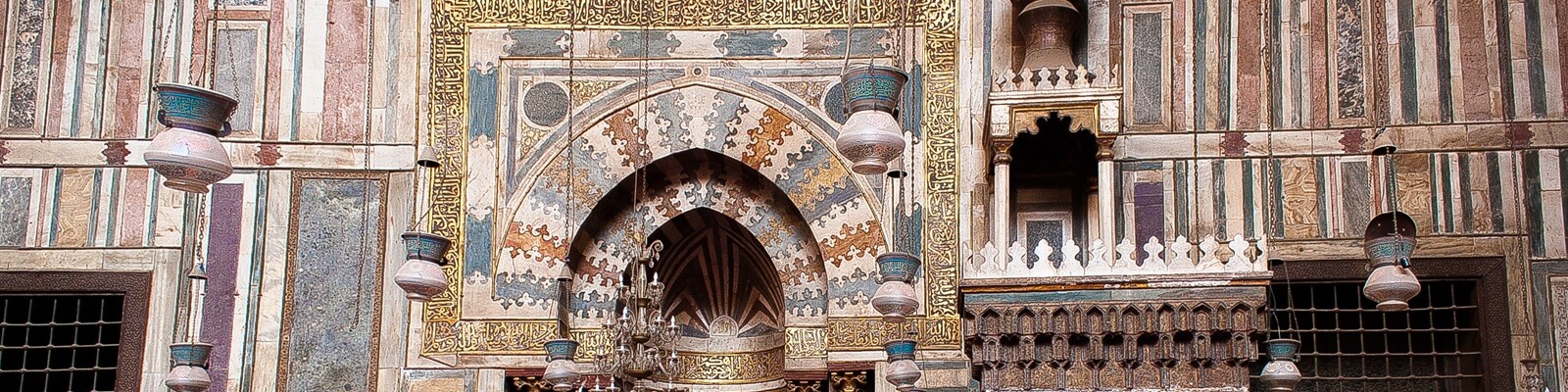
The building is notable for its ablaq-style decorations. It is composed of two floors: a wide hall on the first floor and living quarters, services, courtyards, and study rooms on the second floor. Around the courtyard on the upper floor are īwāns—open study spaces. The front part of the upper floor is ruined. This is the only madrasa built directly on the Temple Mount. Today, there is a center for the preservation of ancient periodicals and a religious school for girls there. QOpposite the madrasa is the Sabil of Qāytbāy, a purification facility located above a cistern and built in the form of a Mamluk-era mausoleum. It has a dome decorated with arabesques of great geometric and sculptural richness, which is the only one of its kind outside Cairo.
Footnotes:
[1] Smith, A. C. (2013). Mamluk Jerusalem: Architecturally challenging narratives. LUX: A Journal of Transdisciplinary Writing and Research from Claremont Graduate University, 3(1), Article 16. http://scholarship.claremont.edu/lux/vol3/iss1/16
[2] Zarcone, T. V. (2009). Sufi pilgrims from Central Asia and India in Jerusalem. Kyoto: Center for Islamic Area Studies at Kyoto University (KIAS). ISBN 978-4-904039-11-3