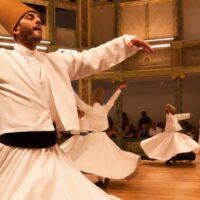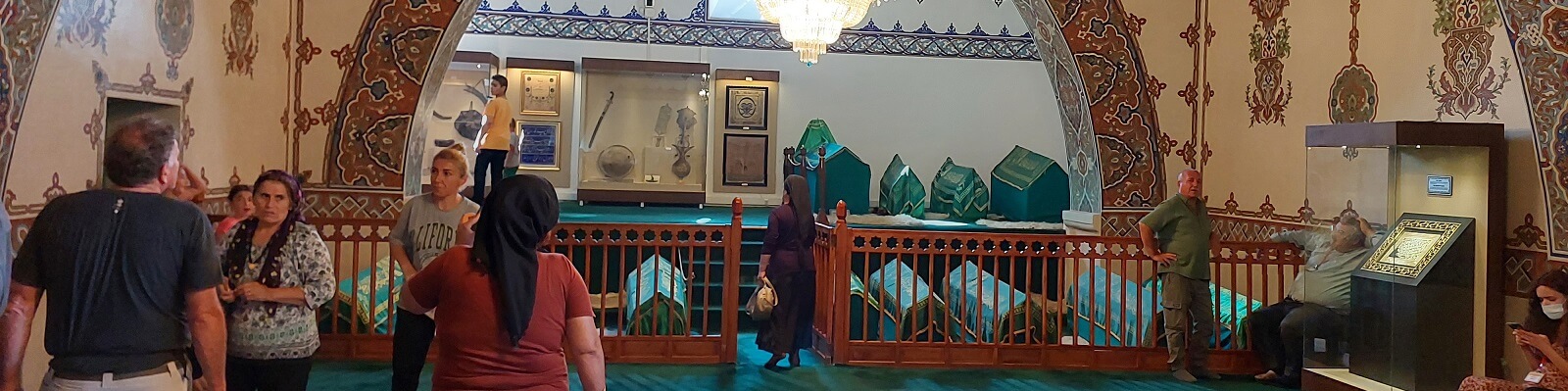
Ottomans and the Bektashi Dervishes
The Ottomans conquered Jerusalem in 1517 and ruled it for 400 years. Ostensibly, this was merely the replacement of one Muslim rule with another, but in fact, the Ottomans brought with them a new state order, a new culture, and new spiritual traditions. Consequently, new Sufi orders were established in Jerusalem, such as the Bektashis and the Whirling Dervishes. There was also an increase in Christian pilgrimage and a flourishing of the Jewish community.
In he 16th century, the Ottoman Empire stretched over an area equal in size to that of the Roman Empire, and about 30 million people lived in it, at a time when even great Spain numbered no more than 5 million. The Ottomans had the most advanced army and navy in the world, and in addition, they had a magnificent system of law and governance. The principles underlying the empire were the ideal of a Muslim state, a concept based on the teachings of Niẓām al-Mulk of Baghdad in the 11th century. The state had to be an entity of justice that enabled human welfare, and its backbone consisted of people who embodied the ideal of the Muslim knight—the man of virtues—who received his education in Sufi centers called tekkes and in madrasas. Indeed, the greatest Ottoman ruler, Suleiman the Magnificent, is also called Suleiman the Lawgiver [1].
The Ottomans granted autonomy and self-jurisdiction to national and religious minorities according to the principle of the Millet—judicial independence in personal, family, and social matters. The Millet created a local and independent government that functioned under the central Ottoman administration. The institution of the Millet exists to this day within the autonomous rights granted to the various religious communities in the Land of Israel.
The Ottomans introduced several important innovations, foremost among them the institution of the Timar—a redistribution of lands. This change brought about a unification of land ownership, enabled greater justice for farmers, and prevented the abuse of the population by local strongmen, thanks to the establishment of an advanced legal system and powerful national judicial institutions. Interestingly, Ottoman land laws and the creation of “state lands” form the basis of land law in the State of Israel to this day.
The Sultan who essentially founded the Ottoman Empire is Mehmed II, who conquered Istanbul and renewed the Ottoman conquest of the Balkans. He confiscated lands from the nobles, strengthened the central government, founded an efficient bureaucracy directly subordinate to him, built an army, and encouraged commerce. He and those who followed made the Ottoman Empire the leading power in the world. His grandson, Sultan Selim I, conquered the Land of Israel from the Mamluks in 1517. He visited Jerusalem, which surrendered to him without a fight. His son, Suleiman the Magnificent, ruled from 1520–1566 and had a significant role in the history of Jerusalem.
end of the 15th century and the beginning of the 16th century were the Golden Age of the Ottoman Empire. The conquest of Constantinople and the expansion of the empire led to prosperity. Rulers such as Suleiman the Magnificent maintained law and order and carried out vast building projects (such as the walls of Jerusalem). The Sufi orders established khānqāhs and zāwiyas and ensured social justice. Jews arrived from Spain after the expulsion and established magnificent communities, helping to develop the economy. A mixed population of Jews, Armenians, Greek Orthodox, members of other Christian denominations, Turks, Arabs, and Muslims from various places developed in Jerusalem.
In the late 16th century, the central government weakened, and local strongmen, who received a kind of autonomy, ruled the Land of Israel. In Istanbul, the Sultanate of Women rose to power, with incompetent sultans who were in fact controlled by their mothers. These were sultans who grew up in the harem and, due to the tradition of killing the other heirs—including their own brothers—were raised in an atmosphere of intrigue and fear. The Ottoman Empire continued to be strong externally, but internal decay had already begun. Nevertheless, religious institutions, poetry, and art developed during this period.
In the early 18th century, there was a military and governmental decline. This occurred concurrently with the rise of the West, the discovery of a bypass route to India that rendered the Silk Roads and the strategic location of Istanbul obsolete, and the development of America. Thus, in the last hundred years of its existence, the Ottoman Empire was artificially upheld by the Western powers, who prevented its collapse and conquest by hostile forces. During this time, the Empire attempted to renew itself through the Tanzimat reforms, but it was too little, too late.
It must be remembered that the Ottoman Sultan was the Muslim Caliph, the head of the Sunni Islamic world. The sense of inferiority toward the Western world led some Sultans to adopt a Pan-Islamic policy and encourage political Sufi orders, such as the Naqshbandi.
The long period of Ottoman rule in the Land of Israel can be divided into three periods: the first hundred years of direct and efficient Ottoman rule that brought about cultural and economic prosperity; during this time, many building projects were executed, Jews came to the land, and the Golden Age of Safed took place; then two hundred years of decline and stagnation followed, until, by the early 19th century, Jerusalem had become a remote and neglected district city; and finally, one hundred years of development and change with the awakening of the land in the 19th century. During all this long time, wondrous things happened in Jerusalem.
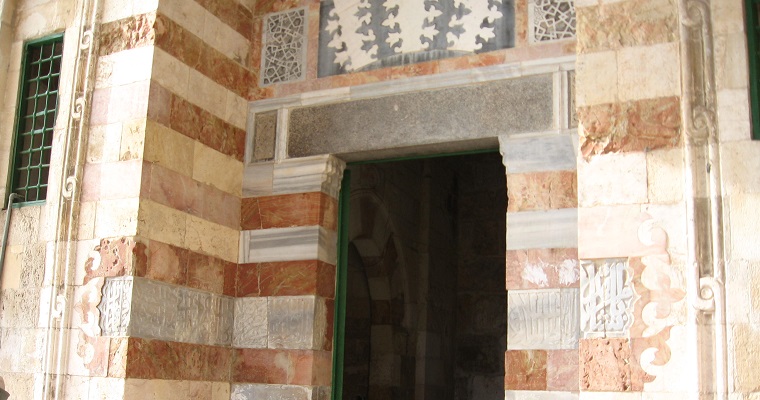
Suleiman the Magnificent and Roxelana
The greatest Ottoman ruler—Suleiman the Magnificent—ascended to power in 1520, three years after the conquest of Jerusalem, and ruled for more than forty-six years. His grandfather, Sultan Bayezid II, was a Sufi who practiced Sufi rituals and supported the orders, especially the Khilwatī. He was the one who brought the Jews to the Ottoman Empire. Bayezid died when Suleiman was 18 and apparently influenced the young prince, who was educated by the best teachers and spoke Persian in addition to Turkish.
Suleiman was a romantic poet, a goldsmith, and also a talented organizer and ruler, a successful strategist and military man. The two most significant events in his life happened when he was 26, and they are related. In that year, he met the love of his life, a slave in the harem named Roxelana, who became his royal consort, confidante, and manager of some of his affairs; and the second was that he became Sultan.
Roxelana was of Christian origin and was kidnapped at a young age from what is today western Ukraine (then Poland). The love between them was so great that Suleiman violated all the prohibitions regarding the relationship between a ruler and a slave, made her his official consort, and married her in a grand ceremony in 1534. She bore him six children, five of them sons, the first in 1521, a year after they met.
Roxelana moved to live in the new Topkapı Palace and received the first-of-its-kind title of Hürrem Sultan (the Sultan’s first wife), a title carrying with it royal duties. She was a learned woman who wrote letters to other European monarchs herself and apparently drew close to Sufi shaykhs. Contrary to the tradition of the Sultan’s wives until her time, she remained with her husband in the palace and did not join her sons who were in distant provinces, thus becoming Suleiman’s close and trusted advisor—cherchez la femme.
Beyond poetry, both apparently loved Jerusalem, or the idea of Jerusalem as the place of the Night Journey, as it seems they never visited it. Typically, Suleiman rebuilt the walls of Jerusalem and renovated the Al-Aqsa Mosque, while Roxelana built charitable institutions within the walls and a unique dervish complex named after her. The couple acted as one: the Sultan (the man) took care of external matters—defense and security, government and law—while the woman took care of internal matters: the virtues of grace and mercy, love and caring.
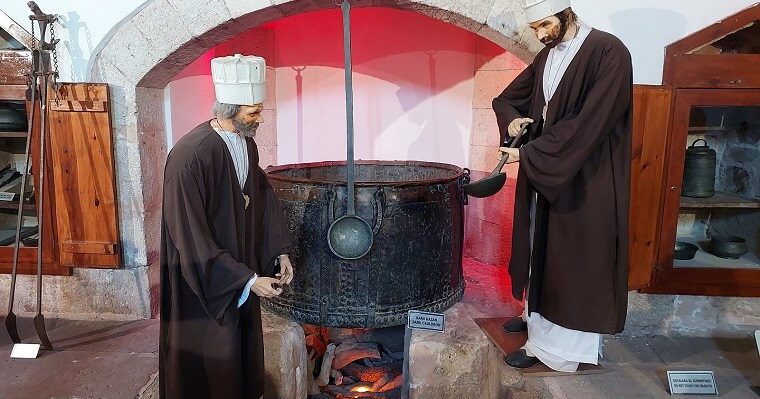
Roxelana, whose title was Khassaki Sultan, built the complex of the Lady Tūnshūq Palace in Jerusalem, the Imaret—a charitable institution designed by the royal architect Sinan. This is a huge complex that included a hostel with more than 50 rooms, a caravanserai (khān), a bakery, a sabil (fountain), warehouses, halls, and a large underground water cistern—everything needed to feed more than 500 pilgrims, needy people, and guests a day. To this day, there is a large soup kitchen there that provides meals for pilgrims and visitors to Al-Aqsa.
Roxelana’s example was Zubayda, the chosen wife of the Caliph Hārūn al-Rashīd, who built many charitable institutions along the pilgrims’ routes, and thus Roxelana built institutions from Mecca to Jerusalem. Her first project was in Istanbul and also served as the first project of the architect Sinan. It was a large public complex named after her—Haseki Sultan—which included the first-of-its-kind mosque with a single space and a single large dome in the style of the Hagia Sophia.
The building projects in Jerusalem that were initiated by Suleiman the Magnificent were, first of all, the rebuilding of the city walls, which were already standing by 1541. At this time, the renovation of the Dome of the Rock and the nearby Al-Aqsa Mosque was also completed. Roxelana’s charitable institution was established ten years later and inaugurated in 1552. It can be assumed that the couple in love initiated the rebuilding of Jerusalem in coordination and dialogue with each other. It is possible that they dreamed of a joint trip to Jerusalem and a visit to the holy sites.
In any case, in 1555, Suleiman the Magnificent invited two important businessmen from Italy, members of a family of Jewish forced converts from Portugal—Doña Gracia and her nephew and son-in-law Don Joseph Nasi—to the Ottoman Empire. They became important figures in the economy and administration of the kingdom. For the Jews, these days were perceived as the coming of the Messiah. The Ottomans allowed Jews to settle in Israel, protected them, and granted them economic rights. The Golden Age of Safed began, Kabbalah studies flourished, and the Jewish community in Jerusalem grew and strengthened. Doña Gracia and Don Joseph Nasi wanted to lease Jerusalem and renew Jewish rule there. Their request was not granted, but instead they received Tiberias.
The security and commercial opportunities arising from the Land of Israel being part of an organized and large empire led to economic prosperity. The cultural, artistic, and architectural Renaissance that swept the Ottoman Empire reached Israel. Suleiman the Magnificent saw himself as a successor to King Solomon, and therefore built his mosque—the Süleymaniye—in Istanbul in the image of the Dome of the Rock, hence his special connection to Jerusalem. According to some of the esoteric societies of Europe, he was a member of the Freemasons and continued the tradition of sacred architecture with the help of his architect, Sinan.
But nothing lasts forever. In 1558, Roxelana died, and eight years later, in 1566, the broken-hearted Suleiman also died. He was succeeded by Selim II, known as “the Drunkard,” and the affairs were managed by the Serbian Vizier Sokollu Mehmed Pasha, who shifted the Ottoman Empire’s focus to the Balkans.
In 1574, Sultan Murad III ascended to power and ruled for twenty years. He was interested in mysticism and astrology and was very close to Sufi circles. In the years 1591–2, there were Muslim messianic expectations, as it was one thousand years since the Hijra—Muhammad’s migration from Mecca to Medina and the beginning of the Muslim calendar. Not only Muslims expected the Messiah, but also Jews: David Reubeni and Shlomo Molcho went on missions to the Christian Catholic world, and an anonymous prophet named Nostradamus wrote enigmatic verses with a reference to the Holy City. Thus he writes: “The Holy Land is stained with blood, a city of great faith is torn to pieces; from east to west the war ascends, and the holy remnants will be shattered.”
Murad III died in 1595, and with his death—and even a little before—the Ottoman central government in the Land of Israel weakened, and power passed to local rulers instead. The empire began to lose its strength and power, and Jerusalem was neglected.
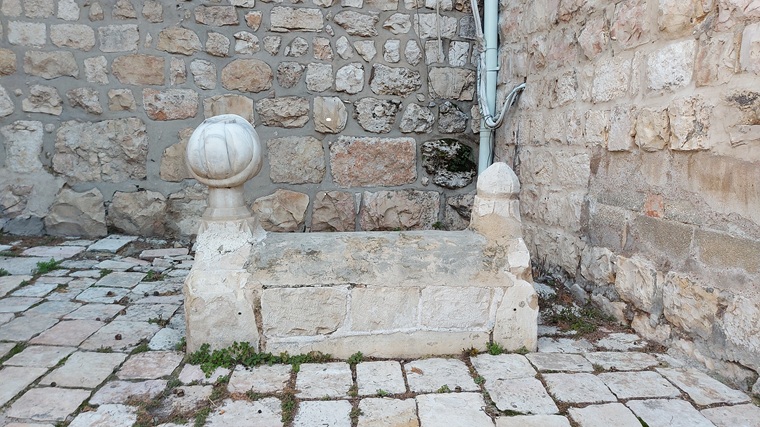
Mimar Sinan
Sinan (1489–1588) was born to an Armenian family in Cappadocia. His father was a builder and carpenter. Upon his enlistment in the army at the age of 22, he converted to Islam and rose in rank in military engineering roles. He served in the army for 25 years, during which time he participated in various military campaigns, including a campaign to Egypt, and it can be assumed that he also visited Jerusalem on the way. He was a self-taught and learned man, taking his inspiration from all the buildings he saw on his journeys, until he eventually became the Chief Architect of the Ottoman Empire in 1539 and served in the position for fifty years. Along the way, he was the commander of Suleiman the Magnificent’s royal guard, and in this way was in close and continuous contact with Suleiman and Roxelana.
The Ottomans had a system of Devşirme compulsory levies, which often included forced recruitment of young Christian boys into military boarding schools. Seen, justly, as a cruel compulsory conscription, it also had a positive aspect, as those who were considered the best and most talented were recruited, and the recruits were given the opportunity to fill any role according to their skills and ability. This created social mobility in the Ottoman Empire that included all the nationalities within it. Within the Muslim governmental system, there was a possibility for self-made people to advance up the ranks of service.
The graduates of the boys’ boarding schools served not only in the army but also filled various positions in the government. The positions in the empire were not hereditary but based on talent, and thus a large part of the recruits joined the Devşirme system willingly and by choice. This was a screening system, not an elitist one— a kind of elite unit where only the best were accepted, and even within it, there was further selection for more privileged roles. The Devşirme was a kind of palace education system, an elite unit of the palace, and sometimes the joining occurred at a later age.
Sinan was a product of this system and became the Chief Military Architect and later the Chief Architect of the Palace. He designed close to 500 buildings of various types. His masterpieces are the Süleymaniye in Istanbul (which somewhat resembles the Dome of the Rock) and the Selimiye in Edirne, where he created a dome larger than that of the Hagia Sophia. The central motif in his work was symmetry and balance, which for him were proof of the order in the universe. Part of this symmetry was the connection between the circle and the square, and between the circle (the dome) and the octagon supporting it. His buildings are characterized by acoustic qualities, plays of light and shadow, modules that determine the shape and size of the space, spaces that are an expression of archetypes (such as a perfect square in the Süleymaniye), and grandeur and wonder that instill a religious feeling.
As part of his works, Sinan designed the magnificent Damascus Gate and apparently also the walls of Jerusalem in the years 1537–1541. The gate features a repetition of numbers (four and three), symmetry that emphasizes duality (two towers), hidden proportions, and a combination of a rectangle and a ribbed arch at the entrance. Ten years later, he designed Roxelana’s Hürrem Sultan complex (the Lady Tūnshūq Palace).
Beyond being an architectural genius, Sinan embodied the ideal of the New Man upon which the Ottoman Empire was built [2]—a talented person who rose to greatness, striving to complete and refine God’s creation through his talent, effort, learning, dedication, and practice. Sinan says in his biography that he grew up in the house of Haji Bektash (see chapter below). The principles of the Bektashi Order were aimed at creating a brave, individualistic, and mystical person—Alp-eren style—and Sinan was indeed such a person.
The Janissaries
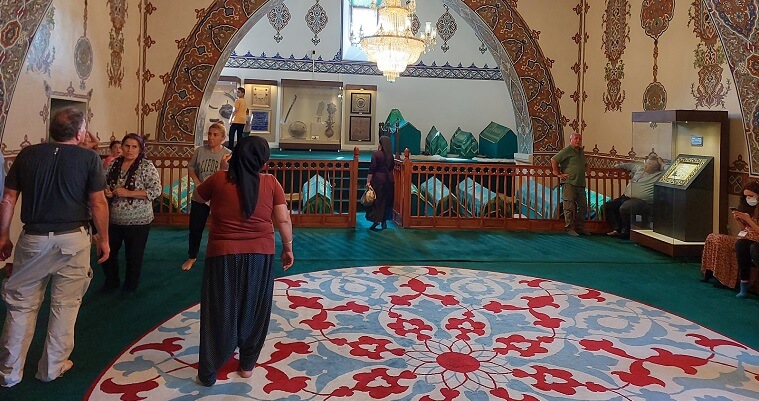
The Janissaries were graduates of the Devşirme system and the backbone of the Ottoman army and administration. The Ottoman state was founded in 1299 by Osman I in Bursa, and initially relied on Turkish tribes that believed in a saint who came from Central Asia named Haji Bektash. One of the tribal leaders, the saint Sayyid Ali, and forty heroes had a shared dream in which the Prophet commanded them to go to that saint who resided in Cappadocia to receive a blessing from him. They went to Haji Bektash, who blessed their sword and commanded them to have a double-edged sword—be warriors in both the physical battle for Islam and the spiritual battle (the double-edged sword is the symbol of Ali and is called Dhū al-Fiqār).
At the same time, Sultan Orhan dreamed that forty heroes would come to him and be a model of a new type of soldier, with miraculous ability and deep religious motivation. The meaning of the name Janissary is “New Soldier.” And so it was: the forty heroes in Orhan’s service crossed the Dardanelles, captured Gallipoli, and succeeded in gaining a foothold in Europe. However, historically, the person who founded the corps was Sultan Murad I (Orhan’s son), who in 1361 moved the capital from Bursa to Edirne and began a campaign of conquests across the Balkans. He was tolerant in religious matters and granted rights to Christians. The new soldier at that time was a volunteer, and there was no compulsory conscription.
Sultan Murad I developed the Janissary institution, somewhat imitating the model of Nizām al-Mulk and the Mamluks. Initially, joining the boarding schools was voluntary, with the government encouraging Christian children from poor families to join, because they were not entangled in ties and loyalties to a tribe or group, and becoming a Janissary gave them a second chance. However, at the end of the 14th century, in the face of the empire’s rapid expansion, Sultan Selim I decided to forcibly recruit children (the Devşirme tax) from among the Christian subjects in the Balkans, and the ranks of the Janissaries swelled to tens and hundreds of thousands. This created a great deal of resentment among the Christian population, as children were taken forcibly from their families and homes, and it became a national post-trauma to this day.
The basis of the Ottoman Empire’s power was the creation of the figure of a New Man, a Muslim noble, a knight who fulfilled the virtues of the Sufi Muslim chivalric ideal, upon which the new society and state of justice were built. Every empire in history was based on a type of person who could be trusted in all circumstances because he had inner motivation. In the United States, it was the pioneer; in Victorian England, it was the figure of the English gentleman; in Rome, it was the Roman aristocrat, and so on. In the Ottoman Empire, it was the Janissaries. They could be relied upon because they were filled with inner motivation and wanted to advance the Ottoman state wherever they were sent and in every role. They were committed to the ideal of the Muslim state as a tool that promotes justice and allows people to live a full religious life and society to function fully.
The Bektashi Order and Jerusalem
About 800 years ago, a man named Haji Bektash (hence the name Bektashis) traveled miraculously from Central Asia to Cappadocia and taught the hidden meaning of the Qur’an and the Muslim religion. He settled in the village later named after him, forming part of a movement of Turkoman babas who continued, under the guise of Orthodox Islam, to practice pagan traditions and customs of former Turkoman life, combined with a mystical system influenced by the Central Asian Sufi Aḥmad Yasawī.
Bektash gradually gained recognition as the leader of the Babas. He taught the beginnings of a simple ritual that included the use of a candle, a ceremonial meal, the drinking of alcohol, singing, and dancing (Samāʿ). He himself wore—and allowed his followers to wear—a distinctive hat, and taught a simple and profound moral teaching: love your neighbor as yourself, educate women, do not harm even if you are harmed, etc. Before he died, he appointed and sent disciples to various regions to continue his teaching. His figure served as inspiration for the popular Alevism movement, which is a kind of very moderate Shi’ism based in eastern Turkey, and also for the establishment of the Bektashi Order, in which a unique system of initiation and religious mystical work leads to union with God [3].
His sayings were collected in a book called Maqālāt. There is another book called Vilāyet-nāme, which contains legends about his life, but this book was written later, at least two hundred years after him. Haji Bektash was largely a legendary figure, and in fact, the one who gave the actual impetus to the founding of the Order—and is considered its second founder—was a man named Balım Sultan, who lived in the 15th century. His name is derived from bal—honey in Turkish. According to legend, his mother conceived from honey placed in her mouth by one of the Bektashi saints. Perhaps for this reason or another, he led communities of celibate dervishes (something that is an anomaly in Islam). These are dervishes who take vows, receiving them by piercing their earlobe and placing an earring in it. The monk-dervishes (babas) are the pillar of the Bektashi Order, those who are initiated into the secrets of religion and maintain a direct connection with God.
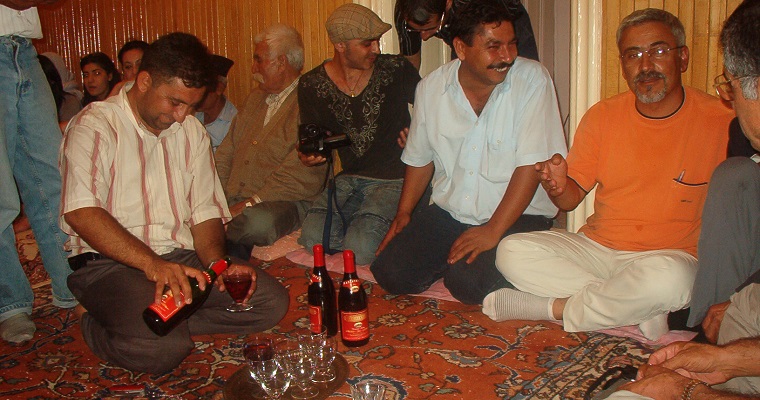
The Bektashis do not pray in mosques, do not fast during Ramadan, and do not observe the other religious duties, and consequently they are considered heretics by other Muslims. Instead of the traditional religious duties, they perform their own rituals in a house called Meydan Evi (or just Meydan), and they have a system of practices based on the Sufi path. The Bektashis emphasize the love of God instead of the observance of religious duties. They express the love of God in rituals of singing, drinking alcohol (which is forbidden in Islam), dancing, and a ceremonial meal. Through the drinking of wine they reach divine intoxication (sukr); through the singing, they reach love; through the dancing, they connect to the movement of the universe; and through the meal, they share in God.
According to the Bektashis, religion has four levels. The basic level is that of the Sharia, but the true followers of the path are at a level beyond that, which is the level of the Way (ṭarīqa), where everything is essentially one. The Sharia divides the world into two, good and evil, but for the Bektashi, God is both in the mosque and in the tavern.
One of their core beliefs is the importance of Ali, the Prophet’s cousin and adopted son. Muhammad brought the manifest teaching, which relates to the level of the Sharia (Law), while Ali brought the hidden teaching, which relates to the level of the Ṭarīqa (Way). Therefore, Ali is the gate to the truth, and his figure assumes dimensions even greater than—or unified with—that of Muhammad. In addition to Ali, they believe in the Twelve Imams who came after him. In other words, Bektashism is a type of moderate Shi’ism with Sufi mystical characteristics.
The importance of the Bektashi Order was that it preserved ancient Turkish traditions from before Islam, such as music and dance and equality for women (it is the only order in Islam where women participate together with men as equals in religious worship and initiation). It is also the only order that used the Turkish language in its rituals, and from it came the greatest Turkish poets, including Yunus Emre. According to members of the order, they engage in bio-energy, influencing thoughts, telekinesis, telepathy, and more. The Bektashis became one of the largest orders in the Ottoman Empire and were especially connected with the Janissaries.
According to legend, the saint Haji Bektash commanded one of his disciples to found the Janissary institutions, where a new type of person would be educated—one who was both a brave soldier and a mystic. Consequently, a Bektashi baba was assigned to every unit of Janissary boys, being responsible for their welfare. The baba was a kind of father figure, taking care of the psychological and social aspects of their education and introducing them to the secrets of the true faith. However, this faith was not related to the Sharia but to humanity and mysticism, the understanding of the unseen worlds, and the recognition that everything is essentially one. The Bektashi rituals included singing, dancing, the reenactment of the drama of initiation, and the persecution of Ali and his descendants. They were very emotional and included the central component of drinking alcohol, which symbolized Muhammad’s Night Journey to Jerusalem.
The Bektashi babas were like abbots for the Janissary boys. The babas would accompany the Janissaries when they became soldiers on the battlefield. The head of the Bektashi Order used to come, after his election, to Istanbul, where the hat symbolizing his position was placed on his head by the commander of the Janissaries. And on the other side, the Janissary headquarters was at the religious center of the Order in the village of Haji Bektash in Cappadocia.
Here is a discharge letter of a Janissary soldier from service that shows their connection to the Bektashis: “We are the old believers. We have confessed the Unity of Reality. We have offered our heads on this path. We have a Prophet. Since the time of the heroes, we have been the intoxicated. We are the doers who are drawn to the holy fire. We are the companions of the wandering dervishes in this world. One cannot count us on the fingers, one cannot finish us with a loss. No one outside of us knows our condition. The Twelve Imams, the Twelve Ways—we have confirmed them all: the Three, the Seven, the Forty, the light of the Prophet. The grace of Ali, our master, the Chief Sultan, Haji Bektashi Wali (the Saint).”
And these are the principles of the Bektashis as formulated in the 13th century:
- Seek and find.
• Education for women (this is the only order in Islam where women participate together with men as equals in religious worship and initiation).
• Do not harm even if you are harmed.
• Whatever you seek, seek within yourself.
• Be the master of your hand (action), your tongue (words), and your desires.
• Wise people are both pure and purifying.
• The first step to spiritual wisdom is proper conduct.
• Human perfection is the beauty of his/her words.
• Do not do to others what is hateful to you.
• Do not blame any person or nation.
• A path that is not guided by science leads to darkness.
• How happy is he who illuminates the darkness of thoughts.
• Do not forget that your enemy is also a human being.
• Saints and prophets are God’s gift to all humanity.
Similar to the chivalry movement of the Middle Ages, the ideal is one of humanity and enlightenment, despite the military occupation. This does not mean that this is what always happened in practice, but in many cases it helped, and as noted earlier, Mimar Sinan also says that he grew up in the house of Haji Bektash.
A few decades after the Ottoman conquest of Jerusalem in 1517, there was a fear of an invasion by Charles V, King of Spain and the Holy Roman Empire, as part of another Crusade. Some say this is the reason why Suleiman rushed to build the walls of Jerusalem, and for this very reason, there were always more than 100 Janissary soldiers stationed in the Tower of David. This means that there was a center (tekke) of the Bektashi Sufi Order there, because the Janissaries were traditionally connected to the Bektashi Order.
According to Bektashi belief, during the Ascension of Muhammad to Heaven that happened in Jerusalem as part of the Night Journey, he met a lion that greatly frightened him. Muhammad gave the lion his ring so that it would calm down and continued on his way to meet God and receive the secrets of prayer. When he descended and reached the third heaven, he entered the Hall of the Forty, where the forty saints by whose merit the world exists celebrated his ascension with music and dancing. At the head of the dancers was Ali ibn Talib, his son-in-law, cousin, and chief assistant, and on Ali’s finger was the ring. An invisible hand squeezed a cluster of grapes that Ali held, and all the saints drank the divine wine and became intoxicated.
It became clear to Muhammad and all those present that Ali is the hidden prophet by whose merit Muhammad ascended to heaven, and that he was the lion whom he met on his way. In remembrance of this event, the Bektashis perform their rituals in the hall called the Hall of the Forty. They sing and dance, drink wine, and remember Ali (the Lion—Haydar) and the Friends. And apparently, this is what happened in their center in the Tower of David in Jerusalem as well.
Footnotes:
[1] Ottoman law was not necessarily based on the Muslim Sharia, but was independent.
[2] Güler, İ. (2014). A historical and an educational analysis to decode the gifted individual type intended to educate in the Ottoman Empire by searching the process of Mimar Sinan’s education. Journal for the Education of Gifted Young Scientists, 2(1), 1-10.
[3] Birge, J. K. (1937). The Bektashi Order of Dervishes. London: Luzac & Co.