The Hasmoneans in Jerusalem
Antiochus IV was an exceptional figure in the history of the ancient world. He developed a personal and profound connection with Zeus and claimed that he ruled by the sanction and guidance of the god. He had a deep religious drive and sincere faith, but this led him to impose religious decrees and to carry out the first religious persecution in history. The trigger for his action was the power struggle in Judea between the supporters of Menelaus, the Hellenizing High Priest, and the supporters of his predecessor Jason, but the nature of the action itself derived from Antiochus’s own character.
Thus, in 167 BCE, the Jewish religion was outlawed. The observance of its commandments was strictly forbidden, circumcision was banned, Torah scrolls were burned, and the Sabbath was desecrated. Moreover, the Jews were forced to participate in idolatrous worship, to sacrifice upon pagan altars, and to eat forbidden foods—especially pork. Altars to foreign gods were erected in various cities of Judea, upon which pigs and other unclean animals were sacrificed. In addition, the Temple in Jerusalem was desecrated and turned into a sanctuary of Olympian Zeus, its treasures and vessels looted. The festival of Dionysus was celebrated in the capital of Judea, and the Jews were compelled to join in the procession in honor of the god, adorned with wreaths of ivy.
But Antiochus’s decrees proved too much for the Jewish population. Most Jews remained anti-Hellenic, united above all by two central elements: their faith in the Torah of Moses and their expectation of the return of a king from the house of David. The movement of the Hasidim, which opposed licentiousness, drunkenness, and Hellenization, played an important role in the Hasmonean revolt, and from it later emerged the Pharisee party. The priestly circles and bands of Hasidim continued to survive in the rural areas, especially in Modi’in, considered to be in the orbit of Jerusalem and serving as a base for pilgrimage. As the decrees grew harsher and harsher, resistance increased; crowds chose to die rather than transgress the commandments of Judaism. Finally, a priest named Mattathias from Modi’in, together with his five sons, launched a revolt in 164 BCE, and many joined them.
The Hasmonean rebels, under the leadership of Judah the Maccabee and his brothers, defeated the Seleucid armies sent against them time and again. Ultimately, they seized control of the Temple in 164 BCE, purified it, and rebuilt the altar that the Greeks had defiled. They found a cruse of oil sealed by the last High Priest from the house of Zadok. This oil sufficed to light the makeshift menorah they had fashioned (in place of the one plundered by the Greeks), and it burned for eight days (a great miracle). Following this revolt, the Sages instituted the commandment of lighting the Hanukkah lamp, and the last historical Jewish festival connected to the Temple was established—Hanukkah.
The miracle of the cruse of oil symbolizes the return of the Divine Presence (Shekhinah) to the Temple, but it also carries a hidden meaning. In the Hasmonean period, oil symbolized wisdom, not only among the Jews. The Greeks had defiled the oil with their foreign wisdom, while the sealed cruse represented a hidden wisdom preserved in the courts of the Temple until the time came for it to be revealed to the world. The victory of the Hasmoneans was, in the eyes of many, the victory of the Divine Presence and the possibility of a renewed bond between God and humankind.
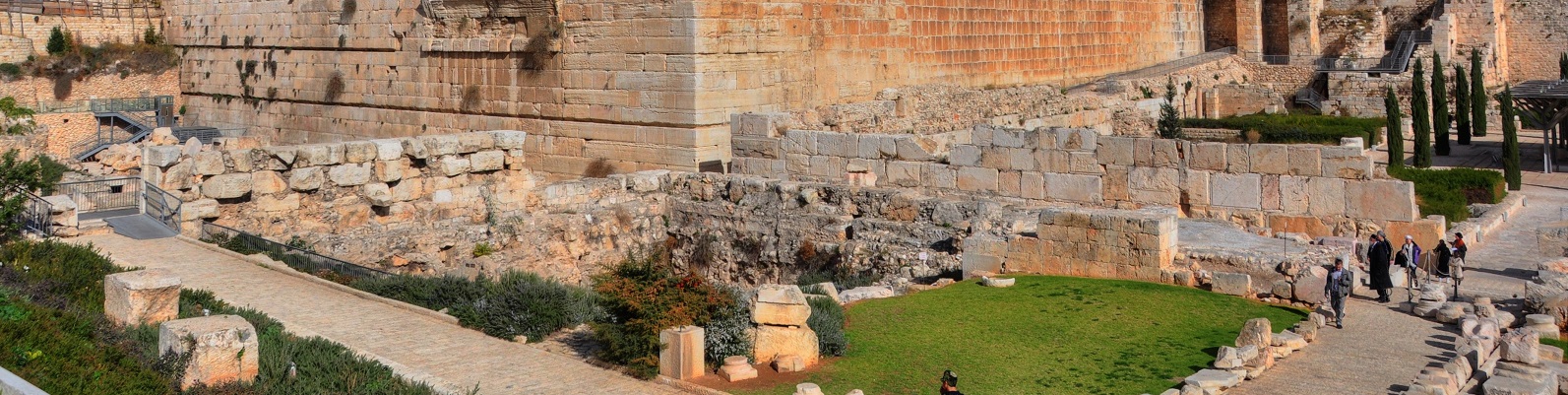
The Hasmoneans purified the Temple and restored it, renewed the worship and the institutions of Jewish leadership, and situated them within the complex of Temple buildings. They built a great courtyard around the Temple and, in addition, established a system of sanctity that spread across Jerusalem, imitating the encampment of Israel in the wilderness: the Court (the Temple courtyard) was the dwelling of the Divine Presence and the camp of the priests; the Temple Mount plaza was the camp of the Levites; and the city itself, surrounded by a wall, was the camp of Israel. It is worth noting that in the Second Temple period there were far more priests than Levites, and it is likely that even “watches” of Israelites were involved in the worship and upkeep of the Temple, and that the scholars of the Temple and the Sanhedrin could also be Israelites.
The Hasmonean victory over the Greeks was not only a national and religious victory, but also a cosmic event—the triumph of light over darkness. The miracle of the oil occurred in the darkest days of the year, three months after the equinox, the date on which the world was created. It is possible that at this season of the year there had once been an ancient Jewish festival, whose origins were lost, in which the revelation of physical light in the world was celebrated, after its creation as the hidden primordial light at the New Year. Some claim that the traditions of Hanukkah, especially the lighting of the menorah, are rooted in that ancient festival.
The Temple was oriented eastward, toward the sunrise over the Mount of Olives at the equinox. However, during Hanukkah the sun rose 23 degrees further south. At that time of year, the rising sun peeked over the slope of the Mount of Olives at a relatively low position. It is possible that this had significance and requires further study. In a synchronous and wondrous way, the sacred geography of Jerusalem causes the rising sun to appear earlier during the shortest days of the year, while on other days the sunrise is delayed, since the sun is hidden for a while behind the Mount of Olives and only rises above it after the light has already spread over the world.
In 164 BCE, Judah the Maccabee defeated the Greeks and liberated the Temple, but in Jerusalem a Greek stronghold remained in the citadel of the Acra (which was probably in the area of today’s Jewish Quarter). Judah himself later fell in battle. Eventually, the last of the Hasmonean brothers—and the most successful ruler among them—Simon, managed to capture the citadel in 142 BCE. As a result, he set up bronze tablets on pillars on Mount Zion inscribed with the story of the Hasmonean wars, similar to other victory inscriptions in the ancient world. Simon was both leader of the people and head of the army, and at the same time also the High Priest. He was the one who established the founding principles of the new and independent Hasmonean state.
After his assassination, John Hyrcanus rose to power. He was the first to declare himself king. Hyrcanus freed himself completely from Seleucid rule, began minting coins, expanded the borders of his kingdom into new territories, and began the forced conversion of some of the populations in the conquered areas, especially the Idumeans. The Idumeans were a Semitic people culturally and spiritually close to the Jews. They lived in the Judean lowlands and southern Hebron hills, and it seems that part of the conversion was voluntary and relatively easily accepted. As a result, they became Jewish patriots and played an important role in the struggle against foreign powers (the Great Revolt). Another large population group in the land were the Samaritans. Hyrcanus conquered their sacred precinct on Mount Gerizim and destroyed it, which added to the historic rivalry and enmity between the two groups (I deliberately avoid calling them nations). Hyrcanus ruled for thirty years. During his reign, the religious, exegetical, and also political conflict between the Pharisees and the Sadducees intensified—a development that would have disastrous consequences for the future. Needless to say, the center of Hyrcanus’s rule was Jerusalem. The Hasmoneans had palaces in Jerusalem, but they have not yet been discovered.
After Hyrcanus, his son Judah Aristobulus reigned for only one year. During his reign, the Galilee was conquered and its inhabitants converted. Aristobulus was the first to place a crown upon his head. After his death, his brother Alexander Jannaeus came to power. He reigned for about twenty-seven years, and under his rule the Hasmonean state reached the height of its territorial expansion. His path was continued by his wife, Salome Alexandra, who ruled for nine years and was an ally of the Pharisees. After her death, a struggle for power broke out between her two sons, Hyrcanus and Aristobulus, which eventually led to Roman intervention and the imposition of their rule over the Land of Israel.
The independence of the Hasmonean kingdom lasted almost one hundred years, during which the great literary project of the Bible advanced, and the Jews became a People of the Book rather than merely a people of the Temple. The Pharisaic and pietistic tendency in Judaism grew stronger and spread, and was represented in the Temple by the Sanhedrin, which convened in the Hall of Hewn Stones in its courts. The Sanhedrin was a council that dealt with matters of law and leadership, but it also issued rulings on religious law. In this way, it became the supreme Jewish scholarly authority, largely replacing the High Priesthood as the leadership of the people. The Pharisees advanced the Oral Torah, the ethics of the prophets, and belief in the Day of Judgment and life after death. They developed the institution of the synagogue, the role of the teaching rabbi, as well as prayer, study, and preaching.
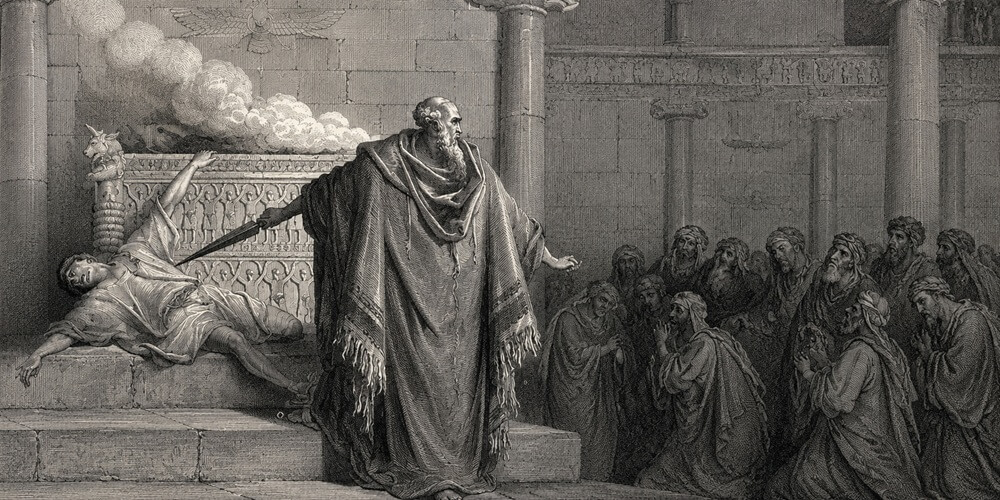
Mattathias the Hasmonean – Rembrandt
Hasmonean Burial Monuments
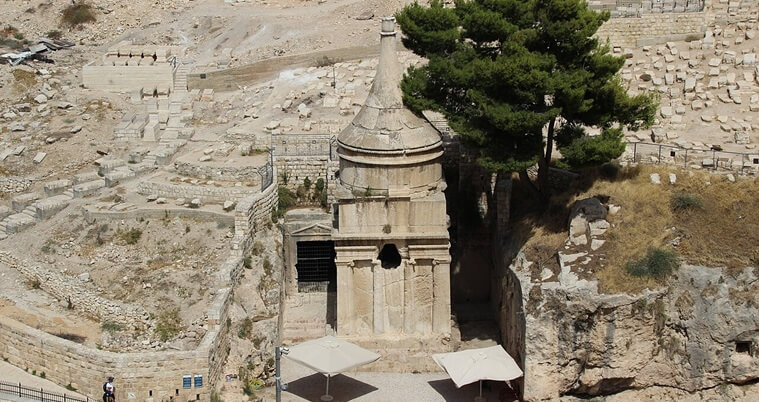
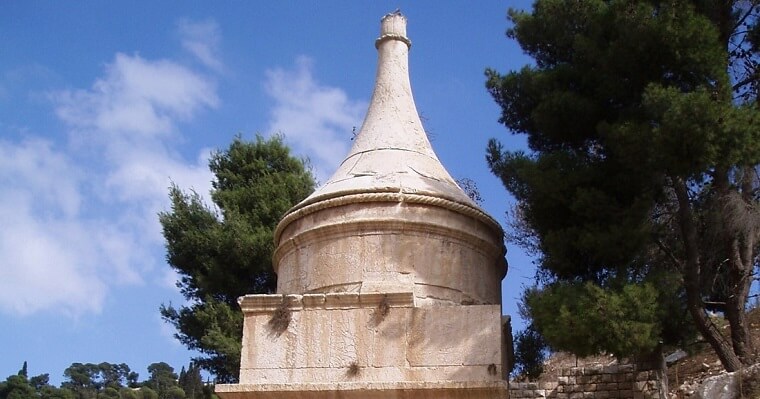
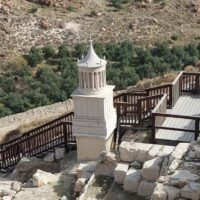
Hasmonean Jerusalem was influenced by Greek culture, but also by the developing Egyptian and Nabataean architecture. For the five Hasmonean brothers, grand tomb monuments were built in Modi’in with pyramid-shaped roofs. Other burial structures with pyramid roofs were built in Jerusalem: above the Tombs of the Kings in Jerusalem there were three pyramids, above Jason’s Tomb in Rehavia there is a pyramid, and above the Tomb of Pharaoh’s Daughter in the village of Silwan there once stood an older pyramid. But the most famous pyramid is the one above the Tomb of Zechariah in the Kidron Valley, where the wealthy families of Hasmonean Jerusalem (often priests) built their magnificent family tomb estates.
The Tomb of Zechariah shows Greek and Egyptian influences and was probably the family tomb of one of the priestly families. The structure with the pyramid on top was a nefesh (soul monument) and not an actual tomb—an anchor for the soul after death. In later times the site was identified with the tomb of Zechariah son of Jehoiada, the High Priest from the First Temple period who was murdered in the Temple by order of King Joash, or with the prophet Zechariah, although the prophet’s tomb is also found in a large burial cave on the slopes of the Mount of Olives, together with Haggai and Malachi.
Next to the square nefesh structure with the pyramid above it are rock-cut halls with a columned portico—this is the Tomb of the Sons of Hezir, a well-known priestly family. The inscription on the lintel, written in square Hebrew script of the 2nd century BCE, is the earliest of its kind in the world and reveals that this is the tomb and nefesh of priests from the family of Hezir. Folk tradition identified this place with the “House of the Freemen,” the place where King Uzziah of Judah lived after he was stricken with leprosy. According to Christians, the cave was where James the Less hid and where he was buried.
The third impressive Hasmonean-period structure in the Kidron Valley is the Tomb of Absalom, a square building topped with a cone and originally with a large stone “hand” on top. This too was a nefesh structure, intended for the soul after death as a kind of anchor, standing beside or above the actual burial site. Indeed, in the rock wall bordering the nefesh’s courtyard is a large burial cave called the Cave of Jehoshaphat. The cave contains halls with stone benches on which bodies were placed for a year, until the flesh decomposed and only the bones remained. Afterwards the bones were collected and placed in a small stone chest called a gluskama. This practice is tied to the belief in the existence of a purgatory where souls are purified for a year before their judgment is determined for either Gehenna or Paradise. The main influence on Jewish burial customs of this period was Persian rather than Hellenistic. Gluskamot from the Hasmonean period have been found in burial caves on the Mount of Olives, such as at Dominus Flevit. Nevertheless, there were likely also Hellenistic influences on the belief in life after death, particularly from the mystery cults and spiritual initiation paths that promised eternal life, which we will expand upon later.
From the Second Temple period, more than 900 tombs have been found around Jerusalem, most from the Hellenistic-Roman era. At this time there developed a greater emphasis on the individual self, personal redemption, and individual resurrection, along with concepts of reward and punishment. Therefore, each person needed to be buried separately, and burial methods changed. The same caves were used as in the First Temple period, but instead of benches, niches (kokhim) were dug, one for each deceased person. The body was placed inside, and after a year the tomb was reopened, the bones collected (likkut atzamot), and placed into a small stone chest the length of the longest bone (the femur), called a gluskama (ossuary), rather than in a collective repository. This method developed mainly from the Hasmonean period onward, though its beginnings appeared somewhat earlier.
Under Persian, Hellenistic, Egyptian, and perhaps also Nabataean influence, some priestly circles in Jerusalem likely believed in a soul that remained after death near the grave and could emerge from it to wander the world. Therefore, near burial caves—often marked with elaborate facades—structures were built above or beside them called nefesh with distinctive geometric forms serving as anchors for the soul. Examples include Absalom’s Tomb and the Tomb of Zechariah. These were places the soul could identify and return to without confusion during its wanderings in the astral realms. This belief recalls the Egyptian concept of the ba—the soul after death and its wanderings in the world. This was not the physical world but energetic realms parallel to our own. Thus, tombs were built with false doors and statues through which the soul could wander.
On Mount Scopus is the famous burial cave of Nicanor, where Judah Leib Pinsker and Menachem Ussishkin, two leaders of the Zionist movement, were buried. Nicanor was a Greek-Jew from Alexandria who donated two precious doors for the entrance of the Temple, hence a gate was named after him. The doors are linked to a miracle in their transport to the Land, and he himself was buried in a magnificent sarcophagus. This was a new burial method adopted into Judaism from the West, from Hellenistic and Latin culture: a large stone coffin in which the body was placed at once without secondary burial. Many ossuaries (gluskamot) have been found in Jerusalem, but relatively few sarcophagi, mostly from the later phases of the Second Temple period.