Queen Melisende of Jerusalem
The military orders, the Hospitallers and the Templars, received support from the King of Jerusalem, Fulk of Anjou, and especially from his wife, Queen Melisende (1105–1161), who was the most important figure in Jerusalem in the mid-12th century. She was the daughter of Baldwin II and an Armenian princess, a native of Jerusalem who was exposed to the ways of both East and West and was well versed in local politics. When she came of age, she married a nobleman named Fulk of Anjou, a 50-year-old widower from the French aristocracy who was much older than her.
The couple had a child named Baldwin III. In 1131, her father, King Baldwin II, died, but even before his death, he decided that the monarchy would pass jointly to Fulk of Anjou and Melisende. However, Fulk of Anjou was preoccupied with his own affairs and was sometimes absent from Jerusalem, so the person who effectively ruled, in cooperation with the local clergy and nobility, was Melisende. He was the official King of Jerusalem, but she was the true ruler.

Fulk of Anjou and Melisende began a strategic plan of building fortresses, and perhaps also country estates, throughout the kingdom. Not all the fortresses served defensive purposes; their construction had cultural and political reasons as well. The fortresses in Europe are later than those in the Land of Israel, meaning that Europe learned how to build fortresses from the experience of the Crusades. Fulk of Anjou died in 1143, and he was succeeded by his son Baldwin III, but as Baldwin was a child, the person who effectively ruled was his mother, Melisende.
The years 1147–1149 are the period of the Second Crusade, which set out from Europe to the Land of Israel with the encouragement of Bernard of Clairvaux and the participation of kings and nobles. Its official aim was to liberate the Kingdom of Edessa, which had recently been conquered by the Muslims, and to strengthen the Christian presence in the Holy Land. Melisende received the newcomers.
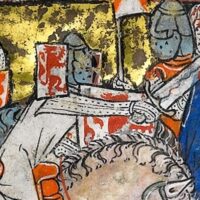
During this crusade, she met with Eleanor of Aquitaine, the Queen of France, which was a significant meeting for the two influential women. Eleanor was the most important woman in Europe, who arrived in Israel with her husband, the French King Louis VII, and Melisende—who was a widow at this stage—the most important woman in the Middle East. The two women found common ground and spent several months together. They opposed the planned attack on Damascus, which was an ally of the Crusaders, but they found themselves in the minority against the men. The attack failed and led to catastrophic results for the Crusaders.
Melisende built many churches in Jerusalem, including Saint Anne’s—where her sister served as a nun—the monastery and Church of Mary’s Tomb in Gethsemane, and the Cathedral of Saint James. She was a partner and the driving force behind the Crusader construction in the Church of the Holy Sepulchre together with her son Baldwin III. Under the influence and encouragement of Eleanor, she corresponded with Bernard of Clairvaux and earned the appreciation of the leading figures of the period. William of Tyre called her “a woman of great wisdom.”
During her time, Crusader art and architecture reached their peak—combining Eastern and Western influences and developing original motifs that later served as inspiration for the development of the Gothic style in Europe.
One of the books that remains from the Crusader period is the Melisende Psalter, which was probably written or edited by her. The book shows mixed influences of East and West in the selection of the psalms, saints, and also in the illustrations. Melisende’s mother was Armenian but belonged to the Greek Orthodox (Melkite) Church. In other words, Melisende represented the international spirit of Jerusalem at that time and the fruitful intercultural and interreligious encounter that took place within it. Melisende died in 1161 and is buried at the entrance to Mary’s Tomb along with her mother (see chapter on Mary’s Tomb).
 The Ivory Cover of the Melisende Psalter

The Journey of Eleanor of Aquitaine to Jerusalem
The famous saying, “Cherchez la femme,” could not be truer than in the case of Eleanor of Aquitaine (1122–1204), who was the woman behind the Second and Third Crusades, the woman behind the appearance and development of the ideal of courtly love, Gothic architecture, Christian mysticism, and the concepts of spiritual-moral chivalry. She was the granddaughter of Guilhem IX—the first troubadour, the wife of Louis VII, King of France, and later of Henry II, King of England, and the mother of two kings of England: Richard the Lionheart and John Lackland [1].
In the 12th century, France was divided into duchies. Eleanor grew up in the court of Poitiers in Southern France and received the best education, including astrology, arithmetic, and history. She knew music, literature, Latin, and dance. Her father died on his way to Santiago de Compostela when she was fifteen. Immediately afterward, she married the young Louis VII, became the Queen of France, and moved her residence to Paris, where she met Abbot Suger (the “father” of Saint-Denis Cathedral) and Bernard of Clairvaux (the theologian, clergyman, and most influential figure of the period). The two figures were part of a religious and social revolution that restored mysticism and enlightenment to Christianity and promoted literature and poetry.
In 1144, a dramatic meeting took place between Bernard and Eleanor, during which she admitted her mistake and accepted his blessing and authority. In other words, she became a personal disciple of the man who started the Templar Order, renewed the Cistercian Order, developed the new Christian mystical theology, and introduced a new level and experience of Marian worship—the love of the Sacred Feminine in the figure of the Great Mother Mary. Two years later, under Bernard’s influence, she vowed to go on the Second Crusade and set out after visiting the tomb of Mary Magdalene in Vézelay, the place where Bernard preached this crusade in 1146.
Eleanor set out on the Second Crusade in 1149 with her husband, King Louis VII. Legends tell of three hundred Amazons who accompanied her. This was the first time a woman set out on a crusade at the head of her own army. Eleanor was independent, and she also had her own ideas. When the army reached Antioch, she connected with her uncle, Raymond of Antioch, and a dispute erupted between her and her husband, King Louis VII. She wanted to stay with her uncle Raymond and attack Aleppo, but Louis wanted to continue to Jerusalem and forced her to come with him. At this point, Eleanor understood that they were not meant to be together and sought an annulment of the marriage based on inappropriate family proximity. For the rest of the crusade, she detached herself from the main camp.
When they returned to Europe in 1151, Eleanor’s entourage and King Louis VII’s company sailed on separate ships. Upon arriving in Italy, she again turned to the Pope for approval of the divorce. On the way back from the Holy Land, she stopped in Palermo, where there was a court of enlightenment and tolerance under the rule of Roger II the Norman, and stayed there for a few months.
In my opinion, during the journey to the East, she was exposed to advanced cultures and completed her extensive education. Being possibly the most educated woman in Europe, her journey to Byzantium and Jerusalem at the age of 27 contributed to artistic, religious, and cultural understanding, developing in her a new perspective on her purpose and destiny in life. The stay at the court of Emperor Manuel Komnenos in Constantinople revealed to her that Paris was not the center of the world. An immense wealth of art, music, culture, and refinement characterized the city, where she stayed for a few months, being exposed to Christian mysticism in the form of the writings of Pseudo-Dionysius the Areopagite. Jerusalem was a meeting point with other Christian denominations and civilizations, such as that of the Armenians, as well as Islamic art and architecture.
She spent more than a year in Jerusalem, where she met kings, Templars, pilgrims, and women of power such as Queen Melisende. In my opinion, she also encountered, on one occasion or another, the mysticism and love poetry of the Sufis, which spoke to her due to her troubadour heritage. The experience of the East made Eleanor want to break free from her marriage and from the restraints of the French royal court.
In 1152, after receiving official approval for the divorce, she separated from Louis by agreement, and her lands were returned to her. Within eight weeks, she married Henry II of the House of Plantagenet, 11 years her junior, who was crowned King of England in 1154. He was a patron of art and learning, and that suited Eleanor’s interests. Even while she was Duchess of Normandy, she established a court of poets and troubadours in her palace in Angers, and she continued this in the palaces of London and Winchester when she moved to England.
Eleanor supported writers like Geoffrey of Monmouth, who wrote the History of the Kings of Britain—a book that claimed a Trojan origin for the English, relating this to the arrival of the descendants of Prince Aeneas in Britain. Eleanor identified with the historical female figures appearing in this story, which essentially created a new mythology for the British. The literary activity intensified when she later moved to her court in the region of Aquitaine in France, which was then part of the Plantagenet Empire established by Henry II, encompassing large parts of France, England, Scotland, and Wales.
Eleanor gave birth to eight children for Henry including Richard lionheart, but their relationship was stormy and shaky. Henry had a dispute with Thomas Becket the educator of her children, who was eventually murdered in Canterbury in 1170. Eleanor apparently supported Becket, and this led to a rift between them. During this time, King Henry had a romance with Rosamund Clifford, which caused Eleanor to distance herself. In 1169, King Henry divided his estate and gave Richard—Eleanor’s favorite son—the regions of Aquitaine and Poitiers in Southwestern France. Thus, in 1170, Eleanor and Richard moved to Aquitaine, the place where she was born and raised.
At this stage of her life, Eleanor was independent, mature, wise, and resourceful. She was 52, with more experience, education, knowledge, and connections than any other person in Europe. She was ready to develop her own way and ideas, observing life from the height of her maturity. According to the historian Amy Kelly [1], she was weary of the foolishness and rule of men and was determined to create a kingdom for herself dedicated to Minerva, Venus, and the Virgin, centered around an intellectual court and an inner circle of female queens, princesses, and disciples.
Eleanor returned to Poitiers and established a new court where troubadour poetry, courtly love, art, and culture were nurtured. According to Andreas Capellanus, a Court of Love made up of four queens was established in Poitiers, where the principles of love were developed and taught, and the disciples were examined to determine whether they adhered to these principles by this court.
Under Eleanor’s patronage were more than twenty sons of kings and nobles destined to rule Europe—many young men whose only knowledge in life was war and violence, and who therefore posed a danger to society, to kings, and to the Church.
The French king needed help in restraining these youths, so it was a logical step to support this effort by Eleanor, provided that Marie of Champagne, the eldest daughter of Louis VII and Eleanor, headed the court—and so it was. Marie and Eleanor together created a Court of Love and Laws of Love, where they taught that manners and correct behavior were tools for creating a civilized society. Together with other princesses, they developed a feminine ideal of the beloved, which brought about the refinement of the heart and mind. From this time on, the chivalric knight’s deeds were done for the sake of the lady.
Love became a universal theme upon which the new code of ethical-chivalric behavior could be built. This code was applied to the stories of King Arthur, with Gawain serving as a prime example. The Court of Love gave rise to ideals that spread throughout Europe, and these in turn elevated the woman from the low status she had previously held—as the one to blame for the Fall of Man—to a status close to that of the angels (as appears in Dante’s Divine Comedy with Beatrice). In the Poitiers code, the man belonged to the woman.
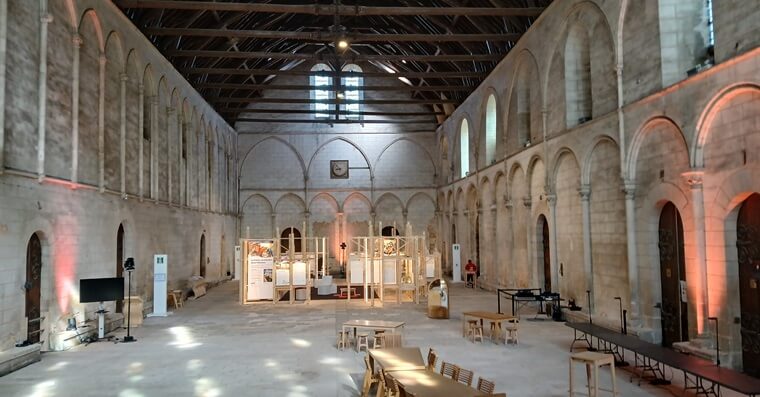
Eleanor gathered a mixed multitude of princes, warriors, and princesses in the new, refined, and magnificent hall in Poitiers and placed them all under the wing of feminine nobility. The code brought about refinement in clothing, scents, environment, music, poetry, storytelling, and behavior.
However, in 1174, Eleanor was apparently involved in a revolt against her husband. Thus, after four years, King Henry dismantled the court in Poitiers, imprisoned the queen, and returned her to England for house arrest in Salisbury Castle, where she remained between 1174 and 1189. Yet Marie of Champagne continued her work. She and a large part of the Poitiers court moved to Champagne in northeastern France and established a similar court, where the cultural and literary endeavor continued and from which the first versions of the Holy Grail legends emerged.
In 1189, Henry II died, and Eleanor was released from house arrest and became Queen of England. Her sons, Richard the Lionheart and John Lackland, reigned after her, and she became a kind of supreme authority—experienced and all-powerful. Eleanor built the cathedral in Glastonbury, nurtured the stories and tradition of the Holy Grail, and connected them to the stories of King Arthur and the Round Table. She was very close to Richard the Lionheart, her chosen son, and managed to witness and be involved in the rule of her second son, John Lackland. She represented a generation of nobility and royalty with immense power.
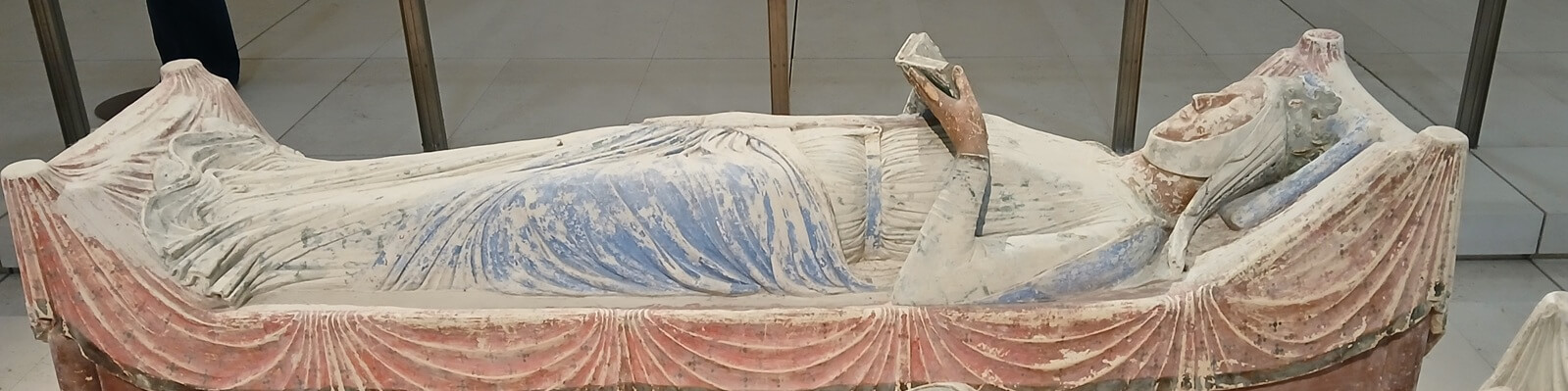
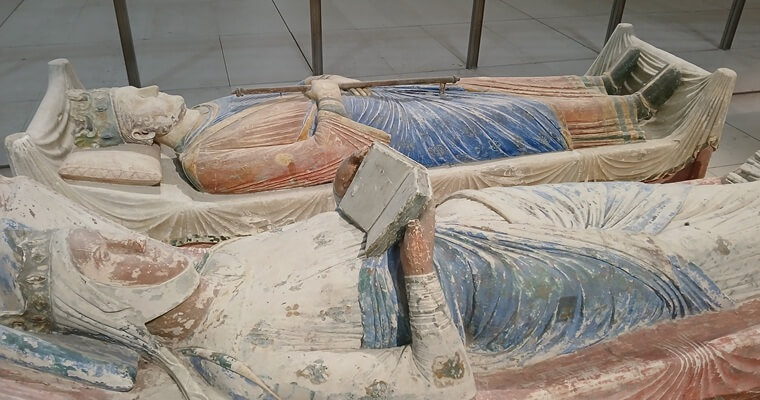
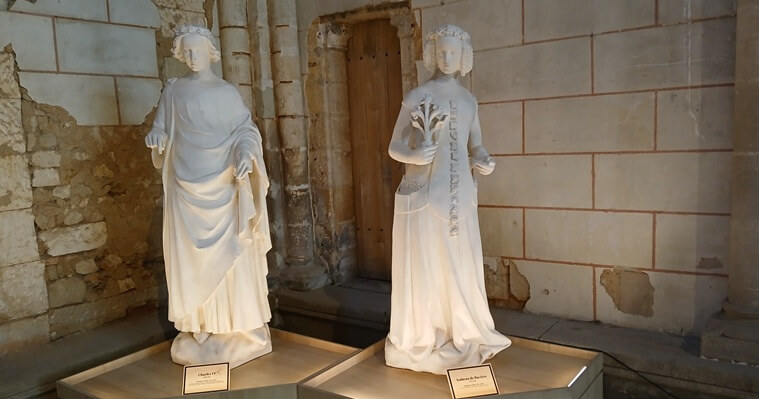
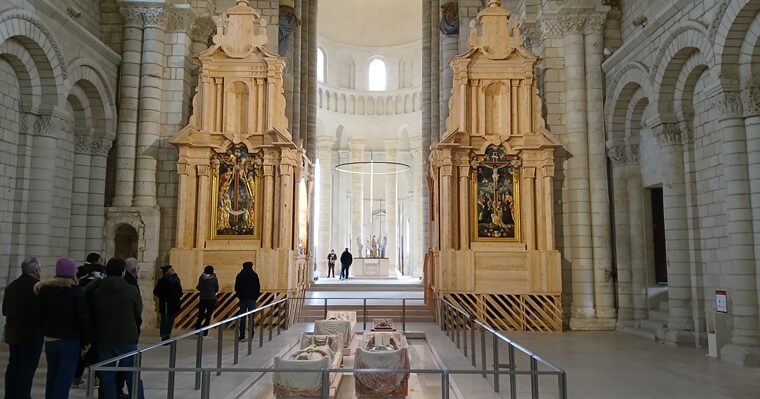
History is determined by figures larger than life. According to Amy Kelly [1], the ideal of courtly love is fundamentally the work of one great woman—Eleanor of Aquitaine, a result of her life experience. In the last two years of her life, she moved to the Fontevraud Abbey in the Loire Valley, where she died (1204) and was buried alongside her husband, Henry II, with a statue of her holding a book in her hand on her tomb.
As for synchronicity and hidden connections: Henry II, Eleanor of Aquitaine’s second husband, was the grandson and heir of Fulk of Anjou, Melisende’s husband, who died a few years before the two women met. This meant that Henry had a right to claim the throne of Jerusalem, and this explains why it was important for his son—Richard the Lionheart—to participate in the crusade to Jerusalem, especially in light of the stories he heard from his mother. As the saying goes: all stays in the family.

The Saint Anne Complex
The Crusader Queen of Jerusalem, Melisende, built (or renovated) three wonderful buildings in Jerusalem: the monastery and church of the Tomb of Mary, the monastery and church of Saint Anne’s—the birthplace of Mary, and the Church of Saint James in the Armenian Quarter. These three sites have mostly survived the ravages of time and are among the most beautiful remnants of the Crusader period. Of the church and monastery of the Tomb of Mary, only the crypt and the entrance gate remain. The Church of Saint James and Saint Anne’s remain largely intact and are some of the best examples in Jerusalem of Romanesque architecture with Armenian influences (see chapter on Romanesque Architecture in Book 3).
On the day of Mary’s Ascension to Heaven (August 15th), processions took place—and continue to take place—between Mary’s birthplace in the Saint Anne complex and the place of her burial and ascension to heaven at the Tomb of Mary. It seems that, due to her being a woman, it was important for the queen to build and nurture sites particularly related to the figure of Mary, and in this context, it should be noted that the Saint Anne Monastery was a royal family convent, where Melisende’s sister and mother resided.
According to Christian tradition, Mary was born and raised in the home of Anne and Joachim, which was located in the area of the Saint Anne complex—the closest place to the entrance of the Temple Mount plaza. The Protoevangelium of James tells us that Joachim, who was childless, went to the desert for 40 days and spent his time in prayer and fasting. When his request for a child was fulfilled, he returned to Jerusalem and embraced his wife Anne at the city gate, and as a result of this contact, Mary was born. The gate was probably the Lions’ Gate, facing the desert, which reinforces the identification of their house in this location. Furthermore, the tradition of presenting the girl to the Temple, which is just around the corner, also corresponds to this location.
Mary, then, was born in the crypt of this house, similar to the birth of Jesus in the crypt of the Church of the Nativity, and one can descend to the place of birth located beneath the central altar. She grew up in this place until the age of three, when she was given to the high priest to be raised in the Temple, and it can be assumed that even when she was in the adjacent Temple, she came to visit, if only because of the Torah commandment to honor one’s father and mother.
The interior of the church, built by Melisende, has special acoustics that enhance singing and public prayer. Anahid—an Armenian woman in charge of the Armenian church in the German Colony—claims that the acoustics indicate energetic properties of the spaces that influence those who enter them, and that the origin of this tradition lies in Armenian sacred architecture, from which the Crusaders drew inspiration (Melisende was the daughter of an Armenian princess). The space of the church amplifies the human energy field—the aura—which extends around the body. This is also reflected in the flat decorative apse in the courtyard opposite the entrance.
After the defeat of the Crusaders, starting from the time of Ṣalāḥ ad-Dīn, the church served as a madrasa and a place for Muslim dervishes, but it was given back to the French government as the representative of the Christians by the Ottoman Sultan during the Crimean War. Today, the place is held by the Order of the White Fathers (so called because they wear white robes) and enjoys the support of the French government. In the impressive plaza after the entrance, there is a garden with a statue of the founder of the Order (see chapter on the White Fathers in the third part).
In addition to the ancient Crusader church, the large complex contains two big ancient water pools of Jerusalem from the Second Temple period, which were uncovered in deep archaeological excavations and were called the Pool of Bethesda, where the sick and disabled who could not enter the sacred Temple Mount complex were left.
According to the New Testament, an angel would occasionally appear in the pool, and the first person to jump in would be cured of their ailments. Jesus comes to the place and heals a man who had been trying to enter the pool for several years but could not do so because he was disabled and always found himself last in line. Jesus tells him, “Get up! Pick up your mat and walk,” and immediately he was cured and walked (John 5:9). Therefore, this place became a Christian holy site, and Byzantine and Crusader churches were built above the pools, the remnants of which can still be seen, and one can walk around the pools. Near the pools are the remains of a temple to the Greek god of healing, Asclepius (see chapter in Book 1), as well as other antiquities.

Bethany
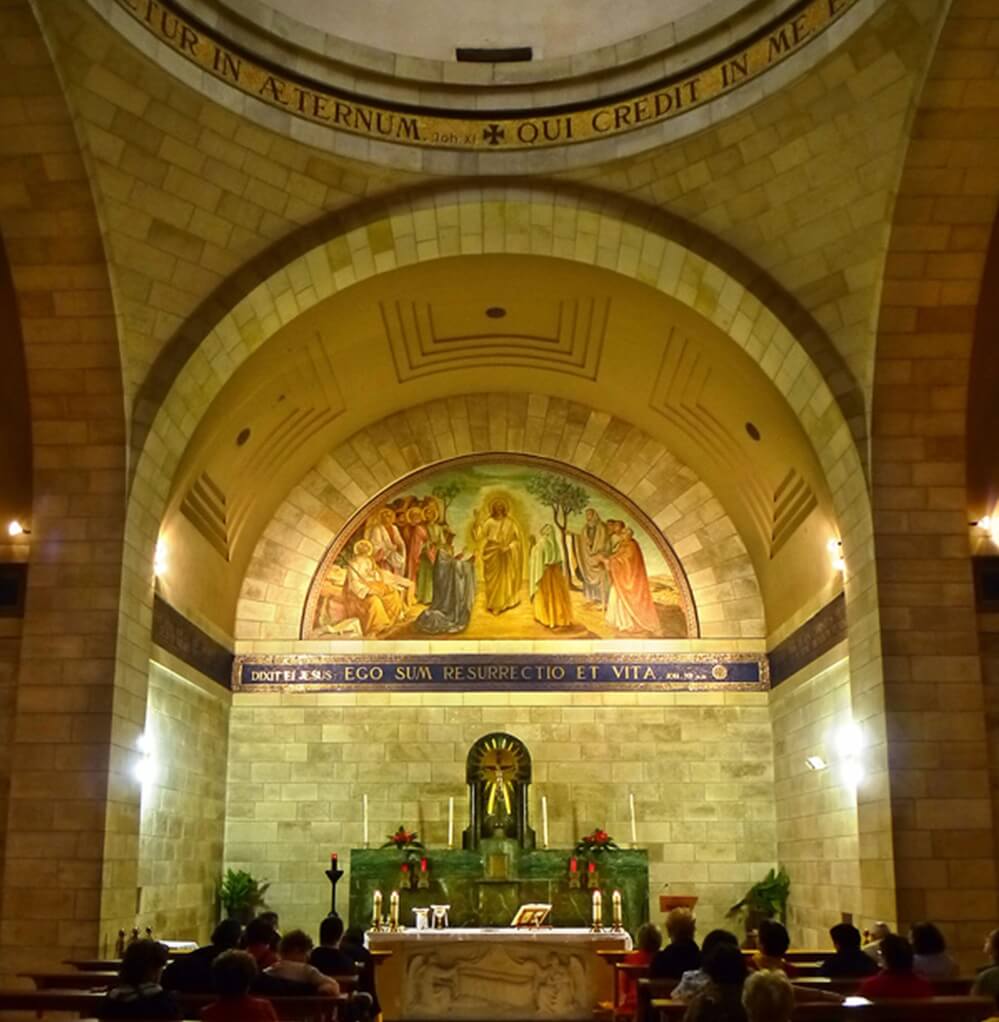
East of Jerusalem is the Arab village of Al-Eizariya, named after Lazarus, the brother of Martha and Mary—the man whom Jesus raised from the dead during Holy Week. The renowned architect Antonio Barluzzi (see chapter in Book 3) built a special church there that revives the miracle of the resurrection in its architecture and art. But during the Crusader period, an important nunnery was located there, established by Melisende, and it complemented the royal convent that existed at Saint Anne’s. Indeed, Melisende’s sister, Loveta, became the head of this convent after having served as the head of the Saint Anne Convent.
The place was a center of learning and spirituality to which other educated women gathered. According to the historian Hans Eberhard Mayer [2], the convent was connected to the Fontevraud Abbey in the Loire Valley in France, which was the royal convent of the Angevin dynasty (Henry II). The Fontevraud Monastery was not an ordinary monastery but a special one that elevated the status of women. It was founded in 1101 by the charismatic saint Robert of Arbrissel as a joint community of men and women who practiced syneisaktism—spiritual marriage and the shared life of a monk and a nun who maintained vows of chastity but shared life. Due to Church opposition, the couples were separated, and instead, two groups of monks and nuns were established who lived separately. Nevertheless, the monks served the nuns and cared for them, and the head of the joint monastery was a woman. According to Mayer, the convent in Bethany was also such a place.
It can perhaps be said that Saint Anne’s was the manifest convent dealing with the overt meaning of the Christian religion, while Bethany was the hidden convent dealing with the concealed mystical meaning. A church was built there for Martha and Mary, Lazarus’s sisters. It was supported by the monarchy and became the wealthiest Christian institution in the Crusader Kingdom. Among the members of the convent was Sibylla of Anjou, the daughter of Fulk of Anjou, King of Jerusalem, who came from France during a pilgrimage and was close to the reformist Pope Callixtus II, who promoted the pilgrimage to Santiago. Her grandfather, Fulk IV of Anjou, was the one who donated the lands to the Fontevraud Monastery.
The last Queen of Crusader Jerusalem—Sibylla—grew up in the convent from the age of four and was influenced by the educated women. She was the daughter of Amalric I and another educated woman named Agnes of Courtenay. It seems that women played a crucial role in the Crusader Kingdom of Jerusalem, and these women decided that the rightful heir to the crown, Sibylla, would marry a French knight named Guy of Lusignan, who would become King of Jerusalem instead of the local contenders for the throne.
Guy of Lusignan came from Poitiers, the French cultural center that was the home and location of Eleanor of Aquitaine’s Court of Love. His family had a magnificent castle not far from Poitiers, and legends said that this was the mysterious castle appearing in the Holy Grail legends, which were becoming widespread at the time, and that Guy was related to the lineage of the Guardians of the Grail, which began in Jesus’ time.
The name Sibylla is the name of the prophetesses in the classical world, who operated in prophecy centers throughout the Mediterranean, such as Cumae in Italy, and they are commemorated in medieval art (for example, in the Sistine Chapel). Christians claimed that they prophesied the coming of Jesus, and therefore their prophecies were collected in a 6th-century book and considered to have divine authority. In various esoteric circles (mostly later, from the 19th century onward), the name of the Crusader Queen Sibylla is associated with her being a kind of prophetess of the end of the Crusader-Messianic era—a Great Mother figure who mourns the fate of her descendants and contains within her heart the loss and changes of time, enabling a new future.
It is possible that Sibylla chose Guy of Lusignan because he was her spiritual twin or for other esoteric reasons, but practically, Sibylla’s choice of Guy of Lusignan turned out to be a mistake, as he lost the kingdom to Ṣalāḥ ad-Dīn largely due to his errors in the Battle of Hattin and the insufficient support he received from the other nobles of the kingdom because of doubts about his right to the throne. Despite this, Sibylla remained loyal to him and continued to support his claim to the throne until her death, according to the Chronicle of Ernoul from the 13th century.
Footnotes:
[1] Kelly, A. R. (1950). Eleanor of Aquitaine and the Four Kings. Harvard University Press.
[2] Mayer, H. E. (1994). Kings and Lords in the Latin Kingdom of Jerusalem (1st ed.). Routledge.