Christian Messianic Expectation
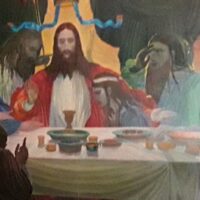
Towards the end of the first millennium, Christian messianic expectation intensified, especially in Catholic Europe, with a concrete anticipation of Jesus’ return. This led to a renewed wave of pilgrimage to Jerusalem.
Medieval society was divided into those who pray, those who fight, and those who work. Bishop Adalberon of Laon, who was active at the beginning of the 10th century, described this social order. The three classes were seen as preparing the way for the coming of the Messiah, with a particularly important role assigned to the praying clergy. Similar to the view of religious Jews today, humanity cannot be saved without ceaseless prayer; therefore, prayer, churches, and monasteries were important. The way for the other classes to connect with this was through pilgrimage to the holy places. In monasteries, a complex liturgy developed around holy relics. The proliferation of monasteries and churches was intended to multiply prayers.
he time of Charlemagne (late 8th century), there was a reform in the Benedictine Order led by Benedict of Aniane. The idea he introduced was that monks withdraw to their monastery not just for their own sake, but for the sake of all mankind. Monasteries housed holy relics, and the quality of the prayers offered before these relics was what mattered. The hope of mankind rested on the intercession of the monks and saints.
In the 10th century, a spiritual monastic movement developed under the leadership of Cluny Abbey, which renewed monasticism according to the Rule of Saint Benedict, with prayer being the most important element. The duration of prayers and the surrounding rituals extended into non-stop prayer. The setting for the prayers (churches and monasteries) became increasingly magnificent and linked to holy relics. A kind of heavenly reality was created on earth, intended to pave the way for the arrival of the Messiah. Naturally, this left a tremendous impression on visitors, and donations poured into the monasteries.
The expectation of the Messiah’s arrival was not fulfilled in the year 1000, but it intensified again toward the counting of a thousand years since Jesus’ crucifixion—1033. The fear of the Apocalypse and unnatural events in the sky, such as meteors, led to an increase in pilgrimages to holy places in general, and to Jerusalem in particular. Concurrently, Europe began to thrive, grow, and develop, recovering from the invasions of the barbarians and Vikings and entering a new era.
The Crusader Period
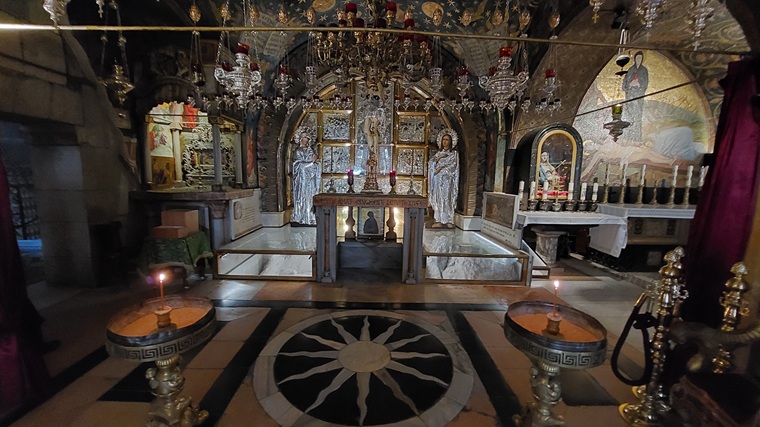
Many view the Crusades as a journey of plunder and murder, and to some extent, they were. Others see them as a social, political, and even religious movement. However, none of this fully explains how a massive movement of people suddenly arose, abandoning everything they had and heading toward the unknown. The deeper reason behind the Crusades is a spiritual ideology related to the fulfillment of the ideal of chivalry [1]. Furthermore, during that period, there was a desire to renew and reform the Church in the spirit of Jesus’ original teachings, and this could not be done in Rome; therefore, a new, global Christian capital had to be created, and this could only be done in Jerusalem.
The Crusades began following Pope Urban II’s call to march to Jerusalem in 1095. Urban II was a product of the ecclesiastical reforms at Cluny. He likely had a vision of a new, unified Christian empire with Jerusalem as its capital [2]. His call offered absolution from sins to those who participated in the journey and introduced a new dimension to papal authority, in which the pope not only represented the holder of the keys to the Kingdom of Heaven but also the giver of the keys, meaning he represented not only Peter but also Jesus.

It is also possible that other ecclesiastical factors stood behind him, seeking to renew the Church in anticipation of the new millennium. After the year 1000, a new messianic expectation for the return of Jesus began, but the nature of the expected Messiah underwent changes. Instead of the direct return of Jesus, there was an expectation that a Christian army would redeem Jerusalem from the enemy, and that this event would hasten Jesus’ return and the establishment of the Kingdom of Heaven.
The First Crusade was composed mostly of Frenchmen (Franks) and was led by nobles and counts (local rulers, not kings). Within the French Christian camp were several main currents: the people of Provence—southern France, who tended toward mysticism and visions; the people from the regions of northern France, who were more earthly and logical; and the Normans from northern France and other Norman territories. The people from southern France were led by Raymond of Saint-Gilles, Count of Toulouse, who was spiritually close to the gnostic Cathars and to the Church reform movement, including Pope Urban II.
In 1099, the Crusaders captured the Land of Israel and Jerusalem in a storm. This dramatic event is not only the result of social and political processes in Europe and the Middle East, as mentioned, but largely an expression of spiritual doctrines that began to spread at that time, first and foremost the ideal of chivalry (see below).
Godfrey of Bouillon from northeastern France was the first ruler of the Crusader Kingdom of Jerusalem. He was devoutly religious, lived simply, and prayed at length. On the eighth day after the conquest of Jerusalem, the nobles chose Godfrey, who agreed on the condition that he would not be called king, as he saw himself as a vassal to the Patriarch of Jerusalem and a servant of the one true King, Jesus.
A year after his coronation, Godfrey was poisoned and died. The patriarch wanted to turn the Kingdom of Jerusalem into a state under the pope’s protection, but the noble knights disagreed and called for Baldwin, Godfrey’s brother, to come from Edessa and become king of Jerusalem in his place. Baldwin received a fractured kingdom, part of which was still in Muslim hands, but during his reign (1100–1118), he succeeded in stabilizing a large, extensive state with territorial continuity. He is considered the Joshua of the Crusaders.
After the death of Baldwin I, he was replaced by his cousin Baldwin II, who reigned for 17 years, successfully defending the kingdom from the Muslim threat, establishing civil law, and recognizing the knightly orders. He married an Armenian princess who gave birth to Melisende, the woman behind the scenes in Jerusalem in the mid-12th century, during the Golden Age of the Crusaders.
The following chapters will cover Melisende and the kings who continued the Crusader rule, and the events of the Crusader Kingdom in Jerusalem. But first, it is necessary to elaborate on the chivalric spirit, since the heroes of our story, including the kings, are knightly warriors. The Crusader Kingdom of Jerusalem was a centralized feudal state. It was held and established by the knights, who were initially part of the feudal system—lord, seigneur, or vassal—and later were joined by a new type of knight, members of the military orders.
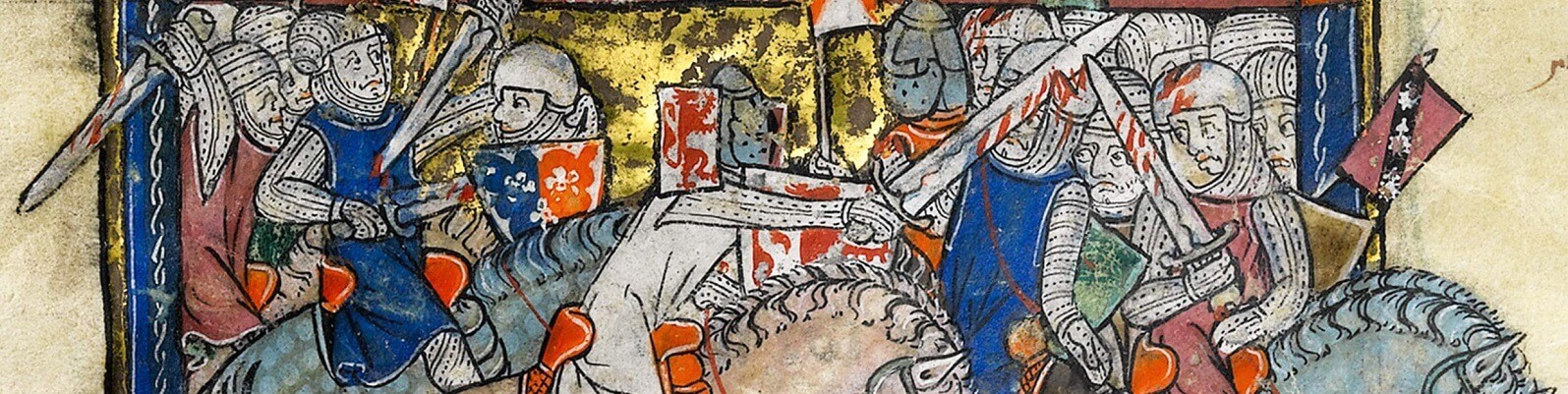
 The Crusader Knights Conquer Jerusalem

Chivalry and the Crusades
The Crusades can be viewed as a result of the economic and demographic development of Europe in the 11th century, or as a papal plan supported by the kings. Or they can also be viewed as an expression and fulfillment of an ideological concept. The journeys would not have been successful had they not appealed to the masses, and especially to the knights, who were the primary military force of the time. What appealed to them was the ideal of chivalry and the opportunity to defend the Church and the social order, help the weak, and fight against injustice. The injustice was the control of the Holy Land, and especially the Holy Sepulchre, by the infidels. The weak one needing their help was none other than Jesus, to whom they felt so indebted, and it was a matter of honor to strive for His sake and give something in return for His sacrifice. In other words, the Crusades were seen as the fulfillment of the ideal of chivalry, which provided an almost perfect ethos that gave justification for the duties and effort of the participants.
The knight is the new man of Europe, seeking ways to fight against injustice, defend the Church, and prove his courage, and the opportunity presented itself in the form of the Crusades. Many of the knights who set out for the Land of Israel did so out of an ideal. It was an endeavor that lasted months and years, cost them great wealth, and many did not return from it—a reality known to them. The knights who went on the Crusades did not do so for economic or social reasons, just as my grandfather, who was in the Gdud HaAvoda (Labor Battalion) and immigrated to the Land of Israel, did not do so for such reasons. They did so out of ideology and a desire to prove themselves worthy, to pay back a debt of honor to Jesus and the Church, as a fulfillment of the ideal of chivalry they grew up on.
The Crusades were perceived as part of the active morality of the knight. Knights had a role in the cosmic drama of Redemption—they had to constantly fight evil to make room for light. Chivalry was a physical force in the service of a spiritual force, which was the Church and Christianity. The conquest of the Land of Israel was considered the restoration of the correct order and the vengeance of justice. The knights who set out for the Holy Land knew the Song of Roland better than the Old or New Testament [3]. They believed that the liberation of Jerusalem from infidel rule would hasten His Second Return and the redemption of humanity.
 The Knighting Ceremony
Moral Chivalry
Chivalry is an ideal, a way of life, not just a historical occurrence. If we try to define it and its importance, we can use the following sentence:
“At all times, people have tried to find the correct code of conduct for human beings, and thus the code of chivalry is fundamentally a manual for correct behavior. It was a set of restrictions that the strong took upon themselves, both with the thought of setting an example for others and out of deep internal conviction. The medieval world was a savage world where might made right and where there was no external authority of law and order. Within this chaos, a number of people chose to direct their path according to an internal code of conduct based on truth and justice. Those ‘few people’ eventually became a massive movement that essentially guided the path of the Western world.”
Today, our world is not much different from the Middle Ages in that we have great power in our hands, and we can use it for ill or for good. Therefore, the concept of chivalry is highly relevant. We need to have the satisfaction of knowing that we are doing the right thing for the right reason—not because we were told to, but because we chose to. That is the meaning of chivalry, in short: choice. The choice to do the right things, for the right reasons, at the right time.
In the 8th century, a new fighting method of mounted knights gained strength, and cavalry became the most important factor on the battlefield. Since cavalry equipment was expensive and only a few knights were needed to wage a war, the mounted knights became a kind of upper class of warriors, serving the lords, and the peasants became serfs. Only those who could afford it became knights, and in the 10th century, the feudal society as we know it consolidated. Land tenure was in exchange for security services. Free people provided military or personal service, while unfree people provided a part of the yield and their labor force. Those who had the means became knightly warriors and, in return, received control over estates and authority over the unfree people from the rulers.
In the 11th century, chivalry acquired an ethical–moral dimension, heavily influenced by the Cluniac monks, who developed the ethos of war against the infidels. This led to an attempt to define the soldier of Christ who acts according to a specific code of conduct. From the middle of that century, knightly romances became popular.
The perception of chivalry as a moral code solidified, and with it, the principles of chivalry as we know them today. Members of the nobility and even kings sought to become knights, and the Church supported them. This was reflected in the vows and ceremonies of knighthood. A knight would be sworn in a church in the middle of the night after undergoing a religious ceremony in which he would kneel before an elder knight, who would pass a sword from shoulder to shoulder of the aspirant and say roughly this: “I swear you to protect the Church, fight against injustice, help women and children in distress, be the champion of good everywhere, but remember that our Lord Jesus conquered kingdoms by the power of love, not by the power of the sword” [4].
Chivalry is a way of life that involves an active search for the good. The knight’s qualities do not stem from his education, genetics, or environment, but are the result of his struggle with himself and his progression through the different stages of becoming a knight—his connection to something internal and essential within him. The knight does not merely encounter evil and react to it, but consciously seeks out evil in order to fight it—in his own kingdom. He can appear from nowhere and save a situation that seemed hopeless. He is a symbol of hope in the world and for the world; he is a good possibility that no one foresaw.
The code of moral chivalry stipulated that if a request for help reached the knight and there was no moral reason not to respond to it, the knight had to abandon everything and go to the aid of the petitioner, especially when it involved rectifying an injustice. This is a state of constant and active service to the community. Not only must the knight respond to requests for help, but he is also required to actively seek out the missions he must perform, the injustices he must rectify. The knight goes out into the world to mend it and also to seek adventures, and here he encountered the greatest adventure of all—an adventure that involved the entire Christian world and within whose framework he had to wander across half the world, face immense difficulties along the way, and assist in the most important mission of all: the redemption of Jesus’ tomb from the hands of the infidels.
Furthermore, until the 12th century, nobles were not necessarily knights, and knights were not necessarily nobles. However, at that time, the estates merged, and chivalry–nobility began to be inherited, and its status rose. The French King Louis VI became a knight without his father’s knowledge, but subsequently, every French king was crowned a knight, until the French King Louis IX, who made a pilgrimage to the Land of Israel, was considered the ideal knight and a saint.
Sons of nobles became squires, and entry into the knightly class was conditioned by coronation by the king. The connection between monarchy, nobility, and chivalry helped the development of the ideal of spiritual and moral chivalry as a literary, social, moral, and religious–spiritual ideal, as reflected in the stories of King Arthur, the Round Table, and the Holy Grail.
The English King Richard the Lionheart went on the Third Crusade to Israel inspired by this stories, the ideal of chivalry and influenced by his mother, Eleanor of Aquitaine, and not only for religious reasons. The last Crusader king’s coronation celebrations in Acre featured plays from the stories of the Round Table knights [5].
 The Round Table and the Holy Grail

Spiritual Chivalry
The Crusader knights conquered Israel in a storm and held it for close to 200 years. As Yitzhak Chiyut Man describes it: “The chivalric spirit, in a desperate last effort, succeeded, against all odds, in conquering Jerusalem and liberating it from the hands of the infidels. It was the peak of the masculine effort of conquest and sacrifice, which could not be surpassed, a complete movement of people who abandoned everything for several years and went to an unknown land, facing dangers from which they had a good chance of not returning. One cannot help but admire the courage, determination, and sacrifice of the knights who responded to the pope’s call to go out and redeem the Holy Sepulchre.”
But here, in the Land of Israel, a new type of knight developed: a first-of-its-kind combination of the ideal of chivalry with the ideal of monasticism, creating a new man who fights for God—a knight operating within the monastic religious military orders. The first order created as such was the Templars, immediately followed by the Hospitallers, and later others such as the Teutonic Order.
Consequently, chivalry began to take on a more mystical, esoteric hue—a search for closeness to God and meaning in life, and not just a search for victory in battle. In addition to the importance of fighting and masculine qualities, an emphasis began to appear on spiritual and religious experience, purity, and abstract thought. This went hand in hand with the development of the ideal of Courtly Love (the woman for whom the knight goes out to battle). From then on, honesty and courage were not enough; nobility of spirit and sensitivity were also required.
The arrival in the East brought the knights into contact with local Muslim and Christian cultures that were in many ways more advanced than those of Europe. Europe received Greek philosophy and science back from the Arabs, Christian mysticism from the Eastern and Orthodox Christians, and influences of Sufi and Shi‘ite mysticism prevalent in the Middle East at that time. All of this led to a shift in the emphasis of the ideal of chivalry from the physical and moral to the spiritual and internal. It was clear to everyone that the Crusades had not led to the renewed return of Jesus or the creation of a model society, and they had also largely failed the moral test of generosity and humanity. The failure led to the search for additional ideals, whether religious or otherwise, that would serve as a guiding light for the knight. Consequently, the ideal of Courtly Love developed among secular knights, and the ideal of religious pietism among the monastic knights in the military orders.
War was no longer perceived as taking place externally. The knight had to fight within himself if he wanted to be worthy of the Lady, and consequently, he was exposed and opened to experiences he could not have reached before. He moves in a world of images where thoughts materialize, and the difference between enemy and friend is not always clear. The knight has a new goal, which appears distinctly in the Holy Grail stories written during this period (see chapter).
The knight is on a journey to holiness, to the miraculous, to the divine. This is the true struggle; to succeed, he must overcome his weaknesses and connect with the feminine, subconscious element within him. The world he moves in is a world of archetypes where miracles happen. The spiritual journey is expressed in symbolism that developed in the Church, in a different type of architecture (Gothic), in new spiritual practices, in the rising importance of Mary, in art, in literature, and more—but mainly in the development of a new idea of man.
See a lecture on spiritual chivalry in the Middle Ages: https://youtu.be/WN-4Hv5Ef5Q
Footnotes
[1] Wright, F. (1995). The Cross Became a Sword: The Soldiers of Christ and the First Crusade. RW Pub..
[2] Urban II died two weeks after Jerusalem was conquered, without the news of the conquest reaching him.
[3] Wright, F. (1995). The cross became a sword: The soldiers of Christ and the First Crusade. RW Publishing.
[4] Barber, R. W. (1975). The knight and chivalry. Rowman & Littlefield.
[5] Prawer, The History of the Land of Israel Vol. VI, p. 331.