
Spear of Destiny
The sanctity of Jerusalem is magnified by its being home to holy relics—both the bones of people and sacred objects. One such relic is the Holy Lance, also known as the Spear of Destiny, the lance that was used to pierce Jesus’ side during the crucifixion. The piercing caused water and blood to flow from Jesus’ body, and according to Origen, it led to a new birth from his side (as with Adam and Eve), which is the Church.
According to the accepted version as it appears in the Gospel of John, a Roman centurion named Longinus, who was present during the crucifixion, pierced Jesus’ side to confirm that he was dead; water and blood flowed from the wound. According to a later legend, the blood ran down the lance to the ground and from there seeped to the bottom of the hill, to the place where Adam’s skull was buried, washing it and atoning for the original sin. Heaven and earth were connected; Jesus’ sacrifice brought salvation to the world. According to another version, Longinus had compassion for Jesus, who was dying, suspended between heaven and earth, and pierced him in the side with his lance to shorten his agony. This was an act of mercy that allowed the release of Jesus’ essence into the world.
a result of its use at that fateful moment, the lance became a sacred instrument through which one could influence events in the world—its essential quality being that it enables things to be brought from potentiality to actuality [1]. It was kept in Jerusalem for centuries, and even today there is a chapel in honor of the lance in the ambulatory (corridor) of the Church of the Holy Sepulchre. Nevertheless, the Armenians claim that the Spear of Destiny reached Armenia as early as the 1st century CE and was hidden in the Geghard Monastery not far from Yerevan. After the collapse of Byzantine rule in the Land of Israel during the Persian and Arab conquests (7th century), the lance passed to other places in the world, and there are several suggestions as to where it went and where it is today, including: Constantinople, Antioch, Rome, Vienna, and Paris.

lance appeared in many decisive events in history (such as the Battle of Lechfeld, when Otto the Great fought the Hungarians in the 10th century), and like the Staff of Moses or the Ark of the Covenant, it was believed to bring victory in any campaign. Legends claimed that the owner of the lance—if he could solve its mystery—could determine the fate of the entire world. It was said to have been in Constantine’s hands when he won the battle of the Milvian Bridge, and in Charlemagne’s hands when he established his empire. The legends (including those associated with the Holy Grail) also claimed that if the lance fell from the ruler’s hands, disaster would befall him. Both Charlemagne and Constantine were said to have dropped the lance before their deaths.
During the Crusades, there was a lance in Constantinople that was considered the Spear of Destiny, but fate had it that the “true” lance was discovered in Antioch during the siege and decisive battle against the Muslims, through the visions of a man named Peter Bartholomew. And the story was as follows: After an arduous journey on foot from Europe to the Middle East and a prolonged, exhausting siege, the participants in the First Crusade succeeded in conquering Antioch in northern Syria on their way to the Land of Israel. But soon afterward, they found themselves besieged in the ruined city by a new and much larger Muslim army that had arrived from the east. The situation seemed hopeless: food ran out during the long siege, and the army encamped outside the city was several times larger than the one inside. It appeared well-organized, terrifying, and equipped with dreadful weapons such as ancient incendiary bombs known as “Greek Fire” (a chemical compound of sulfur, resin, and other flammable materials invented by the Byzantines). The Crusader army had many wounded and dead, including the leader of the crusade, Godfrey of Bouillon, who was severely wounded.
Crusaders prayed, “God, help us,” they pleaded. “Send us Your salvation, send us a sign, a shield, a rescue, so that You may magnify Your glory on earth, so that everyone may see that You are the true God and that Jesus is Your Son. And if we are destined to die, then let us die a martyr’s death and join our Father and our Lord in heaven.” Such were the thoughts of the besieged knights, whose spirits were downcast. And then… suddenly… a new spirit began to blow through the camp, passing like a whisper from place to place, a murmur that grew louder and louder. People began to talk to each other, to whisper, to marvel, to speak, shout, sing, and dance with joy. “A sign!” “A sign!” — God has sent us a sign. God remembers us and helps us and has sent us the Spear of Destiny.
Raymond of Saint-Gilles was one of the main leaders of the Crusade—the wealthiest and oldest of the crusade commanders—a deeply religious man and a mystic at heart, and the one destined to become King of Jerusalem. Raymond was the Count of Toulouse, a land where the Cathar heresy and the ideal of courtly love flourished. Raymond of Saint-Gilles’ camp was the largest and included the Pope’s representative, Adhemar, Bishop of Le Puy-en-Velay, as well as a provincial peasant named Peter Bartholomew.
The same Peter had visions in which Jesus and Saint Andrew revealed to him the burial place of the Spear of Destiny beneath the altar of a church in besieged Antioch, and when he came to tell Raymond about it, the latter did not hesitate and ordered the church to be dug down to its foundations. And so it was. After a full day of searching, Peter asked the brothers to pray and began digging himself until he found the buried lance. Joy spread rapidly throughout the city. The lance became the Crusaders’ amulet and a symbol of Raymond of Saint-Gilles’ authority, who made Peter Bartholomew his private seer and close advisor.

After a fast of several days, during which the horses were given double rations, the Crusaders marched out of the city and attacked their enemies with mighty force, led by the lance, and to their great surprise achieved a great victory. There were many reports during the battle of divine intervention. Bishop Adhemar, who commanded the battle himself, died shortly afterward. From that time on, the common people believed in the power of the lance and carried it in processions with songs and costumes. It led them all the way to Jerusalem.
On the way to Jerusalem, Peter Bartholomew had another vision: Jesus appeared before him and suddenly changed; His clothes became purple with stripes of green, red, and white. Jesus told Peter how he should arrange the army, that he should punish traitors and restore order to the camp—including confiscating the property of judges who had sinned—and that the participants of the crusade should walk barefoot. However, this time it was difficult for the Crusaders to accept Bartholomew’s visions, whose implication was that he himself would become their leader with supreme religious authority. They began to mock his visions and doubt them [6].
In esponse, Peter suggested subjecting himself to the ultimate test that would prove the correctness of his visions: he would walk through a wall of fire 13 meters long and emerge alive. “Not only do I want it, but I beg you to light the fire… with the Lance of the Lord in my hand. If this is truly the Lance of the Lord, I will emerge from the fire without a burn; but if it is a fake lance, I will burn in the flames.”
Peter got what he wanted. During the siege of Tripoli in northern Lebanon, in April 1099, the decisive test took place: after four days of fasting and prayers, wearing a simple cotton garment and holding the lance wrapped in cloth in his hands, Peter Bartholomew entered a two-meter-high corridor of fire. He stopped halfway—where he claimed to have met Jesus—and then exited on the other side. There were no signs of burning on his clothes, but there were several burns on his face and on other exposed parts of his body, which he said were punishment for his previous non-compliance with the first visions. When he emerged from the fire, he raised his hands and cried, “God help us!”
The crowd went into a frenzy. Everyone rushed forward to touch the holy man and tear off parts of his clothing, which would serve as holy objects. In the chaos, Peter was severely wounded and even broke his legs. From these wounds, he died two weeks later. Some claimed that a bird accompanied him from above during his passage through the fire, while others claimed that he actually died from the burns. Most people saw Peter’s success in the test as a sign of the truth of the claims regarding the Spear of Destiny. Indeed, after his death, the army continued on its way to Jerusalem and miraculously conquered it that same year.
About a month later, the lance was taken by Raymond’s clergyman to the Battle of Ascalon, and after Raymond’s death (1105), it was transferred to Constantinople into the hands of Alexios I (r. 1081–1118), the last great Byzantine emperor and Raymond’s ally, where it disappeared—perhaps in one of the defeats to the Seljuks. Since then, various legends have circulated about its reappearance [7].
 The Symbol of the Knights Templar: the Dome of the Rock and Two Knights on One Horse.
The Templars
The Templar Order, also called the “Order of Solomon’s Temple,” was founded in Jerusalem, and its symbol was the Dome of the Rock, which they called “Solomon’s Temple.” The Templars were the largest and strongest military order in the Land of Israel and in the entire world. A mysterious order with closed, secret rituals, it became the subject of many legends—both positive and negative. Twenty years after the Templars left the Holy Land, at the beginning of the 14th century, the Pope declared them heretics and disbanded the order. Since then and until today, the legend of the Templars has only intensified, and even now there are groups and individuals who claim to continue their spiritual tradition in secret—various groups and societies, from the Freemasons to the Rosy Cross and others.
According to sources [2], a few years after the conquest of Jerusalem by the Crusaders, in 1119, with the encouragement of the King of Jerusalem, Baldwin II, and clergymen from the Church of the Holy Sepulchre, a group of nine knights settled in the Temple Mount area and were appointed to the “Militia of Christ.” Their task was to protect pilgrims who wished to bathe in the Jordan River and reach Jerusalem. According to legend, they lived there for nine years, with no one knowing for certain what they were doing or the nature of their connection to the sacred complex. Meanwhile, their spiritual father, Bernard of Clairvaux, worked to legitimize the killing carried out by warrior monks—something that had been unacceptable until that time.
The knights stored their horses and weapons in the spaces beneath the Temple Mount plaza, and thus they received the name “Solomon’s Stables.” Their leader was Hugh de Payns. After nine years, they received their Rule from Bernard of Clairvaux, and it was confirmed at an ecclesiastical council held in Troyes, France, in 1128. Thus was born the figure of a New Man—a monk who is also a knight, fighting by the power of Divine Justice, as Jesus did when required, for example, in the expulsion of the money changers from the Temple Mount plaza before Easter.
Bernard of Clairvaux, the spiritual father of the Order and the most influential saint of that time, wrote about this in a letter to Hugh de Payns—the first Grand Master of the Order: “Once, twice, three times—if I am not mistaken, dearest Hugh—you have asked me to write words of encouragement to you and your fellow knights, and therefore, as a result of my new position, although I cannot wield the spear against the tyranny of our enemies, at least I can wield the pen.” [3]
Bernard justified the killing of non-Christians by the claim that the fighting and killing were done for the sake of Jesus: “The Knights of Christ fight the battles of their Lord with certainty, not fearing to sin by killing the enemy nor fearing their own death, because both killing and dying for the sake of Christ do not constitute a crime but rather a virtue and a glorious reward. In this way, salvation is reached through fighting for the sake of Christ. Whoever truly sees the death of the enemy as an act of revenge will find comfort in his status as a soldier of Christ. The soldier of Christ kills with certainty, and dies with even greater certainty. Not without cause does he carry his sword; he is an instrument of God to punish the wicked and defend the righteous. Indeed, when he kills evildoers, it is not murder but the expulsion of malice, and he is the lawful executor of Christ…”

Bernard of Clairvaux saw the archetype of the Templars in the Maccabees or in King David. He was the ideological father of a new type of knight—a combination of monk and warrior. Thanks to his power, influence, preaching, reasoning, and the unconditional support he gave to the Templars, this impossible combination was accepted, and concurrently, as a result of the connection between chivalry and religious spirituality, the way was opened for the next stage in the development of chivalry—spiritual chivalry.
The new Order set as its goal the protection of pilgrims to Israel, who until then had been exposed to great dangers even within the territories of the Crusader Kingdom. It established its residence in the Dome of the Rock and sanctified the building as its symbol. The Templars chose to wear a white mantle with a red cross on it; they shaved their heads and grew beards. The rules and way of life of the Order were strict and rigid, but many wished to join it, and their fame quickly spread throughout the land and the world. They became the strongest and wealthiest order in the world, and, together with the Hospitallers, formed the standing army of the Crusader Kingdom. Due to their occupation of protecting pilgrims, the Templars built fortresses along the roads, such as those in Latrun or Atlit.
Hugh de Payns visited England and Scotland after the official founding of the Order in 1128, recruiting members from Norman noble families and establishing Templar centers in London, England, and Scotland.
The Templar Order was mostly French, but it must be understood that the Norman nobility in England spoke French and remained connected to their estates in France. King Henry II ruled over western France, the region from which many members and leaders of the Order came. He supported the Order, and already in 1154 he helped build a round church in the style of the Dome of the Rock in London, which was later replaced by a round church (the New Temple) that exists to this day, built thirty years later. The Templars became the most important economic power in England. The kingdom’s treasures were kept in their center in London. They had estates and lands throughout England, as well as monasteries and islands. Kings such as Richard the Lionheart and John Lackland of the Plantagenet dynasty and empire (descendants of Henry II and Eleanor of Aquitaine) were dependent on them.
Pope Innocent II, who was a disciple of Bernard of Clairvaux, convened the Second Lateran Council in 1139 and reconfirmed the existence and rule of the new Order, writing: “Every best gift and every perfect gift is from above, coming down from the Father of lights, with whom there is no variation or shadow of change. And so, beloved sons of God, we bless Almighty God for you and on your behalf, since your honorable Order and institution are renowned throughout the world. For by your nature you were children of wrath, given to the pleasures of the world, but now, through the inspiration of grace, you have become vessels for the message of the Gospel; and, leaving behind earthly splendor and your possessions, as well as the wide path that leads to death, you have humbly chosen the difficult path that leads to life. And to prove this, you have conscientiously sworn upon your breasts the symbol of the Living Cross, because you have specifically decided to be members of the knighthood of God. And in addition, like true Israelites and warriors experienced in the Holy Battle, in the fire with the flame of true grace you carry out the word of the Gospel, where it is said: ‘Greater love has no one than this: to lay down one’s life for one’s friends.’ And following the command of the Chief Shepherd, you are not afraid at all to give your lives for your brothers and to defend them from the infidels. And you are known by the name of the Knights of the Temple (the Templars), founded by the Lord as defenders of the Church and attackers of the enemies of Christ.”
The Templars had a code of laws and rules, some of which were similar to those of monks and other orders: they had to wear a white mantle at all times except when they were sick. The mantle had to be worn properly, and they were forbidden to eat or drink without it. They had to say the prayer “Our Father who art in heaven” twenty-six times upon waking, and sixty more times before eating. They had to eat in silence, without wine or water during the meal, eating only what everyone else ate together. Moreover, to emphasize their religious vocation, they had to observe two fasts a year—one before Easter and one before Christmas—each consisting of forty days of fasting.
The Templars had several centers in Jerusalem, but first and foremost the Temple Mount complex, which was their headquarters. Consequently, many of their churches across Europe, such as the Temple Church in London, were built in imitation of the Dome of the Rock.

In the book The Da Vinci Code, it is claimed that while they were consolidating their presence in the Temple Mount complex, they engaged in excavations there and found Jesus’ secret writings, and perhaps even evidence that he was married and had a lineage destined to rule the world and establish a kingdom of justice on earth. These claims are not based on solid historical evidence but mainly on the secrecy of the Order and the accusations made against it. Some of the Templars had connections with elements in the Muslim world, and some of these were related to Sufi mysticism.
In the mid-12th century, stories about King Arthur’s Round Table brotherhood and the Holy Grail began to appear in England, and towards the end of the 12th century these stories were combined into a single narrative. The people who wrote down the stories were connected in one way or another to the Templar Order, and some claim that they encrypted the secret mystical teaching of the Order within the stories, which could not be revealed publicly to the Christian medieval world.
Stories have always been a way to neutralize the thinking and analyzing mind, which interferes with the absorption of the super-sensory reality—the world of ideas and energies, emanations of God—from which all things arise. This was the case among the Mystery schools of the classical world (such as the Orphic), where mythology was used allegorically to understand the spiritual teaching. This was the case among circles of Muslim Sufi mystics in nearby Spain, and this was also the case among Christian mystics and heretical sects that flourished at that time in France, such as the Cathars.
The place where the complete story of the search for the Holy Grail first appears is the Champagne region in northeastern France. Hugh de Payns himself, and many of the knights, were from this region, whose literary capital was Troyes. Thus, the first version of the Holy Grail stories as a mystical object is by Chrétien de Troyes, the court writer of Marie of Champagne (Eleanor’s daughter).
 The Knights and Kings of the Round Table
The Holy Grail
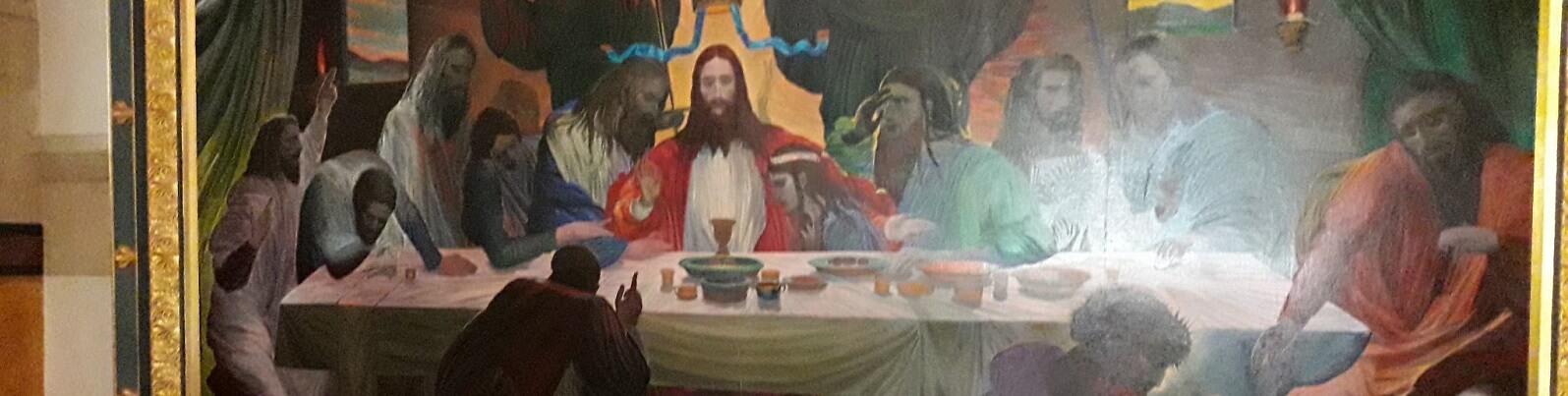
The Holy Grail is the cup that Jesus used at the Last Supper; he filled it with wine, passed it among the disciples, and told them, “This is My blood which you are drinking.” According to legends, the same cup was used by Joseph of Arimathea during the crucifixion—he collected the blood and water that flowed from Jesus’ side after it was pierced by the Spear of Destiny, and thereby the Grail received Jesus’ essence and became a miraculous, magical object.
The Grail has several characteristics related to Jesus: it can heal, enhance, bestow wisdom, purify, and connect people with their inner selves and with God, but it can also be dangerous to those who are not pure in heart or properly prepared. Therefore, it is concealed from unworthy eyes and kept by a lineage of holy men in the Castle Perilous (the dangerous castle).
After the establishment of the Church of the Holy Sepulchre in Jerusalem, the Holy Grail was kept there, in addition to the Spear of Destiny, but over the years it was lost, and in the 12th century, various legends began to appear about its location. According to the legends, the true Grail was taken by Joseph of Arimathea from Jerusalem after the Great Revolt. He took it to a place in Europe, where he founded the Grail Castle where the holy object was kept, with his family and descendants becoming the Guardians of the Grail. Consequently, the land where the Grail is kept is blessed and becomes consecrated.
The Holy Grail legends appeared concurrently in France and England, which were under the rule and enlightened influence of Queen Eleanor of Aquitaine and her descendants at the end of the 12th century, during a period of close connection between the two countries. The stories of the Holy Grail first appear in 1180 in an unfinished poem written by Chrétien de Troyes, the court writer of Marie of Champagne. Chrétien dealt with the subject of courtly love and sought to inject a moral and spiritual component into it. He wrote the tales of knights such as Lancelot and Percival, and finally Perceval, the Story of the Grail (Perceval, le Conte du Graal). In this book, the Grail first appears as a mysterious object—its French name Graal is not necessarily a cup but a kind of bowl containing a Holy Communion wafer. Chrétien’s importance lies in the fact that he initiated the genre of the romantic novella, a narrative of romantic adventure, which became the main literary vehicle for the Holy Grail stories.
The man responsible for the Christianization of the Grail is probably Robert de Boron from eastern France, who wrote Joseph of Arimathea or The History of the Grail, about ten years after Chrétien’s death. In this story, the Grail takes on the meaning of a vessel that collected the blood and water that flowed from Jesus’ side, and thereby received his essence. Joseph of Arimathea took the Grail and brought it to Avalon (Glastonbury) in England, where it waited until the time of King Arthur and Percival. It appeared before the Knights of the Round Table and caused them to embark on a quest for it.
The next important Grail story, and one of the most wondrous, is the anonymous Perceval le Gallois (The High History of the Holy Graal) [4]. Here, Percival meets the Grail Knights, who appear as a kind of monastic brotherhood, wearing white robes with a red cross on their chest—the dress of the Templars. The story relates to alchemy and esotericism. Its content and tone are fundamentally different from its predecessors, but the basic components of the plot remain similar.
The Grail was kept in the “Perilous Castle” for many generations by the Holy Lineage, along with the Spear of Destiny, and brought blessing and abundance to the land. The guardianship was made possible by a life of purity in thought, deed, and word. However, one day, one of Joseph of Arimathea’s descendants sinned, and immediately the Spear of Destiny fell upon him and wounded him. Thus he became the “Fisher King” (he tries to fish but does not succeed because he is wounded in the hip). From then on, the Grail disappeared from the eyes of the pilgrims, and it could only be seen covered, and even worse—as a result, the surrounding land became desolate. To redeem it, a new and pure knight had to arrive at the castle and become the new Guardian of the Grail. And so it happened that the Grail miraculously appeared before the knights of King Arthur’s Round Table, and caused them to set out in search of it.


The next most famous Grail story, and one of the most sublime, is Wolfram von Eschenbach’s Parzival (Perceval). Wolfram begins with an introduction in which he claims that Chrétien’s story is false. He explains that the true story was transmitted to him by a man named Kyot, who heard it in Toledo from a heretic named Flegatnis. He goes into many details about the nature of the Grail Knights, their appearance, and their way—they wear a white mantle with a red cross on it, like the Templars, and are called the Tempelisen—or in other words, the “Templars.” Wolfram is Germanic by name, but it is possible that he lived as a monk in England. The connection to Muslim mysticism appears in the description of a Muslim knight equal in strength to Percival, who turns out to be his lost brother.
The quest for the Holy Grail is essentially a search for meaning, spirituality, and enlightenment, which has existed as an inherent part of human beings and human society throughout the generations. Man is born lacking and searches all his life for what he has lost. The great historian of religions Mircea Eliade called this the “myth of the eternal return” [5]—man wants to return to the time before time, to renew the act of creation, to escape the terror of history to the place of holiness that exists forever.
The human soul was in union with God before birth, but is imprisoned and captured in the world of matter after birth, and it longs to return to its origin, to unite with God and creation. Even if man has forgotten who he is and where he came from, there is something subconscious in him that remembers and yearns for other worlds. The appearance of the Holy Grail awakens this memory and encourages him to set out on a journey whose goal is to reach home—the place of union and holiness.
The chivalric romances on which generations of young knights grew up contained subconscious and spiritual components of this hero’s journey. The young people from noble families knew the Holy Grail stories better than the Bible and the New Testament, and wanted to fulfill the ideals that appeared in them in their lives, and set out in search of the Grail, which was perceived by them as a gateway to heaven. Thus, the journey to Jerusalem was perceived as a kind of quest for the Holy Grail, and the Perilous Castle was the equivalent of the Heavenly Jerusalem, or possibly the Holy Sepulchre or the Dome of the Rock.
Today, there is a stone cup that symbolizes the center of the world in the middle of the catholicon hall of the Church of the Holy Sepulchre. Even though it belongs to the Greek Orthodox, who have no connection to this narrative tradition, it can be seen as a representation of the Holy Grail. The cup contains a sphere with a black stone cross engraved on it; a sphere with a cross is a symbol of the world of matter—the physical world. Its being inside the cup shows that the physical world was born from the Spirit, and it is the Spirit that holds it. The cup, then, is the Spirit, and therefore it can be seen as the Holy Grail. It is unclear when this cup first appeared. It is possible that in earlier periods (Byzantine), there were actual cups in the Church of the Holy Sepulchre that were considered the Holy Grail—the one that Jesus passed among his disciples during the Last Supper.
See a lecture on the Holy Grail:
Footnotes:
[1] Ravenscroft, T. (1981). The spear of destiny: The occult power behind the spear which pierced the side of Christ. Weiser Books.
[2] Burman, E. (1988). The Templars: Knights of God. Inner Traditions.
[3] Baigent, M., & Leigh, R. (1989). The Temple and the Lodge: The strange and fascinating history of the Knights Templar and the Freemasons. Arcade Publishing.
[4] Evans, S. (Trans.). (1898). The high history of the Holy Graal. J. M. Dent & Co.
[5] Eliade, M. (2018). The myth of the eternal return: Cosmos and history (Vol. 46). Princeton university press.
[6] A history of the Crusades / Vol. I, The first Crusade and the foundation of the Kingdom of Jerusalem
[7] Ravenscroft, T. (1982). Spear of Destiny. Weiser Books.


Pingback: Anthroposophy in Jerusalem - ירושלים כמיקרוקוסמוס