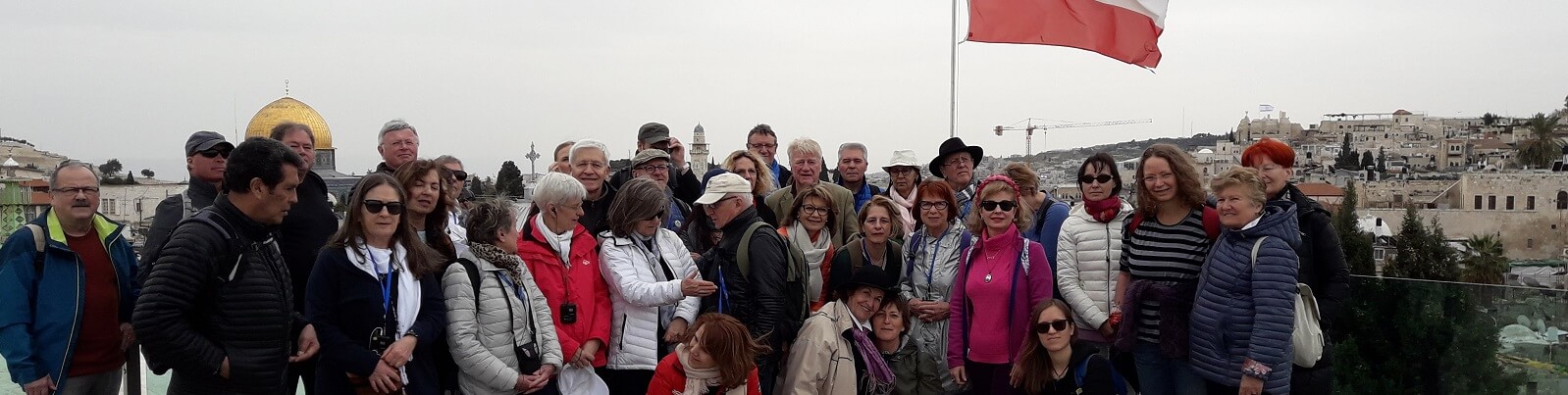
Jerusalem During the Mandate Period: A Cosmopolitan City and Spiritual Center
Following the British conquest of Jerusalem and the establishment of the Mandatory rule, a “window of opportunity” arose during which it seemed that anything was possible. For a few years, Jerusalem became a cosmopolitan city where people of all faiths and beliefs lived in harmony—a phenomenon reflected in the establishment of the “Round Table” of the Pro-Jerusalem Society (see article – arts and crafts round table). The city underwent rapid modernization and became a spiritual beacon for all of humanity, in line with the vision of its early city planners, Ashbee and Storrs. Within this framework, collaborations took place among Jews, Christians, and Muslims; the developing Jewish majority played an important role, and a bolstered presence of Christian institutions, organizations and orders was felt, as well as that of European powers.
Alongside European influence, there was also a strengthening of the international Muslim presence. A vision developed to establish a global Muslim spiritual center in Jerusalem as part of the Khilafat Movement (see article – Indian spirituality in Jerusalem). A growing influx of visitors and pilgrims who benefited from global advancements in transportation and technology flooded the city. Under Mandatory rule, the Anglo-Saxon element grew stronger, while the French, German, and Russian (under Communist rule) elements weakened. However, the British Empire, which ruled over numerous nations worldwide, was inherently cosmopolitan, as were its military and policing forces. Furthermore, in the wake of the World Wars, new populations arrived in the city—primarily highly educated Jews from Central Europe possessing a significant spiritual background, but also Armenian refugees and others. These populations cooperated with the authorities and with one another.
While Tel Aviv served as the political, economic, and national center of the Jewish community (the Yishuv), New Jerusalem was a Jewish national and political hub while simultaneously serving as a spiritual-intellectual international center. Large parts of the Jewish new community developed strong ties with the other populations of the city that shared similar characteristics. Whereas the residents of Tel Aviv differed in character, occupation, and education from the residents of Jaffa, the Jewish elite in Jerusalem was not very different from its Muslim or British-Christian counterparts. This gave rise to shared clubs, such as those of the Freemasons, and fostered a dialogue that led to mutual enrichment.
Another aspect of this cosmopolitanism and the city’s development was the arrival of spiritual teachers from all over the world, both for visits and permanent stays. During this period, spiritual doctrines that were developing worldwide – such as Anthroposophy and Theosophy—began to emerge among the Jewish and general populations alike.
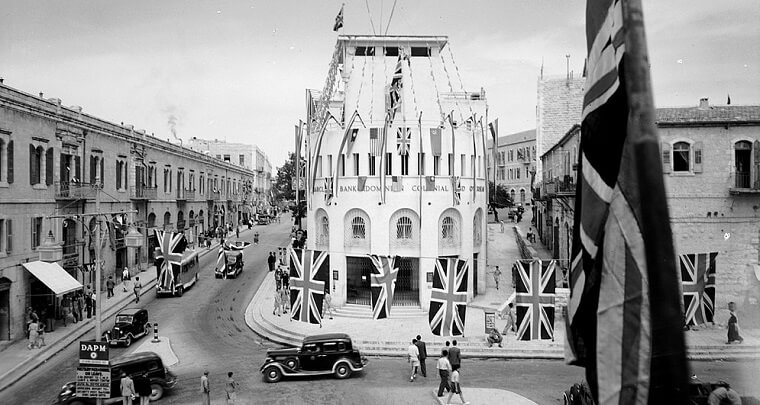
Spiritual Zionism and Jerusalem as a Center of Renewal
At the dawn of Zionism, Theodor Herzl depicted Jerusalem in his novel Altneuland as a shared spiritual center for the three major religions, featuring a Third Temple as a “Palace of Peace” designed to bring healing to every human need across the globe. The Hebrew University, established in 1925, viewed itself in a certain sense as the realization of this vision.
With the founding of the Zionist movement, a distinct stream of thinkers emerged within it, the most prominent of whom was Ahad Ha’am. He argued that a spiritual center must first be established in the Land of Israel to cultivate new Jewish values and ideals. The role of this center was to “prepare the hearts,” strengthen Diaspora Jewry, and serve as a source of identity for them. According to this approach, mass settlement of the land could only be possible after such a spiritual center was established and the preparation of the people in the Diaspora was complete.
For a large portion of the immigrants, returning to the land was deeply intertwined with creating an exemplary society and shaping a “New Man”—a process that also encompassed spiritual and moral development. For instance, A.D. Gordon did not merely seek to drain swamps; heavily influenced by the teachings of Tolstoy, he aspired to connect with his “missing part” through agricultural labor and a direct, unmediated bond with the land. The Zionist enterprise was perceived by some settlers (as well as by outside observers) as part of humanity’s evolutionary process toward creating a type of human suited for the modern era, so much so that the Divine Presence (Shechinah) seemed to dwell upon both the pioneers and the soil.
Some argued that a “oneness of heart” prevailed at the First Zionist Congress, bringing about the presence of the Shechinah in a manner akin to the revelation at Mount Sinai. However, this unity was later compromised by the over-interference of intellect, pragmatism, and division (as seen, for example, in the Uganda Scheme). Critics argued that people failed to rise to the greatness of the moment and lacked the wisdom to solidify that “Archimedean fulcrum” which could have been forged had they adhered to and developed that essential, heartfelt sentiment.
Despite the existence of the Old Yishuv in Jerusalem with its multi-generational spiritual legacy, elements of it integrated over time into the spirit of the era. Alongside them, numerous settlers arrived in Jerusalem and established a new city outside the walls. On the eve of the War of Independence, the city’s Jewish population numbered approximately 100,000—about one-sixth of the total Jewish population in the land (which stood at around 600,000 at the time).
A unique tapestry developed in Jerusalem: members of the Old Yishuv, Ultra-Orthodox (Haredi) Jews, “New Religious” Jews (who would become the Religious Zionist community), Mizrahi Jews from various backgrounds (from Yemen to Germany), Yekkes (German Jews), a secular-pioneering public, and a distinct class of intellectuals and scholars. The city was home to trailblazing figures such as Eliezer Ben-Yehuda, the reviver of the Hebrew language; spiritual leaders like Rabbi Kook and Rabbi Meir Bar-Ilan; artists like Boris Schatz; and pioneers like Yitzhak Ben-Zvi. Alongside them stood prominent intellectuals such as Hugo Bergmann, Martin Buber, and Gershom Scholem, the preeminent scholar of Kabbalah.
Despite the differences between these groups, for a brief period, they were all bound together by a shared spirit of yearning for Jewish independence. It seemed that, drawing from the city’s historical weight and ancient stones, the residents managed to preserve that profound sentiment from the First Zionist Congress without losing it. With the founding of the Hebrew University, a spiritual beacon was created in Jerusalem, translating the vision of Spiritual Zionism into reality.
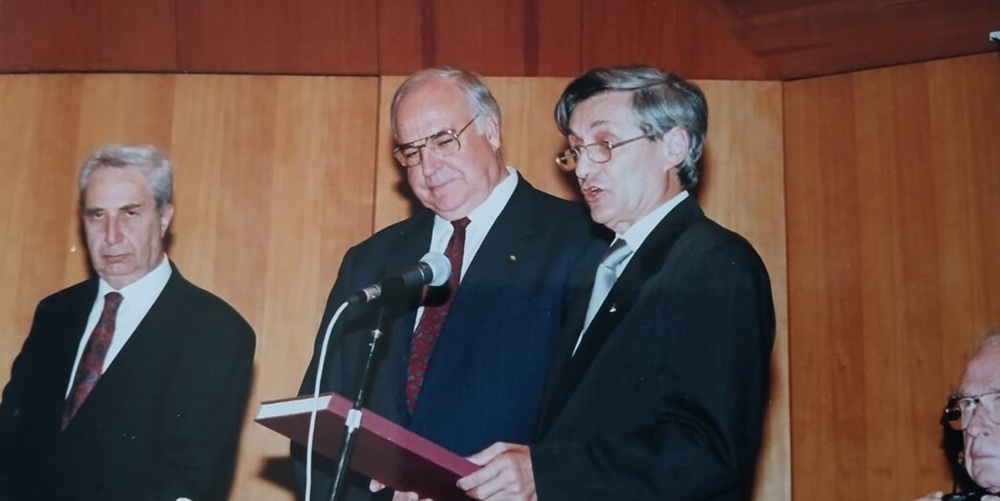
The Miracle of the Hebrew University
Following the unification of Germany in 1871, it became not only the strongest physical power in Europe, but also an intellectual powerhouse—a cultural center where Jewish scientists and thinkers played a prominent role. They were an inseparable part of the intellectual elite of Germany itself, as well as that of the Austro-Hungarian Empire, particularly in Vienna. The German language and its cultural sphere influenced both of these empires, which effectively formed a single cultural domain.
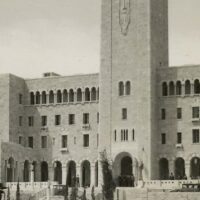
With the defeat of Germany and Austria in World War I, an immigration movement (Aliyah) to the Land of Israel began, turning into a massive torrent after the Nazis came to power in Germany in the 1930s. Many of the leading figures in Jewish culture and science left Germany, and a large, critical portion of them arrived in Palestine. They helped catalyze a cultural and scientific flourish, the fruits of which we continue to enjoy in Israel and across the world to this day. The Hebrew University, inaugurated in 1925, played a central role in this transfer of knowledge and education.
Thus, we find on the university’s Board of Governors figures such as Albert Einstein, Sigmund Freud, and Martin Buber, and among its academic faculty Judah Magnes, Hugo Shmuel Bergmann, Hans Jakob Polotsky, Ladislaus Farkas, Bernhard Zondek, Gershom Scholem, Ernst Simon, and many other illustrious names. What they all had in common was that they had studied at universities in Germany or Austria. This was in addition to scholars who arrived from other countries, particularly England and the United States (the latter of which also benefited greatly from the intellectual and spiritual migration of jews from German-speaking Europe).
In addition to academics, there was an influx of artists and creatives to Jerusalem: poets, sculpturers, architects, painters, musician, both Jewish and non-Jewish. This led to a lot of new cultural activity in the city. for example, in the early 1940s, the poet Else Lasker-Schüler organized bi-weekly gatherings called Der Kraal, which were attended by Max Brod (who famously published Kafka’s writings), Arie Ludwig Strauss, Werner Kraft, and others.
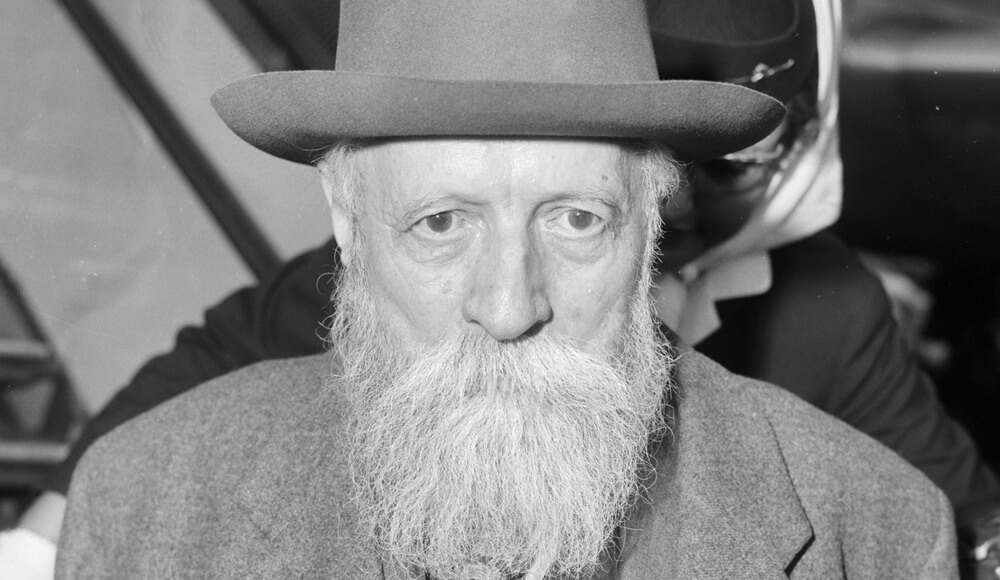 Martin Buber
Martin Buber
Martin Buber (1878–1965) was one of the greatest philosophers, scholars, and writers of the 20th century. He was active in Jerusalem from 1938 until 1965, was a friend of Hermann Hesse, Carl Jung, Mircea Eliade, and other key figures, and authored profound works on Hasidism. Buber argued that spirituality in the modern era is rooted in “I-Thou” relationships, contrasting with the alienation of the “I-It” dynamics prevalent in contemporary society. He wrote his doctoral dissertation (1903) on Jacob Boehme and Nicholas of Cusa—the last of the great medieval philosophers, who presented a vision for establishing a new universal spiritual center for all nations in Jerusalem (see chapter – Christianity after the Crusades)—and through his very existence, Buber effectively realized this vision.
Buber engaged in the study of Hasidism as early as 1906, treating it not merely as an intellectual pursuit, but out of a desire to bring the sparks of light and wisdom of Hasidism to an ignorant modern audience, providing them with the tools to transition from the “I-It” to the present “I-Thou.” Buber translated the tales of Rabbi Nachman of Breslov and the legend of the Baal Shem Tov. It appears that his immersion in Hasidism was part of his personal spiritual quest; furthermore, he delved into other spiritual teachings and, by his own account, sought ecstatic experiences early in his journey. One of his most famous books is Tales of the Hasidim: The Early Masters (literally: The Hidden Light). According to the alchemists, it takes gold to make gold, and the gold within Hasidic tales enables an individual to uncover the light within themselves. A central theme in this book is the archetype of the Tzadik (the righteous man).
According to Buber, there is a fundamental need for a helper of both body and soul, addressing both the earthly and the heavenly dimensions. This helper is called a Tzadik. He is a healer of both physical and spiritual ailments, for he recognizes the connection between the two and can influence both. He teaches humans to conduct your affairs in such a way that their soul remains free, and instructs them on how to strengthen the soul within themselves so they can withstand the difficulties of life. Time and again, the Tzadik knows how to lead disciples by the hand until they dare to continue their path alone; he does not do for others what they can do for themselves, nor does he spare their soul any struggle it needs to wage on its own to fulfill its unique purpose in the world.
According to Buber, the life of the Baal Shem Tov represents a perpetual absorption and transformation of fire into light, and what transpires within him gives rise to his dual impact on the world: those whom intellect has distanced them from the life of nature, he brings them back to the source; and those weighed down by earthly burdens, he elevates to the heavens. There is a interplay in him between light, which symbolizes spirituality, and fire, which symbolizes physiology. Fire springs from the earth, while light comes from the air and the sky. This can be observed in a candle: a flame bound to a burning coal.
Despite his deep yearning, the Baal Shem Tov did not immigrate to the Land of Israel, as it was decreed from heaven that the time had not yet come to connect the Tzadik to the Holy Land. However, Martin Buber, who wrote extensively about him, did move to the Land, and it seems that the atmosphere of Jerusalem enlightened him. In 1946, he delivered a series of lectures that became a guidebook for the spiritual path he believed in—a brief yet profound book titled The Way of Man, According to the Teaching of Hasidism. A year later, approaching the age of 70, he published Paths in Utopia, which analyzes past cooperative community experiments and proposes a new model for the future as an antidote to the crises of modern society: small communities based on “I-Thou” relationships, responsibility, sharing, and a shared spiritual utopia. Years later, an attempt led by the disciples of Yosef Schechter sought to manifest these ideas in the settlement of Yodfat in the Galilee.
It is reasonable to assume that during his many years in Jerusalem, Buber met countless intellectuals and spiritual seekers—both Jewish (particularly Hasidim) and members of other faiths, including visitors to the city—especially given his emphasis on the direct, unmediated encounter with the “Other.” However, we know almost nothing about such meetings. We know he was a member of various peace groups and in close contact with Jerusalem’s great minds in academia and Jewish society, including Hugo Bergmann and Gershom Scholem. Yet, we remain in the dark regarding his connections with the “other world”—with unique locales in Jerusalem, with ordinary people, hidden Tzadikim, Muslims and Sufis, Christian priests and mystics, members of esoteric societies, and so forth. Nonetheless, it is highly probable that such encounters occurred, both intentionally and through synchronous, unplanned moments.
 Gershom Shalom
Rudolf Otto and the Eranos Circle
Rudolf Otto (1869–1937) is considered one of the greatest scholars of religious studies, a theologian, and a philosopher who personally set out to discover the richness of the human religious experience through world travel. He concluded that religiousness is an inherent, natural faculty in man that cannot be examined solely through the lenses of other disciplines such as sociology, psychology, or even theology. He formulated the concept of the “holy” in his seminal book, The Idea of the Holy, and described the distinct emotion that arises during a spiritual encounter, which he termed the “numinous.” It all began when he embarked on a journey around the globe in 1911; during his visit to Morocco, he attended a Yom Kippur service at a synagogue, where at a specific moment he felt something he had never experienced before—sensations of “creatureliness,” awe, majesty, “the Wholly Other,” sublimity, and fascination, which he spent the remainder of his life trying to characterize.
From Morocco, Rudolf Otto continued to the Middle East, visiting Palestine and Jerusalem, before traveling onward to the Far East. Upon returning to Germany two years later, he focused on characterizing the religious experience and conducting comparative religious research between East and West. Therefore, it was only natural that he supported the initiative of theosophist and mystic Olga Fröbe-Kapteyn (1881–1962) to hold seminars on the religious experience that would serve as a meeting point between East and West.
In 1928, without knowing exactly why, Olga renovated a meeting hall near her home on the northern shore of Lake Maggiore in Switzerland. Jung suggested that she transform it into a meeting place for East and West; Rudolf Otto supported the initiative and proposed the name Eranos, which in Ancient Greek means a banquet to which the guests contribute their own food and drink. In 1933, the first meeting was held on the topic of “Yoga and Meditation in East and West,” and meetings have been held annually ever since. Among the regular participants were Gershom Scholem, Henry Corbin, Karl Kerényi, Carl Jung, Erich Neumann, Mircea Eliade, and many others. It was the only international circle for the study of religion and spirituality that continued to convene even during World War II.
Olga was well-connected to the intellectual elite of Switzerland and Germany, a member of the Theosophical Society, and deeply interested in Eastern religions. She was closely associated with the “School of Wisdom” (Schule der Weisheit) founded by Hermann von Keyserling in Germany, which explored the common origin of world religions. Keyserling had embarked on a world tour during the very same years as Rudolf Otto (1911–1912) and visited the same destinations; he argued that the shortest path for a person to find themselves is a journey around the world, and that the travel transformed him through his encounters. Keyserling maintained that Europe had a unique role in reinforcing the principle of individuality. It was through the activities of the School of Wisdom that Olga met Carl Jung (1875–1961), who played a pivotal role in her life.
In 1928, without knowing exactly why, she renovated a meeting hall near her home on the northern shore of Lake Maggiore in Switzerland. Jung suggested that she transform it into a meeting place for East and West; Rudolf Otto supported the initiative and proposed the name Eranos, which in Ancient Greek means a banquet to which the guests contribute their own food and drink. In 1933, the first meeting was held on the topic of “Yoga and Meditation in East and West,” and meetings have been held annually ever since. Among the regular participants were Gershom Scholem, Henry Corbin, Karl Kerényi, Carl Jung, Erich Neumann, Mircea Eliade, and many others. It was the only international circle for the study of religion and spirituality that continued to convene even during World War II.
Gershom Scholem
The “Eranos Circle” meetings, drew some of the world’s greatest scholars of religion and the human psyche, including Gershom Scholem (1897–1982). He was the preeminent scholar of Kabbalah and one of Jerusalem’s intellectual giants, and participated in most of the Eranos conferences over a span of 30 years (1949–1979). This participation lent a universal and “numinous” dimension to his research. At each conference, each scholar presented a topic for two hours, and an in-depth paper was composed in honor of the occasion. Scholem lectured on topics such as alchemy, colors and their meaning in Judaism, and more. His book On the Kabbalah and Its Symbolism is based on these lectures, and it is highly probable that he was influenced by the circle’s engagement with symbols and archetypes inspired by Jung.
Scholem immigrated to the Land of Israel from Germany in 1923 and served as a professor at the Hebrew University from 1925 for a period of 40 years. His earliest research, while still in Germany, focused on the Book of Bahir (Sefer ha-Bahir). In 1941, he published Major Trends in Jewish Mysticism, and in 1957, he published his monumental work on Sabbatai Zevi, in which a certain sympathy for the movement could be discerned—a fact that led to his being accused of “crypto-Sabbatianism.” Scholem possessed a rich philosophical background, investigated Gnosticism and its influence on Jewish thought, and was a multidisciplinary intellectual, a true “Renaissance man,” and a humanist. His students went on to become the most prominent experts in Kabbalah research, including Joseph Dan, Ithamar Gruenwald, Isaiah Tishby, Rivka Schatz uffenheimer, and others.
In other words, the way Kabbalah is presented to the general public today is heavily influenced by the approach of Gershom Scholem, who was himself influenced by the universal-numinous perspective of the Eranos Circle. Similarly, the way Hasidism is presented in Israel was shaped by the writings and mystical worldview of Martin Buber, as well as by Scholem’s own research. These were two giants of the spirit who were in close contact with one another, and despite their fundamental disagreements, they largely complemented each other when viewed from a unifying perspective.
Gershom Scholem’s close friend before his immigration to Israel was Walter Benjamin, an original thinker who synthesized Marxist philosophy with Jewish mysticism. Their point of connection was viewing the historical process as a trajectory leading toward a climax, crisis, and redemption. Consequently, Benjamin adopted a painting by Paul Klee titled Angelus Novus (The Angel of History), from which he drew inspiration for his writing of the Theses on the Philosophy of History. This painting eventually came into the possession of Gershom Scholem, who donated it to the Israel Museum (see article: Spiritual Art).
Hugo Bergmann: Philosophy and Anthroposophy
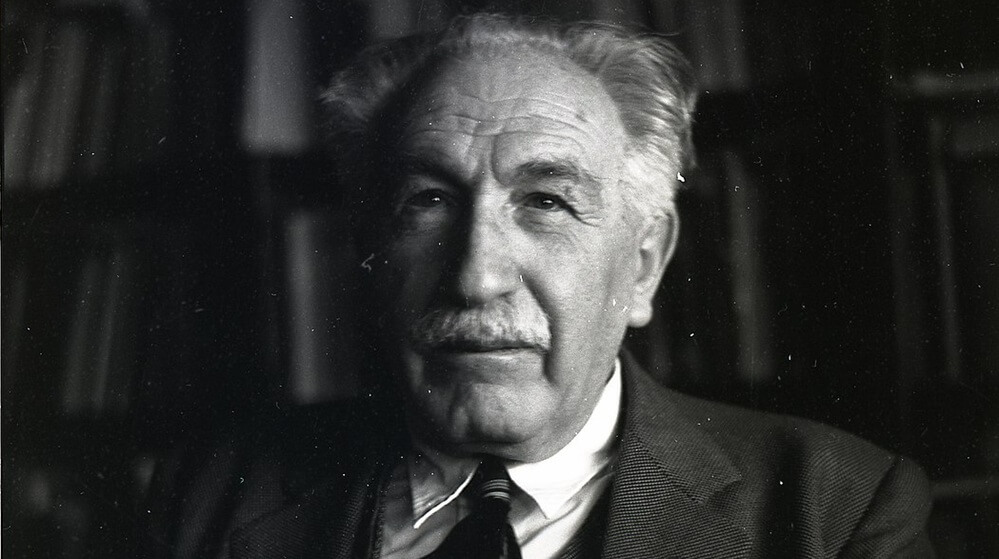
Shmuel Hugo Bergmann (1883–1975) was, in his youth, a classmate and friend of Franz Kafka in Prague and was well-acquainted with Rudolf Steiner. He immigrated to the Land of Israel in 1920 after holding various positions within the Zionist movement, continuing the path of Hebrew humanism pioneered by Hermann Cohen and Franz Rosenzweig. Bergmann taught philosophy and held senior positions at the Hebrew University, and in 1935, he was elected to serve as its first rector. He was profoundly influenced by Martin Buber and was his close friend, as well as being a friend of Gershom Scholem (Bergmann even married Scholem’s ex-wife, Fania, as his second wife).
In parallel with his academic and public activities, Bergmann harbored a deep interest in mysticism. Among his endeavors, he translated P.D. Ouspensky’s book (The Psychology of Man’s Possible Evolution) into Hebrew and engaged with contemporary spiritual doctrines: parapsychology, the writings of Sri Aurobindo and Eastern philosophies, as well as the works of René Guénon and Sufism. Above all, he was connected to the Anthroposophical movement. He knew Rudolf Steiner from the early stages of his career and translated several of his books, including the foundational work How to Know Higher Worlds. Bergmann was, in many ways, a “beacon” of spirituality in the new Jerusalem.
See article: Anthroposophy in Jerusalem.
Jerusalem of Madness
Jerusalem has always been a city of messiahs and the mad. This messianic frenzy intensified in the wake of World War I and reached its peak after World War II and the atomic bomb; it seemed as though Judgment Day was imminent, leading individuals like the Irishman William Irvine (1863–1947) to settle in Jerusalem. Irvine claimed to have uncovered the correct interpretation of the Book of Revelation, which he called the Omega Gospel regarding the end of days. He was the founder of the “Two by Two” movement, a form of New Age Christianity that continues to exist to this day.