Christians in Aelia Capitolina
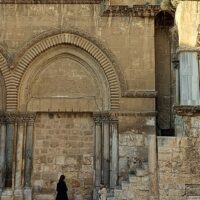
After the destruction of the Temple during the Great Revolt, the city of Jerusalem was in ruins, but this probably did not prevent Jews and Christians from living among the ruins and beginning to rebuild the city, even though there was no organized urban system or walls. In the Syriac church in Jerusalem named after Saint Mark (Mark’s House), there is an inscription from 73 CE mentioning the rebuilding of the house.
It is not clear what happened in Jerusalem during the Bar Kokhba Revolt, but immediately after its suppression, the pagan city of Aelia Capitolina was built. Christian sources tell us that a Christian community existed in the city starting from the end of the 2nd century and that it had a bishop. The first important known figure in the new Jerusalem was Bishop Narcissus, who held office from 180 CE and became a saint. He was a man of wonders who lived to the ripe old age of 117, performed miracles such as turning water into oil, and spent several years as a hermit in the desert.
The man who was called to replace him and assist him at the end of his life, and who became an even more important and holy figure, was Bishop Alexander, who held the office from 216 to 251 CE. Saint Alexander was born in Cappadocia and became the first bishop of Cappadocia, a very important position, because Christian thought and Orthodox monasticism made it their center at this time. The special rocks and valleys of Cappadocia served as a suitable home for the development of Christianity, and to this day they instill a mystical atmosphere in everyone who visits them. During the reign of Emperor Severus (222–235 CE), Alexander was imprisoned for several years for his faith, and it was then—despite the suffering and torture he underwent—that his faith was strengthened. When he was released, he decided to make a pilgrimage to Jerusalem and was asked by the Bishop of Jerusalem, Narcissus, to assist him in his office.
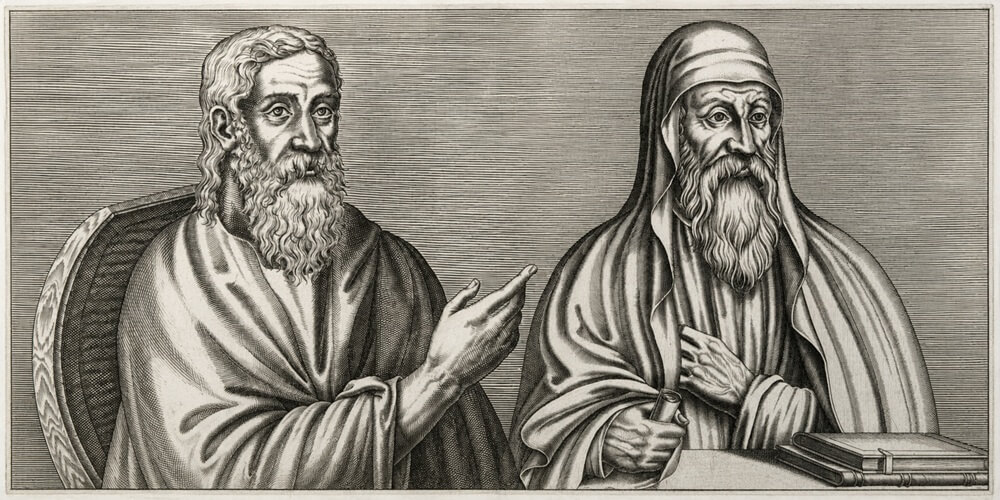
It is likely that before Alexander’s arrival in the land, he studied at the school of Clement of Alexandria, one of the most important mystical thinkers in the early Christian world, together with Origen, an equally important thinker who also found refuge in the land. Alexander recognized Origen’s genius and holiness, and although Origen held no official position in the Church, Alexander invited him and allowed him to preach in the churches under his authority. He even ordained him as a priest despite the opposition of the religious establishment.
Origen and Alexander brought with them books from Alexandria that preserved the knowledge of the ancient world, and together they created a rich library in Jerusalem, second only to that of Alexandria. Origen was later invited by the community of Caesarea, which also recognized his genius, to settle there and establish a study center and library. He eventually became the head of the theological school in Caesarea and the leading teacher of the Church in the Land of Israel. His allegorical interpretation of the Old and New Testaments gave rise to a Christian exegetical school that flourished in the following centuries and had a profound influence on Christianity.
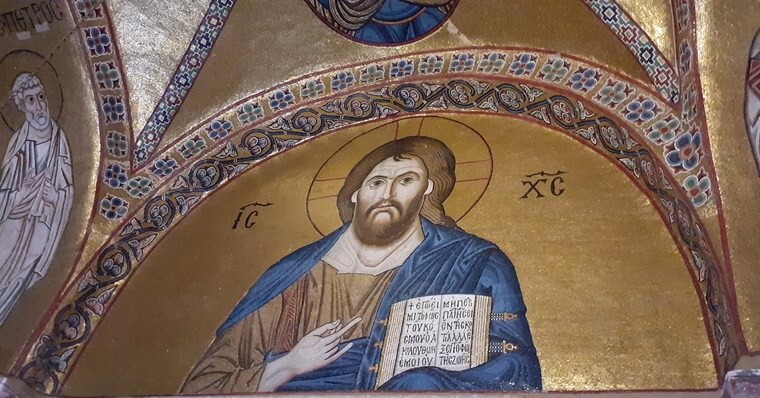
Origen
Origen (185–255) was born into a poor Christian family in Alexandria. He studied at Clement’s catechetical school and became a senior teacher there. In 212, he shifted his focus to the interpretation of the Holy Scriptures and learned Hebrew for this purpose. From that point on, he left the teaching position to his students and successors, dedicating all his time to literary and religious work. He began a vast project of allegorical interpretation of the Old and New Testaments. At his disposal were seven stenographers and dozens of scribes and copyists, who were supported financially by his friend Ambrose.
The light emanating from Origen’s work—his charisma, genius, and influence—probably led to jealousy on the part of the Patriarch of Alexandria, who began to persecute him. Origen found refuge in the Land of Israel, where his friend Ambrose had important business connections, and where he also had the support of Alexander, the Bishop of Jerusalem, who cooperated with him in establishing a significant library and appointed him as a priest and preacher. In 231, Origen moved to Caesarea and continued his literary work there. He founded a school of Christian teaching, where he delivered sermons twice a week. David Halperin argues that in Caesarea, Origen encountered Jewish mystical traditions and became familiar with the teachings of the Merkavah and the Pardes[1].
One of his major achievements was the compilation of the Hexapla, a version of the Old Testament presented in six parallel columns with different translations and languages. He was the most important interpreter of the Old Testament of his time, offering both literal and allegorical readings of the text. In addition, he played a significant role in shaping which writings were to be recognized in the New Testament canon, though the final sealing of the New Testament took place only in the early 4th century.
Christianity made a strategic decision at the beginning of its development to include the Old Testament among its sacred scriptures and to build its theological concepts on the foundation of both the Old and New Testaments. It would have been possible to discard the Old Testament, but instead the decision was made to embrace everything that preceded the New. For this purpose, a massive work of interpretation and adaptation was required, in which Origen played a central role. In addition, there was a need to bridge the mystical philosophy and allegorical thought of the Greeks, as found in the schools of Pythagoras and Plato, with Christian philosophy and mysticism—and here too Origen played a decisive role. He was the first to propose a philosophical structure for Christian doctrine that incorporated Neo-Pythagorean and Neo-Platonic elements. In his books and lectures, he addressed topics such as reincarnation, cosmology and the worlds of angels, the universality of souls, and the eventual union of all creatures.
Origen gave Christianity the profound meaning it needed at the time and is regarded as the spiritual teacher of his generation. For this reason, his writings became the foundation for all who sought depth in Christian thought thereafter.
According to Kurt[2], there was not much allegorical interpretation in Christianity, since the prevailing tendency was toward typology. The exception in this context is Origen, who is regarded as the ancient authority on allegory and as a continuation of the Alexandrian tradition of Philo of Alexandria (20 BCE–50 CE). Origen takes the verse from John 5:39—“You search the Scriptures because you think that in them you have eternal life; and it is they that bear witness about me”—and uses it as an endorsement to interpret the literal, visible meaning allegorically. According to Origen, one must transform the gospel known to the senses into an intellectual and spiritual gospel. Anyone can read the text and know the facts mentioned in it, but the reader must direct the mind to penetrate the depth of the gospel’s meaning and seek the truth within it.
Origen distinguishes between three levels in the interpretation of the text: the literal, the moral, and the spiritual-mystical. These correspond to the body, soul, and spirit in man. The spiritual interpretation, according to Origen, refers to Jesus and to universal truths. Within the spiritual interpretation, there are Christological interpretations (related to Jesus), ecclesiological interpretations (related to the Church), mystical interpretations, and eschatological interpretations (related to the end of days).
For example: Jerusalem, in the literal sense, is the name of a place; in the moral sense, it refers to the soul of the believer; in the spiritual sense, it is the Church of Christ; and in the eschatological sense, it is the New Jerusalem, the spiritual city that exists in heaven and will descend to earth at the end of days.
Allegory allows for the resolution of problems in the text. Origen was convinced that there were thousands of cases written as though they were events that happened, but which in fact did not occur in a literal way. “They are absurd and impossible,” he wrote, “but they have an allegorical meaning.” For example, when the devil tempts Jesus and takes him to a high mountain to show him the kingdoms of the world (Matthew 4:8), this is absurd and physically impossible. Therefore, the mountain symbolizes the haughtiness of the heart, which is the most dangerous sin.
Origen continues the interpretive tradition of Philo of Alexandria, who claimed, for example, that a pilgrimage to the Holy Land is an entry into the world of philosophy; Israel is a land that yields fruits (philosophical ones) and supports plants and divine qualities. The wanderings of Abraham to the Promised Land are an allegory for the human soul that loves virtue and journeys in search of the true God.
According to Origen, the Jews see the texts of the Old Testament only in their external, simplistic form, while the Christians are able to penetrate their inner, prophetic meaning. At the same time, he acknowledges the Jewish mystical tradition, which attributes a double meaning to the text and is interested in it. According to Origen, when the Jews ask John, “Are you Elijah?” this shows their belief in reincarnation, and he claims they possessed secret writings. Origen argues that the Song of Songs is an esoteric text: it describes the love of God for the soul, and he even composed a commentary on this book. In addition, he regards the first chapters of Genesis and the first and last chapters of Ezekiel—which deal with the Merkavah and the vision of the Temple—as esoteric as well.
Even in the laws of the Torah, there is a literal level of morality and a secret divine meaning. Moses passed on the secret knowledge to the priests, who understood the meaning of the sacrifices and the worship. There was a group of priests who preserved this deeper knowledge, but over the years it was lost, and the rabbis were left with only the external meaning. In Genesis 26:30, Isaac makes a feast for Abimelech, king of Gerar (in Beersheba). Origen claims that this refers to the feast of the perfect ones, in which the divine secrets are revealed. There is a hidden name of God that is known only to the perfect Jews, and in the same spirit, the names of Canaanite cities conceal a secret meaning. Origen also wrote a commentary on the Psalms, excerpts of which appear in the Philokalia. According to him, the biblical text is like a house with many locked rooms. There is a key next to each entrance, but it is not necessarily for the door beside it.
According to Origen, John taught a secret oral tradition about the deep meaning of baptism and prayer, and therefore people came to him from all over the country. Both John the disciple and Ezekiel swallowed a scroll, and from this it is understood that they passed on the knowledge orally. Jesus taught the disciples things that could not be written down. He taught in nature and in the synagogue, but the teachings were so deep that they could not be written. The mystery was intended for those who desired to become light. Jesus taught these deeper truths only to those close to him, in a house that only they could enter, and therefore he did not allow his family to come in.
Origen distinguishes between simple and esoteric Christianity. Just as there are two types of Judaism, there are also two types of Christianity, but the enlightened Christians must not lose contact with the rest of the community. The Gnostics separated the two types of teaching and had secret books, but Origen says that these are the same texts, the same teaching—only the enlightened see a different meaning in them and penetrate more deeply with the help of their modesty and purity of heart. They perceive different things in the place where the literalists see only physical reality.
argues that there is a hierarchy in the understanding of Christianity: beginners, the advanced, and the perfect. “Jesus explained things to his disciples privately, and for this reason the authors of the Gospels hid the explanation of the parables” (Commentary on Matthew, 12–14). The mystical interpretation dealt with the symbolism of baptism, the Eucharist, the cross, the meaning of the descent into hell, and the ascent of Jesus through the seven heavens in which the angels dwell[3].
According to Eliade[4], Origen promotes a philosophy called apokatastasis, which means “the restoration of all things.” This should be the goal of all souls that have fallen, and it is to be achieved through a hierarchy of Jesus, angels, human beings, and demons—similar to the Kabbalistic concepts of building Adam Kadmon (the Primordial Man) by merit rather than by grace. The new perfection will surpass the first because it is attained by merit and is eternal. The souls will receive a resurrection body. The Christian journey is one of growth and struggle with evil, but only through love can the perfect Christian know God and unite with Him.
The Archonites in Jerusalem
At the beginning of Christianity, there were many versions of what it meant to be a Christian, what Jesus taught, and additional gospels that were eventually not included in the New Testament, such as the Gospel of Thomas. In the 2nd–3rd centuries CE, a major spiritual movement developed, mainly in Egypt, that saw the world as a struggle between good and evil, matter and spirit. This was the Gnostic movement. It claimed the possibility of direct knowledge of God (gnosis) and that Jesus was an enlightened teacher who passed on a secret teaching to a closed circle of disciples. This was a broad movement, within which there were different schools and groups, and it fit into the universal spiritual atmosphere of the period.
One of the most important books adopted by part of the Gnostic movement was the Gospel of Thomas, which some claim is an older or contemporary text to the gospels of the New Testament. In this gospel, Jesus takes Thomas aside and reveals three things to him. It is written: “And when he returned to his companions, they asked him, saying, ‘What did Jesus say to you?’ And Thomas said to them, ‘If I tell you one of the things he said to me, you will take up stones and stone me, and a fire will come out of the stones and consume you.’[5]“
It can be understood from this that Jesus had a secret teaching that he revealed only to his inner circle. This teaching was not suitable for the masses, as it was nihilistic in nature and sometimes stood in complete opposition to the church’s dogma. In the spiritual worlds, there is a kind of nihilism that is suitable only for the few. From Judaism, we know the story of the four who entered the Pardes, of whom only Rabbi Akiva managed to leave in peace. Gnosticism, which developed in Egypt in the first centuries CE, dealt with the spiritual worlds and offered a path for the few who were ready and qualified to reach enlightenment.
When the Roman Empire became Christian and the dogma of the church was consolidated at the Council of Nicaea, a systematic and organized suppression of the Gnostic movement began, and the trend shifted toward the acceptance of official theology and religiosity. The Church Fathers claimed that the sources of Gnosticism came from Plato, and therefore it should not be accepted, since it preceded Jesus. Indeed, there are scholars who argue that Gnosticism had sources older than Jesus, such as the religion of Zoroaster in Persia, Jewish breakaway sects such as the Essenes, the Egyptian Hermetic movement, the mystery schools of Greece, and others.
In Gnostic literature, the Mount of Olives holds a place of honor, and some claim that in early 4th-century Jerusalem—at the time when Helena came to the city and the construction of the Church of the Holy Sepulchre began—there was a Gnostic community called the Archonites on the Mount of Olives.
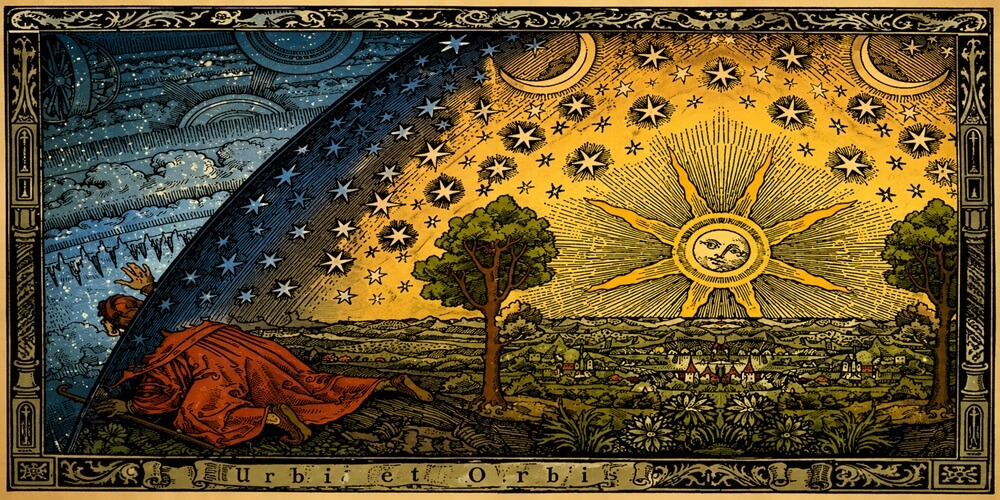
The archons are the name the Gnostics gave to the seven forces that rule the world, corresponding to the seven planets seen moving in the sky against the background of the fixed stars: the sun, the moon, Mercury, Venus, Mars, Jupiter, and Saturn. In Jewish, Christian, and even pagan mysticism, these were considered beneficial forces and were identified with the music of the spheres and the seven colors of the rainbow. But in the Gnostic worldview, which regarded the material world negatively, they were seen as seven restrictive forces—the messengers of Yaldabaoth, the false god—whom one must overcome and be freed from in order to reach the supreme God, who is beyond them in the eighth heaven[6].
Epiphanius of Salamis tells of a priest from Israel named Peter who was caught up in the Gnostic heresy. He was expelled by Bishop Aetius of Antioch and found refuge among the brotherhood of the Ebionites, a Jewish-Christian Gnostic sect that existed at the same time as communities of believers in the deserts of Arabia. The Ebionites did not believe in the divinity of Jesus. They regarded him as the Messiah, had their own gospel (the Gospel of the Hebrews), and probably continued ancient Jewish and Essene traditions, while elevating the figure of James the Just, the brother of Jesus.
staying with the Ebionites for several years, Peter came to Jerusalem and lived as a hermit in a cave near the city on the Mount of Olives. His reputation as a holy man spread far and wide, and many people made pilgrimages to him. Shortly before the death of Constantine II (and the rise of Julian the Apostate), a man named Eutactus, who was probably of Armenian origin, came to Peter and learned the secret teaching from him. He then carried this knowledge, together with the spiritual emanation that accompanied it, to Armenia, thereby strengthening the Armenian Gnostic movement. In time, Armenia indeed became a center of Gnostic heresy.
Alongside Peter, and probably a few others, there was the Archonite sect, which believed that the Demiurge—the false god—rules over the seven heavens. These heavens, they claimed, imprison souls, especially after death, and prevent them from returning to the source of spiritual light, the supreme God.
In the seventh heaven dwells the tyrant Yaldabaoth, identified by the Gnostics with the biblical YHWH, but regarded instead as a demonic force. The devil, once a divine being, rebelled against the supreme God and set himself in opposition to Him. According to this teaching, he had relations with Eve, from which Cain and Abel were born. The two quarreled over the love of a sister, and as a result, Cain killed Abel. The only “normal” child of Adam and Eve was Seth, regarded as the father of the children of light, while the rest of humanity were considered the children of the spirits of darkness.
Seth plays a major role in many Gnostic texts. As the third son of Adam and Eve, he is portrayed as a savior who appears in the figure of Jesus—“the second Logos of the Great Seth.” In the fifth generation he fathered Enoch, who ascended to heaven to be with God, and in the eighth generation Noah. Sometimes Seth is given an independent and ancient existence, connected to other biblical figures. He was significant for the Samaritans and the sects of the Second Temple period. Seth also appears in the Epistle to the Hebrews and is regarded as the embodiment of the high word, the Logos.
One of the important books of Gnosticism is called Allogenes, another name for Seth. The meaning of the name Allogenes is “foreigner,” that is, a person of another seed. In the text, Allogenes appears as a representative of the race of Seth who receives heavenly visions and voices and records them for his son, Mesos. The reader is invited to identify with Mesos, to overcome fear and ignorance, to meditate on each stage of the revelation of knowledge, and to ascend toward the realization of the spiritual self within the divine[7].
Allogenes is afraid to enter the mystery, but a female figure named Yoel appears to him and helps him. She anoints him with oil, gives him strength, and in the end, he attains enlightenment. But before this, he must meditate for a hundred years until the light of knowledge dawns upon him. During this process, he comes to know himself and becomes one with the supreme God. He stands upright in the One, at rest, in silence, and becomes whole. Allogenes hears everything from within the silence—an eternal intellectual movement, undivided and beyond words. He becomes like the One of whom he was previously unaware, the One who exists within him. God is described in apophatic terms, through what He is not, while the book emphasizes the positive revelation of the divine. This represents Gnostic monism, which teaches that through knowledge one can transcend the heavenly bodies and return to the source.
The reason the archons—the rulers of the seven heavens—prevent souls from returning to their source is that the souls serve as food and a source of energy for them. Without the souls, the archons have no power and cannot live. However, Wisdom, the messenger of the supreme God, who exists beyond them, is like the dew that descends from above: it gives strength to the souls, fills them with knowledge, and protects them from these forces. In this way, the soul is able to resist the archons, rise above them, and return to the supreme Mother and Father—the source from which it came. Jesus is the messenger of the supreme God and the embodiment of Wisdom, who came into the dark material world to help human souls escape from it.
An important Gnostic book, Pistis Sophia (“Faith-Wisdom”), tells how Jesus taught the disciples the “small mysteries” for eleven years after his resurrection, on the Mount of Olives. He revealed to them a spiritual path that would enable them to be freed from the rule of the archons. At the end of this period, he ascended to heaven once again, fought the archons, and broke their control over human beings. He liberated Sophia, who was imprisoned in the material world, and allowed her to rejoin the array of divine forces (pleroma) of the supreme God as the thirteenth emanation (aeon).
Afterward, Jesus descended again to his disciples—among them Mary Magdalene, Mary, Martha, John, Judas Thomas, and others—and taught them the “great mysteries.” This teaching did not take place on the physical plane alone, but also, and at the same time, in a realm called the Treasure of Light. Another Gnostic text, The Secret Gospel of John, also mentions the initiation into the mysteries on the Mount of Olives.
It is possible that Peter and the Archonites settled on the Mount of Olives because of its mystical and Gnostic significance, and that they possessed texts such as Pistis Sophia, the Secret Gospel of John, and others. They may also have been in contact with Melania the Elder and Rufinus, who were engaged in the allegorical interpretation of the holy books. It is likely that their practices included meditation, prayer, the reading of mystical literature, and attempts to connect with spiritual forces and angels, as well as undertaking journeys of the soul to other realms and dimensions. All of this was directed toward breaking the power of the archons, relying on the spiritual provisions that Jesus had given for liberation from their control.
The Archonites probably cultivated a rich mental and emotional world of images, through which they were able to transcend earthly memories and imaginations and ascend to their true spiritual source—the worlds of light.
It is interesting to note that, according to traditions in Western esoteric studies, the world has an energetic field composed of seven layers that contains the memory of the Earth. In other words, everything that has happened is imprinted in the planet’s energetic field, similar to how a person’s history is imprinted in their aura. Thus the energetic imprint of our history surrounds us and conditions which new signals from the universe can reach us. This layer of collective imprinting is often called the collective subconscious.
The archons, then, are the history of humanity—with all its evil and suffering—that enslaves the human race because it knows nothing else. This is similar to Tarot card XV, The Devil, in which people cling to the devil’s chains by their own will: although they can release their grip at any moment, they do not. In modern spiritual terminology, one might say that the archons are the occult, the Earth’s magnetic field, or the memory of the soul. There are also sparkling lights in the occult—imprints of spiritual movements and leaders who brought good to the world—but the great divinity is beyond the here and now, beyond time and place. To reach it, one needs spiritual practice and inner development.
The theme of seven rulers—archons over the world, whose influence must be overcome or at least transcended—also appears in the teachings of the Essenes. The Book of Jubilees elaborates on the act of creation: on the first day, seven groups of spirits, a pleroma of spiritual forces, are created. Yet the transition between these divine forces is not automatic. The plants created on the third day are not ordinary plants but the plants of Paradise. On the fourth day, with the creation of the luminaries, the counting of time begins—and for this reason, it is difficult for us to comprehend what was created before.
The number seven also appears in the vision of John. The vision is sealed with seven seals, which can be seen as equivalents of the archons. In order to reach redemption, the seven seals must be opened. The opening of the first four seals brings forth the Four Horsemen of the Apocalypse—four calamities that befall the human race: war, famine, plague, and death—similar to the Gnostic concept of the archons. The seals bring suffering and sorrow. The fifth seal reveals the saints (martyrs) who call upon the name of God. The sixth seal unleashes disasters such as a great earthquake. The seventh seal introduces the seven trumpets, which in turn lead to the seven bowls of wrath. At this moment, the heavens open; there is silence, and seven angels are seen standing before God, singing His praise.
The trumpets (except for the seventh) and the bowls represent disasters that befall humanity, all of which ultimately serve the purpose of leading to the longed-for salvation. After the earth is purified through death and suffering, the figure of the divine is revealed, accompanied by twenty-four elders. These elders are advanced human beings—a kind of white brotherhood, a council of light—individuals who have undergone initiation.
In modern spiritual teachings, such as those of Gurdjieff, the law of seven is discussed. It governs appearances on earth and signifies, at the highest level, the possibility of doubling frequency—a rise in level, as in a musical octave. Yet along the way there are two obstacles, or shocks, represented by the half-tones, and it is at these points that we tend to lose the way, the meaning, and our concentration. This is also the reason why there are no straight lines in nature. Thus, there are seven levels, each containing seven stages, but between them lie the two obstacles—shocks—on the path toward the refinement of matter.

Nag Hammadi Scrolls
The Secret Gospel of John
Of the four gospels, the Gospel of John is the most spiritual. According to Anthroposophy, which in many ways revives the Gnostic tradition, the second book attributed to John—the Vision of John (also called the Book of Revelation)—is the most esoteric of all the books of the New Testament. John is regarded as a man who underwent initiation, and Steiner even claims that he was Lazarus, who died and was resurrected by Jesus[8].
The visions in the Book of Revelation cannot be understood in the ordinary way, but only through images and a different kind of perception. In this sense, a distinction arises between Christians who interpret the New Testament literally and those who discern within it a deeper spiritual teaching. The boundary between esoteric and external Christianity is not an outward one but an inward distinction.
John, who is considered the disciple closest to Jesus, refers to Jesus as the Logos: “In the beginning was the Word, and the Word was with God, and the Word was God” (John 1:1), and to the duality of darkness and light: “In him was life, and the life was the light of men. The light shines in the darkness, and the darkness has not overcome it.” For this reason, he was embraced by the Gnostic movements. In the second century, another book appeared that presented his secret teaching, claiming that there were things John could not reveal in the gospel, as they were not intended for everyone.
The plot of the Secret Gospel of John begins when John is in the Temple and a Pharisee named Arimanius confronts him, expressing doubts about Jesus’s words. John leaves the Temple and goes to the Mount of Olives, troubled and deep in thought. There, in a vision, the figure of Jesus is revealed to him, clarifying his actions. The heavens open, and a figure appears who is simultaneously a man, a woman, and a child. This figure reveals to John the secrets of the universe—past and future—and the inner war that exists within us between the forces of good and evil.
John is troubled by the Pharisee’s question: “Where has your Lord gone now?” He asks himself: Why was Jesus sent into the world by the Father? Who is the Father? What is the place to which we are going?
The figure explains to John that, in the end, the good force will awaken humanity and rescue it from the dark physical world, wrap it in spiritual light, and guarantee its eternity. When Jesus finishes his words, he becomes invisible, and John goes to tell the other disciples.
The book reveals Gnostic mythology, in which three forces make up the godhead: the Father, the Mother, and the Son. The supreme God is called the Monad (reminiscent of John Dee’s 16th-century work), pure light that exists before everything. He cannot be defined by words because He is beyond time. His thought created the first Spirit—Barbelo, the feminine Mother—who became the womb of all things. The Mother and Father gave birth to the First Man, an androgynous being with three names. Barbelo (the Mother) became pregnant by a spark of light from the supreme God, and the only Child of Light, the Christ (Jesus), was born—who is not equal to the source but resembles it. The spark of light became complete, anointed with goodness. Then he was given a partner, the Holy Spirit, who beautified him and Barbelo, and everything became silent. Christ created all things, with the Holy Spirit (the invisible Spirit who is also the divine Mind) completing him together with Barbelo, so that he could appear before the Invisible as the divine Christ with a mighty voice.
Christ received authority as Truth, to know the name above all names. With the help of the Invisible Spirit, the will of Christ brought forth the emanations of light. From these emanations arose three primordial lights and four divine powers. The three lights were Will, Thought, and Life; and the four powers were Understanding, Grace, Perception, and Caution.
After this, twelve aeons (energies) were emanated: Grace, Truth, Form, Perception, Concept, Memory, Understanding, Love, Idea, Perfection, Peace, and Wisdom. Thus the Perfect Man appeared—the first revelation of Truth—called Adamas. The First Man is the reflection of the Invisible Spirit.
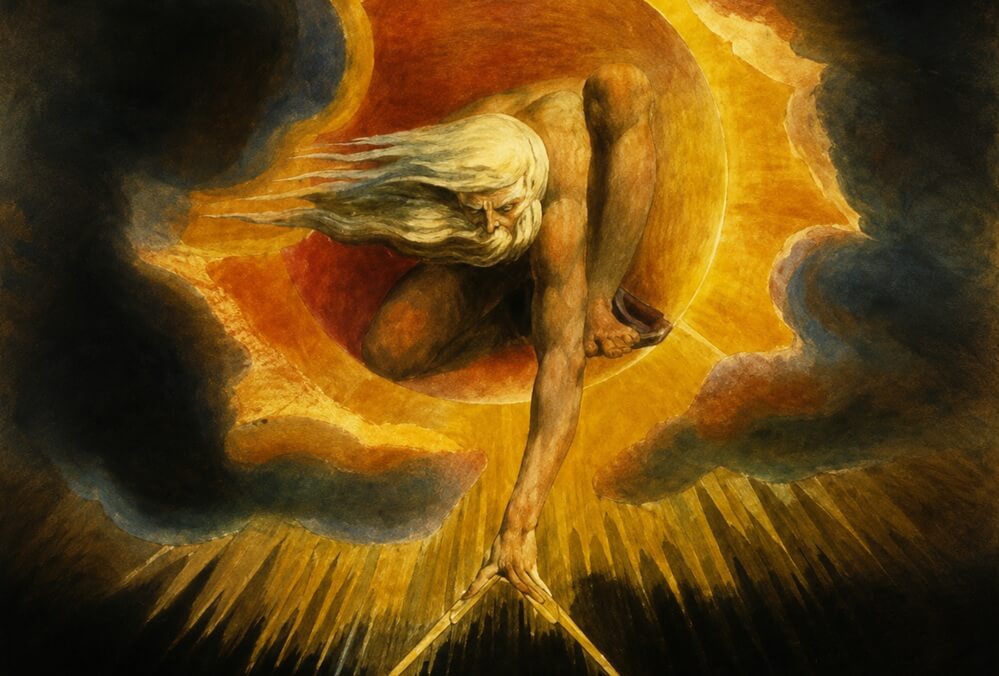
One of the aeons is Sophia—Wisdom. In her ignorance, she desired to create worlds like those of the supreme God, but she failed in this attempt and instead gave birth to a monstrous being in the form of a lion-headed serpent, named Yaldabaoth. He became the false god (the Demiurge) of the world. Yaldabaoth—identified with the biblical YHWH—cried out: “I am the only God, and there is no other beside me.” Yet he betrayed himself with the word “jealous.” For how can a god be jealous if he is truly alone? Then a voice was heard from above: “Man exists, and so does the Son of Man!”
Sophia tries to rid herself of what she created in her ignorance. She encloses the creature, Yaldabaoth, in a cloud of light and sets him upon a throne of honor—but it is already too late. Yaldabaoth, the first archon, draws power from her and goes on to create twelve other false beings (false aeons), called archons, who join him. He appoints seven of them as rulers over the seven heavens and five over the abyss. The archons then create angels, and with them begins the formation of the material world—a creation that is, in fact, a cosmic accident.
At the end of the process, Yaldabaoth creates a physical man to serve him. Yet during this act, Sophia manages to correct her error by placing the spirit of the spiritual man, Adamas, into the physical man. From this moment on, those who come to know their higher self are able to break free from the rule of Yaldabaoth, attain enlightenment, and, in doing so, repair the world and restore it to its original state. But not all people are the same: some possess a spirit, while others do not. Among them are the children of Seth—the children of light—and, in contrast, the children of Cain and Abel, the children of darkness.
The aeons dwell within the children of Seth in a dormant state, awaiting the time when they can be freed from the physical body and restored to their existence in the original spiritual man—Adamas. For this purpose, they are willing to endure all suffering. Meanwhile, the primordial thought that existed before creation appeared in the world in the figure of Jesus, in order to awaken humanity. It descended into the heart of the dark material world and spoke to John through Jesus. Sealed with five seals against death, it ascends in light from the waters to the supreme God. Before doing so, it imparts the spiritual knowledge to the race of Seth—and it is their duty to pass it on.
The existence of the Archonites in Jerusalem in the 4th century CE, and the connection between Gnostic teaching, Essene tradition, and ancient Hebrew mysticism, suggest that there may have been other Gnostic groups and teachers in Jerusalem at least in the early stages of Christianity, and that they possessed books similar to those later discovered at Nag Hammadi in Egypt. Such esoteric writings may have been preserved by individuals within the monastic movement.
With the acceptance of the decisions of the Council of Nicaea and the onset of religious persecution, the Gnostics went underground, and it is possible that they continued as secret fraternities within the monasteries of Jerusalem and the Judean Desert. In this context, the spiritual teacher Gurdjieff, who visited Jerusalem at the beginning of the 20th century, recounts the existence of a secret Essene school in one of the monasteries near the city (see the chapter on Gurdjieff in the third book).
References
[1] Halperin, D. J. (1988). The Faces of the Chariot: Early Jewish Responses to Ezekiel’s Vision. Tübingen: Mohr Siebeck
[2] Kurt, J. (1990). Theological interpretation of Scripture: Origen and beyond. Cambridge University Press.
[3] Eliade, History of Beliefs, Vol. 2, p. 275. (Hebrew)
[4] Eliade, History of Religious Ideas, Vol. 3, p. 41. (Hebrew)
[5] Calo, S. (1994). The Unknown Gospel: (The Gospel of Thomas). Jaffa: Da’at – Know Thyself Always.
[6] Pagels, E. (1979). The Gnostic Gospels. Random House.
[7] Robinson, J. M. (Ed.). (1977). The Nag Hammadi Library in English. Harper & Row.
[8] Steiner, R. (2013). The Fifth Gospel: From the Akashic Record (A. Welburn, Trans.). Great Barrington, MA: SteinerBooks. (Original work published 1913)