Early Sufis and Jerusalem
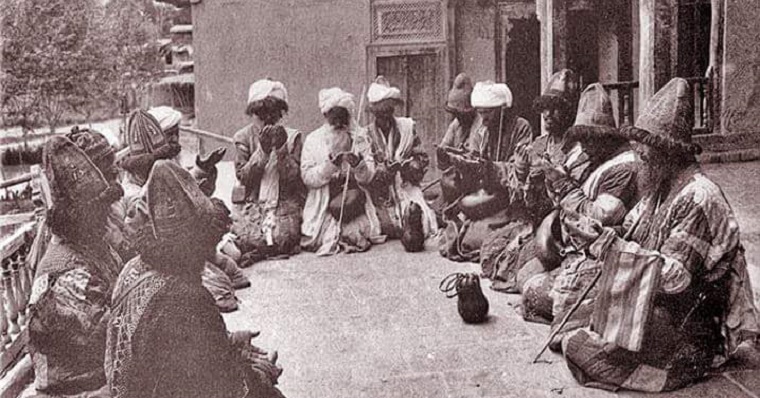
Towards the end of the 8th century CE, holy individuals began to appear throughout the Middle East, claiming to possess mystical knowledge passed down to them from the Prophet Muhammad, who conveyed an open teaching to all believers and a hidden teaching (including the esoteric meaning of certain Qur’anic verses) only to those close to him. They were called Sufis (or Dervishes), named after their attire. According to Ofer Livne-Kafri, many of the figures associated with the literature praising Jerusalem are described as wearing coarse wool (sūf), which was the garment of the solitary monks and later became the attire of the Sufis [1].
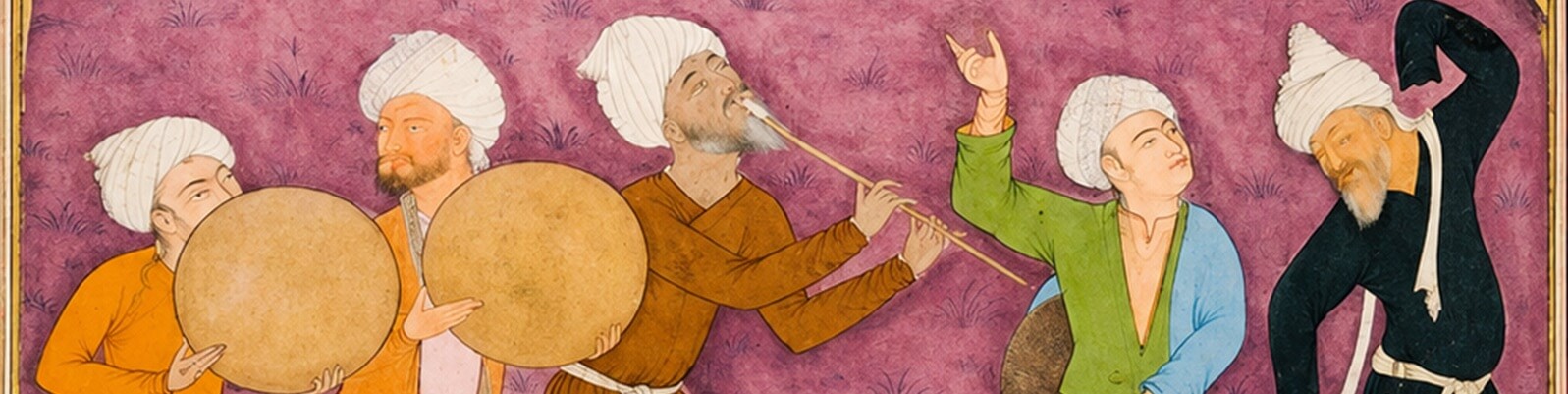
According to some versions, the Land of Israel was the place where the first Sufis appeared. The first Sufi center in the world was in Ramla. One of the reasons for this is that the Sufi movement drew its inspiration from the Christian monastic movement, which was widespread throughout the Middle East, particularly in Egypt, the Judean Desert, and Israel. The Sufis themselves claim in several places, and some Jews have supported their claim, that they are the successors of the companies of prophets that roamed the land in biblical times, dancing, singing, reaching ecstasy, and prophesying.
The important Muslim historian of the 14th century, Ibn Khaldun, wrote: “The way of life adopted by the Sufis was in practice from the beginning of Islam and was widespread among the Prophet’s Companions and their disciples, and was considered to be the path of truth and guidance. It was based on devotion and singling out God and renouncing the honor and pride of this world, and regarding nothing—pleasures, wealth, and fame. It included seclusion for the purpose of prayer. Nothing was more widespread among the Companions and others of the believers in the early days, and when the love of the world spread in the second century of the Hijra and later, and most people allowed themselves to be drawn into the world’s turmoil—those who adhered to piety were called Sufis” [2].
Jerusalem was an important center for the Sufis from the beginning of the Muslim period: in the Muslim Quarter, there is a street named after Bayazid al-Bastami, one of the first to reach the state of “annihilation” in God. On the Mount of Olives, there is a maqām (shrine) in honor of Salman the Persian, and another maqām for Rābiʿa al-ʿAdawiyya—the poetess of Sufi love. Al-Ghazali visited Jerusalem and secluded himself in the Temple Mount mosque, and many other Sufi saints are connected to this place. More on these fascinating figures in the following sections:
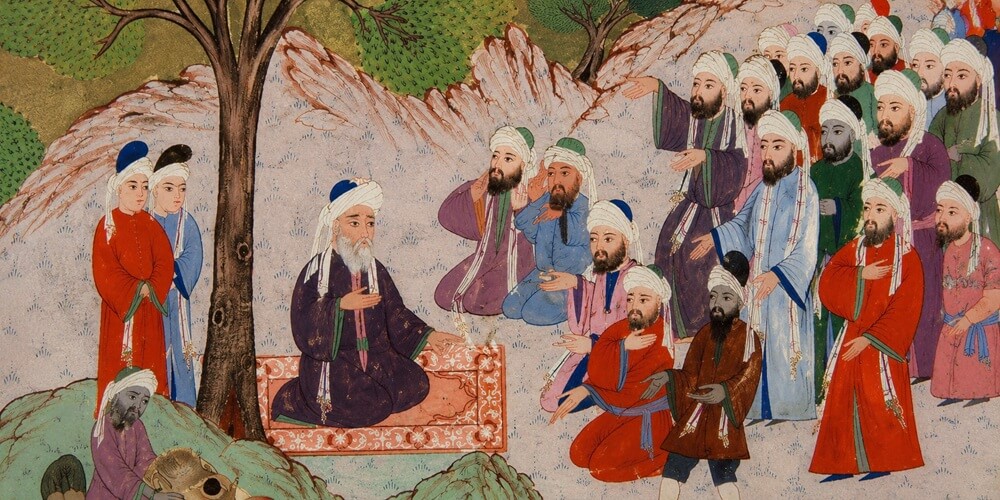
Bayazid Bastami
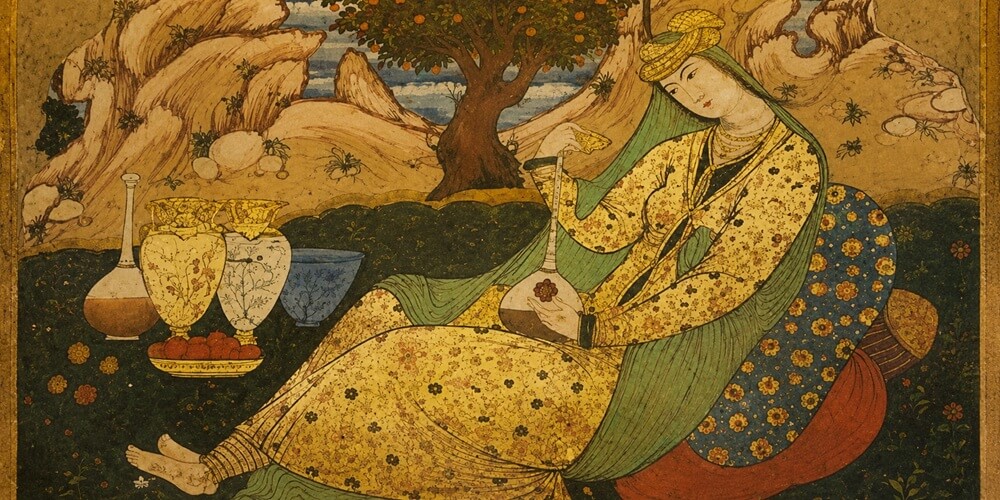
Rābiʿa al-ʿAdawiyya, the Poetess of Love
At the summit of the Mount of Olives is a cave where, according to the Muslim Sufi version, the saint Rābiʿa al-ʿAdawiyya (714–801) is buried. The main street of the Mount of Olives is also named after her, and for this reason, some claim that she visited Jerusalem and spent some time in this cave, secluding herself in her love for God. The scholar Margaret Smith, who worked in Beirut at the beginning of the 20th century, brought Rābiʿa’s teachings and persona to the West [3].
Rābiʿa was considered the second “Mary,” the herald of mystical love in Sufism. Even today, when one wants to compliment a woman in the Sufi way, they call her “another Rābiʿa.” Rābiʿa loved God and God alone. Her sole desire was to be one with Him and with His will. She prayed constantly, day and night, and slept only a few hours. One of her famous sayings is: “O God, I do not worship You out of fear of Hell or fear of Your fire, nor out of desire to enter Paradise, but out of my love for You.”
Rābiʿa was born to a poor family, and her parents died when she was young. She was sold into slavery but was freed by her master, who one day woke up in the middle of the night and found Rābiʿa praying devoutly while levitating in the air, with a miraculous glowing lamp illuminating above her head. In her youth, she was a student of Hasan al-Basri, one of the earliest and most important Sufis. He was born in 642 in Medina to a woman who was close to the Prophet’s family, a second-generation of the Ahl al-Ṣuffa (People of the Bench), and received the hidden knowledge from the Ṣaḥāba, especially from ʿAli ibn Abi Talib. According to legends, he was an ascetic who emphasized the life of the hereafter, the vanity of this world, and the love of God, prayer, and devotion (he was the one who started the use of prayer beads and repeating the name of God). In addition, as far as we know, he was also a judge and a transmitter of tradition (Hadith). He died at the age of 86 (in 728), but before his death, he passed the torch of spirituality to Rābiʿa, who became the poetess of Muslim love.
At night, on the rooftop, she used to pray: “My Lord, the stars are shining and the eyes of men are closed, and kings have shut their doors, and every lover is alone with his beloved. And here I am alone with You.” She would stay awake all night until dawn, then fall asleep briefly and wake up startled, lest she had not praised Him enough. Her love for God so filled her that there was no room in her to love or hate anything else. When asked, “What is love?” she answered, “Love comes from eternity and returns to eternity.”
Rābiʿa lived and worked in Basra, Iraq. She lived alone, managed her household herself, and guided those who came to her, always open to helping people. However, as was the custom of the Sufis, she used to go out for periods of seclusion, and it is possible that as part of this, or as part of a pilgrimage to the holy sites, she visited and stayed in Jerusalem. Her “tomb” on the Mount of Olives is an underground room located beneath the place of Jesus’ ascension to heaven at the summit of the mount. It is part of a Second Temple-era structure, with large and impressive stones.
It is important to remember that the Mount of Olives is sacred in Islam—from it will begin the redemption, the resurrection of the dead, and the events of the Day of Judgment, and therefore it is natural that there would be graves of Muslim saints on it. At the same time, Christians identify the grave of Rābiʿa al-ʿAdawiyya as the grave of Saint Pelagia (see the chapter “Early Christian Saints,” first book), and Jews as the grave of Hulda the Prophetess. Three women in one mausoleum.
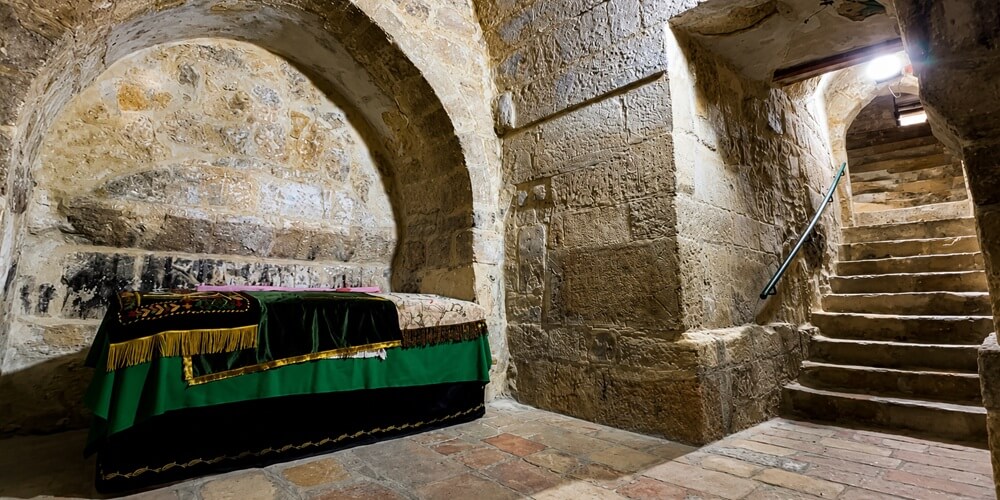
Tomb of Rabiʿa al-Adawiyya on the Mount of Olives, Jerusalem
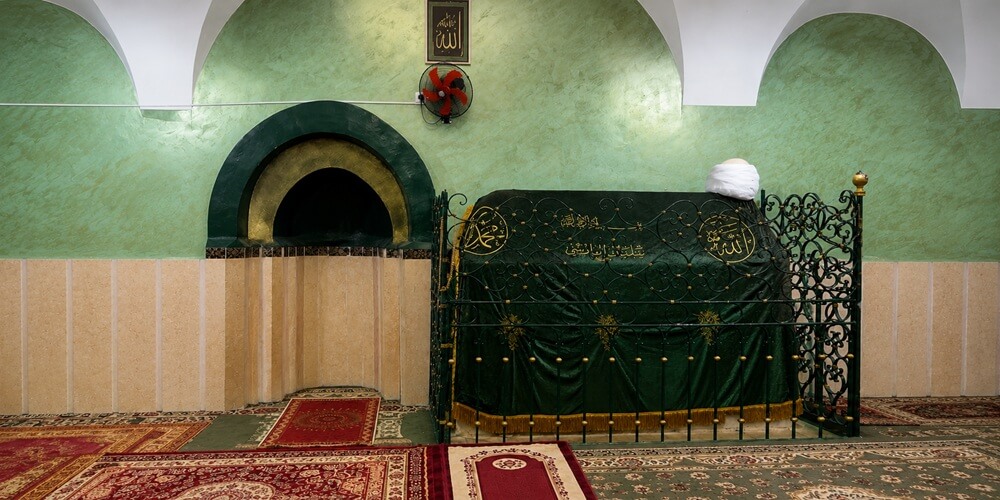
Salman the Persian on the Mount of Olives
Another Muslim saint who has a maqām on the Mount of Olives is Salman the Persian. In a street branching off the main street of the Mount of Olives and named after him, there is a maqām and a mosque named after Salman the Persian, one of the most important early Muslim believers, and a transmitter of the chain of spiritual knowledge and Baraka (spiritual energy) from Muhammad to the Shaykhs who would follow. According to various Sufi orders, as well as the Shi’ites, Druze, and Alawites, he is the most important of the Prophet’s Companions who was non-Arab; he had a crucial role in bringing Islam to the Persian world. The imam of this mosque in the years 1960–1995, whose grave is in the mosque’s courtyard, was Shaykh al-Qadiri Hashim al-Baghdadi, on whom we will elaborate in the third book.
Salman the Persian was born to a Persian noble family. His father wanted him to be a servant of the holy fire in the temple of Zoroaster—the dominant religion in Persia at the time. Salman entered the temple but failed to light the fire. When his father was angry with him, he fled and passed a monastery on his way. Something drew him to enter, and he became a Christian monk, probably of the Nestorian Christianity that was common in Persia at the time. Salman became the favorite student of the head of the monastery, and when he was about to die, he sent him to a solitary monk living in the deserts of Syria. There, Salman continued his spiritual initiation under the guidance of this monk and became a solitary monk himself. However, this teacher of his also died, but before he died, he directed him to go to Mecca and seek the next stage of his guidance there, and thus he told Salman: “No good people are left here. These are the days when a Prophet will appear in Mecca. Go there and find him.”
Salman set out for Mecca. On the way, he was captured by slave traders and sold as a slave in Medina. However, Abu Bakr, who sensed his spiritual qualities, freed him, and he became one of the Prophet’s close companions. According to another version, Salman heard that Muhammad was coming to Medina, and he turned to him asking to accept Islam, and as a result, he was released from slavery by Muhammad paying a ransom.
In any case, Salman symbolizes humility and purity for the Sufis. He was one of the first to wear the wool garment. He was very poor and did not deal at all with commerce and daily affairs, but served God all his days. When asked for help, he always responded. He advised Muhammad to dig the ditch in the Battle of the Trench (a battle in which the Muslims in Medina fought the army of Mecca, which was then opposed to Muhammad), advice by which the Muslims won the battle. Salman is the figure of the ideal believer, one of four wise men who recognized Muhammad. The Sufis emphasize his actions and words in their literature and try to imitate his way of life.
Salman also had an important role in the spread of Islam, especially among the Persians. He traveled all over the Middle East, persuading people to accept the religion of Islam. His official grave is in Iraq, but he has landmarks (maqām) in the Land of Israel. The most important is in the settlement of Yitzhar in Samaria, but there is also a mosque in his honor on the Mount of Olives in Jerusalem.
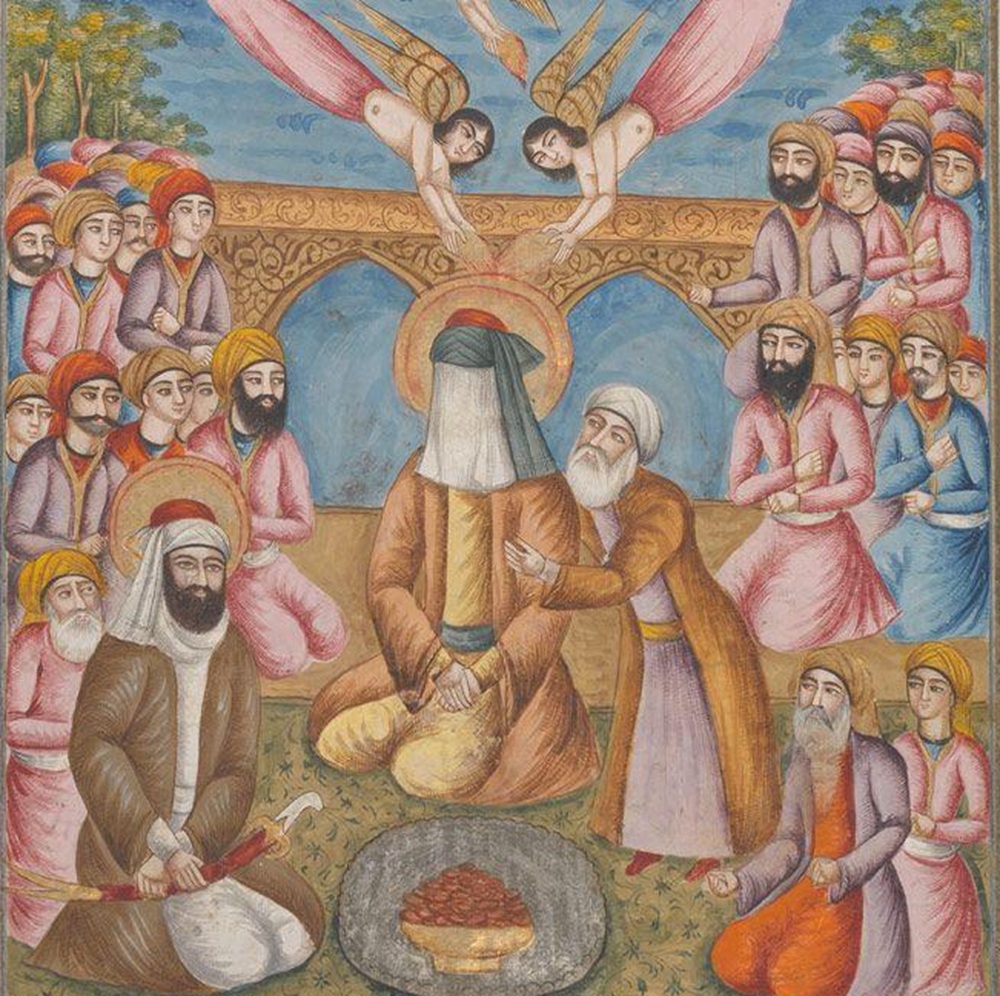
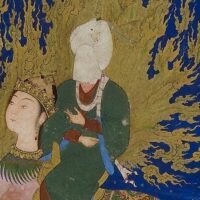
Salman al-Farsi Meets the Prophet Muhammad
Ibrahim ibn Adham: The Muslim Buddha
Ibrahim ibn Adham (d. 782) was a Muslim prince who became a famous ascetic and mystic. His story is somewhat reminiscent of that of the Buddha. He traveled all over the Middle East, the Levant, including the Land of Israel, somewhat like a wandering dervish. His life is shrouded in legend, and therefore it is not clear how and where he died, and there are several places identified as his burial place, as is common in other cases in Islam. One of his grave markers is located in the area of Jeremiah’s Cave in East Jerusalem, outside the walls. According to tradition, Ibrahim said about his time: “These are times of punishment, leave this world with all its oppressive inhabitants and go out to the Holy Land and these mountains…” and he pointed his hand towards the mountains of Jerusalem.
Ibn Adham was from a royal family in Balkh in northern Afghanistan. His father went on a pilgrimage to Mecca, and Ibrahim was born there. He carried the baby around the Kaaba and asked the masses to pray for him. The boy grew up as a prince. One day, while hunting, he heard a heavenly voice saying to him: “O Ibrahim, is this why I created you?” Out of fear, he fell from his horse. This happened three times, and then a voice spoke to him from before his saddle: “Truly I did not create you for this, nor will you die in this state.” Ibrahim dismounted his horse and met one of his father’s shepherds. He took the man’s wool clothing and put it on, paid him, and with nothing in his hands began to walk toward Mecca.
According to another version, one of Ibrahim’s students once asked him: “What caused you, a king’s son, to leave this world and seek eternity?”
And he recounted: “One day, as I sat in the Dīwān of the palace with my servants around me, I looked out the window and saw a beggar outside eating dry bread that was soaked in water and seasoned with salt. After the beggar satisfied his hunger, he prayed and went to sleep. I asked for him to be called and sent one of my servants to him. The beggar, when he heard that the lord of the palace wished to speak with him, said: ‘In the name of God, there is no lord and no power but that of God, but I will come.’
I asked the beggar: ‘Was your hunger satisfied by the piece of bread?’
And he answered yes.
I asked him: ‘Do you sleep well, without worry or sorrow?’
And he answered yes.
I thought about the beggar’s answers and my dissatisfaction with my life, and wondered how he could be so content. That same night, I removed my royal clothes, put on the clothes of the poor, and left the palace to live a life of poverty and wandering, like the beggar. At first, I made my way to the desert. And then a knowing man joined me, who, through prayer, could make water and provisions appear. That man taught me the secret divine names, and then disappeared.

Mad with fear, I called out to God by His Name, and immediately someone appeared beside me and said: “Ask, and it shall be given to you.”
The man said: “I am your brother Khidr, and it was my brother Dawood who taught you the secret names. I will direct you to call upon God so that He will strengthen you whenever you need.” (Khidr is the guide of souls in Islam).
And so, I remained in the desert for four years while God provided my needs, and Khidr advised and taught me. My heart became empty of everything except God.”
After the encounter with Khidr and the seclusion in the desert, during which Ibrahim achieved enlightenment, he went on a pilgrimage to Mecca, where he met important Sufi teachers. He then went to Syria and lived there as a famous Sufi saint, eating only what he grew himself, and spending the nights in prayer. According to the legends, he surpassed every person in love, knowledge, and companionship.
Junayd says that Ibrahim was the key to the Sufi doctrine. Some connect him to Muhammad’s family through the Shi’ite Imams or the Caliph ‘Umar. Rumi dedicates many verses to him in the Masnavi. The Sufis of the Chishtiyya order believe that he was one of their chain of Shaykhs, as do the Naqshbandi Sufis. In contrast, there are those who claim that he is a legendary figure who did not exist in reality. According to the tradition of the Naqshbandi order, Ibrahim taught a Shaykh named Shaqīq al-Balkhī, who moved to Khorasan and was a significant factor in the creation of the Malamatiyya current.
The burial landmark of Ibrahim ibn Adham is located in Jeremiah’s Cave, which is part of what is called the Prison Court complex, adjacent to the central bus station of East Jerusalem, across from the Flowers Gate (Herod’s Gate). In 1335, a Zawiya (Sufi lodge) of Dervishes from the Adhamiyya current was founded in the cave. At the entrance to the cave are the grave of Sultan Ibrahim and other graves, a mosque in his honor, an orchard, and a courtyard. Above the cave is a Muslim cemetery, which is why the Dervishes were called “the living beneath the dead.” This cemetery is considered the place where the resurrection of the dead will occur: “Indeed, after one sounding of the Trumpet, they will exit their graves” (Qur’an ʿAṭh 14). And indeed, the ancient name of the place is al-Sāhira (the Vigilant/Waking Ones), perhaps because of the connection to the practice of night vigils that Ibrahim ibn Adham practiced, similar to the Christian neptic Fathers (the Vigilant ones), or perhaps because the dead never sleep.
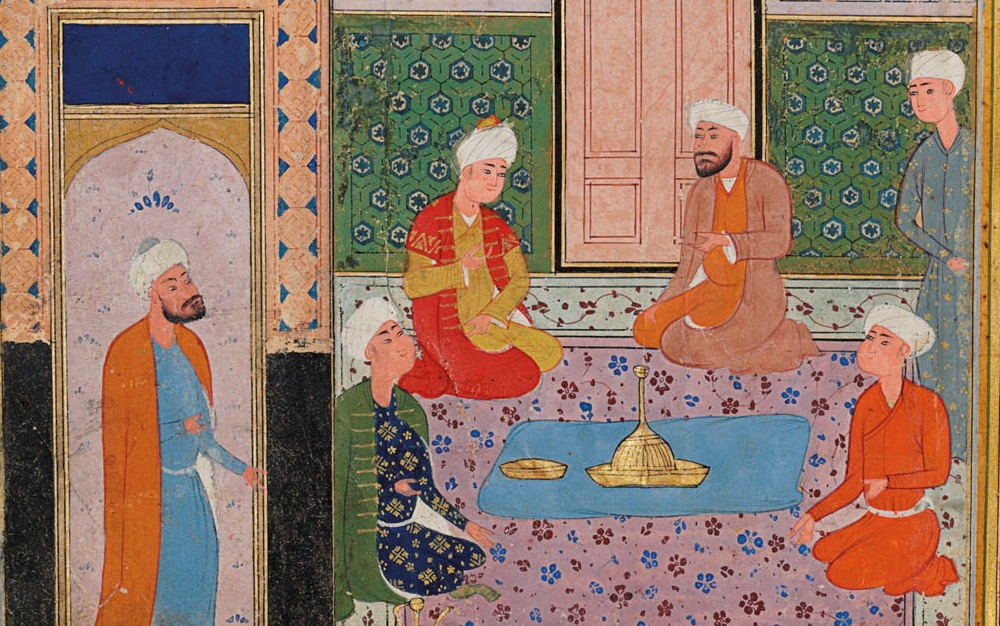
The People of Blame – Malamatiyya
Ibrahim ibn Adham initiates a psychological Sufi current called the Malamatiyya. Generally, from the 9th century onwards, Sufism developed in two main currents: one more “calm,” which is the Baghdad current of Junayd, which emphasized the observance of commandments and gradual learning and progress in spiritual states, and one more “wild,” led by people like Bastami, al-Hallaj, and others, which emphasized the mystical union with God through ecstasy. In this current, the concept of shaṭaḥāt (ecstatic utterances) developed, which means living words of God. Sufis who reached a state of union with God would cry out such things as: “Worship me, how exalted I am!,” “I am God!” and others. But there was also a third current, which was the Malamatiyya.
The spiritual path of the Malamatiyya developed in Central Asia from the 9th century CE as an independent spiritual system within the Sufi world, and its essence revolved around the claim that sometimes it is a greater sin not to sin than to admit one’s weaknesses and sin, because the greater sin is the sin of pride. This is the only sin that separates a person from God. Minor sins help a person understand that they are not perfect and to be humble. The dangers lying in wait for a person on the spiritual path are greater than those facing a person who does nothing. The devil is elusive and knows how to find convoluted ways to the human heart.
It is told that Moses one day complained to God about the weaknesses of human beings.
“Go and bring Me the worst among them,” God told him.
Moses began to wander among the people. He met a stingy old man, but when he wanted to bring him before God, he saw that he was sharing crumbs with the birds in the morning. He met a cruel murderer, but when he wanted to bring him before God, he saw that he was petting a cat that had sat on his lap. He met swindlers and thieves, rapists and robbers, but in each of them there was also some good quality.
Finally, having found no one he could define as the worst, Moses decided to bring a stray dog before God, but since it followed him faithfully, Moses gave up on this attempt as well and approached God with courage. “I am the worst,” he said, “because I have sinned the sin of pride. I thought I was better than others.”
“If you had not reached this conclusion, you could not be a Prophet,” God answered him, happy that Moses had finally learned this important lesson, which is essential for leading people and reaching spiritual enlightenment.
The Malamatiyya current began as a protest against the false piety and pride of the ascetics on the one hand and the hedonism and materialism of the rulers on the other, and was led by Shaykhs such as Abu Sa’id, al-Qushayri, and al-Sulami, as well as poets like Omar Khayyam, Sanai, Attar, Rudaki, and others. The center of the movement was in Khorasan, and it continued to develop in the 10th–11th centuries through the great teachers and orders that were created in that area over the generations. The emphasis was on internal psychological introspection, while trying to understand the weaknesses within us and striving to overcome them.
Another story that reflects this approach: “It is told about a king who went out to look for one of the pious recluses. When the recluse learned that the king was near, he asked for food and vegetables to be brought to him, and began to devour them ravenously and coarsely. When the king saw him doing this, his value immediately diminished in his eyes and he turned away. The recluse said: ‘Blessed is He who has rid me of him'” [4].
The stories of the Malamatiyya resemble a current that existed among the Christian monastic movement in the deserts of Judea, Jordan, and Syria a few centuries earlier. The Syrian monks were in part ascetics who sought hardship and self-mortification as a way to experience and share in Jesus’ fate and as a way to develop willpower that overcomes the limitations of the physical body; they performed impossible things, like the fakirs in India. However, some of them were not satisfied with physical asceticism and also sought psychological asceticism, overcoming the ego. They pretended to be insane during the day so that people would despise them, and thus share in Jesus’ fate. At night, they would pray and purify themselves. The idea was to work against self-pride. The most famous of them was a monk from the 6th century called Simeon the Holy Fool.
He lived until the age of 39 as a monk in the Judean Desert and the Monastery of Gerasimus near the Jordan, but then, by divine inspiration, he decided to go to the city of Homs in Syria. He entered the city dragging a dead dog to the cheers of the children, filled his pockets with pits and walnut shells, and proceeded to the nearby city church. Upon arriving, he showered a heap of shells and pits onto the church candles, in the middle of the prayer, until he managed to put them all out, to the horror of the believers. But he did not stop there; he climbed onto the preacher’s stage and continued to shower his shells from there, aiming at the women. Only one man in the audience refused to be impressed by the crazy spectacle and assumed that before him was only a monk pretending to be insane; this man invited Simeon to be his guest. The strange guest began to fear that he might still commit the sin of pride, which would result from the honorable hospitality, and decided, on the spot, to repay the man in kind. At night, he sneaked into his wife’s bed, making sure to do so in a way that would be caught red-handed. Simeon was thrown out of the house to his satisfaction. And the man who invited him swore that there was no greater villain than him. Which made Simeon even happier [5].
It is worth mentioning in this context that Salman the Persian was directed to reach Mecca by a Christian monk, and even in the funny case above, we see a transfer of spiritual traditions from Christianity to Islam.
Footnotes:
[1] Livne-Kafri, Ofer, “Jerusalem – ‘The Navel of the Earth’ in Islamic Tradition,” in: Studies in the Status of Jerusalem in Early Islam: A Collection of Articles, Jerusalem: Yad Izhak Ben-Zvi, 2001, pp. 78-109.
[2] Abd al-Rahman Ibn Khaldun, Prolegomena to the Science of History (“Muqaddimah”), Bialik Institute, 1966, Second Edition 2002.
[3] Smith, M. (1994). Rabiʿa: The Life and Work of Rabiʿa and Other Women Mystics in Islam (Mystical Classics of the World). Oneworld.
[4] Al-Kharqūshī, Ta’dhib al-Nufūs (Disciplining the Souls), appears in Saviri Sarah, The Sufis – An Anthology, Mapah Publishing, p. 42.
[5] Peña, I. (1992). The amazing life of the Syrian monks in the 4th–6th centuries (J. Sullivan, Trans.; R. Bonanno, Ed.). Milano: Franciscan Printing Press. (Trans. of La desconcertante vida de los monjes sirios, siglos IV–VI).