Ismailism
In 969, the Fatimid forces conquered Jerusalem and ruled it for over a century, until 1073—and for an additional year in 1098, just before the arrival of the Crusaders. This marked the first (and last) time that Jerusalem was under Shiʿite Muslim rule. This important period witnessed remarkable developments in the city. The purpose of this text is not to provide a historical overview but to present the spiritual traditions that emerged in various historical periods. In the case of the Fatimids, these traditions were linked to the Ismaʿili stream, so we begin by describing this movement.
Ja’far al-Ṣādiq was one of the most important Shiʿite Imams and is also recognized by Sunnis as a learned and exemplary figure. He was the sixth Shiʿite Imam, active during the transition from the Umayyad to the Abbasid Caliphate (mid-8th century). He established a kind of religious academy in Medina, where secular subjects such as mathematics, philosophy, and astronomy were taught, as well as esoteric disciplines like alchemy. Among his students were Abū Mūsā Jābir ibn Ḥayyān (the most famous and influential Arab alchemist), Wāṣil ibn ʿAṭāʾ (founder of the Muʿtazila movement of rationalism), Abū Ḥanīfa (founder of the Ḥanafī school of Sharīʿa), and Mālik ibn Anas (founder of the Mālikī school).
Ja’far al-Ṣādiq had a son named Ismāʿīl, who was intended to succeed him but died before him. That son had a child named Muḥammad al-Maktūm ibn Ismāʿīl, and according to the Ismāʿīlīs, he was destined to be the seventh Imam. However, after al-Ṣādiq’s death, a struggle for succession arose among his sons, and Muḥammad went into hiding. The majority of Shiʿite believers accepted Mūsā al-Kāẓim, another son of Jaʿfar al-Ṣādiq, as the seventh Imam, followed by five more Imams—twelve in total—forming what is today the dominant branch of Shiʿism (the Twelvers). The minority, however, who believed in the sanctity of Muḥammad al-Maktūm, did not accept this. According to their belief, Muḥammad vanished and will return at the End of Days as the Messiah. Meanwhile, his descendants established a line of Imams—a kind of secondary rank—which eventually developed into the Fatimid dynasty.
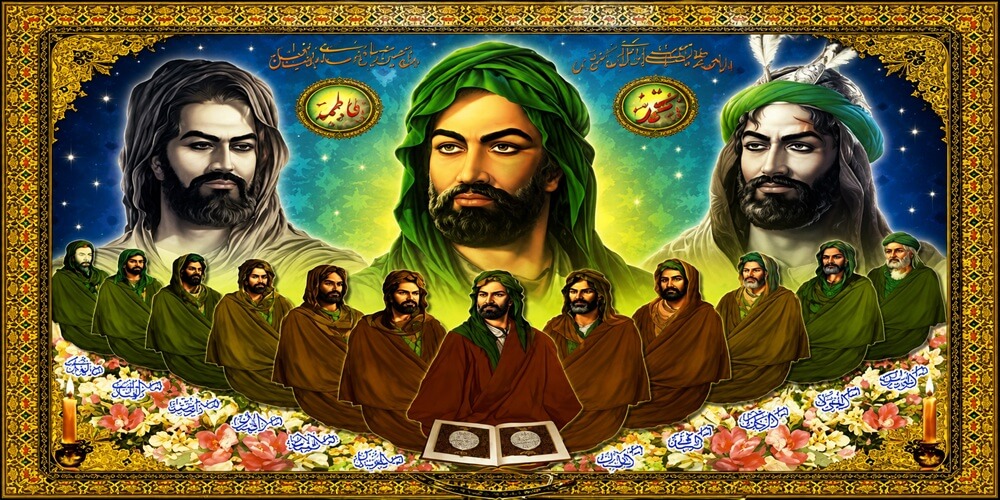
The difference between Ismāʿīlism and the rest of Shiʿism lies not merely in the personal identity of the seventh Imam but, more significantly, in the symbolic importance of the number seven. According to the Ismāʿīlīs, this number is not arbitrary but deliberate and filled with meaning. The world is structured upon seven emanations of truth and creation. The supreme divine source is abstract, while the seventh emanation is the earthly realm of human beings. The path to God, therefore, proceeds through abstraction and the realm of the Idea—through the Intellect, which forms a seven-rung ladder. The Ismāʿīlī doctrine bears a clear resemblance to the Neoplatonic and Hermetic teachings that flourished in Alexandria in the 2nd–3rd centuries CE [1].
According to their belief, human history is also divided into seven epochs, each associated with the appearance of a great prophet. The last of these is Muḥammad ibn Ismāʿīl—the Messiah—who is regarded as even greater than his predecessor, Muḥammad, the founder of Islam. The seven prophets who each inaugurated a new era are Noah, Abraham, Moses, Jesus, Muḥammad, ʿAlī, and the final prophet, Muḥammad ibn Ismāʿīl, who is viewed as a messianic figure destined to return at the end of time as the Mahdī (al-Qāʾim). The Mahdī unites within himself the roles of both prophet and successor. In the meantime, he is said to be in concealment in Byzantium, from where he will one day return and bring with him a new and renewed Sharīʿa that will annul the previous one. Until that time, his path is continued by seven descendants—Imams who follow in his line.
The prophet is called the Nāṭiq (“Speaker”)—the Universal Intellect that manifests itself in a historical personality. He is aided by the Universal Soul, which also takes human form and is called the Asās (“Foundation”), whose role is to reveal to the prophet the esoteric doctrine—the hidden interpretation of all the Holy Scriptures. Thus, beside every prophet stood a kind of hidden helper or “silent one,” who assisted him solely in matters of esoteric teaching: Aaron aided Moses, Peter aided Jesus, and so on.
According to Yigal Granot, the most important principle in the Ismāʿīlī faith is Taʿlīm (“Superior Teaching”)—a supreme instruction that transcends the human realm and surpasses all mortal concerns. This supreme doctrine can be imparted only by the representative of the Divine on earth—the Imam—who is infallible. The Imam is mortal, yet he possesses a divine spark, which grants him ʿisma—immunity from error. Consequently, absolute devotion to the Taʿlīm and to the Imam is required.
The Ismāʿīlīs emphasize the distinction between Ẓāhir and Bāṭin—exoteric and esoteric knowledge. Every commandment possesses an inner meaning, and only this inner meaning brings salvation. One who follows only the external aspect falls into error. In its extreme interpretation, the external religion is seen as a punishment for humankind—it is the true Hell, disguised as Paradise.
God is without attributes, beyond comprehension, and indescribable by speech. He did not create the world directly and has no immediate connection with it, but acts through seven emanations: God, the Universal Intellect, the Universal Soul, Primordial Matter, Place, Time, and the material World. The verses of the Qurʾān possess both an explicit and a hidden meaning, which differ from the conventional interpretation—a kind of Kabbalah or secret Oral Torah.
There are seven degrees of initiation into the secret. The process of entry is gradual, leading the individual—through hints, deceptions, and the systematic cultivation of doubt—to absolute faith and obedience to the Imam. One who attains this stage, called istiqrār (“stability”), stands above all beliefs and is exempt from all religious commandments, for these are merely symbolic. Hell signifies ignorance, Paradise signifies the state of the soul that has attained perfect knowledge, and the resurrection of the dead is understood as the manifestation of the Ismāʿīlī Imam, also called the “Ruler of the Time.”
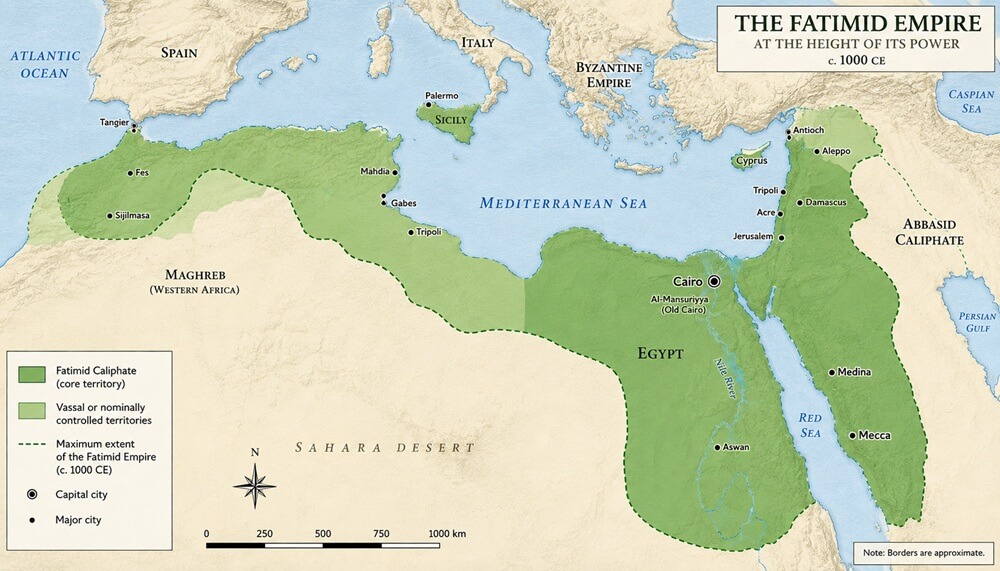
The Ismāʿīlīs maintained a network of propagandists throughout the empire, and several renowned figures—such as Ibn Sīnā, al-Bīrūnī, and Ferdowsī—were associated with them. They developed a system of secret societies, including the Brethren of Purity of Basra, who compiled a vast encyclopedia encompassing all the sciences of Islam. They also established the Qarmaṭian kingdom in the eastern Persian Gulf, which lasted for about two centuries (900–1100). Yet their greatest achievement was the creation of the Fatimid Empire in North Africa, which extended its rule over Egypt, southern Italy, and the Levant.
Over the years, the movement split, with a faction of the Ismāʿīlīs—mainly in Persia—supporting Nizār, who was meant to succeed his father, al-Mustanṣir, as the Fatimid Caliph but was dispossessed and murdered. The Nizārīs seceded and took control of the mountain fortress of Alamūt, south of the Caspian Sea, where they remained for about 150 years until the Mongol invasion. From among their ranks emerged the Ḥashīshīn (Assassins)—skilled political killers who spread terror throughout the Land of Israel during the Crusades.
Today, there are about 15–20 million Ismāʿīlīs worldwide, who long ago abandoned the ways of violence and now advocate peace. They are divided into several groups, the largest of which is led by the Aga Khan—a billionaire philanthropist with a Western education who resides in England. The Pamir Mountains region in Tajikistan is predominantly populated by Ismāʿīlīs.
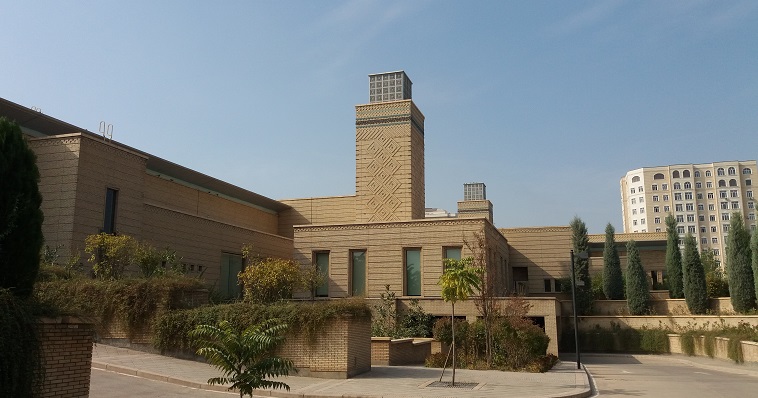
The Fatimid Kingdom
Shi’ite propaganda initially focused on the Middle East and gained many supporters in the Land of Israel. In this context, it is worth noting that Khumayma in southern Jordan was the city of the Abbasids, while the center of the Ismāʿīlī Shiʿite movement was in Syria. After the disappearance of Muḥammad ibn Ismāʿīl, his descendants continued the Imamate—the first three operating underground while simultaneously dispatching emissaries throughout the world. The fourth Imam, ʿUbayd Allāh al-Mahdī, sent one of his chief missionaries to North Africa. Remarkably, that man—Abū ʿAbd Allāh—succeeded in persuading the local Berber tribes to embrace the Shiʿite faith. As a result, ʿUbayd Allāh traveled to North Africa, overthrew the local dynasty, and established the Fatimid state in its place.
The new Fatimid state was regarded by the Ismāʿīlīs as a sacred realm ruled by a holy dynasty of prophets, heralding the return of a prophet even greater than Muḥammad—Muḥammad ibn Ismāʿīl, the Hidden Imam. This was the first time in Islamic history that a Shiʿite kingdom ruled by direct descendants of the Prophet was established; the first time a Muslim state was named after a woman—Fāṭima; and the first time the ruler was also seen as a prophet linked to the Divine Light.
Ubayd Allāh was the fourth Imam after Muḥammad ibn Ismāʿīl. Following three more Imams, when it became evident that the Hidden Imam was not planning to return—at least not in the near future—there arose a need to explain the existence of additional Imams beyond the traditional system, which recognized seven interpreters of the prophet of each generation. Thus, new theories emerged, suggesting that Muḥammad ibn Ismāʿīl would manifest himself through eighteen interpreters, culminating with the last Fatimid ruler, and so forth. This development led to a retreat from the notion of an imminent messianic expectation.
The subsequent Imams and rulers expanded the borders of the kingdom. The fourth Fatimid ruler, al-Muʿizz, conquered Egypt and the Land of Israel on the advice of his Jewish counselor, Paltiel the Head—an astrologer who was later buried in Jerusalem. Another Jew who played a crucial role in the rise of the Fatimid Empire was Yaʿqūb ibn Killis, a native of Ramla, who first rose to prominence at the Ikhshīdid court. He became al-Muʿizz’s close advisor and later served as vizier to al-ʿAzīz. There were also Jewish commanders in the Fatimid army, such as al-Fatḥ Faḍl ibn Ṣāliḥ. Encouraged by his Jewish advisors, al-Muʿizz established Cairo as the new capital of the empire.
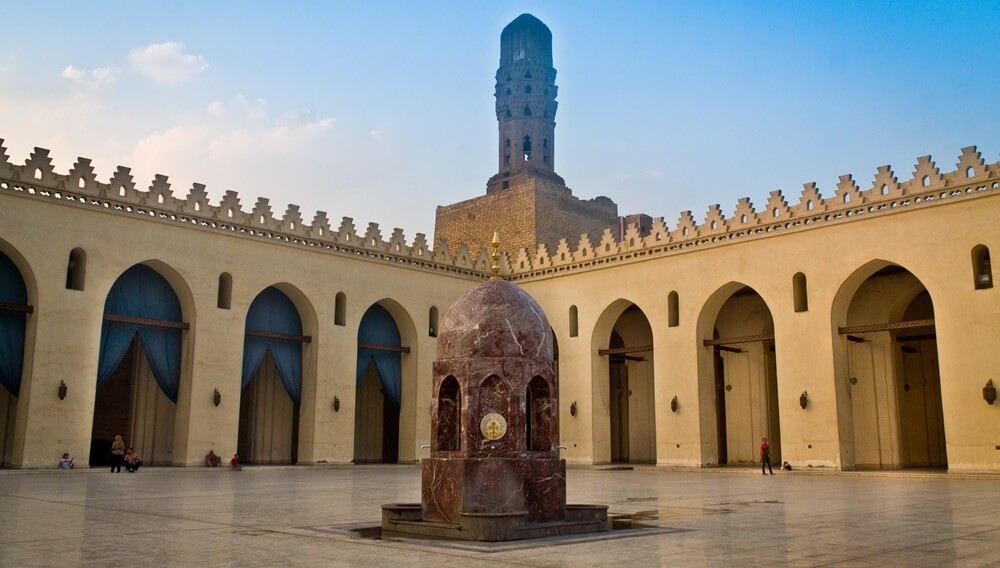
The Ismāʿīlīs were deeply devout and developed an institution of emissaries who spread their teachings throughout the Muslim world. In Cairo, the custom arose of holding weekly lessons and sermons, as well as the study of the Holy Scriptures. After al-Muʿizz, al-ʿAzīz came to power. This was a time of cultural renaissance, during which al-Azhar University was founded. The period was marked by religious tolerance and close relations among the different faiths. For example, the Patriarch of Jerusalem was the brother of the Caliph’s wife, the governor of Syria was a Christian, and important governmental positions were held by Jews.
With the conquest of Egypt, it appeared that the ancient Egyptian worldview had permeated the Fatimid movement, reinforcing the ruler’s status as the representative of God on earth. There was an increasing focus on the structure of the divine realms and the act of creation, on the esoteric interpretation of the Qurʾān, and on establishing an organized system for the propagation of the faith. The oral sermons evolved into a structured literary doctrine. This formed the background for the rise to power of the most eccentric and enigmatic of the Fatimid Caliph-Imams—al-Ḥākim—who was regarded by his followers as an embodiment of the divine and as a Hidden Imam inaugurating a new era.
The Druze believe in the divinity of al-Ḥākim, who is regarded as the founder of their faith. Yet he also possessed terrifying aspects. During his reign, Jews and Christians were persecuted, and many were compelled to convert to Islam. For Jerusalem, his rule proved disastrous—he ordered the destruction of all churches, including the Church of the Holy Sepulchre, the crowning glory of Christian devotion.
After the rule—and subsequent disappearance—of al-Ḥākim, his sister, Sitt al-Mulk, assumed power as regent for his son, ʿAlī al-Ẓāhir, and effectively ruled Cairo. She was a strong and exceptional woman who restored the rights of Christians and Jews, persecuted the Druze followers of al-Ḥākim, and reversed the policies of her brother by restoring order, justice, and economic stability to the realm. After two years, she died, and her nephew, Caliph ʿAlī al-Ẓāhir, formally ascended to power.
Ali al-Ẓāhir was the seventh Caliph of the Fatimid dynasty—a number of great symbolic significance in their faith. He ascended to power in 1021 at the age of sixteen but began to rule effectively and implement his own policies only at eighteen, and these stood in complete contrast to those of his father. Al-Ẓāhir reinstated the policy of religious tolerance and initiated the rebuilding of Jerusalem, focusing on two of its principal structures, which were intended to balance one another. First, he permitted the reconstruction of the Church of the Holy Sepulchre and concluded an agreement to this effect with the Byzantine emperor Romanos in 1029. Second, in 1034, he undertook the renovation of the al-Aqṣā Mosque, which had been damaged by an earlier earthquake.
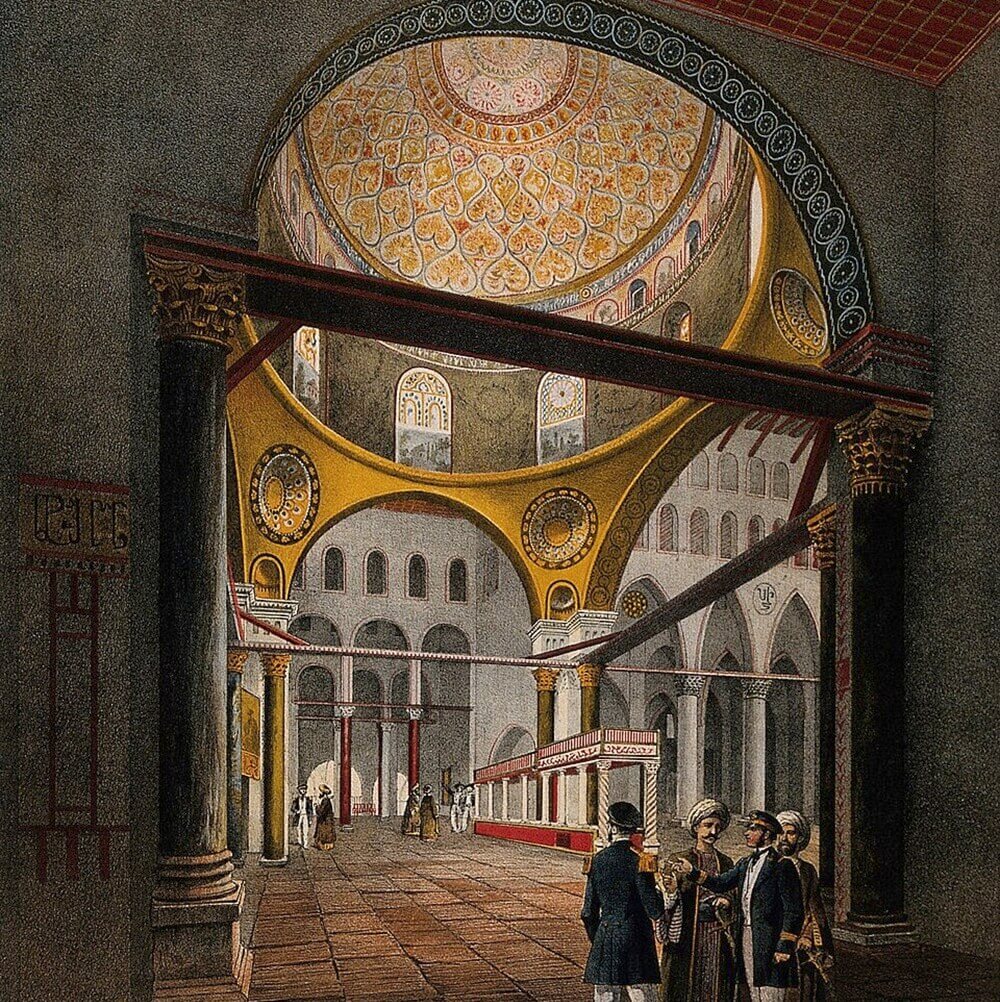
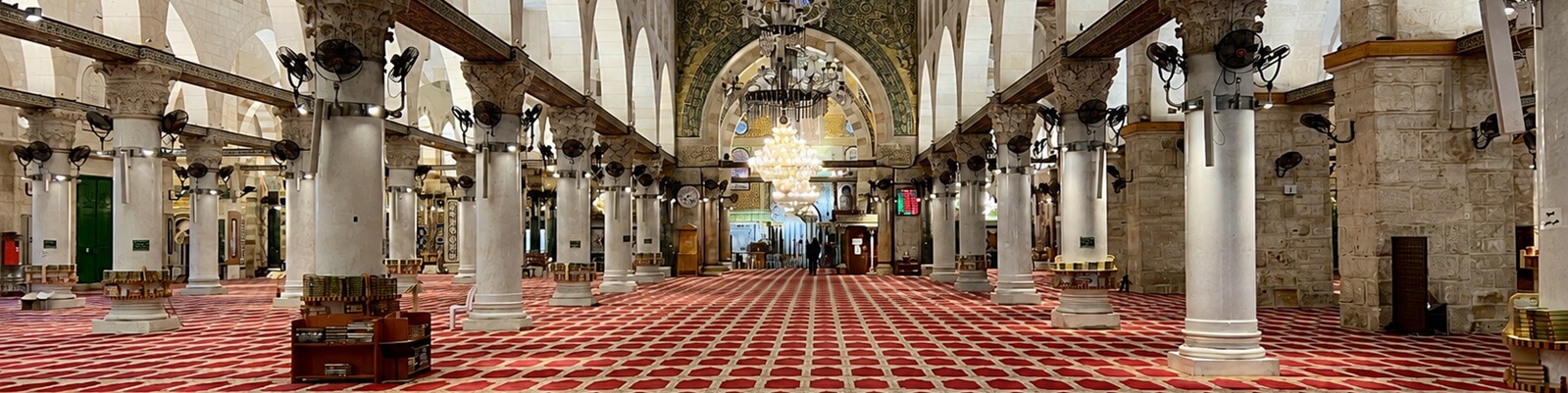
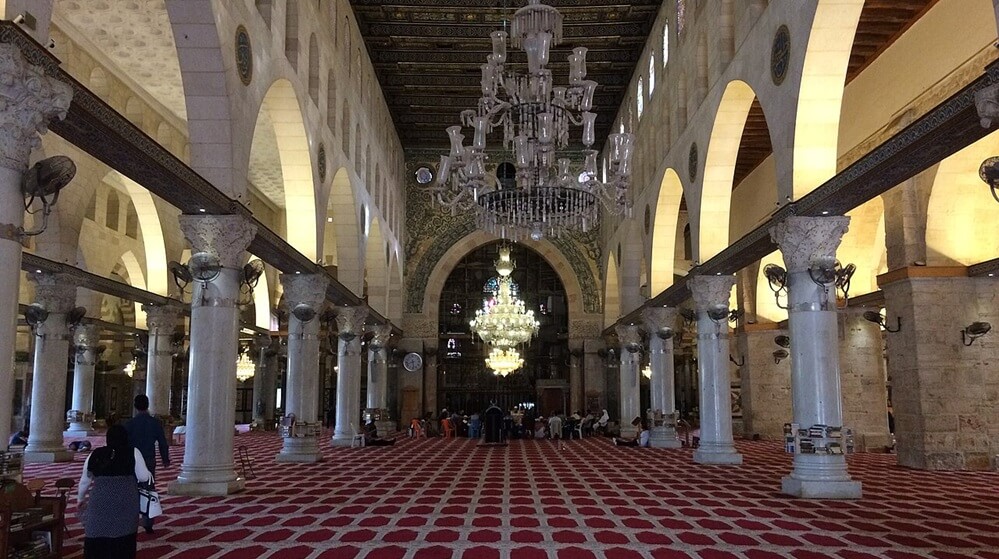
Al-Zahir rebuilt the al-Aqṣā Mosque to comprise seven longitudinal aisles instead of six. He installed seven arches at its entrance, with an inscription bearing his name on the central arch. The use of the number seven in the architecture was likely symbolic, reflecting the importance and centrality of Ismāʿīlī doctrine in one of Islam’s most sacred sites. Another element of Ismāʿīlī theology expressed in the new architectural design was that the dome constructed under al-Ẓāhir was made to be half the diameter of the Dome of the Rock’s dome—thus emphasizing the connection between the two and creating a duality of Sun and Moon, a key motif in Ismāʿīlī cosmology.
The three Fatimid rulers who followed al-Ẓāhir were weak and reigned only for short periods. By the end of the 11th century, a new force had become dominant in the Middle East—the Turkish soldiery. The Abbasid rulers had established military academies for youths of Turkish origin, who became the backbone of their armies and eventually took control of the Empire and the Land of Israel. Turkish tribes and armies entered the Middle East and founded new Muslim states. Thus, the Seljuks defeated the Byzantines in the decisive Battle of Manzikert in 1071, and in 1073 they conquered Jerusalem.
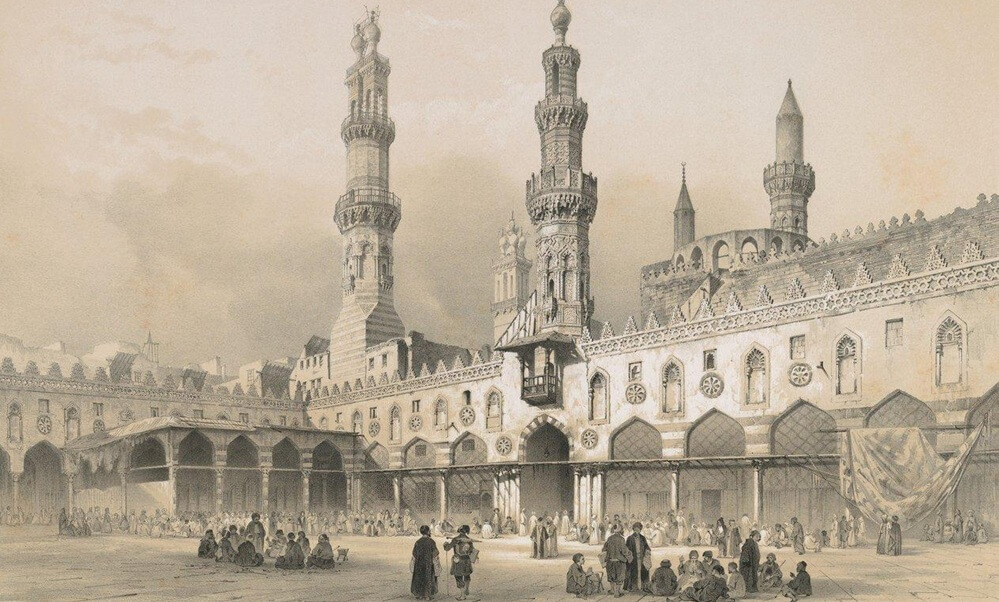 Al-Azhar Mosque in Fatimid Cairo, by Émile Prisse d’Avennes, 1869–1877
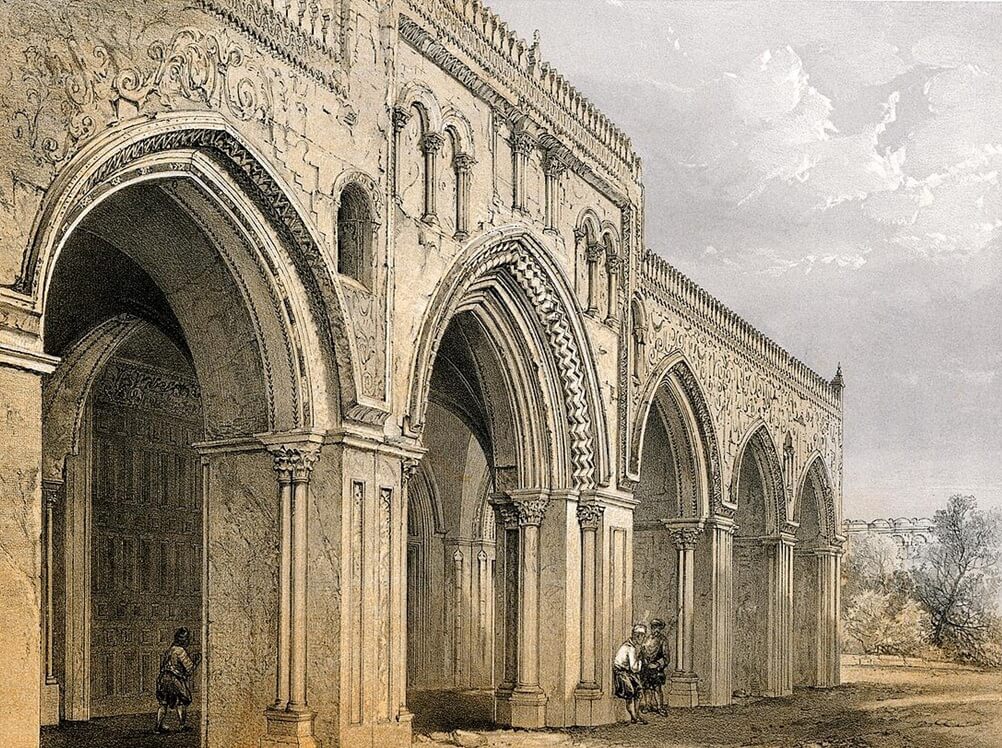
Al-Aqsa Mosque
On the Temple Mount plaza stand two principal structures: the Dome of the Rock (see previous chapter) and the al-Aqṣā Mosque. The Dome of the Rock is not a mosque but a place of pilgrimage, sanctification, and prayer, built to mark the site of the creation of the world and the Day of Judgment, continuing the Jewish and Christian traditions. Over time, the structure came to be identified with the place of Muḥammad’s Ascension to heaven during the Night Journey (al-Isrāʾ wa’l-Miʿrāj).
The tradition of the Night Journey, which developed in the 8th–9th centuries, gained increasing importance in the 10th–11th centuries with the consolidation of Sufi mysticism on the one hand and Ismāʿīlī Shiʿism on the other. Thus, on the Temple Mount plaza, two main focal points in the narrative were identified: the first is the site of the Ascension itself, upon which a kind of sanctuary was built—the Dome of the Rock—and the second is the site of Muḥammad’s prayer before his Ascension to heaven, where the al-Aqṣā Mosque was constructed.
The mosque is located south of the Dome of the Rock and borders the southern wall of the plaza, facing Mecca. It is not the Dome of the Rock, and therefore it holds immense significance. Initially, an ancient wooden mosque stood on this site, but over time—and alongside the construction of the Dome of the Rock during the reign of Caliph ʿAbd al-Malik and his son al-Walīd—a magnificent mosque was erected there.
Indeed, the al-Aqṣā Mosque is the “Farthest Mosque” (al-Masjid al-Aqṣā) mentioned in the Qurʾān: “Glory to Him who journeyed His servant by night, from the Sacred Mosque, to the Farthest Mosque, whose precincts We have blessed, in order to show him of Our wonders. He is the Listener, the Beholder.” (Surah 17, verse 1)
osque was destroyed by earthquakes at the end of the 8th century CE and rebuilt by the Abbasid caliphs al-Manṣūr and al-Hādī. It was again destroyed in 1033 and rebuilt by the Fatimid caliph ʿAlī al-Ẓāhir as part of the renewed and sanctified Fatimid construction program in Jerusalem. The Fatimid design has largely survived to this day.
In addition to the al-Aqṣā Mosque, al-Ẓāhir built additional structures on the Temple Mount plaza, renovated the Dome of the Rock, permitted Christians to rebuild the Church of the Holy Sepulchre, and restored the walls of Jerusalem. In other words, the rebuilding of Jerusalem was of great importance to al-Ẓāhir, emphasizing the uniqueness of Muḥammad and his Night Journey—perhaps as a counterbalance to the Druze heresy that had spread during his father’s reign.
al-Aqṣā Mosque is located south of the Dome of the Rock, that is, along the line connecting the Foundation Rock with the Black Stone in Mecca. Thus, a concept in Muslim sacred architecture emerged, known as the connection of the two Qiblas.
There is a clear relationship between the two structures—both architecturally and in their spatial orientation. The open view between them is accentuated by an impressive staircase and an arched structure emphasizing their visual and symbolic connection. The proportions of the Dome of the Rock, which was built first, are echoed in the al-Aqṣā Mosque: its dome is half the diameter of that of the Dome of the Rock. The interior decoration of the mosque’s dome resembles that of the Dome of the Rock, as do the vegetal motifs beneath the dome, found in its mosaics and windows.
According to Jennifer Pruitt [2], al-Ẓāhir added a complex array of mosaics, similar to those in the Dome of the Rock, which are rare for this period. He erected a dome before the miḥrāb—a rare architectural feature—and a monumental gate, a kind of triumphal arch, between the mosque hall and the space beneath the dome. The gate is adorned with exquisite decorations and Qurʾānic verses referring to the Night Journey, along with an inscription bearing al-Ẓāhir’s name and a blessing for his descendants—the dynasty of ʿAlī and Fāṭima.
Pruitt argues that the mosque embodies a new Fatimid conception of Jerusalem, emerging as a response to the destruction wrought by al-Ḥākim. Al-ʿAzīz, al-Ḥākim’s successor, restored stability and fostered a sacred harmony in Jerusalem between Christians and Muslims, showing respect for other faiths while simultaneously elevating the city’s status as the place of Muḥammad’s Ascension to heaven. He renovated the mosque, inscribed his name in its dedicatory inscription, added verses describing the Night Journey within it, and established an architectural connection both with the Dome of the Rock and with Ismāʿīlī philosophy.
Around the dome of the mosque are four small domed niches set within the pendentives supporting the main dome—a unique architectural feature found nowhere else. According to Oleg Grabar [3], these niches represent the four domes that the Fatimids constructed around the Dome of the Rock: the Dome of Joseph, the Dome of Gabriel, the Dome of the Spirits, and the Dome of the Chain. With the exception of the Dome of the Chain, which is considered ancient, the other domes are generally regarded as later additions. Yet, assuming they were originally erected by the Fatimids, the interior of the mosque can be seen as a kind of reconstruction of the sacred layout of the entire plaza—if not physically, then metaphysically—since in Paradise, four rivers are said to flow from beneath the Foundation Rock.
The mosque is vast and can accommodate up to 5,000 worshippers. Beneath it lie halls that were converted into another large prayer space, thus creating a mosque above a mosque. The Fatimid al-Aqṣā Mosque, following its reconstruction, was described and praised in glowing terms by Nāṣir Khusraw, one of the most important Persian poets, writers, and spiritual figures, who visited Jerusalem in the mid-11th century CE. It may be assumed that what he saw closely resembles what exists today.
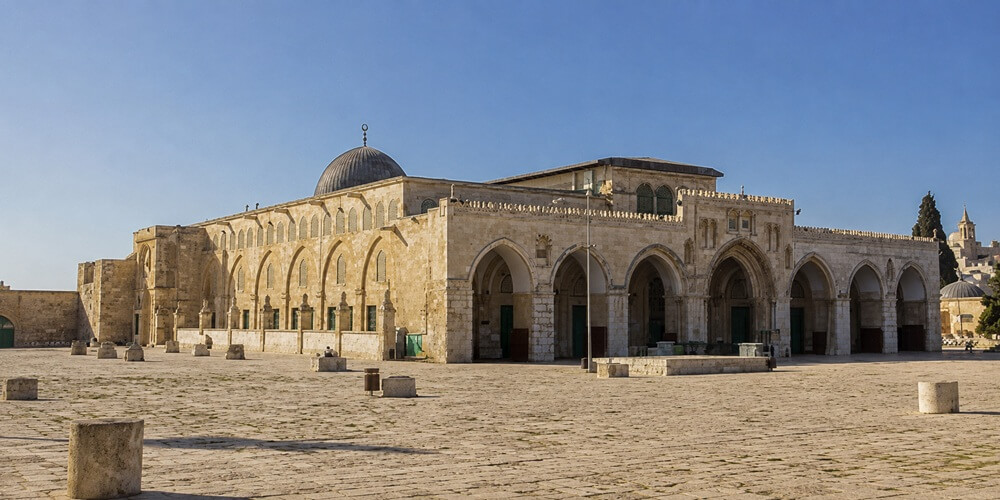 Al-Aqsa Mosque on the Temple Mount, Jerusalem – Exterior View
Footnotes
[1] Epstein, M. (2017). “Ismailism.” In M. M. Bar-Asher and M. Hatina (Eds.), Islam: History, Religion, Culture (pp. 353–366). Jerusalem: Magnes.
[2] Pruitt, J. (2017). “The Fatimid Holy City: Rebuilding Jerusalem in the Eleventh Century.” The Medieval Globe, 3(2), 35–56.
[3] Grabar, O. (1996). The Shape of the Holy: Early Islamic Jerusalem. Princeton University Press.