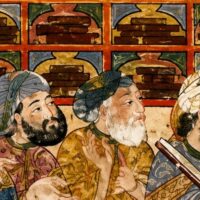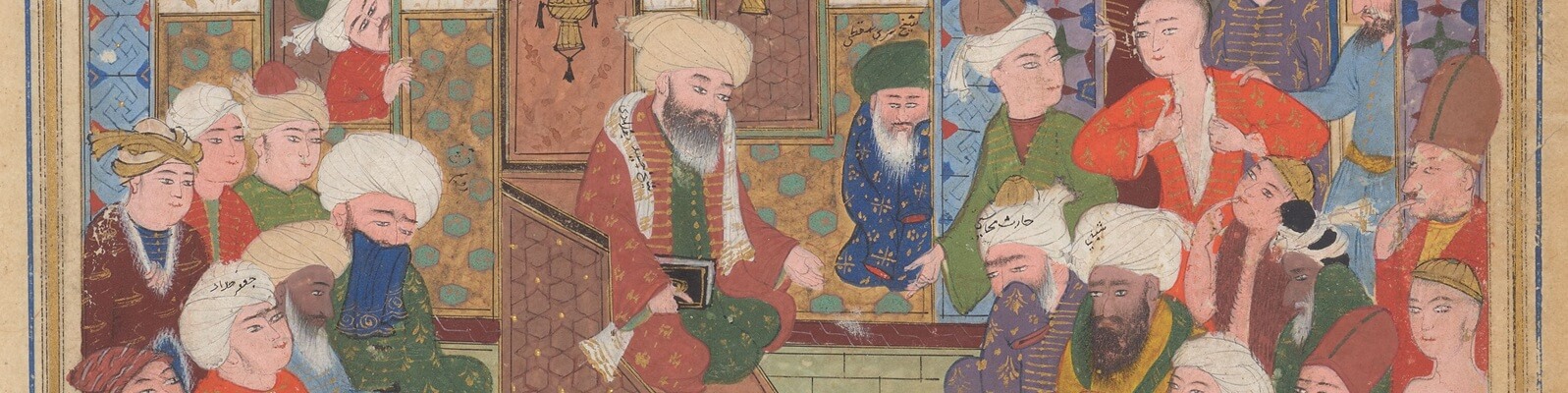
Bāyazīd Bisṭāmī – Annihilation in God (Fanāʾ)
Sufism during the Golden Age of the Abbasid Caliphate in Baghdad developed along two main currents: one was the sober, “calm” path of Junayd, which emphasized the observance of religious duties and gradual spiritual learning; the other was the ecstatic, “intoxicated” path associated with figures such as Bisṭāmī (844–879), who emphasized mystical union and the state of divine intoxication (sukr).
Bāyazīd Bisṭāmī was born and buried in Basṭām, in northern Persia, but was active throughout the Muslim world, apparently including Jerusalem. He was among the first mystics to reach the state of annihilation (fanāʾ)—death in God in order to be reborn in God (baqāʾ). This state was symbolized by the Night Journey of Muhammad and was therefore connected to Jerusalem as a heavenly archetype.
According to Eliade [1], “Bisṭāmī was the first to describe his mystical experience in terms of the Miʿrāj (Muhammad’s nocturnal ascent). He attained complete fraternity, and at least for a moment believed that he had achieved the absolute unity of the Beloved, the Lover, and Love itself. When he was in this state of ecstasy, Bisṭāmī uttered ‘theopathic expressions,’ speaking as if he were God Himself: ‘God examined all consciousnesses in the entire universe and saw that none were mindful of Him. Only in My consciousness did He see Himself in the fullness of His splendor.’ He reached a state of absolute unity of the Beloved, the Lover, and Love itself, during which he cried out: ‘I am God,’ or ‘Worship me, how exalted I am!’”
According to scholars of the Far East such as R. C. Zaehner [2], Bisṭāmī’s mystical experience was the result of Indian influence, transmitted through the Vedānta of Śaṅkara in Iraq, whereas Eliade attributes it to the influence of Yoga. In any case, Bisṭāmī attained the state of annihilation in God (fanāʾ), the highest degree of the spiritual path. Part of this experience is connected to a visionary journey he underwent—resembling that of Muhammad—during which he made a Night Journey and ascended through the heavens, learning the divine names and encountering ever more angels in each celestial sphere.
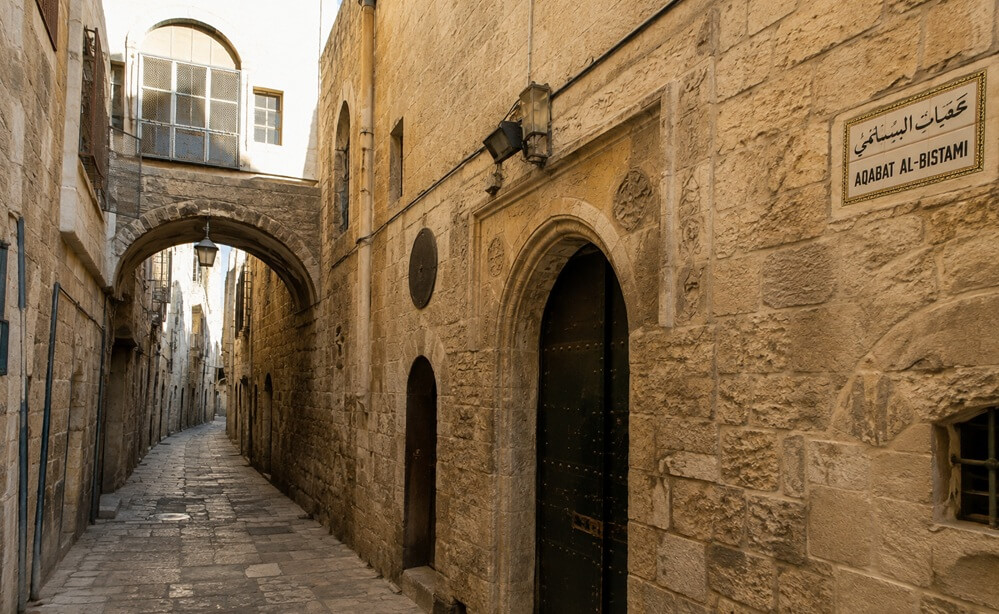
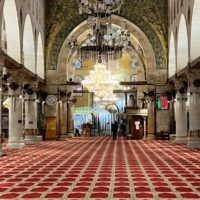
According to legend, Bisṭāmī spent a period of seclusion in the Al-Aqsa Mosque, immersed in meditation. A follower of the great Sufi Dhū al-Nūn al-Miṣrī came to Jerusalem at his shaykh’s command to convey his greetings.
When he found him, he said: “Peace be upon you, al-Bisṭāmī. I have come from Dhū al-Nūn, who sends you his greetings.”
He replied, “Who is that?”
The man said, “He is your friend and shaykh, O al-Bisṭāmī.”
Bisṭāmī replied, “Who is al-Bisṭāmī?”
The man said, “You.”
He replied, “Who am I?”
The follower returned to Egypt and told Dhū al-Nūn what had happened.
Dhū al-Nūn laughed and said, “May God have mercy on al-Bisṭāmī—he has reached the state of annihilation.”
And this is how he described the process he underwent:
“I divorced the lower world three times so that I could never return to it, and turned to God alone, without anyone else, calling upon Him alone for help, saying: ‘O Allāh, O Allāh, none remains for me but You.’ At that moment, the sincerity of my supplication was revealed to my heart, along with the reality of my ego’s helplessness. Immediately, my prayer was accepted. Then a vision opened before me in which I no longer existed, having completely vanished from myself into His Self. He restored to me all that I had renounced before and clothed me in His light and His attributes.”
at times he described the process of losing the self more poetically, like a Japanese Zen master: “The Righteous Allāh called me one day into His presence and said to me: ‘Bisṭāmī, how did you reach My presence?’
I replied: ‘Through zuhd (asceticism), by renouncing the world.’
He said: ‘The value of the lower world is like a mosquito’s wing. What kind of renunciation have you brought with you?’
I said: ‘O Allāh, forgive me.’ Then I said: ‘I came to You through tawakkul (trust in God), by dependence on You.’
He said: ‘Have I ever betrayed the trust I promised you?’
I said: ‘O Allāh, forgive me.’ Then I said: ‘I came to You through You.’
And Allāh replied: ‘Now We accept you.’”
Bisṭāmī turned the orthodox religious perception on its head, and thus he recounted: “One day I came to the Throne of Glory in the heavens and said to it: ‘Throne of Glory, it is said among us that God dwells in you.’
And the Throne replied: ‘Bisṭāmī, it is said among us that God dwells in the heart of the humble.’”
He also turned the Sufi mystical perception on its head, and thus he recounted: “One day I searched for my heart and did not find it, for it was lost in the love of God. When dawn came, I heard a voice saying: ‘O Bāyazīd, why do you seek anything but Me? What do you care for your heart?’”
Bisṭāmī taught people through wit and humor. One day he heard that one of his followers was looking for him. In response, Bisṭāmī sent him the following message: “My son, I have been looking for Bisṭāmī for forty years and still cannot find him.”
And in this same wondrous spirit, he said: “I sailed into the ocean while the previous prophets remained on the shore,” and also: “I shed my ego just as a snake sheds its skin, and then I looked at my essence, and I was He.”
Bisṭāmī scorned the conventional religious outlook that frightens believers with reward and punishment, much like Rābiʿa al-ʿAdawiyya before him, though in a different way. He said: “O Allāh, what is Your Fire? It is nothing. Grant that I be the one person who goes into Your Fire so that all the rest may be saved. And what is Your Paradise? It is but a child’s game. And who are those unbelievers whom You wish to torment in Hell? They are Your servants. Forgive them.”
He also scorned the worship directed toward him by his young disciples. It is said that one day a young man asked for a piece of his cloak as a blessing. Bisṭāmī told him: “Even if you were to take Bisṭāmī’s entire skin and wear it as your own, it would not help you unless you followed his example.”
Finally, one of the most beautiful definitions of the concept of “man” is attributed to Bisṭāmī. He was asked: “When does a man become a man?” He replied: “When he recognizes his own faults and devotes himself to correcting them.”
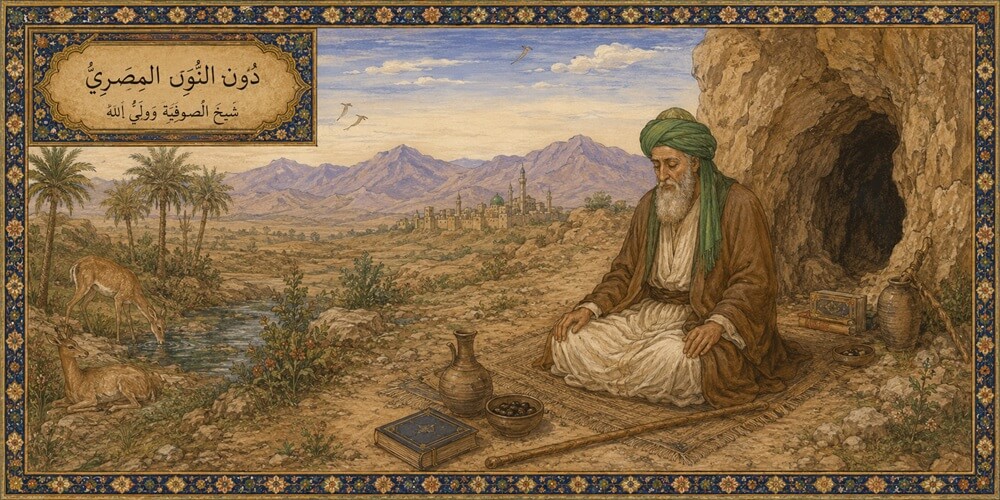
Dhu al-Nun al-Misri in the Desert
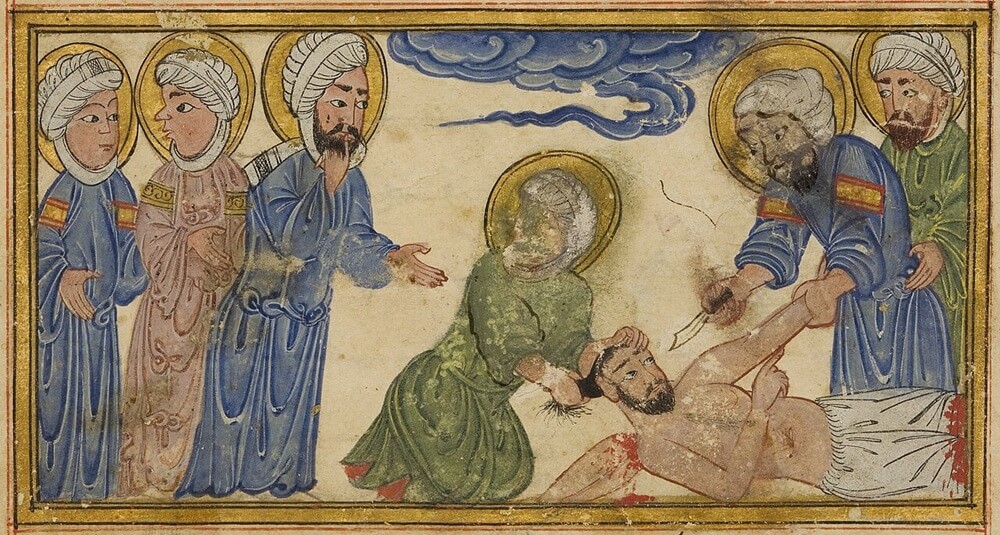
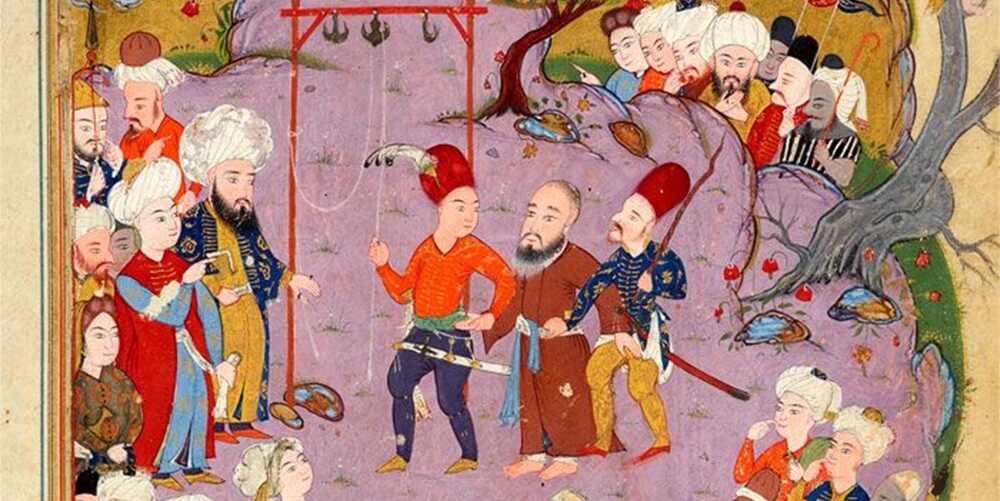
Al-Ḥallāj
As mentioned, in the early Sufi movement there were two main currents: the sober current, associated with Junayd of Baghdad, and the ecstatic current, associated with Bisṭāmī. With the consolidation of the Abbasid Caliphate, the tension between the ecstatic Sufi movement—which withdrew from society—and the rulers and official religious institutions intensified. Consequently, the political and religious establishment began to persecute the Sufis as heretics, and some were even executed, the most famous among them being al-Ḥallāj [3].
The execution of al-Ḥallāj symbolized a deep fault line between ecstatic Muslim mysticism and theology and the religious establishment. This divide could easily have developed into persecutions similar to those of the Christian Inquisition, which suppressed charismatic mystical movements within Christianity. However, a savior arose for the Sufis—and for Islam as a whole—in the person of al-Ghazālī, whose story is also connected to Jerusalem.
Al-Ghazālī
Al-Ghazālī (1058–1111) was a partner in the political, social, and religious revolution of Nizām al-Mulk, but also one of the greatest religious thinkers and Sufi mystics in the Muslim world, a man of the stature of Maimonides, who worked to reconcile Orthodox legalistic Islam with the mystical Sufi current at the end of the 11th century, making Sufism acceptable and sometimes even leading in the Muslim world. Part of the shaping of his personality and the mystical experience he underwent is connected to his journey to Jerusalem.
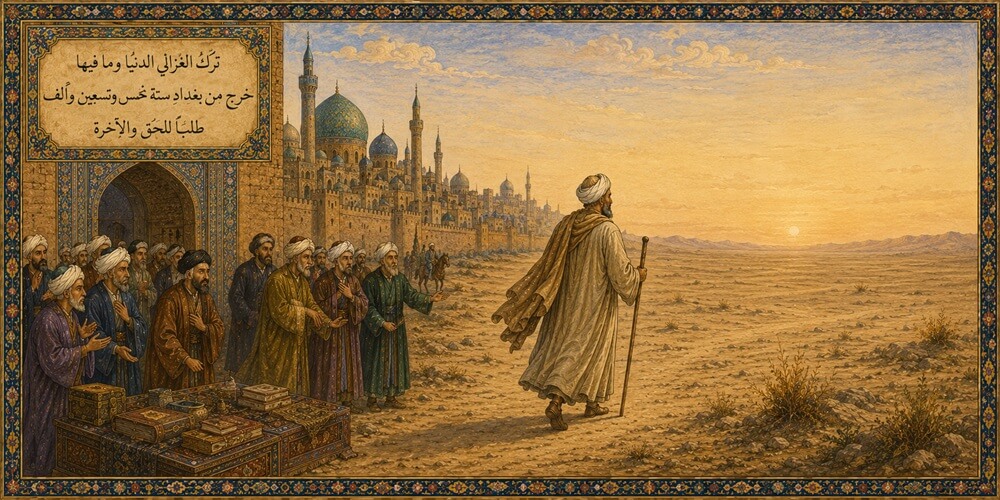
Even as a child, al-Ghazālī showed himself to be a prodigy in the field of religious sciences and was therefore sent to study with the ʿulamāʾ—the religious scholars of Baghdad. He quickly rose through the ranks until he attained the highest positions and began delivering sermons in mosques. He had many disciples, and by his mid-thirties he was regarded as a role model—the embodiment of the religious Muslim ideal and a figure worthy of imitation. Yet inwardly, he felt empty.
In his autobiographical work al-Munqidh min al-Ḍalāl wa-al-Mūṣil ilā Dhī al-ʿIzzat wa-al-Jalāl (Deliverance from Error and Attachment to the Lord of Might and Majesty) [4], he recounts:
“After that, I turned to examine my condition, and behold, I was bound by chains surrounding me on all sides. I reflected upon my actions—the best of which were lecturing and teaching—and I saw that I was inclined toward sciences that had no real value and were of no use for attaining the afterlife. I then examined my intention in teaching and saw that it was not purely for the sake of Allāh, the Exalted, but that the desire for greatness and fame was what truly motivated me. At that moment, I knew with certainty that I stood on the brink of a chasm and was approaching the gates of Hell—unless I corrected my path. I did not cease reflecting on the matter, while the paths of choice lay open before me. One day I would resolve to leave Baghdad and sever all my ties, and the next day I would abandon my decision. With one step I would advance, and with the next I would retreat. In the morning I would sincerely seek the afterlife, and by evening the army of my desires would overcome me, and my hands would weaken. The vanity of this world shackled me in place, while the voice of faith ascended, calling: ‘To the path! To the path! Only a few years remain for you, and the road ahead is long. All your deeds and knowledge here are but acts of hypocrisy and vain imagination. If you do not now prepare for the afterlife—when will you? If you do not now sever your ties—when will you sever them?’
Hearing this, my desire grew stronger, and I made a firm decision to flee and escape. But the devil would return and say to me: “It is but a passing impulse, and woe to you if you listen to it, for it will soon fade! But if you yield to it and abandon your high and orderly position—one of great importance, untroubled and undisturbed, a perfect state free even from rivals’ disputes—your return will not be easy once your mind has settled.
Thus, I was trapped for six months between the vanity of this world’s desires and the yearning for the afterlife, beginning in the month of Rajab in the year 488 AH. Then the desire departed from me, and compulsion took its place. And Allāh sealed my tongue so that I was unable to teach even once to benefit the hearts of those who came to hear me. My tongue could utter no word, and I could do nothing with it. Then, in addition to this impediment of the tongue, sorrow filled my heart, depriving me of the power of digestion and the ability to eat or drink. I could neither swallow a morsel nor digest a crumb, until all my strength was gone and the doctors lost hope for a cure. They said: “This disease resides in the heart; from there it spreads throughout the body, and there is no remedy for it except the removal of the anxiety that has descended upon the heart.
When I felt this helplessness and the absence of all willpower, I sought refuge in Allāh, the Exalted, like one who seeks shelter with no escape. And He answered me—“He who answers the distressed one when he calls upon Him”—and it became easy for my heart to turn away from greatness and wealth, from family, children, and friends.”
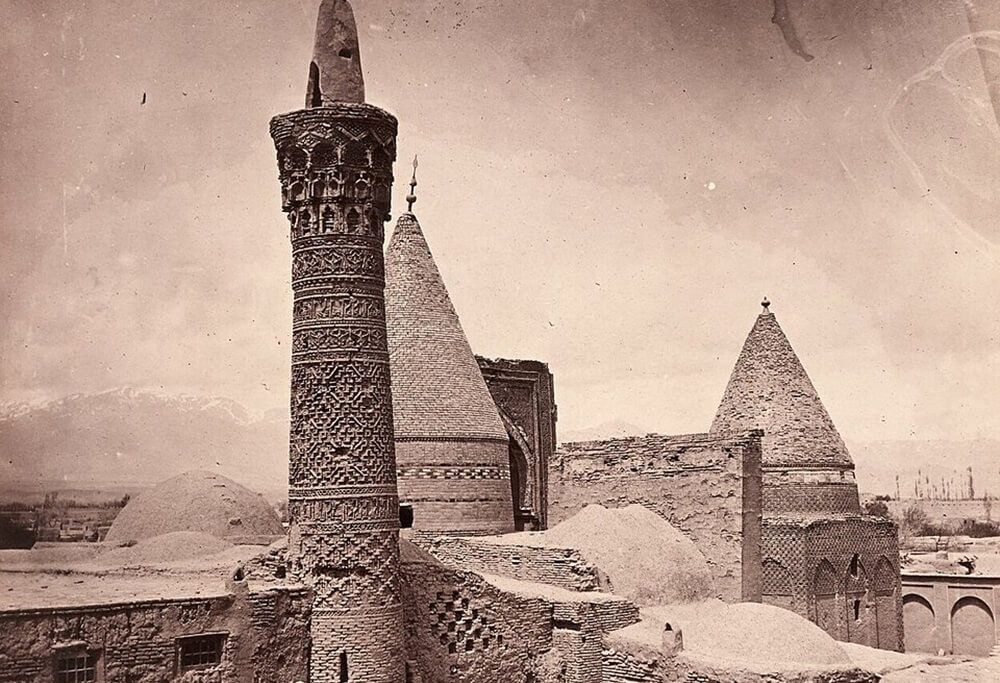
At the age of thirty-seven (1095 CE), al-Ghazālī renounced everything—his status, position, family, and city—and set out to wander the Muslim world in search of truth. He became an initiate on the Sufi path, learning the spiritual practices of dhikr, fikr (meditation), and others, and eventually reached Jerusalem, where he stayed (and at times in Damascus) for nearly two years. Some say that he secluded himself atop the minarets of the Temple Mount plaza, where he experienced the mystical ascent through the heavens—the Night Journey of Muhammad. He was annihilated in God (fanāʾ) and born anew (baqāʾ).
After two more years of searching and wandering, he returned to Baghdad and devoted the rest of his life to creating a synthesis between the Sufism of his time and Islam—an effort to form a renewed Islamic spirituality—which he articulated in his monumental encyclopedia Iḥyāʾ ʿUlūm al-Dīn (The Revival of the Religious Sciences). Muslim sources [5] claim that he composed this work while in Jerusalem. In this monumental achievement, he succeeded in fusing Sufism with orthodox Islam—a synthesis that led to the reintegration of the Sufis into the fold of religion and the revitalization of an ossified and rigid faith through Sufi spiritual emotion. From this point onward, Sufism flourished: Muslim rulers embraced it, supported the establishment of Sufi orders and centers, and at times were Sufis themselves.
Footnotes:
[1] Eliade, A History of Religious Ideas, Vol. 3, p. 112.
[2] Zaehner, R. C. Hindu and Muslim Mysticism.
[3] Al-Ḥallāj, Al-Ḥusayn ibn Manṣūr. (2024). Kitāb al-Ṭawāsīn: Thoughts on Religion, Metaphysics and Mysticism (Bilingual Arabic–Hebrew edition; Translation, Introductions, and Annotations: Avi Elkāyām). Tel Aviv: Adra.
[4] Al-Ghazālī, Muḥammad ibn Muḥammad (Abū Ḥāmid) al-Munqidh min al-Ḍalāl wal-Mūṣil ilā Dhī al-ʿIzzat wa-al-Jalāl (Deliverance from Error and Attachment to the Lord of Might and Majesty). Translation, Introduction, and Foreword: Ḥavah Lazarus-Yafeh; Linguistic Editing: Moshe Mikam. Tel Aviv: Dvir, 1965.
[5] The Open University of Israel. (1984). Jerusalem Throughout the Ages. Open University of Israel.