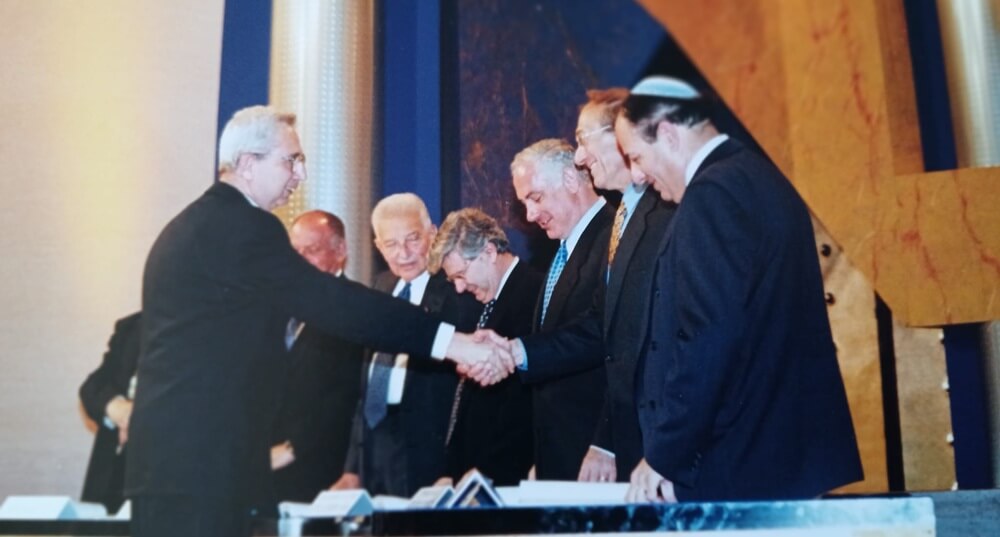
Born in 1928 in the then-rural colony of Petah Tikva, “Yehoshua”—as he was known by his students—initially trained at a Jerusalem teachers’ college. His early years as a primary school educator deeply shaped his lifelong dedication toteaching. This enduring passion was evident throughout his extensive tenure at the Hebrew University, where he enthusiastically taught well into his 90s.
Ben-Aryeh pursued his academic degrees at the Hebrew University’s Department of Geography, studying under Professor David Amiran, the patriarch of Israeli academic geography. Recognizing Ben-Aryeh’s exceptional talent, Amiran supervised his Master’s thesis on the Lachish area, while Professor Yitzhak Shatner advised his doctoral dissertation on the Sea of Galilee basin. Although both projects rooted themselves in traditional regional geography, they highlighted a concept Ben-Aryeh deemed vital: tracking historical remnants within contemporary landscapes. This perspective became a cornerstone of his future methodological framework. Furthermore, these early investigations relied heavily on 19th-century travelogues and scholarly accounts, particularly the British Survey of Western Palestine.
Between 1964 and 1965, Yehoshua completed a post-doctoral fellowship at University College London, collaborating with Clifford Darby, Great Britain’s foremost historical geographer at the time. This period solidified his focus on historical geography as a distinct academic branch. It also allowed him to forge long-lasting professional and personal bonds with British peers. While in London, and during subsequent visits, he conducted extensive research at the Palestine Exploration Fund. His growing fascination with 19th-century explorers culminated in his book The Rediscovery of the Holy Land, marking the beginning of a lifelong research focus on 19th-century Palestine.
Upon returning in 1965, Yehoshua accepted a lectureship at the Hebrew University, where he began institutionalizing historical geography. In a landmark 1970 article, he introduced a novel, structured methodology: “historical geography from a geographical perspective.” This proposed framework directly challenged the prevailing approach used by archaeologists. While archaeology focused primarily on linking historical place-names to physical ruins, Ben-Aryeh’s geographical model viewed the environment as dynamic, aiming to analyze how landscapes and settlements evolved over time.
His methodology required examining specific geographic areas during defined eras to grasp the interplay between historical events and environmental transformations. He concentrated on the 19th century, viewing it as a catalyst for profound multi-dimensional shifts across the Land of Israel.
A charismatic mentor and academic leader, Ben-Aryeh cultivated a dedicated circle of students who adopted his methods. He supervised numerous Master’s and doctoral candidates, acting as both an academic advisor and a personal guide; many eventually secured faculty positions across Israeli universities. He also prioritized global integration, inviting international counterparts for guest lectures and encouraging advanced students to attend the International Conference of Historical Geographers. In 1989, he successfully brought this global gathering to Israel.
In his seminal monograph on 19th-century Jerusalem, Ben-Aryeh detailed the city’s complex evolution from a confined, walled town into a modernizing, expanding urban center. He later broadened his scope to the wider region of Palestine, tracking its transition from an isolated Ottoman province into a focal point of European interest and early Zionist immigration. He even dedicated a book to the various landscape paintings produced by European artists during this era.
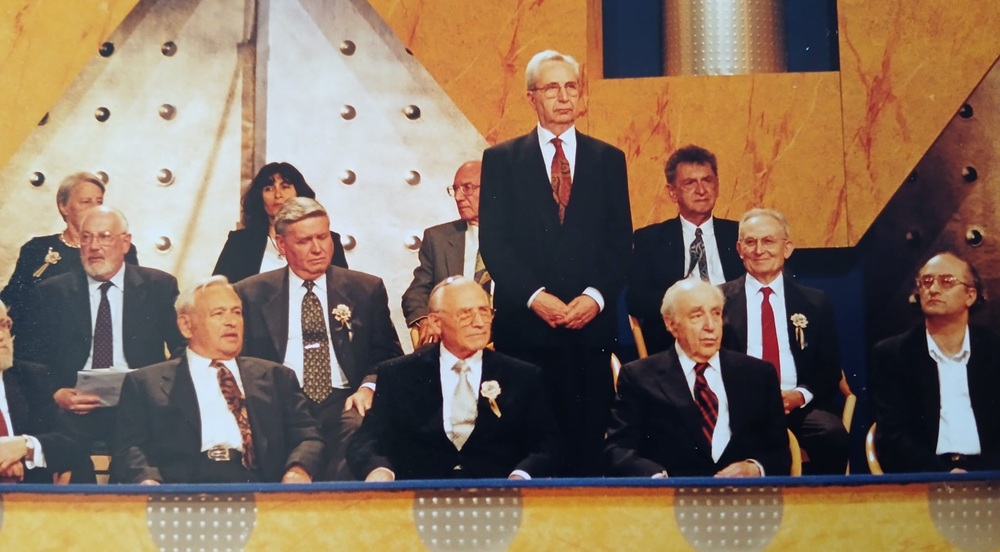
Over his prolific career, Ben-Aryeh produced more than 130 articles and roughly 20 books, alongside numerous edited volumes. His academic output persisted long into retirement; he authored two books in his final 25 years, alongside an autobiography and several previously unreleased papers. His profound contributions earned him the Bialik Prize (1978), the Ben-Zvi Prize (1971), and the prestigious Israel Prize (1999).
Beyond his research, Ben-Aryeh was a foundational figure in Israeli academia, serving as Dean of the Faculty of Humanities (1981–1985) and Rector of the Hebrew University (1993–1997). He also held leadership roles in external organizations like Yad Izhak Ben-Zvi and the Israel Exploration Society.
Above all, he was deeply devoted to his wife, three children, and grandchildren. Characterized by his humility, warmth, and gentle demeanor, Yehoshua possessed a genuine love for people, always prioritizing individuals over institutions. His colleagues, students, and peers will permanently cherish his memory as both an exceptional mentor and a dear friend.