The Mystery of Golgotha
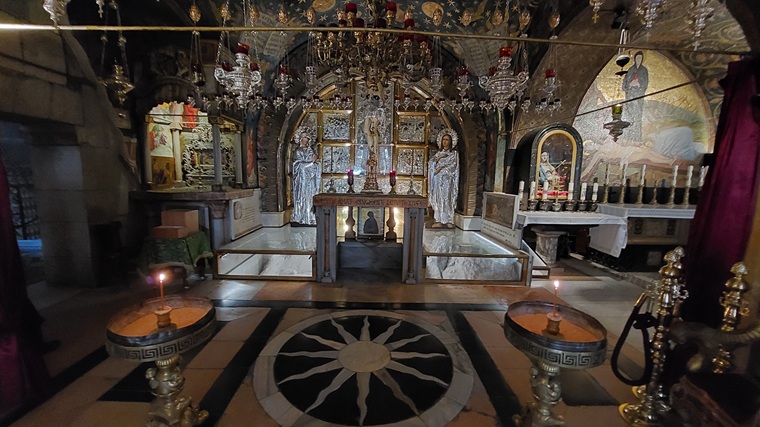
Anthroposophy is a philosophical movement and a way of life initiated by Rudolf Steiner. In Israel, they possess a magnificent education system, social welfare institutions, and a community in the Galilee called Harduf. The roots of Anthroposophy lie in the Western esoteric tradition and Christian mysticism. According to Anthroposophy, the most important event in the spiritual and physical history of the world is the crucifixion and death of Jesus in Jerusalem 2,000 years ago, and this is referred to by them as “The Mystery of Golgotha.” This event symbolizes the beginning of the emergence of the “New Jerusalem” (the Heavenly Jerusalem), which is not a vision for the distant future, but a spiritual reality wherein the Earth undergoes an energetic transformation. The Earth is reborn into a state that Steiner calls “Jupiter”—a state of conscious harmony.
If until the appearance of the Heavenly Jerusalem good and evil were intermingled, then in the process of the Mystery of Golgotha, the appearance of this spiritual city, good and evil are separated and refined. According to Steiner, The Book of Revelation describes a cosmic-spiritual process that began in 1933, through which more and more people are capable of perceiving the spiritual Christ and having the Christ-spirit implanted within them. The essence of this change is the transition of the Divine from an external existence tied to the material world, to being reborn within humanity and existing within it spiritually. This is made possible through the sacrifice and the process that Jesus underwent in Jerusalem during the crucifixion and resurrection.
The moment the soul of Jesus and the Christ-spirit implanted within him left the world during the crucifixion, the veil in the Temple was torn, and this symbolizes the moment the external temple loses its power, and in its stead, the inner temple is born. From this moment onward, the connection between the Divine and humanity can exist without mediation. According to Steiner, at this exact moment there was an earthquake and there was darkness like during a solar eclipse; the Earth underwent a transformation, and the spiritual life of humans—as well as that of plants and animals—changed, the connections between the spiritual, physical, etheric, and astral bodies shifted. And not only that, the world of shadows was illuminated by the Christ-energy and the connection to the heavens was opened; humanity could channel wisdom upward and continue to receive impulses from the cosmos.
The appearance of the Christ-spirit is alluded to in the Hebrew Bible, and the one who initiates the process is John. His baptism is different from what had existed until then; he stays underwater for a long time, and this brings about the separation of the spiritual bodies (physical, astral, etheric, and the Ego) and a near-death experience during which a person has visions. After waking from it, their spiritual bodies rearrange themselves differently, and they have new insights regarding themselves and their lives. John baptizes Jesus, and at this time, a supreme solar being chooses him as its home; he becomes Christ, and the Christ-spirit is implanted within him. Thereafter, and for three years, the high spiritual being operates from within Jesus’s body, and upon its (his) death, a portion of it merges into the etheric body of the earth. From this moment onward, the history and energetic state of the world changes; thanks to this magical-spiritual operation, which Steiner calls “The Turning Point of Time,” humanity can henceforth find God within.
According to Steiner, due to the strengthening forces of evil of Lucifer and Ahriman, which disrupted the normal course of evolution, there was a danger that humanity would fall from its lofty status and what was destined for it could not be fulfilled. The angels and spiritual forces could no longer carry out their work, and therefore God sent a high being to manifest in the physical world and change the course of history. Such an appearance involves a sacrifice on the part of the Divine and great suffering on the part of the human through whom it passed.
The Mystery of Golgotha is the process by which the Christ-spirit was implanted into the world. For this to be done, Jesus had to die, separate from the Divine, and descend into the material “desert.” His last words on the cross were: “Eli, Eli, lama sabachthani” (My God, my God, why have you forsaken me?). Jesus had to separate from God to enable the process; he descends into hell and is ultimately reborn, and this undertaking enables new human possibility—connection to a new spirituality that bring aboutthe enlightenment and redemption but at the same time enables the evolution of the Earth and the entirety of Creation.
The high solar spiritual being of Christ freely and individually chooses to incarnate into the world, and therefore one can only connect with it out of free will and individual intent; it brings with it an immense evolutionary impulse, a possibility for a person to give birth within themselves to the a new type pf spiritual man, this is the Second Coming of Jesus, which is taking place at this time, with the maturation of the Christ solar being within the etheric field of the Earth, that brings about possibility of giving birth to the Christ-impulse within, to be reborn into a new consciousness, feeling, and awareness—this is a process that will continue for the next 2,500 years.
Steiner claimed that he was able to read in the “Akashic Records” of the Earth the events and the true significance of Jesus’s appearance on Earth, and the joining of the energy he calls “Christ” to him during the baptism in the Jordan. This was divine energy coming from the enlightened realms, and its purpose is to encourage the evolution of the human race and the Earth. It had existed since the dawn of creation, and three times in ancient history, it intervened in the energetic worlds to balance and save the evolution of humanity. Finally, for the fourth time, the Christ-energy appeared through a physical human being, and with the help of the Mystery of Golgotha, it was reborn into the aura of the Earth. That is where it is located today, granting humans hope and an impetus for development.
The Christ-being joined Jesus in his 30s during the baptism in the Jordan, underwent an acclimatization process that lasted three years, and after the Mystery of Golgotha, was born into the Earth and created within it the “Christ Impulse” that remains active to this day.

The Anthroposophical Doctrine and Christianity
In a lecture I once heard in Jerusalem by Yeshayahu Ben-Aharon, who was one of the leaders of Anthroposophy in Israel, the argument was made that Christianity is the most widespread religion in the world, with over two billion people, and if everything physical stems from the influence of the energetic worlds, then there must be a spiritual reason behind these numbers. Almost every third person believes in Jesus, who is undoubtedly the most important figure in the history of the world, far ahead of Buddha and Muhammad, Moses and Lao-Tzu, and spiritually this has significance.
The story of Jesus is the most fantastic legend in existence, one that has captured the imagination of humankind for many generations – a man who died and rose again, suffered as an atonement for our sins, performed miracles, and taught a moral doctrine and deep wisdom. Different people throughout history have tried to understand the secret of Jesus’s power and charm, or as it is more correct to say, the myth of Jesus.
From the very beginning of Christianity, there existed within it a branch of mysticism called Gnosticism, which differentiated between Jesus the man and the energy that joined him, which was called the “Christ.” This is the equivalent of the figure of “Adam Kadmon” (Ancient Man) in the Kabbalah, or the Perfect Man “Al-Insan al-Kamil” in mystic Islam – an energy thanks to which the entire world exists. In modern time Gnostic teachings appeared through movements such as the White Brotherhood in Bulgaria, the Rosicrucian’s in central Europe, Freemasons and others.
Steiner’s interpretation of the Christian story is allegorical and close to the interpretation of these mystical circles. According to Steiner’s book “Christianity as Mystical Fact”, one of the defining events in the New Testament stories is the resurrection of Lazarus. As recalled, Jesus brings Lazarus back from the dead after three days. This reminiscent of the initiation stories of ancient mystery schools, in which a person dies and rises again (as in Eleusis), and if so, there is no point in returning Lazarus to life if he remains the same person. Rather, according to Steiner, Lazarus was the first to undergo initiation in the new spiritual path in which the Christ-impulse was implanted within him, and he became John, the beloved disciple close to Jesus, about whom Jesus says to his mother while on the cross: “Behold your son.” Jesus made the path of initiation available to all, with himself being the safety valve, the impulse-giver, through the Mystery of Golgotha. The first to undergo the new way of initiation was Lazarus – John.
The new path of initiation is connected with imagination, inspiration, and intuition, and it corresponds to the planets Jupiter, Venus, and the future planet Vulcan. Inspiration can only be achieved through feeling and emotion, which helps overcome the fear of approaching the threshold. In the tradition of initiation of ancient times, people left their physical bodies and their earthly existence and ascended to the world of spirits. There they met with a great spirit whom they called the “Sun Spirit” – the source of everything – and received spiritual inspiration from it, According to their perception. this was the Logos. However, over the years, the ability to ascend and commune with that great spirit diminished, and therefore it incarnated in the figure of Jesus; thus, human beings could commune with it through its earthly existence. This is the Mystery of Golgotha.
John commits the core tenets of the new doctrine to writing in the books he pens: the Gospel of John, the Epistles of John, and especially the Apocalypse of John – the Book of Revelation, which is the most sealed and esoteric book of the New Testament, containing within it the secret doctrine through the worlds of imagination. The Book of Revelation speaks of a man who is like a son of God, surrounded by seven lampstands and holding seven stars in his hands. According to Steiner, the knowledge of Anthroposophy is these lamps, which leads to initiation. The figure of the man opens the scrolls, but it is not enough to open them – John must eat the scroll. It causes him stomach aches; there are many who are exposed to the knowledge, but only a few can take it inward, and this passes us through the purifying torments of purgatory, in which we separate from the ego.
There is a process of individuation in the present time, in which man separates from God and from everything that sustains him in order to develop within himself. During the walking in the desert time of men, internal strength and the capacity for free choice are developed; and then, when he arrives at the new spirituality, he chooses it willingly and by right, and connects as an individual and unique being, different from all others. This is the secret of our time, the reason for the fall into the material world and the strength of Ahriman, which balances the unbalanced Luciferic (religious) influence of previous times.
The Christ-impulse isolates the individual and at the same time integrates him with other individuals who constitute humanity, a sort of invisible plasma connecting different truths, which is one truth. The Mystery of Golgotha is the possibility to connect to the spiritual precisely during the abandonment of God and the rise of materialism, and this is through the world of imagery. The spirit enters into the soul as a result of a process of initiation that all earthly beings can undergo. The struggle is internal – between the light of the spirit and the darkness of the soul.
Mystical Christianity is open to all and is not the domain of a small minority whose members are linked together in a collective soul, as was the case in the mysteries of ancient times and with the Essences. Jesus is the first love, as appears in Paul’s letter to the church of Ephesus, the first of the seven churches. in the new way it is not what a person thinks, but how he thinks. In the old way Solomon’s Temple represented the human body, and later it was manifested in the body of Jesus (as appears in the New Testament, the Gospel according to John 2:19: “Destroy this temple, and in three days I will raise it up,” meaning the temple of his body).
The problem with Christianity is that it was distorted over the years. Until the third century, there was a chance for Christianity to become mystical, for a connection between the ancient mystery tradition and the new mystery of Jesus. This chance was expressed in Gnostic Christianity, and also in the figure of great pagan thinkers such as Plotinus, but it ultimately failed because of the intervention of material forces in the form of the Roman materialism. The Roman essence was concerned with creating a human society without reference to the spirit, and the Hebrew Sadducees were part of it. This is why they persecuted Jesus, but even afterward, when the Romans became Christian, this essence remained, expressed in the figure of Augustine (the most important Catholic Church Father who operated at the end of the 4th and beginning of the 5th century). He preferred obedience over freedom, adherence to the Church organization over adherence to Jesus, and the promotion of institutional and official Christianity over the mystical.
According to Steiner, Augustine is a reincarnation of Judas Iscariot. Judas betrayed Jesus just as Augustine betrayed mystical Christianity, but this was a necessary betrayal so that the ancient mystery tradition could die. Just as Jesus had to die to perform the “Mystery of Golgotha” and Judas played the important (even if thankless) role in this process, so the world needed to pass through the stage of materialism and disconnection from spirituality. This was so that a new freedom, a new spirituality, and a new knowledge of man could grow in the future. Because of persecutions, the connection to the Christ-impulse and the new spirituality was preserved in secret esoteric orders such as the Rosicrucian’s in Europe in the 16th century, and before that, in the legends of the Holy Grail and with the Templars (see article on the Templars and the Holy Grail), and only with the appearance of Anthroposophy is the knowledge related to Christ and the true history of Jesus available to all.
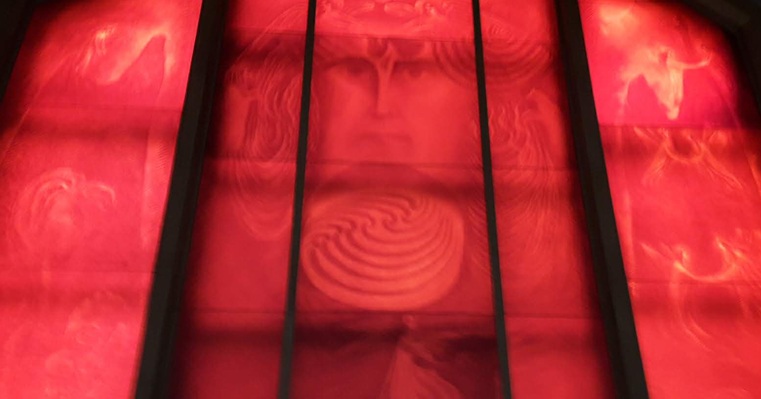
Anthroposophy and Gnosis
Steiner was well-versed in the Gnostic literature that developed from the 1st to the 3rd centuries AD. This is a body of Christian-mystical literature that combines Neoplatonic and Hermetic concepts, offering a possibility for immediate knowledge of God – the Gnosis. The spiritual center of the world at that time was Alexandria, which was a hub of religious genius and a shift in human thought. Steiner brings as an example Valentinus, who speaks of the “silence” and the “abyss” prior to creation, and of the process of merging between Bythos (abyss) and Sige (silence) which brings about the birth of truth and man – the Anthropos. The Gnostics recognized an experience of the presence of inner silence. “In the beginning was the Word,” but it could only be heard against the background of silence. Valentinus conditioned entry into his circle of disciples upon five years of silence. However, out of the silence came not only the Word, but also the Anthropos (man) and Aletheia (truth). According to Steiner, the Anthropos is the “religion of the gods” who look toward the cosmic man – a heavenly primordial man. Truth is the human capability to recognize wisdom; humanity is a divine organ destined for truth. The Divine needs to be recognized by man, and man by the Divine. Jesus says: “I am the way, the truth, and the life” (or the light).
There is within us an intuitive sense of truth that the Gnostics called Pistis – faith. This does not mean blind faith, but the recognition of truth as a first step to understanding it. The Anthropos is the first Aeon emanated from the Father and from Silence, while Sophia (wisdom) is the last Aeon. Sophia yearns for the light and therefore wants to renounce a part of herself – which is the desire to become an independent entity. If we go beyond Gnostic terms, the combination of “Anthropos” and “Sophia” creates Anthroposophy – man’s knowledge of himself. On the other side, the combination of wisdom (Sophia) and faith (Pistis) is the name of one of the most important and spiritual Gnostic books – Pistis Sophia. Steiner mentions a prayer found in the book “Pistis Sophia” as a text that Jesus himself said to his disciples after the Mystery of Golgotha. It seems that this book inspired Steiner to develop the concept of the two figures of Jesus who merged into one (as appears in his book “The Fifth Gospel”). The prayer says thus:
“I want to praise you, O Light, because I want to come to you. I want to praise you, O Light, because you are my savior. Do not leave me in the chaos. Save me, O Light from on high, because you are the one I have praised. You sent your light to me through you and saved me. You led me to the high place of chaos. May the figure of evil that pursued me sink into the low place of chaos, and do not let them come to the high place so that they see me; and may a great darkness cover them and darkness upon that, and do not let them see me in the light of your strength that you sent to me to save me, so that they cannot take power over me again… Because I believed in the light, I will not fear. And the light is my savior, and I will not fear.”
It can be seen from this quote, and from the references mentioned earlier, that Steiner knew the Gnostic literature deeply and relied on it. According to his words, from the 1st century BC until the 3rd century AD a “star” shone – the same one seen in the skies of Bethlehem – and human thought reached new depths and heights. The star influenced not only Christian thinkers but also others; Philo of Alexandria (a Jewish thinker from the 1st century AD) is a good example of this. According to Steiner, Philo was an enlightened teacher who recognized the power of inner truth and the Logos, and he reincarnated in the 17th century in the figure of Spinoza and in the 18th century as the philosopher Fichte, who greatly influenced Steiner.
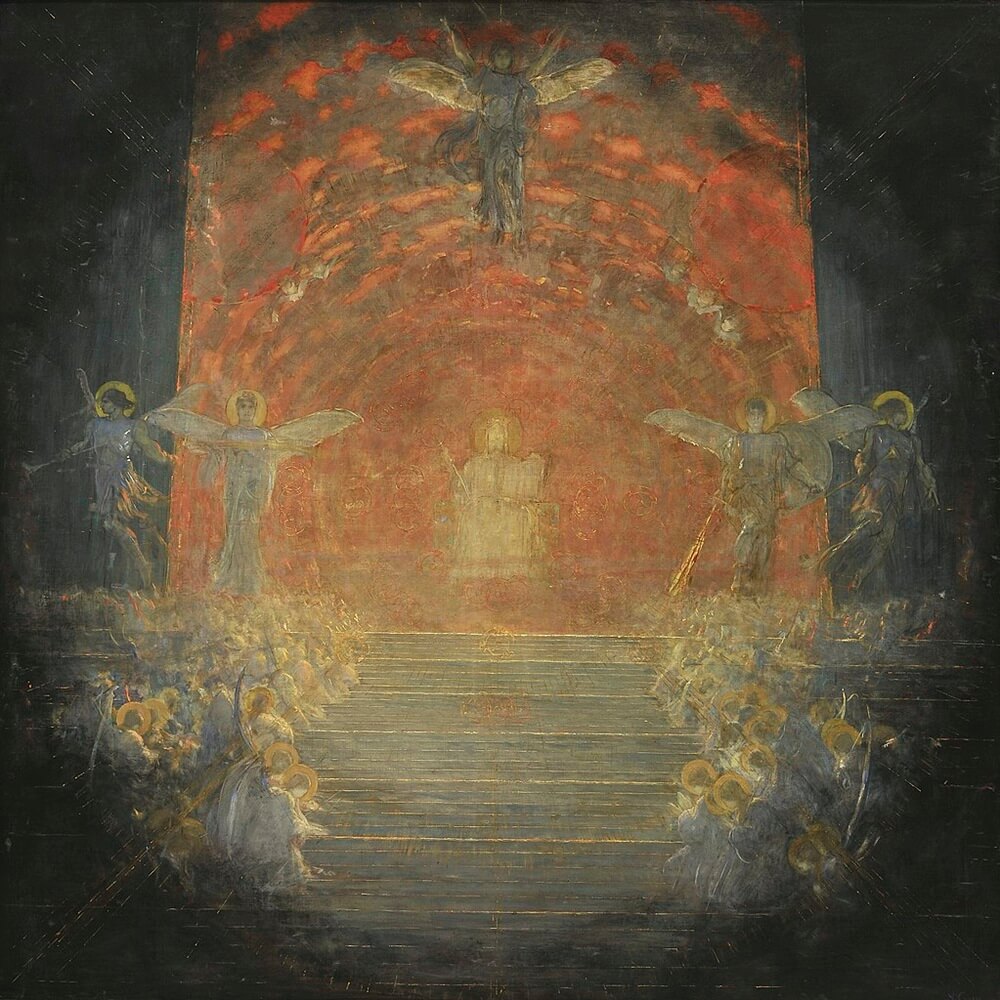
Jerusalem and Anthroposophy
In Jerusalem, the most important event in the physical and spiritual history of the world took place according to Anthroposophy, which is none other than the Mystery of Golgotha, and therefore the question arises whether there is significance to the physical Jerusalem, beyond the vision of the spiritual Jerusalem? Steiner himself did not visit Jerusalem, but some of his closest disciples arrived in the city, perhaps as part of a spiritual pilgrimage aimed at connecting with the Mystery of Golgotha. Among them were Emil Bock (1895–1957), the head of the New Christian Community that Steiner helped found, and Ita Wegman (1876–1943), who initiated Anthroposophical medicine.
Ita Wegman and Emil Bock came for a visit, but there were also those who came to live in Jerusalem during the Mandate period. One of the important figures associated with Anthroposophy and the city is Hugo Bergmann, the first Rector of the Hebrew University. In addition to him, the Richter couple should be mentioned, who were part of the team that worked on the Goetheanum in Dornach, Switzerland, and there were others as well. Today, there is an Anthroposophical school in Jerusalem (Adam School), kindergartens, and a vibrant community. In addition, the Zommer Anthroposophical School in Ramat Gan maintains a tradition of pilgrimage to Jerusalem for seventh-grade students every year.
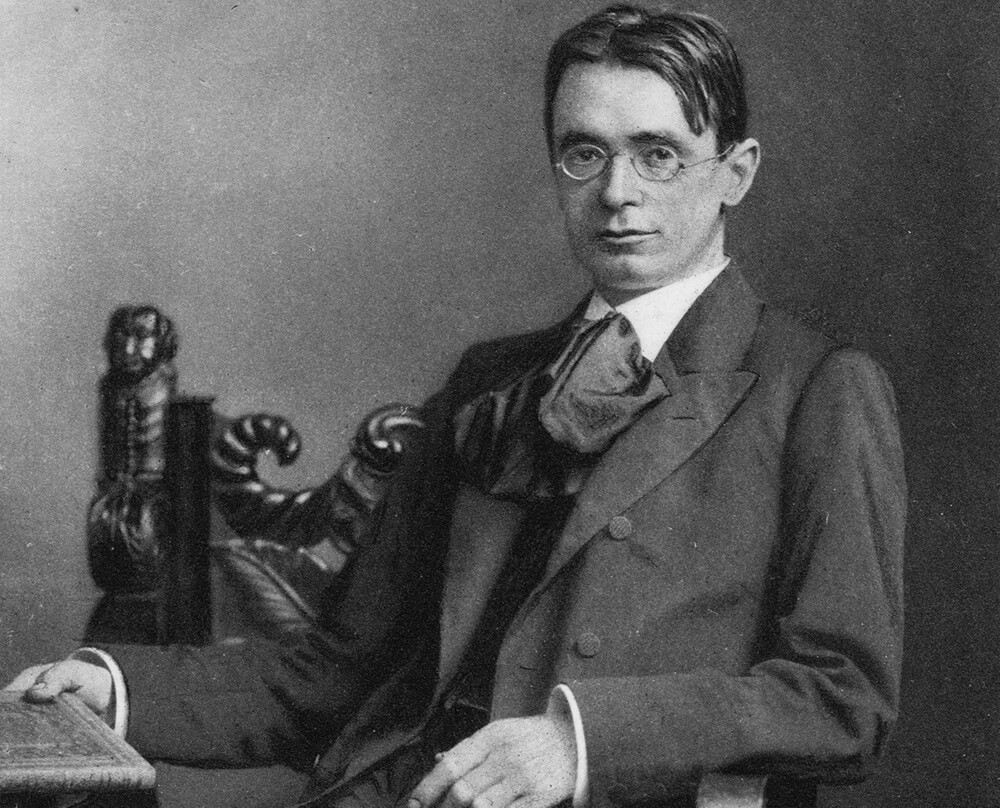
Hugo Bergmann
One of the important Anthroposophists who lived and active in Jerusalem is the philosopher Hugo Bergmann; he was not an official part of the movement, but a supporter of it and a personal friend of Steiner. As a soldier in World War I, Bergmann used Steiner’s teachings on karma, reincarnation, and the distinction between spirit and matter to cope with the harsh reality at the front. Steiner even assisted in transferring him from the front to the rear, and it is possible that by doing so he saved his life. Bergmann’s first wife was Elsa Fanta; her mother (his mother-in-law), Dr. Berta Fanta, was a close friend of Steiner and active in Theosophical and Anthroposophical circles. Despite a sharp debate that Bergmann had with Steiner regarding Zionism (which Bergmann supported and Steiner rejected), the two remained on good terms.
In the preface Bergman wrote for the Hebrew translation of How to Know Higher Worlds, he expressed deep appreciation for the man who greatly influenced his life and opened new horizons for him. According to Bergmann, Steiner claims that what is known to us is only a small part of a larger and subtle reality, and that we cannot understand as long as we content ourselves with a partial view. What we perceive through the senses is only a fraction of the cosmic reality in which we live. Human life between birth and death is only a stage in an evolution that began before birth and will continue after death. One must view the current waking consciousness of man as only a part of a much more comprehensive consciousness.
Bergmann relates that when Steiner began to publish books on occult science, some of his friends rebelled – among them Frederick Eckstein of Vienna (Freud’s friend who was connected to Theosophical circles) that argued that mystical knowledge was not intended for the general public. However, Steiner believed that we live in new times that mandate the publicity of hidden esoteric knowledge, and therefore he published his book Occult Science. In Bergmann’s eyes, Steiner was “one of the great teachers of humanity.” According to Bergmann, Steiner explains and directs toward the next stage in human evolution. The modern era has turned man materialistic, narrowing his conscious horizon so that the concept of man’s “waking ego” could develop, but now that this development is reaching a peak, consciousness must be expanded again toward the cognition of higher worlds. Man had to disconnect from the collective subconscious of nature, intuition, and instinct in order to develop a separate identity, and with it, he will return to a higher collective subconscious.
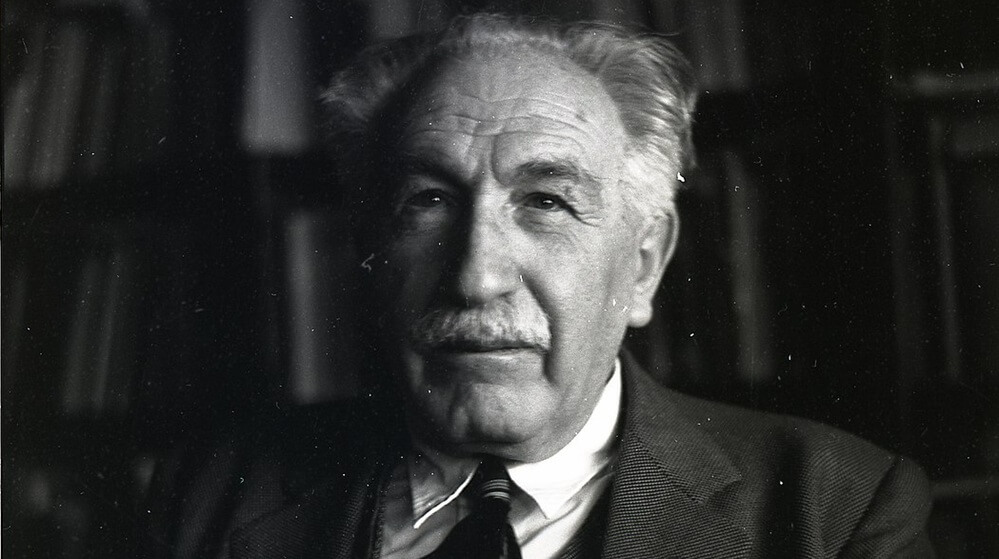
The Richter Couple
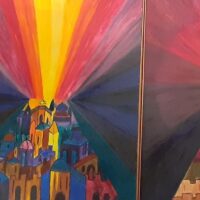
Tadeusz Rychter (1873–1943) was a Polish painter who visited Berlin, where he met Anna May-Rychter (1866–1955), who studied under Professor Nikolaos Gyzis (1842–1901), and they became a couple. The meeting between them was synchronic and connected to Tadeusz’s relationship with Rudolf Steiner; in one of the lectures that Tadeusz attended, Steiner mentioned a painting by a painter called Gyzis called “The Heavenly Bridegroom,” which deals with the return of Jesus – a painting that greatly resembles the art at the Goetheanum in Dornach, Switzerland. Tadeusz was looking to rent a room in Berlin and came to the room that Anna May was vacating, and to his surprise, he found the original painting hanging on the wall. This synchronous meeting led to a love affair and partnership of many years. Steiner, who was interested in the spiritual in art, came to see the painting and told the thrilled Anna May about Anthroposophy and the connection between body, soul, and spirit. Afterward, he enlisted the help of the artist couple to plan and execute the art of the first Goetheanum, whose purpose was to connect with spiritual ideas and convey them through the art in the building. It is interesting to note in this context that among Gyzis’s students was also Wassily Kandinsky (1866–1944), who was close to Theosophical circles and later wrote the important book Concerning the Spiritual in Art.
Tadeusz prepared sketches for the stained glass windows of the first Goetheanum (the one that burned down), which was a total work of art, and Anna May painted the scenery for Steiner’s “Mystery Dramas” plays. However, in 1920 they were forced to leave the Goetheanum, and in 1924 they decided to move to Jerusalem after Tadeusz received a position as a watercolor painter of the holy sites. This was a sort of exile for them from Steiner, but they accepted it with love and maintained their sentiment and connection with the movement. After arriving in Jerusalem, they painted figures from the city. Tadeusz became famous for his portrait paintings (for example, of Saul Tchernichovsky), as well as for paintings of the city’s landscapes and its special light. The watercolor technique made the paintings look noble and full of physical and spiritual light. Tadeusz participated in the renovation and painting of churches, including the Church of the Nativity in Bethlehem. In 1938, Tadeusz left to paint a church in Poland – on a journey from which he never returned.
Anna May Rychter lived in Jerusalem for more than 30 years (1923–1955), partly in East Jerusalem. During the years Tadeusz was with her, they gathered around themselves the first group for the study of Anthroposophy in the Land of Israel, they were in contact with Hugo Bergmann, and were neighbors of Boris Schatz. Throughout these years and also afterward, she was in a correspondence of letters with Marie Steiner. It is worth noting that while Anna was in Berlin, after they left the Goetheanum, she worked on a piece that was intended to be displayed at the Goetheanum – a triptych called “The Holy Grail.” The work continued while they were in Israel, and perhaps she found the Grail in the end. Who knows?