Mount Moriah and the Foundation Rock
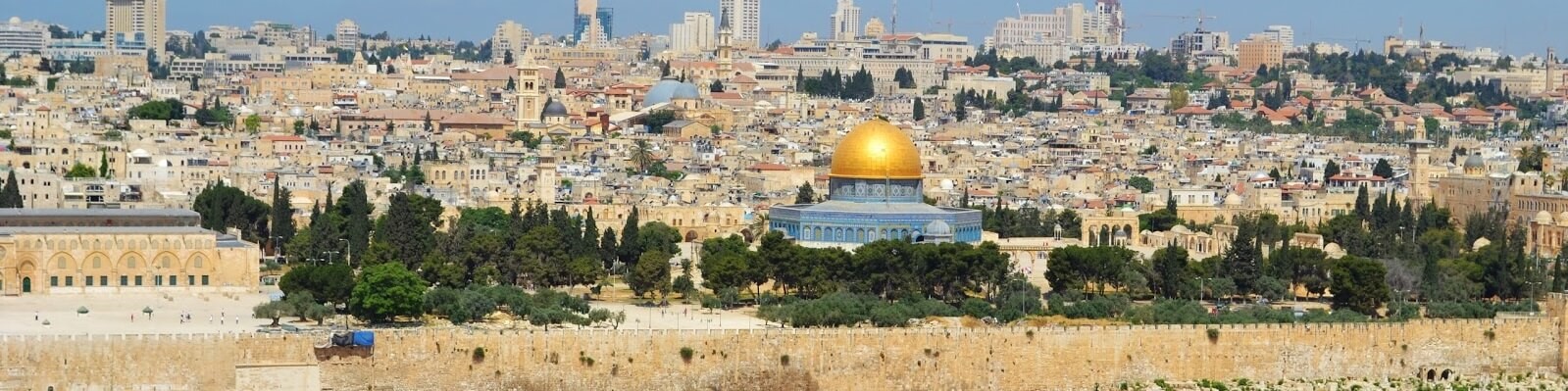
According to the Jewish Midrash, when God created the first man from the dust of the ground, it was the ground of Mount Moriah, on which the Temple would later be built. In this place was the Foundation Stone, from which the creation of the world began, and beneath it all the waters of the abyss of the world flow. Adam and Eve came to this place after the expulsion from the Garden of Eden, and therefore the first man offered the first sacrifice to God on Mount Moriah and was later buried under the Foundation rock. Later, Cain and Abel offered a sacrifice to God in the same place and on the same altar, and after them Noah [1].
Our forefather Abraham arrived at Mount Moriah (identified with the Temple Mount) to offer a terrible sacrifice, his only son whom he loved, Isaac. He built an altar on the mountaintop and intended to sacrifice his son there, but then a ram appeared in the thicket and the voice of an angel was heard calling to Abraham: “Do not lay your hand on the boy.” Following this, Abraham had a vision of a temple to be built for God in the place of the Foundation Rock. According to the Zohar, the stone for the head of our forefather Jacob was the Foundation Stone, where (on Mount Moriah and not in Bethel) he saw angels ascending and descending a ladder, received a promise from God to give his seed the land, and erected a monument in honor of the event. (The archetype of a ladder is a central motif in Merkava literature from the late Second Temple period, with Merkava pilgrims climbing through the various stages of the temples).
If all these events did take place in Jerusalem, then this explains the sanctity of the place and the reason why David and Solomon chose it to build the Temple. But then the question arises: why for 400 years before them (according to the biblical number of years), when the Israelites were already living in the land, did they not bother to conquer Jerusalem, settle there, and build a temple, a platform, or an altar on Mount Moriah? Jerusalem remained in the hands of the Jebusites. Instead, the Israelites established a permanent tabernacle for 369 years in Shiloh, and then in two other places not far from Jerusalem – Gibeon and Nob. And no one thought about Jerusalem or even mentioned it in a word.
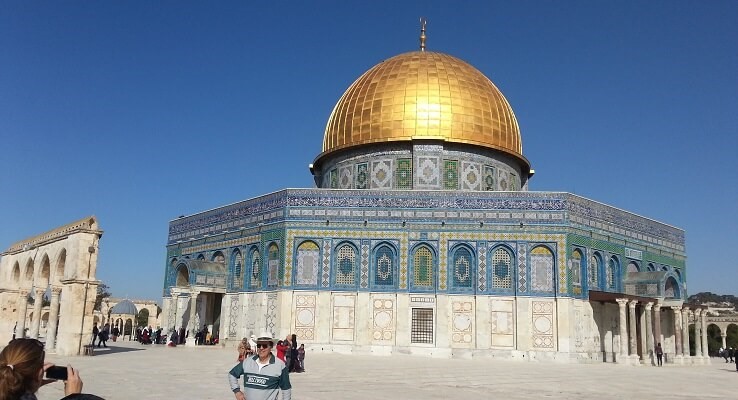
Surprisingly, Jerusalem is not mentioned even once in the Torah. Although Melchizedek, king of Salem, is a priest of the Most High God and blesses Abraham, Salem is not necessarily Jerusalem, and the story may be anachronistic. If Jerusalem were important to God, it would have been mentioned at Mount Sinai, but it was not. Instead, the Israelites were tasked with building a house for God “in the place that He will choose to place His name there” (Deuteronomy 14:23). Israel is the chosen people, and Jerusalem becomes holy by virtue of a historical act of choice.
The choice of Jerusalem as the capital by King David and the building of the Temple by Solomon create a threefold connection that continues to this day between the dynasty (House of David), the place (Jerusalem), and Judaism. As a result, we pray toward Jerusalem and associate creation and redemption with Jerusalem. Before that, prayers were prayed in any direction, and the prophetic and spiritual light could pass through any person. What this means is that the spirituality of the Temple is different from that of the Tabernacle, first and foremost because it is tied to a fixed place on earth – Jerusalem.
It seems as if after 400 years of testing, the time has come to anchor the divine energy permanently in the land. Indeed, according to Kabbalah, the building of the Temple constitutes the completion of the creation of the world – the purpose of the revelation of the Divine Presence among the worlds of matter [2].
The meaning of building the Temple was to sanctify the land and to solidify the covenant between the Jewish people and the land. No more settlement or wandering, but the anchoring of Jewish energy in the rocks, mountains, and soil of the Land of Israel. This can also be seen in the following way: After 400 years of experience, the land “saw that it was good” and influenced the people who lived on it, evoking in them thoughts and feelings and a desire to sanctify it. The land tested them throughout the long period, and they finally received its blessing to build a permanent Temple.
Before the Israelites came to the land of Israel, there was an Egyptian presence here for 400 years, but the Egyptians did not receive the blessing or approval of the land to establish themselves on it, and therefore they were forced to leave it. The same is true for the Israelites in Egypt, who were there for 400 years and were forced to leave, because they did not fit the frequency of the land of Egypt. To a certain extent, we can say, as the first Zionists said: “A land without a people and a people without a land” found each other, and it was their connection that led to the establishment of the Temple in Jerusalem, as a seal of the covenant between them and as a seal of creation.
But why Jerusalem? Why not sign the covenant in other places, such as Gibeon, which is not far from Jerusalem and where the Tabernacle was located? Or Shiloh, where the Tabernacle stood for 369 years? The answer, in my opinion, is that the Israelites, and especially King David, noticed that Jerusalem had aspects of sacred geography and topography (as explained in previous chapters), along with political and social advantages, that made it more suitable for the construction of the Temple than any other place. One could add that Jerusalem is characterized by a strong energy emanating from the earth and also by a special ultraviolet light (which is why many painters loved it) [3]. Although its holiness was forgotten by the Jews during the time of the Judges, this concealment was intended to preserve it until the right time, which came with the rise to power of the House of David dynasty, which created an inseparable triangle of holiness between the Jewish people and religion, the dynasty from which the Messiah would come, and Jerusalem as the place for the Temple.
David was a shepherd from Bethlehem, who probably roamed the Jerusalem area with his sheep, and Mount Moriah probably caught his attention as a place where one could connect with holiness. As he grew older, the prophetic light appeared through him, and in collaboration with the prophet Samuel, he delved into a hidden scroll that revealed to him the spiritual history of Jerusalem, the pattern of the Temple as revealed to Moses on Mount Sinai, and the command to build it (as we will see later). For these reasons, David chose Jerusalem as the capital and the place to build the Temple and brought the Ark of the Covenant to it. He did not build the Temple himself, but prepared the ground for his son Solomon to build it.
The Tabernacle was portable, and this situation had many advantages and good aspects, but in order to be able to advance in the developmental journey of the Jewish people as the leader of humanity towards redemption, it was necessary to create a permanent center. A center that would allow for the concentration of effort, inspiration, development, and sanctification, and would be connected to the myth of place – to the land. This happened with the establishment of the Temple in Jerusalem
Imago Mundi and World Axis
According to Eliade in his book The Myth of the Eternal Return#ftn4, the basic experience of man is the feeling that he was born far from home, and the desire to return to it—to reconnect with the eternal, sacred, and meaningful plane, in place of the mundane, temporary, and routine. This process is facilitated by sacred places and times. In Judaism, the “desire to return home” can be equated with the aspiration to repair the world. According to Jewish spirituality, man’s role is to Rectify himself, and in doing so, to help the Creator and creation repair themselves, so that they can return to their original state in the Garden of Eden—a kind of homecoming.
Our natural home and state was in the Garden of Eden, but due to original sin we fell into the material world. The giving of the Torah at Mount Sinai and the building of the Tabernacle and then the Temple in Jerusalem are the turning points that begin and make possible the journey back home, to our original spiritual state. The building of the Tabernacle and the Temple are crucial steps in the process of historical Rectification from the Fall to redemption. The Temple is the creation of a heavenly reality on earth, which will ultimately lead to the return of the world to a state of Eden [5].
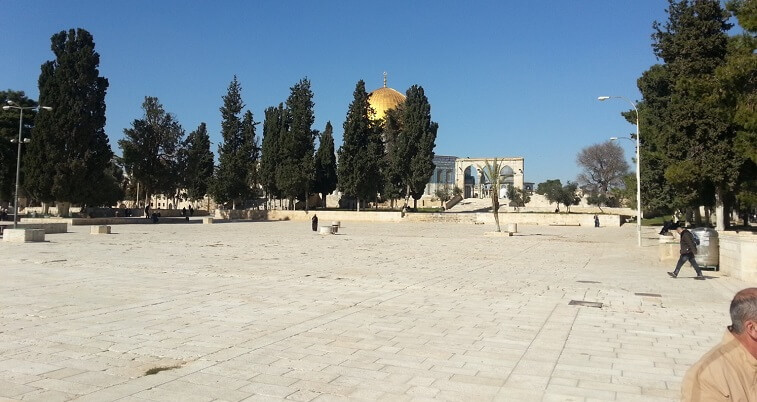
The profound meaning of building the Temple is the creation of a center, a point of reference, a kind of world axis that connects the planes of heaven, earth, and the underworld. This was also the case with other temples in the ancient world. But beyond that, the construction of the Jewish Temple in Jerusalem creates a turning point in the historical process, connecting what was—the fall from Eden—to what will be, to redemption. In the act of building the Temple, the Jewish people create a center that can constitute a world axis on the one hand and a turning axis of the historical process on the other. Therefore, the Temple is anachronistically connected to the act of creation.
The transition from the Tabernacle to the Temple can be likened to the transition of humanity from the time when we were hunter-gatherers and wandered on the sacred journey across the earth, to the time when we settled in permanent homes and settlements. In doing so, we created a sacred space of a different kind, one that is not natural. In building a house, man participates in the act of creation, creating his own environment, and in this he is different from other animals. As a result, he places himself outside of nature and instead directs himself towards the heavens and the hidden divinity.
The home is the result of our planning, thinking, perception, and action as humans—it is our essence. According to Eliade, all homes, like all temples, palaces, and fortresses, are located at the same point—the center of the universe. This is a transcendent space, which is completely different from secular space, and there may be multiple and even infinite “centers” in it. The center point actually recreates the act of creation, the temporal time, and creates the cosmic order [6]. Therefore, it is not only a geographical center but also a center in time. If the home is such, a temple that is a house of God, all the more so.

Footnotes
[1] Ariel, Y. (2019). The Holy Temple in Jerusalem. Maggid Books. (Original work in Hebrew)
[2] Makover, M. (2003–2005). Oro shel Mikdash: Olam ha-machshavah shel ha-Mikdash [The Light of the Temple: The world of thought of the Temple] (2 vols.). Jerusalem: Temple Institute. (in Hebrew).
[3] Ben‑Arieh, Y. (1997). Painting the Holy Land in the Nineteenth Century. Jerusalem: Yad Izhak Ben‑Zvi. (Original work published 1992 in Hebrew).
[4] Iliade, M. (1971). The Myth of the Eternal Return: Cosmos and History (W. R. Trask, Trans.). Princeton, NJ: Princeton University Press. (Original work published 1949).
[5] Aptowitzer, A. (1931). Beit ha-Mikdash shel ma‘alah al pi ha-aggadah [The heavenly Temple according to Aggadah]. Tarbiz, 2, 137–250. (in Hebrew)
[6] Eliade, M. (1959). The sacred and the profane: The nature of religion (Vol. 81). Houghton Mifflin Harcourt.