Goddess Culture
Human civilization as we know it began with the transition from a hunter-gatherer lifestyle to settling in villages and relying on agriculture for a living. This happened 11,000 years ago and began in the Land of Israel. Instead of a tribe of 20–25 people wandering from place to place and spending part of their time in caves, we have villages with nuclear family homes and communities of hundreds of people. The transition to village life was accompanied by a religious revolution: the hunting god was replaced by a Mother Goddess, and some archaeologists claim that the society was matriarchal, led by priestesses and sanctifying craft, fertility, aesthetics, and life in its various forms, including the hidden (afterlife).
The Neolithic period is, in the view of this book, also the time of the “Culture of the Goddess,” which lasted from the beginning of agriculture and the construction of the first houses and villages 11,000 years ago until the beginning of history and the establishment of the first cities 5,500 years ago. Throughout this long period, peaceful cultures existed across the land that sanctified the earth and nature, crafts, fertility, the cycles of life, and worshipped the Mother Goddess. Evidence of this can be found in the Negev—the Harifian culture—and to the north, the Yarmouk culture in the Shaar Hagolan. Surprisingly, in recent years it has been discovered that there was a very large settlement from this period at Motza in the Jerusalem Mountains.
If you have ever asked yourself whether war is a natural phenomenon of human culture, the archaeological findings show us, without a shadow of a doubt, that during the long period of the Goddess culture, lasting more than 5,000 years, we find no burned and ruined settlements, no fortified towns, no evidence of wars, shattered skulls, or depictions of destruction and killing. Instead, we encounter large settlements that thrived in prosperity and harmony for thousands of uninterrupted years, maintaining lively trade with distant places, sanctifying crafts, believing in a world of spirits and a connection with the afterlife, and conducting shamanic rituals to contact this realm, which included music and dance. They also buried the dead in a manner that integrated them into the world of the living and allowed for their resurrection in the world beyond.
The society of the Neolithic settlements found in Israel (such as that of the Yarmouk culture) encouraged values of equality, responsibility, and attentiveness. People cultivated a close connection to nature, animals, and plants, and they practiced a form of shamanic religion that included rituals, dances, and music. The villages had leadership that was probably collective and succeeded in voluntarily mobilizing the population to participate in large communal projects, maintain social order, and sustain useful trade and cooperative relations, including the storing of food for difficult times. Their worldview was aesthetic, expressed in decorations on stones and jars, figurines, clothing, and jewelry. The universe and the world were perceived as a web of forces that combined time, animals and plants, natural cycles, and the various manifestations of human life. All of this is not an invention but rather conclusions based on research from excavations of Neolithic sites throughout the country and the world.
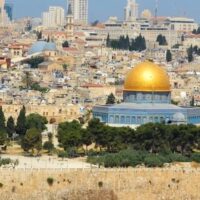
The Neolithic people (the goddess worshippers) sanctified the circle and later erected stone circles in various places around the world and also in Israel. The round shape of the Holy Basin in Jerusalem suggests that it may have accommodated a dispersed stone circle made of rocks situated on top of the mountains surrounding Mount Moriah and the Foundation Stone. Many of the earlier prehistoric stone circles, such as the Kosev Kamen Megalithic site in Macedonia, were formed by rocks that were scattered at great distances from each other, and sometimes placed on hilltops. Thus, one can imagine a circle of rocks around the valley of Jerusalem, and another stone circle in the area of the Temple Mount itself or to the north of it.
The hypothesis that there were ancient megalithic complexes in Jerusalem is supported by the findings of dolmens in two places in the city. The Goddess period is marked by the appearance of dolmens (tombs made of giant stones in the shape of a chamber or door), standing stones, stone circles, tumuli (burial mounds)[1], and more. According to the Jerusalem Book [2], during the construction of the Augusta Victoria Hospital on the Mount of Olives, the remains of a dolmen were discovered. According to one of Ariel’s pamphlets, by the end of the 19th century, there was a large dolmen in the Valley of the Cross, but the residents of the nearby village of Lifta used it to build their houses. Some date these dolmens to a later period, the Middle Bronze Age, but the dating is uncertain. At parallel sites on the other side of the Syro-African Rift, at the Al-Murayghat–Hajr al-Mansub site not far from Madaba, there are dolmens, menhirs, and stone circles from the Chalcolithic period [3], the time of the Goddess culture. In general, we find many stone circles and megaliths in the Middle East, some dating back 9,000 years or more [4].
No conclusive prehistoric remains have been found in the Sacred Basin of Jerusalem. However, other prehistoric finds from the nearby Judean Mountains and traditions from historical periods suggest that Jerusalem may have been a place of ancient worship of the Mother Goddess. If so, it is likely that this worship began 10,000 years ago or more. A day’s walk from Jerusalem is the world’s first agricultural settlement—Jericho—and it is likely that Jerusalem was within its sphere of influence.
A Prehistoric Village of the Goddess Culture
In 2019, the remains of a very large prehistoric village town (around 3,000 inhabitants, about 9,000 years old) were discovered near Jerusalem at the Motza interchange. The findings offer further evidence of the worldview described above [5]. It is unclear who lived there or why the population was so large. In my opinion, even at that time the Jerusalem area was considered sacred, and it is possible that some of the houses belonged to pilgrims, especially in summer, coming from the Jordan Valley, which was then greener and more fertile than today (end of the Ice Age), though still hot. It is known that Jericho is the oldest settlement in the world (11,500 years old), and that around 9,000 years ago, large settlements existed near Amman, including a similar and even larger village town named Ein Ghazal. This suggests a likely connection with Jerusalem as well.
The meaning of the name ‘Ein Ghazal’ is ‘Spring of the Gazelle.’ Although it is a new name, it suits the ancient settlement, since its inhabitants also engaged in hunting, especially gazelles. It now appears that the inhabitants of Tel Moza likewise engaged in gazelle hunting. At the same time, Ein Ghazal is the first instance we have of a settlement of such magnitude whose livelihood was based primarily on agriculture, while at Tel Moza agriculture was also the main occupation. At Ein Ghazal, lentils were cultivated, which together with wheat and meat supplements constituted a sufficient diet, and large quantities of lentils were also found at Tel Moza. In other words, the way of life in these two settlements—located about two days’ walk from each other—was similar and points to a connection between them.
At Tel Moza, round stone structures were found (the lower rows built of stone, and above them probably mud-brick) with plaster floors and a hearth in the center. In addition, a planned street system was uncovered, along with larger structures that were likely public buildings and perhaps even temples. Beneath the plaster floors, ten skeletons were discovered buried in a fetal position, some of them children, and some without heads. This type of burial also appears in other places in the country and in the world during the same period, suggesting that the prevailing culture was matriarchal and centered on the worship of the Mother Goddess.
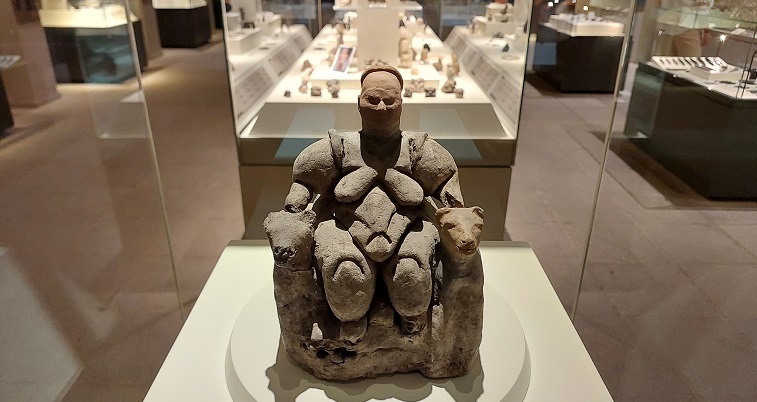
At Çatalhöyük in Turkey, a vast settlement from the same period, with a similar burial practice was found. According to the site’s excavator, James Mellaart, it had an advanced belief system focused on the Mother Goddess and her various manifestations [6]. Society was matriarchal, and women held dominance in economic, religious, and familial spheres. Skeletons were buried beneath floors (and beneath sleeping platforms) in order to maintain a connection with the spirits of the dead. The fetal position was intended to allow them to be reborn into the spiritual world, while the separation of the head from the body was intended for shamanic rituals: modeling the skull (placing a clay mask over it) and planting it in the ground like a seed. The head was regarded as the seat of the spirit. Thus, in Jericho and in other sites in the country, clusters of modeled skulls have been found buried beneath floors
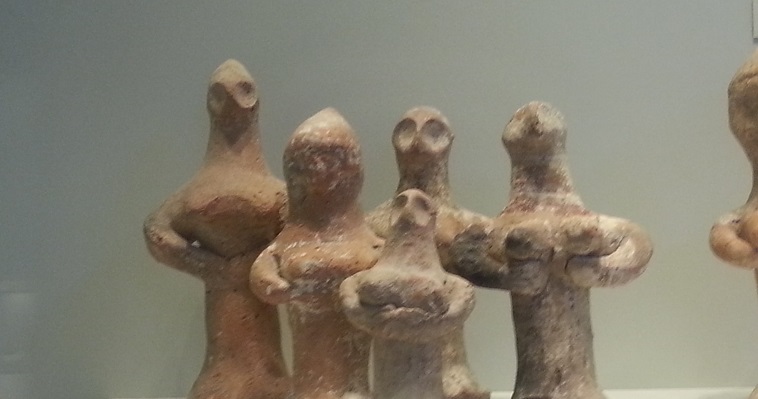
In the settlement at Tel Moza, small figurines were found, including a human head, a bull with horns opening like a bay, and a ram with spiraled horns shaped like a sphere. The human head has narrow and abstract openings for the eyes and mouth, and its shape resembles an egg. The motif and the way the figurines are represented suggest the existence of an ancient goddess religion, as found in Çatalhöyük and other places around the world. The bull had not yet been domesticated at the time, but was a totemic animal that appears in later, larger settlements such as Vinča in Serbia, where special attention is given to its horns. The spiral is a recurring motif in prehistoric matriarchal culture, appearing in various parts of the world, sometimes as a double spiral. According to Marija Gimbutas, this symbolized the cycles of time, as the movement of the sunrise and sunset along the horizon follows a spiral pattern rather than a circular one throughout the year. The sun rises and sets in a different position every day, progressing from the shortest to the longest day of the year, then reversing [7].
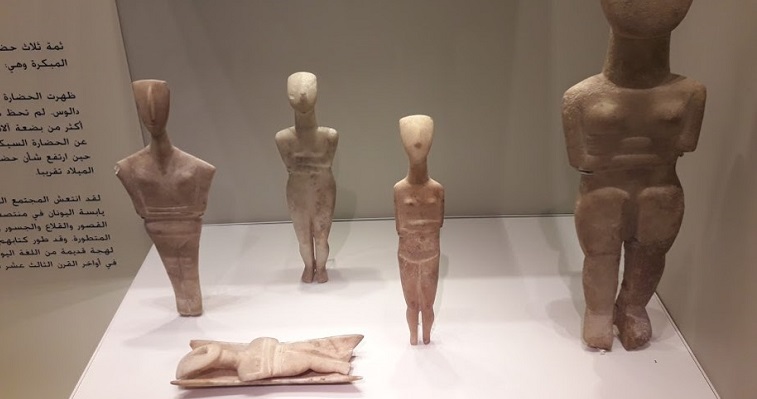
The combination of the human figure and the egg symbolizes the fertility attribute of the goddess. The emergence of life from the Inanimate appears in other figurines in Israel, such as the Venus of Sha’ar HaGolan. The linear rendering of the mouth and eyes resembles the figurines found at Sha’ar HaGolan, showing abstract thinking and indicating that the representation of the human figure was symbolic and meaningful, not necessarily realistic.
The settlement at Tel Moza was engaged in long-distance trade, and materials such as obsidian (volcanic glass) imported from Anatolia or Armenia, shells from the Red Sea, bitumen from the southern Dead Sea, and flint tools were discovered. As part of this developed trade (which also indicates a time of peace), Tel Moza had workshops for processing flint, which is not naturally found in the area but rather in the Judean Desert. The inhabitants produced stone bracelets worn from a young age, mother-of-pearl pendants, alabaster beads, and shell jewelry. One of the characteristics of the Goddess culture was aesthetic sensibility and a desire for beauty, which is evident here. Another characteristic was abstract thinking, as shown by symbols found on some processed bones—possibly an early form of proto-writing. After centuries of harmonious existence, the site was abandoned without signs of violent destruction[4].
If we draw a line between Tel Moza and the Founsation Stone in Jerusalem, we find that it is oriented toward the sunset on the longest day of the year (a distance of about 7 kilometers), which suggests a possible intentional alignment or ritual connection. In this context, it is worth noting that in the Negev Desert, there is an ancient line of stones called Line K line, connecting Mount Ramon to Mount Rumem over a distance of 4.5 km, also aligned with the sunset on the longest day of the year. Other such alignments exist in the Middle East and date back to the 6th millennium BCE. It is possible that there were ancient megalithic sites in Jerusalem to which the residents of Tel Moza would walk (less than a two-hour walk) in order to conduct ceremonial worship in a separate and sacred location.
Historical clues to ancient Goddess worship
If we delve deeper into history, we see that before the Hebrews arrived in the land, other Semitic peoples lived here, collectively called “Canaanites.” The main god of the Canaanites was called “El,” and his wife was Asherah. We know about the worship of Asherah in Jerusalem from the Bible. In general, her worship was widespread in Israel, both privately and officially. The word ‘Asherah’ in the Bible refers both to the goddess and to her cult objects, which have been discovered in Israelite and Judean settlements. There are references to her in Hebrew inscriptions found in archaeological excavations. At Kuntillet ‘Ajrud—not far from Kadesh Barnea—an inscription was found reading: ‘Blessed by Yahweh and his Asherah,’ and another inscription from the 8th century BCE: ‘I bless you by Yahweh of Samaria and his Asherah.’ At Khirbet el-Qom, near Hebron, an inscription was found: ‘Uriah is blessed by Yahweh and his Asherah.’ [8]
With the construction of the Temple in Jerusalem, Solomon also established places of worship for Asherah on the Hill of Anointing, opposite the Temple Mount (southeast) on the other side of the Kidron Valley. According to the Bible, this was done under the influence of his foreign wives (especially Phoenicians), but it is said that most of the kings of Judah also worshipped Asherah. In addition to her, the Jewish and foreign inhabitants of the land apparently also worshipped the goddesses Ashtoreth and Anat.
The Jewish worship of Ashtoreth and Asherah is a continuation of ancient Canaanite practices that are probably based on an even more ancient prehistoric cult [9]. The ancient goddess presided over a comprehensive network of spiritual and physical forces, types of life (inanimate, plant, animal, and human), and various life stages and cycles, especially birth, fertility, death, and the afterlife. One of the important aspects of the goddess was as ruler of the underworld, who accompanied the soul through rebirth in the world beyond. The appearance of the goddess in Jerusalem was largely as a goddess of life after death. Jerusalem is the place of creation, and therefore has an important aspect of the goddess of sunrise—birth—but even more so it is the place of resurrection and connection to the unseen worlds. Sunrise had great significance in Jerusalem, and this was central in temple worship, but sunsets also possess a special beauty. Thus, there is evident importance to the east (Mount of Olives), but also a hidden yet equally great importance to the west.
This hypothesis is based on the name “Jerusalem.” Jerusalem is named after the Canaanite god of sunset—Shelem—who was also responsible for the afterlife, health, and protection. Shelem was the brother of Shahar—the god of sunrise. Both were born from the union of the Canaanite god El with two goddesses or mortal daughters named Atirat and Rahmei. Shahar and Shelem were identified with the planet Venus, which appears low in the sky at the beginning and end of the night and is thus called the morning and evening star. They represented the dual nature of the divinity.
After their birth, El married Asherah, who gave birth to the other gods, including the twins Ishtar and Ashtoreth, who at some point replaced Shahar and Shelem as deities of sunrise and sunset. Over time, Ishtar disappeared, and Ashtoreth acquired dual identification with sunrise and sunset and with the planet Venus. In addition, Ashtoreth was also identified with the Mesopotamian Ishtar (or by her Sumerian name, Inanna), the goddess who descended into the underworld to rescue human souls, died, and was resurrected.
In other words, Jerusalem was initially a place of worship of the sunrise, sunset and the full moon and thus a place connected with birth (sunrise), life after death (sunset), and resurrection (cycles of the moon and Venus). Over time, the identification with Shahar and Shelem was replaced by Asherah and Ashtoreth. However, Asherah may not have been particularly important or disappeared like the Canaanite god Tammuz or the Mesopotamian Dumuzid, and thus Jerusalem became a place of worship for Ashtoreth and Mesopotamian Ishtar—goddess of witchcraft, healing, and love—identified with the great earth mother Asherah and also with the war goddess Anat. Yet in addition to her earthly aspect, the goddess had a celestial dimension, and so Ashtoreth is also identified with the sky goddess. The dual nature of the goddess as mistress of this world and the world beyond, earth and sky, was symbolized by her association with Venus, the star of sunrise and sunset.
The Canaanites therefore worshipped Asherah, the wife of El, and their common daughter Ashtoreth. But El and Ashera had another important daughter (they had many children) that was called Anat. The verse from Hosea 14:8—”I will answer and I will support him”—can be interpreted as a wordplay alluding to both Anat (answer in Hebrew) and Asherah (confirm him in Hebrew), the two main goddesses of the Land of Israel.
The meaning of the name Anat in Ugaritic (ancient Canaanite) is “the important woman.” According to the Bible, in Judah, worshippers of the goddess would gather in cities, light fires, and the women would bake special cakes for the Queen of Heaven, pour libations, and burn incense “..and the women knead the dough and make cakes to offer to the Queen of Heaven” (Jeremiah 7:18). Some identify the Queen of heaven with Anat, or with the feminine principle of the sun (hence the lighting of fire), while Ashtoreth is more closely associated with the moon.
Anat is a goddess of love, but also a goddess of war, identified with the Egyptian goddess Sekhmet, who had anciet temples in the Land of Israel (e.g., Jaffa), and perhaps also in Jerusalem. However, some believe that the Queen of Heaven is actually Ashtoreth, and that Anat is a specific manifestation of her, just as Sekhmet can appear in different divine forms. Either way, it is clear that Jerusalem during the First Temple period was a place of goddess worship, and that such worship was widespread among the Israelites. More on this later.
Among the ancient Canaanites of the second millennium B.C, there were also Indo-European elements, not just Semitic ones. These groups had a different religious and spiritual worldview and a corresponding pantheon, including the Jebusites from Jerusalem, who were likely of Hurrian-Hittite origin. They too associated Jerusalem with female deities. In the Amarna Letters from the 14th century BCE, a king of Jerusalem named Abdi-Heba appears. Heba was the chief goddess of the Hurrians from the Mitanni kingdom, and was sometimes identified with the Persian Goddess Anahita. The name suggests that the king was a devotee of the goddess. Thus, we have evidence from two directions for the existence of goddess cults in the city, which, in my opinion, began already in prehistoric times.
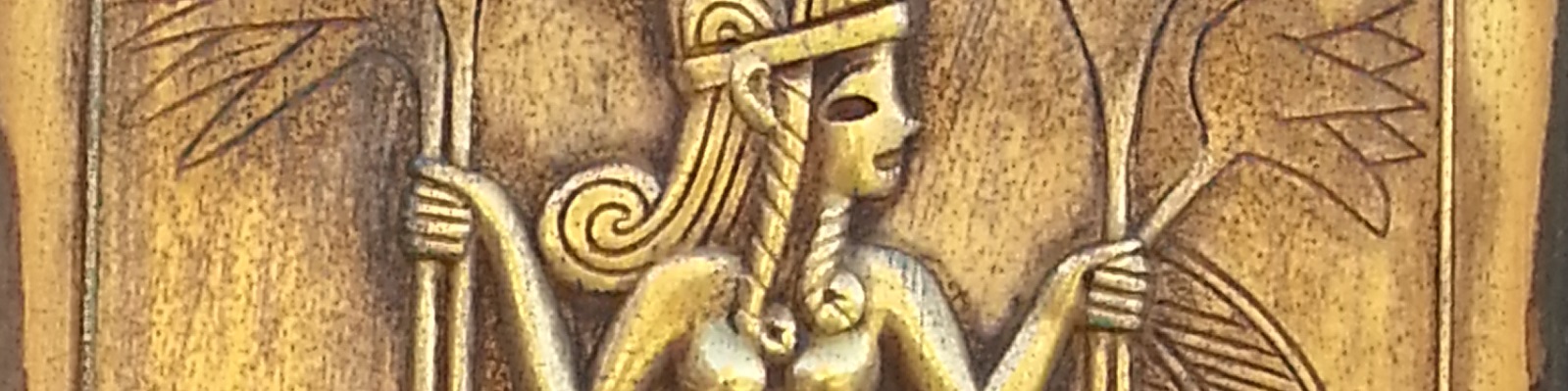
A relief of the Canaanite goddess holding two plants in her hand and standing on an animal resembling a tiger is exhibited in the Tower of David Museum. Many statuettes of Asherah are housed in the Israel Museum, some of which were found in excavations in Jerusalem. The place of worship of Asherah was on the Mount of Anointment, an extension of the Mount of Olives, but there were also Asherah poles on the Temple Mount itself—a hint that Mount Moriah may once have been a place of goddess worship in ancient times.
Footnotes
[1] In Kiryat Yovel there are several tumuli dating to a relatively late period (7th century BCE), but it is possible that they continue an earlier tradition.”
[2] Ahituv, S., Mazar, A., & Merkaz le-ḥeḳer Erets-Yiśraʼel u-yeshuvah (Center for the Study of the Land of Israel and Its Settlement). (2000). Sefer Yerushalayim – Tkufat ha-Mikra [The Jerusalem Book – The Biblical Period]. Jerusalem: Yad Izhak Ben-Zvi. p. 40. (in Hebrew)
[3] Savage, S. H. (2010). Jordan’s Stonehenge: The Endangered Chalcolithic/Early Bronze Age Site at al-Murayghât—Hajr al-Mansûb. Near Eastern Archaeology, 73(1), 32-46.
[4] Ben-Arie, Z. (2021). Tarbut ha-Ellah be-Yisrael: Gan ha-eden ha-avud shel ha-prehistoria [The Goddess Culture in Israel: The lost paradise of prehistory] (1st ed.). Jerusalem: Prague Publishing. (in Hebrew)
[5] Vardi, J., Yegorov, D., Levy, A., Shatil, A., Mitki, N., & Khalaily, H. (2022). Motza: A village of the final phase of the Pre-Pottery Neolithic B, preliminary observations. Tracking the Neolithic in the near East-Lithic Perspectives on Its Origins, Development and Dispersal. Sidestone Press, Leiden, 249-265.
[6] Mellaart, J., Hirsch, U., & Balpınar, B. (1989). The goddess from Anatolia. Eskenazi.
[7] Gimbutas, M. (1989). The language of the Goddess:[unearthing the hidden symbols of Western civilization]. Harper & Row.
[8] Paton, L. B. (1910). The Cult of the Mother-Goddess in Ancient Palestine. The Biblical World, 36(1), 26-38.
[9] Patai, R. (1990). The Hebrew goddess. Wayne State University Press.