St. Savior Church
The 19th century was characterized by Christian renewal movements designed to meet the challenges posed to Christianity by the Enlightenment, the Industrial Revolution, and the Modern Era. This desire for renewal did not bypass the Franciscan Order, the largest monastic order in the Holy Land, which was also responsible for the holy sites.
In 1897, Pope Leo XIII led a union among the various Franciscan Orders, aiming to restore the Order to the original spirit of Francis: humility, learning, and the spreading of the Gospel. This union, called the Leonine Union, promoted the establishment of educational institutions and printing presses. In 1901, Leo XIII instituted the Jerusalem Cross decoration, which the Custodia grants to pilgrims who visit the city. He encouraged the perception of pilgrimage to Jerusalem as the “Fifth Gospel.”
Leo XIII served as Pope for one of the longest periods (1878–1903). He was an intellectual who supported workers’ rights, a Jesuit who supported and valued the Franciscan Order. During his time, the Franciscans’ new St. Savior Church in Jerusalem was consecrated, and the Catholic presence in the city intensified.
The church, designed by Father Raffaele Cingolani, drew its inspiration from the mother church of the Jesuit Order in Rome—the Church of the Gesù (Il Gesù), designed by Giacomo Barozzi da Vignola in the late 16th century.
The Church of the Gesù was one of the first important churches built after the Council of Trent (1545–1563) and was influenced by its decisions. While there was no specific reference to architecture, its centralized focus, the absence of a narthex, side aisles, and transept (cross structure), the high and decorated arch in the center, the basic circular lines, and the emphasis on religious decoration and sculpture heralded the spirit of the Counter-Reformation. The Church of the Gesù emphasizes acoustics that allow the sermon to be heard, and it includes frescoes, marble panels, statues, gold, and several side altars and niches. Its orientation point is the altar—not the church space—it enacts the drama of faith.
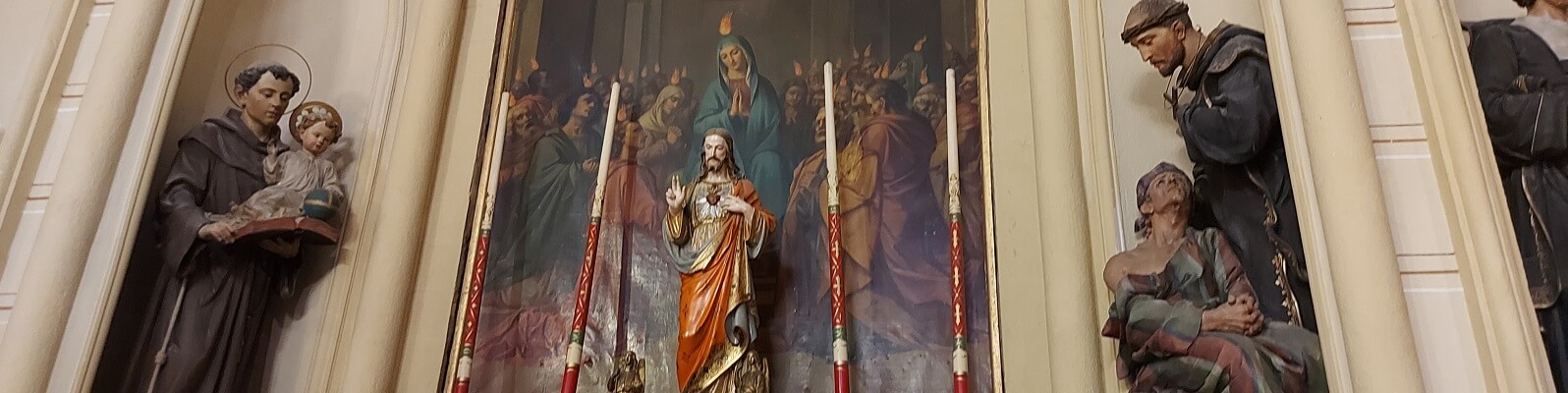
St. Savior Church in Jerusalem is reminiscent of the Church of the Gesù. It is a very impressive church, and the visitor is transported to another, magical world, where the emphasis is on the altar and the decorations. As in the Gesù, the church has good acoustics. It is a basilica with side aisles, but these are not emphasized and are not part of the main space. The side columns are thick and connected by arches. The style of St. Savior Church is Mannerist and Baroque. Unlike other churches, its orientation is north–south (toward the north) and not eastward.
The church’s bell tower was completed in 1932 and dedicated to Anthony of Padua, the 12th-century Franciscan friar associated with education. The tower resembles the towers of several important churches in Spain, foremost among them the tower of San Salvador Church in Oviedo, the capital of Asturias—which is also the first ancient Catholic Christian capital of Spain. The church in Oviedo was first built at the end of the 8th century and has a special chapel, the Cámara Santa (Holy Chamber), where holy objects from Jerusalem were stored; it features a reliquary containing important relics.
The Holy Chamber preserved the city from conquest by the Muslims. Since Oviedo was never conquered, it served as the capital of Christian Spain and the point from which the Reconquista (reconquest) began. Many of the objects in the Holy Chamber are from Jerusalem, including the cloth that covered Jesus’ head during the Crucifixion.
Another Spanish church whose tower resembles that of Jerusalem is the San Salvador Church in Zaragoza, Spain.
The renewal of the Catholic presence in the city, the opening of the land to Christian pilgrims, the important role of the Custodia in maintaining the holy sites and among the global Franciscan Orders, and the construction of St. Savior Church—all led to visits by many Franciscan friars to Jerusalem. Synchronistically, these visits influenced many countries around the world. Here are a few examples:
In 1877, the Argentinean Franciscan friar Mamerto Esquiú arrived in the Holy Land. He was a political activist who rose to fame for a speech he delivered in 1853 in support of the Argentinean Constitution—a kind of Argentinean declaration of independence. His visit to Jerusalem and a speech he delivered to thousands of people in the Church of the Holy Sepulchre transformed him. On that occasion, he also met with the head of the Franciscan Order, who was visiting the land, and the latter, in cooperation with Pope Leo XIII, compelled him to return to Argentina after 16 years of exile and accept the role of Bishop of Córdoba. He mediated between church and state and contributed to the preservation of Catholic values and heritage in that country.
Later, another Argentinean Franciscan priest, Jorge Mario Bergoglio, would become the first Franciscan Pope in history—Pope Francis (2013–2025), who declared Mamerto “Blessed” in 1921. Pope Francis visited Jerusalem as Pope in 2014.
In 1876, the Franciscan friar Frédéric Janssoone arrived in the Holy Land and served in the Custodia Terrae Sanctae as a pilgrims’ guide and in administrative roles. Here, he met priests from Canada who invited him to come to Quebec—the French Catholic region. In 1881, he arrived in Canada for a year, returned to Jerusalem, and went back again in 1888, where he stayed until his death in 1916. Janssoone revived the Catholic Christianity of the French Canadians and promoted the national pilgrimage centers associated with the worship of Mary (Notre-Dame-du-Cap) and of Anna, her mother (Sainte-Anne-de-Beaupré). During his years in Jerusalem, between his two missions, he understood the essence of his calling and the way to fulfill it—these were the years when St. Savior Church was consecrated.
The Spanish-Galician Franciscan Samuel Eiján (1876–1945) was the Franciscan official responsible for the Church of the Holy Sepulchre and held senior positions in the Custodia from 1902–1908. These were years during which he expanded his education and received inspiration for his life’s mission—promoting Galician literature and poetry and strengthening the Franciscan presence in the region. He wrote books on the connection between Spain and Jerusalem [1] and argued that, of all countries, Spain made the greatest contribution to maintaining the Catholic sites, and that there was a link between Spanish nationalism and Jerusalem.
However, it was the spirituality of the city, not nationalism, that influenced him—and others. The magnificent buildings constructed in the city at that time should not be seen as an end in themselves, but as part of a network of interpersonal, interreligious, and intercultural encounters that took place in the holiest place in the world—the only Christian pilgrimage site where pilgrims could mingle with Christians from denominations different from their own, and even with members of other religions. In Rome there were only Catholics, and in Etchmiadzin only Armenians. Here, in Jerusalem, everyone met everyone.
The encounter was not political-national: in the city of Jesus, the main influence was spiritual. Jesus said, “Render unto Caesar the things which are Caesar’s, and unto God the things that are God’s”—therefore, who the Caesar was did not matter.
Contrary to what is emphasized in conventional studies of Jerusalem’s history, research into the Christian revival of Jerusalem in the 19th century shows that what was important at that time was not only the politics and nationalism accompanying the city’s remarkable development, but also the spiritual, sacred-religious experience that took place within it. Nationalism has a place in the study of spiritual traditions when it is linked to culture and high ideals—to the human search for meaning. Often, patterns of holiness take on a national guise, but one must distinguish this from ethnocentrism. There have always been people who used religion and the religious experience for self-serving purposes, but this does not negate the existence of religious experience as an independent and vital faculty in man.
Observing the city’s developments solely from a political-nationalist perspective misses the crucial role of the religious experience in human beings, and sometimes even invalidates it. For many people, visiting Jerusalem was a life-changing experience—requiring great effort and involving an encounter with a world utterly different from anything they had known until then. As a result of this experience—whether it involved others or not—the person changed and was able to access parts within himself connected to the spirit, to life after death, to the energies of divine emanations, to the presence of God within him.
Jerusalem was a catalyst for personal development, and additionally, a microcosm of the human search for meaning—in its various manifestations across the Christian, Muslim, and Jewish worlds.
Papal Visits to Jerusalem
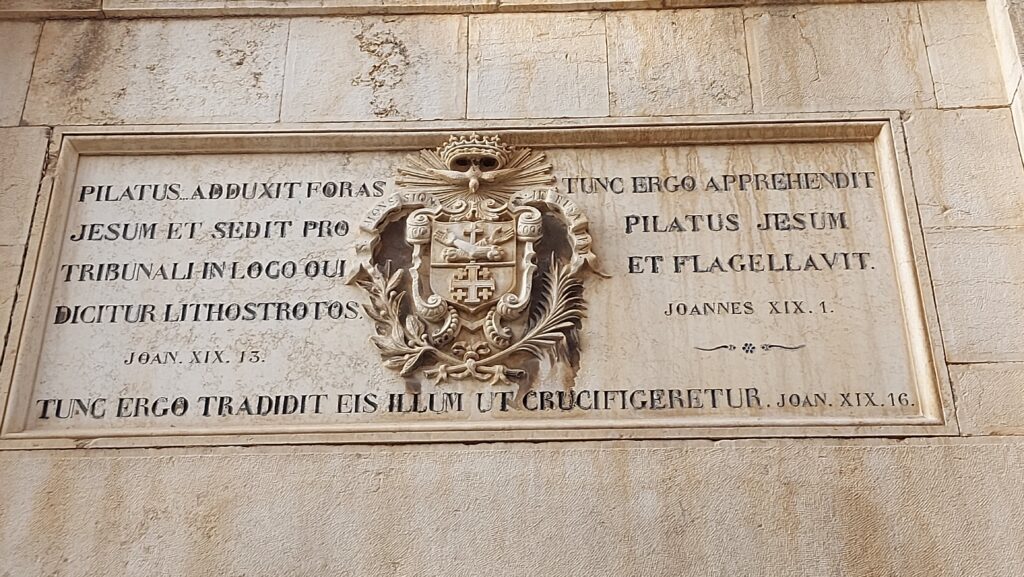
In 1964, another holy guest appeared in Jerusalem: Pope Paul VI came to visit. This was the first first time in two thousand years of Christianity’s existence that a Pope had visited Jerusalem—not during the Byzantine period, nor during the Crusades, not during Ottoman rule, and not even during the Mandate period had a Pope ever visited the city. Paul VI was accompanied by Patriarch Gori for two days of the visit. He prayed in the Church of the Holy Sepulchre and held a historic, first-ever meeting with the head of Orthodox Christianity, Patriarch Athenagoras I of Constantinople.
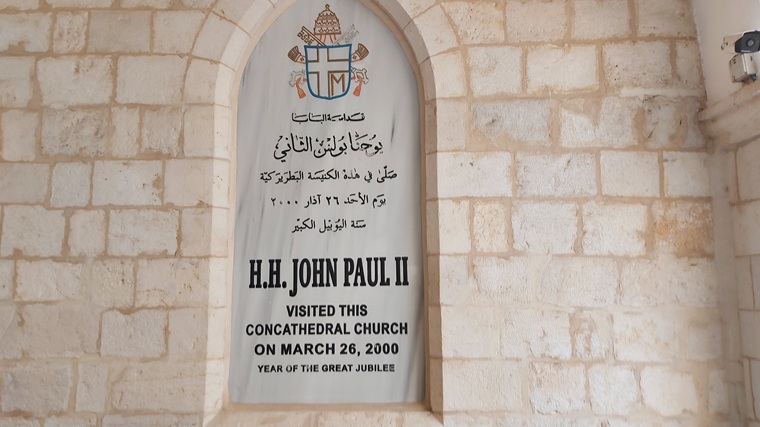
Paul VI was one of the most important Popes in the history of the Church. He led the Second Vatican Council, which worked to adapt Catholic Christianity to the Modern Era and reformed forms of worship, as well as the Catholic Church’s approach to others and to the world. The visit occurred only half a year after the start of his papacy and set the tone for the next 15 years of his tenure. Paul VI opened the way—subsequently, John Paul II, Benedict XVI, and Francis also visited Israel. In fact, all the Popes since Paul VI have visited Jerusalem—a matter of immense significance for Catholics worldwide.
Saints and Religious Orders
According to the Catholic Church, a saint is a person—male or female, of low or high origin, uneducated or educated—who at a certain moment in life achieves spiritual enlightenment, and consequently, miracles occur during their lifetime or after their death. Saints dedicate their lives to the service of faith until their death.
The ways of serving God are many and varied: some devoted themselves to caring for the sick and suffering; some engaged in preaching and spreading the faith and influenced many with the fervor of their belief; some were granted visions and enlightenment; some withdrew from public life and dedicated themselves to prayer and spiritual seeking; and some died for the sanctification of their faith. However, not everyone who does these things becomes a saint.
Usually, at least fifty years pass from the death of such a person until they are recognized as a saint, and this recognition depends on verified miracles they performed, whether in life or after death.
Every order draws its inspiration from its founder and operates according to his or her special mission, and many of the founders are saints; however, each one has a different calling and vocation. Thus, there are orders whose members engage in education, the establishment of schools, and the dissemination of knowledge; orders that care for the sick and needy, founding hospitals and orphanages; orders that focus on theological research; and orders that seclude themselves from the life of this world, dedicating themselves to prayer and spiritual contemplation.
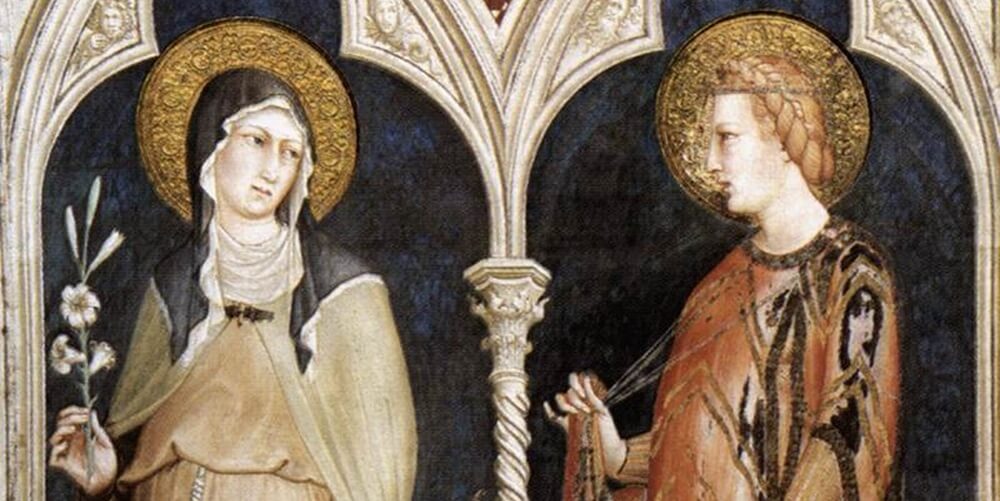
Order of the poor Clares
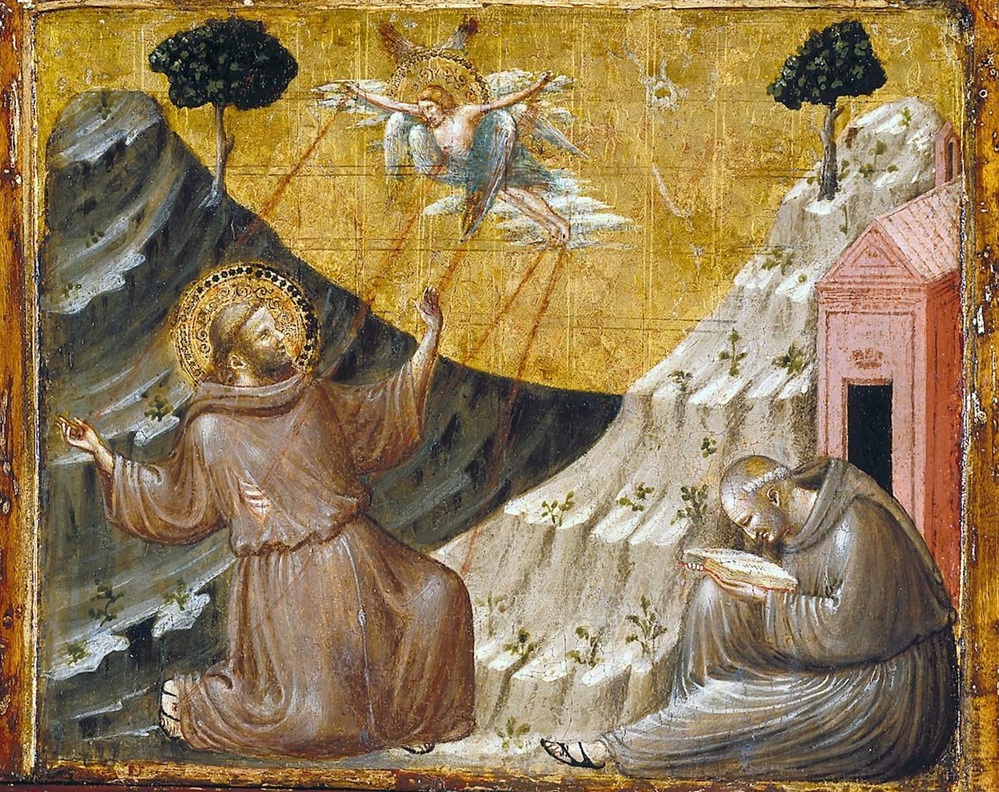
Saint Clare (1194–1253) was a disciple and spiritual partner of Francis of Assisi. Both were born in Assisi in the Umbria region of central Italy at the end of the 12th century. Clare was a young and beautiful girl from a wealthy and well-born family. She was known for her piety and great compassion for the poor and suffering. When she came of age at eighteen, her parents sought to marry her off, but she refused to marry anyone. Despite her young age, she knew that she wanted to give up the life of luxury awaiting her and dedicate herself to a life of prayer and asceticism. She longed to meet Francis and receive spiritual inspiration and guidance from him.
Clare’s well-connected family strongly opposed her desire to dedicate herself to monastic life. Nevertheless, she met with Francis, and he encouraged her to listen to the call of her heart and choose religious life. On Palm Sunday night, a week before Easter, she fled her parents’ home and arrived at the Church of Santa Maria degli Angeli, where Francis and his brother friars awaited her and consecrated her to the Church, shaving off her abundant hair.
Clare found refuge in a nearby convent of Benedictine nuns, where her family arrived to persuade her to return. Upon removing her head covering and seeing her shaved hair, they realized she would not rescind her decision. Her sister, Agnes, later joined Clare. The sisters’ aspiration was to live out what they had learned from Francis: a life of simplicity and poverty, renouncing the pleasures of the world and the holding of any possessions. They lived a life full of love and charity for every living creature and constantly sought to be closer to God.
Clare moved to an abandoned convent on the outskirts of Assisi named after Saint Damian, where other young girls joined her, aspiring to dedicate their lives to God. Clare would never leave this convent—she lived there for forty-two years, until her death. Francis took Clare’s convent under his patronage and asked his Franciscan friars to care for the secluded women. He wrote the Rule of the Order for them.
From the writings that remain from this period (first half of the 13th century), it is evident that all who met the small communities of Francis and Clare admired their modesty and spirituality. They were perceived as a renewal and revival of the early Church, continuing the path of Christ and preserving the purity of His teaching.
Amid the splendor, corruption, and degeneration that afflicted the official Church, the “Little Brothers” of Francis and the “Little Sisters” of Clare stood out for the purity of their lives, their readiness for sacrifice, and their search for what lies beyond the vanities of this world. A few years after her death, Clare was officially canonized as a saint, but even during her lifetime she was regarded as a saint by those around her. Many miracles were attributed to her, including numerous cases of miraculous healing.
From the small convent of Saint Damian on the outskirts of Assisi, the Order of the Poor Clares spread throughout the world, and today many women—from Asia to South America—live out the spirit of Saint Clare in their lives. A group of such women established a convent in Jerusalem.
Footnote
[1] Eiján, S. España en Tierra Santa: páginas de la vida franciscana en Oriente (siglo XVII), Apuntes Históricos. Herederos de Juan Gili, 1910.