The Return of the Catholics to Jerusalem
The French saw themselves as the protectors of Catholics in the Holy Land, but they were not the only Catholic nation in Europe, and certainly not in the world. Italy was the heart of the Catholic world, the Austrians were Catholic, as were some of the Germans, the Spanish, and a large part of the New World.
In the mid-19th century, a renewed and expanded Catholic presence in Jerusalem became possible after nearly 700 years. At the beginning of the 19th century, the Custody of the Holy Land (Custodia Terrae Sanctae)—a branch of the Franciscan Order—was the sole body responsible for the Catholic presence in the land. The center of the Catholics (Latins) in the country was the St. Savior Monastery (San Salvatore), whose church was rebuilt at the end of that century. The monastery housed several dozen friars, most of them Italian and Spanish; traditionally, the head of the Custody (the Custos) was Italian, while the official responsible for administration and finances (the Procurator) was Spanish.
However, in 1847, the Latin Patriarchate of Jerusalem was re-established, and the first Patriarch appointed was the Italian Giuseppe Valerga. Immediately afterward, there was a significant surge in the construction of Catholic institutions. Alphonse Ratisbonne and the Sisters of Zion built convents on the Via Dolorosa and in Ein Karem. The Sisters of St. Joseph established a school and a hospital, the Carmelites and the Poor Clares returned to the land, and a local order—the Rosary Sisters—was founded. Various Catholic nations built churches and monasteries in the city, which served as homes for orders such as the Benedictines, the Dominicans, the Salesians, the Assumptionists, and others.
In 1893, an international Eucharistic Congress was convened in Jerusalem under the patronage of Patriarch Ludovico Piavi, attended by nearly 800 people. This was the eighth Eucharistic Congress—a tradition that began at the end of the 19th century—and the first to be held outside Europe. Its theme was the Divine Mystery of the Eucharist, and its goal was to spread the light of the Catholic faith in the Middle East, especially the Levant. Perhaps even more significantly, it was during this era that reports began to surface of Mary appearing to people in the Holy Land, attempting to guide the sequence of events toward hope and love.
Patriarch Valerga
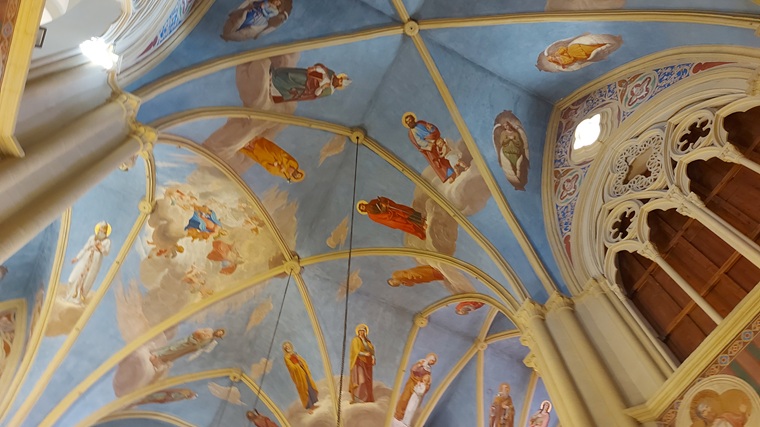
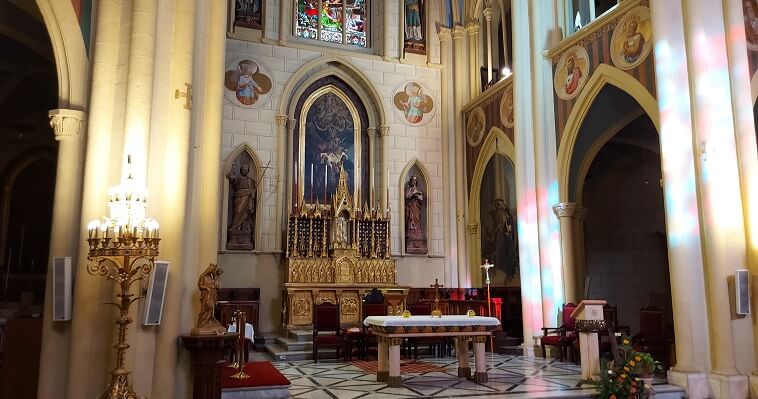
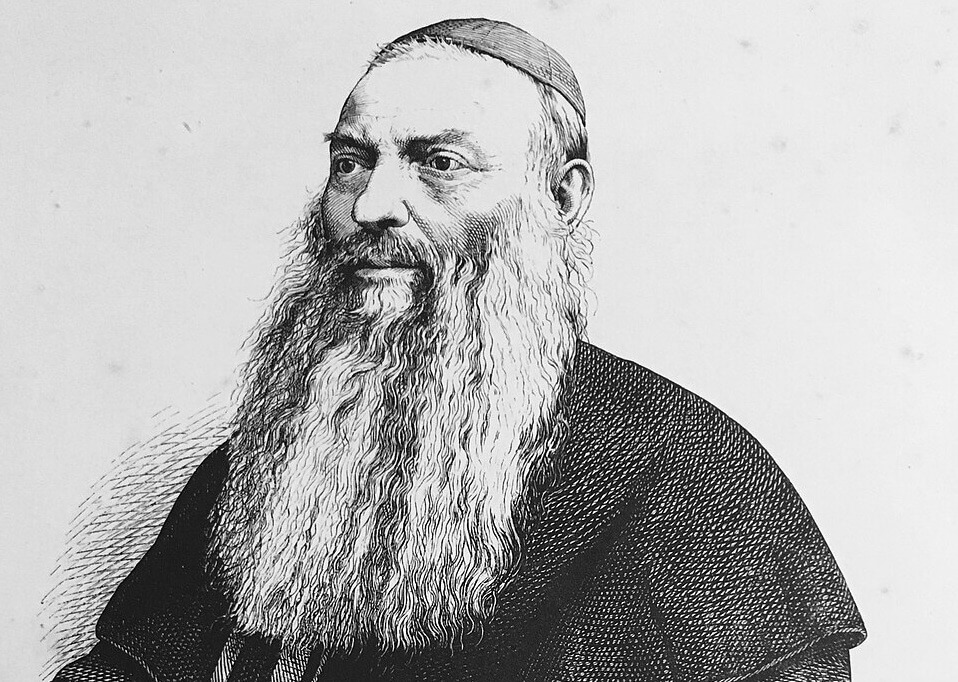
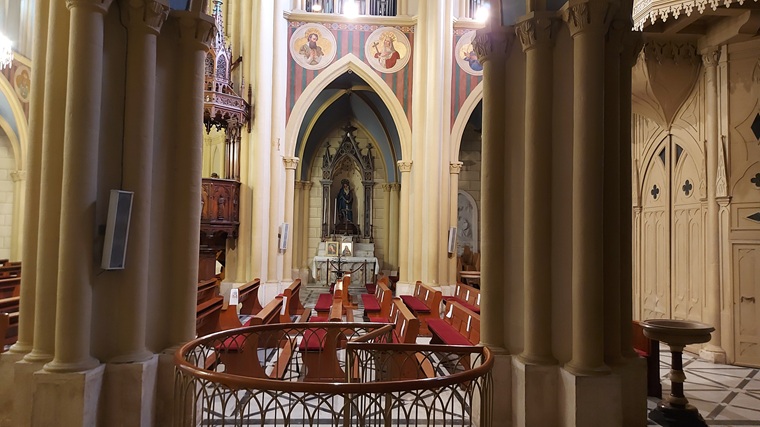
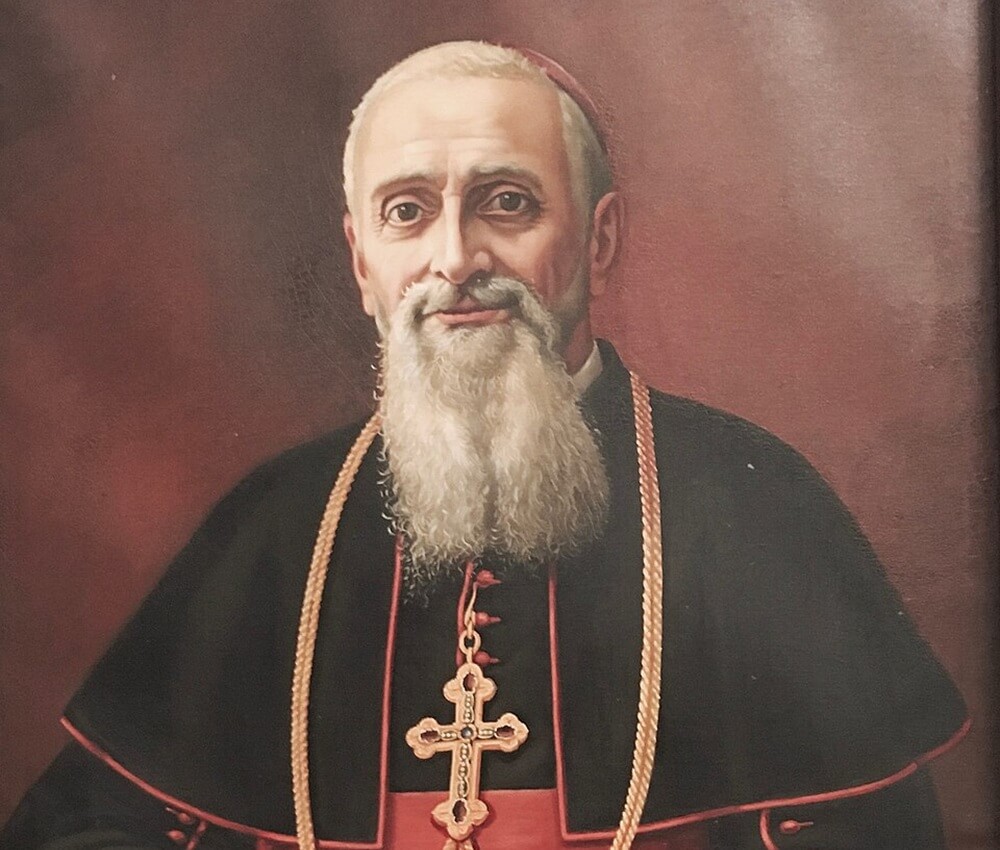
The first Latin Patriarch in the Holy Land (after the restoration of the Patriarchate) was Giuseppe Valerga (1813–1872), a polymath, musician, and poet who was fluent in many languages, including Hebrew and Arabic. He served as the Grand Master of the Order of the Knights of the Holy Sepulchre until his death in 1872. During his tenure, the Co-Cathedral of the Most Holy Name of Jesus was built and consecrated in Jerusalem. Valerga himself, an amateur architect and the son of a builder, designed the cathedral [1]. He died just a few months after the building’s inauguration and is buried in its crypt.
In 1916, a “great miracle” occurred in the Cathedral: a locust plague threatened the land, which was then already embroiled in World War I. Patriarch Filippo Camassei called for a public prayer to avert the disaster, and following the prayer, the locusts departed. This event reinforced the belief in the power of Catholic intercession in the affairs of the land.
Valerga was born in the Kingdom of Piedmont-Sardinia, Italy. Possessing an adventurous spirit, he was sent on a Church mission to Northern Iraq (Mosul). There, he formed a bond with another adventurous soul who had been born in Turin ten years earlier—the archaeologist and diplomat Émile Botta. The two became kindred spirits. Valerga was the one who advised Botta where to excavate to find the ancient Assyrian capital, Dur-Sharrukin.
The deep spiritual and synchronistic connection between these two men, who grew up in the same environment—Turin—continued when they met again in the Holy Land. Valerga was appointed the first Latin Patriarch in 1847, and Botta became the French Consul and the protector of Catholic interests a year later, in 1848. Both played a central role in the struggle for control of the Holy Sites, particularly the Church of the Holy Sepulchre—a conflict that eventually contributed to the outbreak of the Crimean War in 1853.
The connection to Turin also links to the figure of the Italian Giovanni Bosco (1815–1888), known as “Don Bosco” or the “Educator of Youth.” He established Christian schools and institutions in Italy and founded the Salesian Order (named after St. Francis de Sales, a model of kindness and patience, though Bosco’s educational methods were also influenced by figures like La Salle). In 1883 (and more formally in 1891), Salesian priests—undoubtedly with Giovanni Bosco’s approval—established a presence in the Holy Land, including the Cremisan Monastery near Beit Jala/Gilo.
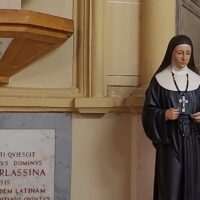
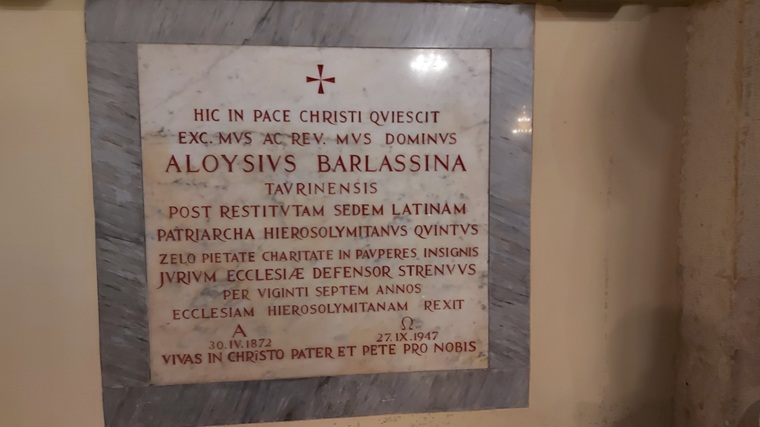
Another important Patriarch, who served during the British Mandate period, Luigi Barlassina (see chapter), was also from Turin. It seems there are synchronistic connections between Turin—considered a capital of both magic and spirituality (as well as politics) in 19th-century Italy—and Jerusalem.
The Sisters of St. Joseph
The first Catholic order to establish educational institutions and hospitals in the Land was the Sisters of St. Joseph of the Apparition order. To this day, they have 17 institutions in the country, including the St. Joseph and St. Louis Hospitals in Jerusalem, and the Convent of Our Lady of the Ark of the Covenant in Abu Ghosh. The Sisters vow to be “dedicated unto death” to their role, and they perform holy work of service to the community, including Jews and Muslims.
The Order was founded in 1834 by Mother Émilie de Vialar (1797–1856) from France, with the aim of serving the Christian population primarily in Arab countries—first in North Africa and then in the Middle East—hence their connection to the Arabic language and the Land of Israel.
Émilie was born into a privileged French family and inherited an estate where she established a shelter for the poor and a kind of convent in 1834. Following her brother’s advice, she moved to Algeria, North Africa, in 1842, which was under French occupation since 1830, and established a hospital there. From there, she continued to establish many more charitable institutions throughout the Ottoman Empire, including many schools, the first of which was in Malta—following a miraculous event that happened to her. Her ship encountered a storm, and she vowed that if she were saved, she would establish a school for Mary in the place where she was rescued. Thus, she reached the coast of Malta, just like the Apostle Paul, who was similarly rescued from a storm.
The ethos of the Order she created is based on the angel’s revelation to Joseph, Mary’s husband, encouraging him to marry her. In the same way, the nuns dedicate their lives to Mary.
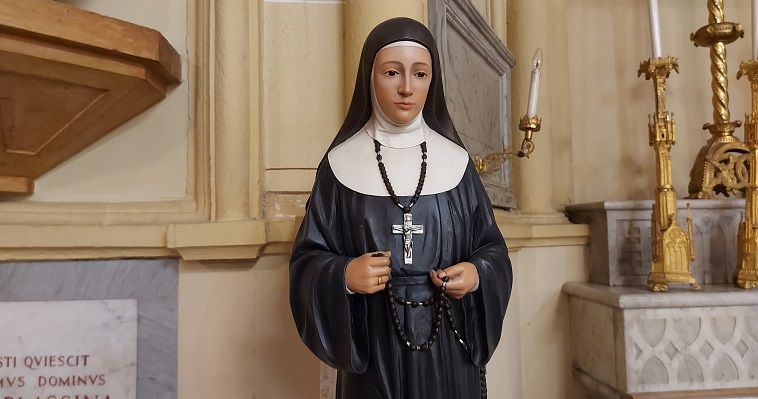
Mary’s connection to her homeland was significant in Émilie de Vialar’s eyes. Thus, as early as 1848, she sent nuns to establish social institutions and schools in Jaffa and Jerusalem. In one of these schools in the Christian Quarter, Saint Mariam Alphonsine was educated, while Saint Mariam Baouardy was educated at the Sisters of St. Joseph institutions in France.
The first Catholic order to establish educational institutions and hospitals in the Holy Land was the Sisters of St. Joseph of the Apparition. To this day, they maintain 17 institutions in the country, including the St. Joseph and St. Louis (French) Hospitals in Jerusalem, and the Convent of Our Lady of the Ark of the Covenant in Abu Ghosh. The Sisters vow to be “dedicated unto death” to their calling, performing sacred work in service to the community, including both Jews and Muslims.
The Order was founded in 1832 by Mother Émilie de Vialar (1797–1856) from France . Her aim was to serve the population primarily in Arab countries—first in North Africa and then in the Middle East—hence the Order’s deep connection to the Arabic language and the Land of Israel.
Émilie was born into a privileged French family (in Gaillac). She inherited a large estate where, in 1832, she established a shelter for the poor and founded her congregation. Following her brother’s advice, she moved to Algeria (North Africa) in 1835—which had been under French occupation since 1830—and established a hospital there.
From there, she continued to establish many more charitable institutions throughout the Mediterranean and the Ottoman Empire, including numerous schools. The first of these was in Malta, established following a miraculous event. Her ship encountered a violent storm, and she vowed that if she were saved, she would establish a house for the Order in the place where she was rescued. Thus, she reached the coast of Malta, just like the Apostle Paul, who was similarly rescued from a shipwreck there.
The ethos of the Order she created is based on the biblical account of the angel’s Apparition to Joseph, Mary’s husband, encouraging him not to be afraid to take Mary as his wife (Matthew 1:20). In the same spirit, the nuns dedicate their lives to the service of God and the care of the “dear neighbor.”
The Virgin Mary’s connection to her homeland was significant in Émilie de Vialar’s eyes. Thus, as early as 1848, she sent nuns to establish social institutions and schools in Jaffa and Jerusalem. It is worth noting that Saint Mariam Alphonsine (founder of the Rosary Sisters) was educated in one of these schools in the Christian Quarter and was initially a member of this Order. Meanwhile, Saint Mariam Baouardy (Mary of Jesus Crucified) spent time as a postulant with the Sisters of St. Joseph in France before joining the Carmelites.
The 19th-Century Marian Apparitions
In the 19th century, the Virgin Mary frequently appeared in a French context:
Paris (The Miraculous Medal), 1830: Mary appeared before Sister Catherine Labouré in Paris, standing with both hands extended forward and rays of light emanating from them. Around her was written: “O Mary, conceived without sin, pray for us who have recourse to thee.” Mary asked the nun to strike a medal with this inscription. The nun sought permission from her superiors and produced the medal, which became immensely popular.
The medal depicts Mary standing on a globe, extending her hands, with rings on her fingers and gems that radiate light. On the reverse side is the letter M (symbolizing Mary) with a cross above it and two hearts beneath it—one representing Jesus and one representing Mary. The heart of Jesus is encircled by a crown of thorns, and Mary’s is pierced by a sword (referencing the Stabat Mater and Simeon’s prophecy). Through Mary’s intercession, the medal brings blessings to the wearer, preparing them to receive grace, and in rare cases, even facilitates an apparition.
La Salette, 1846: Mary appeared in the mountains above the village of La Salette in the French Alps before two children (Maximin Giraud and Mélanie Calvat). She conveyed a message to Catholic believers that they must observe the Sabbath (Sunday rest) and not take the Lord’s name in vain. It is clear that Mary remembers her Jewish heritage (the Ten Commandments).
Lourdes, 1858: Mary appeared in Lourdes, France, which subsequently became the largest Catholic pilgrimage site in the world. Pope Pius IX had defined the dogma of the Immaculate Conception in 1854. Four years later, divine confirmation of this decision seemed to come through Mary’s apparition in Lourdes before a 14-year-old girl named Bernadette Soubirous.
Soubirous entered a small grotto (Massabielle) near the river, where Mary appeared to her on 18 separate occasions. The figure in the vision directed Bernadette to pray the Rosary and conveyed messages of repentance to humanity. Mary commanded Bernadette to dig in the ground, which led to the springing forth of a spring whose waters possess healing properties. When Bernadette asked the lady for her name, she replied, “I am the Immaculate Conception.” This confirmed the Church’s dogma, since the girl had no way of knowing the decisions that were made four years earlier
Alphonse Ratisbonne and the Sisters of Sion
It all began in 1842, when the young Alphonse Ratisbonne, son of a wealthy Jewish banking family from Strasbourg, agreed to wear the Miraculous Medal of Catherine Labouré for a few days at the request of a Christian friend and his brother Théodore, who had converted a few years earlier. To his surprise and astonishment, as he entered the Church of Sant’Andrea delle Fratte in Rome on January 20, 1842, the Virgin Mary appeared before him. At that moment, as he later described, he achieved enlightenment, was filled with heavenly knowledge, and understood the purpose and direction of his life from then on.
It is possible that Mary decided at this stage to look out for her people and her land, seeing Ratisbonne as an instrument for her purpose. A year after the apparition, he and his brother founded the Congregation of Notre Dame de Sion (Sisters of Zion). Four years later, he was ordained a priest and entered the Jesuit order. However, Ratisbonne’s deep connection with Mary and his specific calling eventually led him to leave the Jesuits. With the blessing of Pope Pius IX, he moved to the Holy Land to work exclusively with the Sisters of Zion in 1855, resolving to dedicate his life to establishing charitable and religious institutions, churches, and convents in Jerusalem.
His first goal was to establish a French school for the Christian children of Jerusalem. He sought a location connected to the Passion of Jesus. He succeeded in acquiring the “Ecce Homo” Arch and its surroundings, located at the beginning of the Via Dolorosa (which were ruins at the time). In 1856, he built a church, a convent, an orphanage for girls, and a school there, which eventually became the Mother House of the Sisters of Zion. Concurrently, he began building the St. Peter of Ratisbonne Monastery on Shmuel HaNagid Street in Jerusalem (consecrated in 1874, though work began earlier) as a school and orphanage for boys, and the Convent of the Sisters of Zion in Ein Karem, consecrated in 1861 as a home for Maronite orphans from Lebanon.
In addition to the charitable institutions, Ratisbonne was involved in various Catholic projects in Jerusalem toward the end of his life, such as the founding of the Saint-Étienne (St. Stephen’s) Compound. In the second half of the 19th century, Ratisbonne was one of the most influential figures in Jerusalem, contributing significantly to the establishment of aid for youth in distress. Through Ratisbonne, the Great Mother Mary cared for and nursed the abandoned children of Jerusalem, and from this time on, she became very active in the lives of the people of the Holy Land.

Ecce Homo Sisters of Zion Covenant
The Convent of the Sisters of Zion on the Via Dolorosa is the Mother House of the Congregation in the Holy Land. It is a complex compound featuring a basilica, halls, nuns’ quarters, subterranean archaeological chambers, a small museum, and ancient underground water cisterns. At its center stands a large church (Basilica of Ecce Homo) which incorporates part of the ancient Roman arch known as Ecce Homo. The church is built in a Roman-Byzantine style and integrates seamlessly with the ancient ruins.
The name Ecce Homo derives from the Gospel account of Pontius Pilate presenting Jesus to the crowd, saying prophetically and unintentionally, “Behold the Man!” (John 19:5). With these words, Pilate expresses the concept that Jesus is the archetype of Humanity (or the “Temple of Man”). However, the arch itself is actually later than Jesus’ time; it is part of a triumphal triple arch built by the Emperor Hadrian a century later (c. 135 AD) as the eastern gate to the Aelia Capitolina forum.
Excavations carried out at the convent site before construction uncovered stone vessels (which, according to Jewish law, are not susceptible to ritual impurity) and ancient ossuaries (bone boxes), which are displayed in the small museum.
Beneath the convent lies the Lithostrotos (pavement), often identified with the pavement where Jesus was judged, though it likely dates to the time of Hadrian. Below this ancient floor are the vast water cisterns known as the Struthion Pool. These were originally carved by the Hasmoneans and later expanded by Herod the Great (and covered by Hadrian) as part of the water supply system for the Temple and the Antonia Fortress, which guarded the Temple Mount from the north.
Ein Karem Sisters of Zion Convent
Ein Karem today is an artists’ colony—a neighborhood of affluent Jerusalemites who enjoy the mountain scenery and the tranquility of a village atmosphere near the city. Until the War of Independence (1948), it was a large Arab village; before that, it was a prosperous settlement that had existed for thousands of years, centered around a copious spring surrounded by agricultural terraces descending to the Sorek Valley.
From a Christian perspective, Ein Karem is considered the hometown of John the Baptist, and consequently, it houses many churches and Christian institutions. The identification of this site as his birthplace dates back no further than the ninth century.
Excavations beneath the Church of St. John in the Mountains (St. John BaHarim) uncovered a statue of Venus (Aphrodite) from the time of the Emperor Hadrian. From this, we learn that Ein Karem has long been linked to the Divine Feminine; in the Christian period, this connection shifted to Elizabeth and Mary. Ein Karem was also the site of an apparition of the Virgin Mary to a young Arab nun, Saint Mariam Alphonsine (founder of the Rosary Sisters), at the end of the 19th century.
The Convent of the Sisters of Zion in Ein Karem was founded in 1861 as a shelter for Maronite orphans fleeing the civil war between the Maronites and the Druze in Lebanon. It is located at the edge of the beautiful village’s hill, a large compound surrounded by a stone wall, containing gardens, a guesthouse, and the convent building itself. At the heart of the compound stands a small, humble house where Alphonse Ratisbonne lived, which today serves as a small museum dedicated to his life and work
The monastery has several contemplative nuns who live in seclusion and work in the garden, and several who serve the public who come to the guesthouse and visit the place. On the lower terrace of the garden is the cemetery, where Ratisbon’s grave is located.
In addition to the monastery on the Via Dolorosa and the monastery in Ein Kerem, there is another monastery and institution that Ratisbon built for the Fathers of Zion on Shmuel Hanagid Street in Jerusalem. The place was a school and orphanage and now houses a papal institute.
Luigi Barlassina and Our Lady of Palestine
In 1927, a local feast day in honor of the Virgin Mary, titled “Our Lady of Palestine” (Regina Palaestinae), was established by the Latin Patriarch of Jerusalem, Luigi Barlassina. This was done out of a desire to invoke Mary’s intervention in the affairs of her homeland, specifically to establish peace and good relations among Jews, Christians, and Muslims, and to seek protection from disasters such as the severe earthquake that had struck the country a few months earlier (July 1927). Barlassina formally declared Mary “Our Lady of Palestine” and established her feast day, originally celebrated on October 25th each year.
Barlassina was motivated to do this after acknowledging that Mary had appeared to several women in the Holy Land in the preceding decades, most notably to Saint Mariam Alphonsine (founder of the Rosary Sisters), who died that very same year (1927).
Barlassina served as the Patriarch of Jerusalem throughout the British Mandate period (1920–1947). His establishment of the feast reflects his deep personal devotion. He was grateful for Mary’s perceived intervention in the affairs of local Christians, the strengthening of the Catholic community, and the return of Christian rule to the Holy Land (via the British Mandate) after 660 years. He viewed his tenure as Patriarch during these transformative times as highly significant, perhaps even messianic in nature.
To permanently anchor Mary’s patronage in her homeland, Barlassina established a shrine and convent named “Our Lady of Palestine” in Deir Rafat (in the Judean Lowlands, near Beit Shemesh), which included charitable institutions for the community.
Inside the church, he commissioned the painting of the prayer “Ave Maria” (Hail Mary) in 280 different languages. These inscriptions appear on scrolls carried by painted angels that adorn the walls and ceiling of the church. Atop the church structure stands a tall statue of Mary, extending her hands to protect the land from disaster.
Barlassina died in 1947, just two months before the United Nations resolution on the partition of the land and the outbreak of the War of Independence. Perhaps sensing that his era had concluded, he departed this world to be united with Our Lady of Palestine in heaven.
The Pope’s Visit
In January 1964, a distinguished guest arrived in Jerusalem: Pope Paul VI. This marked the first time since the days of the Apostle Peter that a reigning Pope had visited the Holy City. During the two-day visit, Paul VI was accompanied by Patriarch Gori. He prayed in the Church of the Holy Sepulchre and held a historic, first-ever meeting with the spiritual leader of Orthodox Christianity, Ecumenical Patriarch Athenagoras I of Constantinople. This encounter symbolized a significant step toward healing the Great Schism between East and West.
Paul VI was one of the most consequential figures in Church history, having overseen the completion of the Second Vatican Council. The visit occurred only six months into his papacy and set the tone for the next 15 years of his tenure. Paul VI paved the way for this tradition; subsequently, his successors have followed in his footsteps to Jerusalem—a matter of immense significance for the Catholic world. Pope John Paul II – Visited in the Jubilee Year, 2000. Pope Benedict XVI – Visited in 2009. And Pope Francis – Visited in 2014.
Footnote
[1] https://www.lpj.org/en/the-patriarchate/diocese/patriarchs-1/patriarch-giuseppe-valerga